Milk Thistle Uses to Improve Your Health – Crooked Bear Creek Organic Herbs

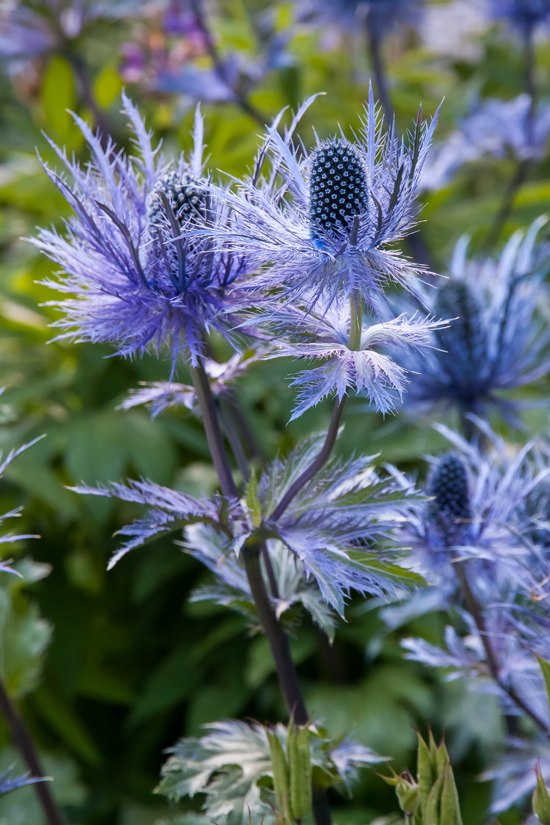
Milk thistle (Silybum marianum), a member of the Asteraceae family, is a therapeutic herb with a 2000-year history of use in traditional Chinese, European, and Ayurvedic medicine. Originally native to Southern Europe, Asia Minor, and the Mediterranean region, the plant now grows wild throughout the world. In addition to being one of the most commonly used supplements for supporting liver health, milk thistle also offers specialized nutrition for the cardiovascular system, prostate, and gallbladder. High-quality, organic milk thistle is inexpensive, readily available, and should be on your list. Let’s take a look at seven exciting ways milk thistle supports good health.

Source: Milk Thistle Uses to Improve Your Health – Crooked Bear Creek Organic Herbs

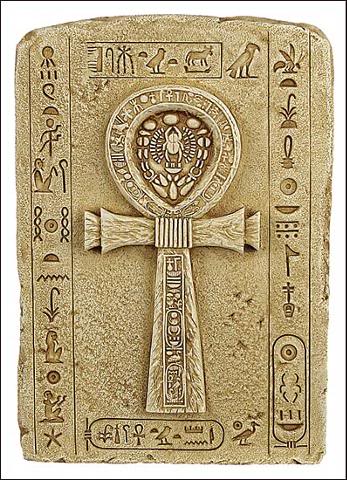
The Ankh ~ secretsoftheserpent

ankhrelief

The Ankh is one of the most well-known and widely used symbols of ancient Egypt. It is in their myths, hieroglyphs, texts and art. What is the Ankh symbolizing? Mainstream ideas are “life”, “breath of life”, or “death and resurrection”. As you will see, they are all way off base. The Ankh has to do with you, your higher self to be exact.

The Ankh is pure Egyptian. It is found in different civilizations, but only because they originated from Egypt. The Christians stole the symbol and used it for their cross. If you understand the true meaning of the christ, you will see why they stole the symbol. Who the hell would worship the symbol that killed their god or prophet? You don’t see Hindus worshipping an arrow. The arrow being what killed Krishna. Mohammed was killed by a wild boar and is the reason why muslims will not eat ham. So why do christians venerate the cross? Christianity is Egyptian and the cross is just a stylized Ankh. […]

Read the entire article at its Source: The Ankh

22 Trees That Can Be Tapped For Sap And Syrup | Wild Foodism

maplespilewildfoodism2As winter wanes and spring approaches, wild foodists all across North America tap into the time-honored tradition of sugar production – mainly, the transformation of maple tree sap into maple syrup and sugar.  This process, passed on from the Native Americans to the early settlers, is still quite popular today, and is responsible for one of the few wild foods that can be purchased commercially in most supermarkets.

Most people associate syrup with the maple tree, and although much of today’s syrup does originate from the sugar maple, all species of maple can be tapped.  Even better, many other trees from other genera can be tapped to extract sap, which ultimately can be turned into delicious syrup.

In this post, I won’t be discussing the methods involved in tapping for sugar production.  If you are unfamiliar with the process, there are a variety of great websites, videos, and books to guide you.  Rather, I would like to provide a list of various trees (maples, birches, walnuts, etc.) that you can tap successfully to yield wonderful, sugary products. […]

Read the entire post at its Source: 22 Trees That Can Be Tapped For Sap And Syrup | Wild Foodism

Thistle Soup Recipe – Good Witches Homestead

This Thistle Soup Recipe is made using edible food from the wild.

Make thistle soup by chopping (scissoring would be a better word since an old pair of shears is the best thing I’ve found for cutting up green plants) a pan of thistles. Push them down in the pan and add just enough water to cover the plants. Bring to a boil and let simmer for at least twenty minutes. Now you can season this soup and eat it just as it is or you can add some boiled fish, leftover rice or anything else you happen to have. It’s guaranteed to be good and you can use this stock in a stew. […]

Read the entire post at the Source: Thistle Soup Recipe – Good Witches Homestead

Slowing Down the Druid Way: A History of Time

What continues to drive me is to live more in line with my principles: to grow my food, to take care of my basic needs, take charge of my health and healing, and to live fully and honestly with myself in line with the living earth. For a while, as I have discussed on this blog, I ran a homestead as well as worked full time to pay for it, something that I stopped doing about a year and a half ago. Part of why I had to walk away from my homestead in its current model (and regroup) was that it was physically exhausting me, especially as a single woman. I was trying to do everything: hold a full time job, grow my own food, tend my bees, tend my chickens, tend my land, make lots of things, write my blog, engage in my druid studies…and I couldn’t do it all. It was a painful and hard thing, leave a year and a half ago and open myself up to future possibilities. It also has been good in that I’ve been working to confront some of the fantasies that made me pursue things in the direction that I did when that direction was, for me, unsustainable. I had a hard time understanding how my ancestors made it–how they were able to do so many things, when I seemed to be able to do so few effectively.


Source: Slowing Down the Druid Way: A History of Time | The Druid’s Garden

Dragon – secretsoftheserpent

34d3b6c9607dd648024f7a13f35a1cb5


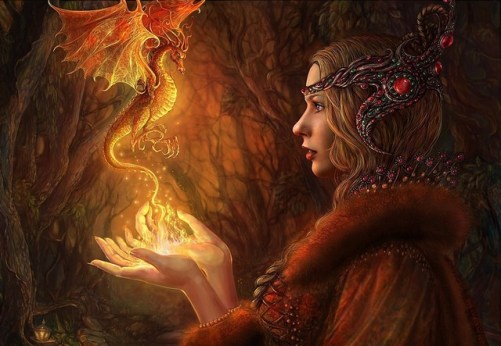
I love the symbol of the dragon. The Greeks saw the dragon as enlightenment. The Gauls saw the dragon as sovereignty. The Chinese saw the dragon as good fortune. Christians made the dragon sinister and meddlesome because they were against learning. They made the keeper and bringer of wisdom a heretic. Stay tuned to this blog and you will see that christians did this quite often. Dragon comes from the Greek “draken”, meaning serpent. It is clearly seen in the word edraken, which means to clearly see. So serpent means one who sees clearly. Having clear vision meant you were wise.

The Dragon is a symbol of the four levels of consciousness. There are four levels of consciousness represented by the elements. Earth(body), wind(thoughts or mind), water(emotions) and fire(intellect). The wings of a dragon represent air. The claws represent earth. The scales represent water and the blazing breath represents fire. When you have mastered all elements of consciousness, you release, slay or control the dragon.
Whenever you see a dragon in a story, it has to do with enlightenment. You slay or release the dragon, so now you have mastered your consciousness. Save the girl (which is the feminine side of your brain) from the dragon to reach enlightenment. Slay the dragon that is guarding the treasure and the riches of enlightenment are yours. My favorite is to release or train the dragon by becoming enlightened. When you become enlightened, you are the dragon rider. Anyone who is a student of magic should see why magic and dragons are usually in the same story.  I love myth. Really. I can’t get enough of it.

Now that you know what the dragon means in myth, I will give you the occult meaning.  In Lemurian Magic I showed you that the Sphinx was created to show exactly when Egypt originated.  The Sphinx was the head of a goddess and body of a lion.  Showing the time between Virgo and Leo.  Later the Patriarchs of Lower Egypt did not like the goddess symbol so they adopted the lion as their logo.  Lower Egypt is also the red crown.  This is why you see a red lion as a logo for royalty, religions and corporations.  Yes the Judah lion is pointing to Egypt.  They are showing the people in the know where their loyalties lie.

As I have said before, everything comes out of Egypt.  Upper Egypt had the Cobra as their symbol and they also had the white crown.  The Cobra refers to the goddess Wadjet.  So the Lion refers to Lower Egypt and the  Cobra refers to Upper Egypt.  When the sides decided to work together out of necessity they combined the lion with the cobra and made the dragon.  When you hear about or see a white dragon it is referring to Upper Egypt and the red dragon is Lower Egypt.  Same goes for red and white serpents.
Source: Dragon – secretsoftheserpent

Elder Mother, The Wild Hunt, And The Winter Solstice

If you follow the sun, you’ll find that, as fall edges into winter, it slips further and further south. The angle of the sun’s rays gets shallower, and the days become shorter with the sun in southern skies. But every year, it turns back and begins its northward course right around the time of the winter holidays: a new light is reborn, and we can start fresh in a new year. The Winter Solstice.That said, many traditional cultures used the moon as an easier form of time-tracking. Her course, when accounting for the earth’s orbit around the sun, runs about 29-30 days from full moon to full moon. The moon cycle also divides neatly into four segments of about 7-8 days each, making it a useful way to mark the more practical weekly calendar. The moon traces more intimate rhythms, while the sun holds the broad, seasonal cycles.But the lunar and solar calendars are offset: while there are about twelve full moons in a year, that’s not quite enough to account for all the days between one winter solstice and the next. In fact, there are about 11-12 extra days after twelve lunar cycles before the sun synchronizes with the calendar again. So, in order to keep the daily household rhythm and the seasonal agricultural rhythm aligned, our ancestors simply inserted twelve extra days at the beginning of the year, right after the Winter Solstice. These days existed outside of the normal lunar calendar, and after they were over, the weekly reckoning could recommence and be in line with the solar cycle again. This, of course, is the origin of the “twelve days of Christmas”.

Source: Elder Mother, The Wild Hunt, And The Winter Solstice

21 Ways to Celebrate Winter Solstice

Winter Solstice – also known as Yule – is one of my favourite times of the year…. okay, my absolute favourite time of year. But maybe I say that for all holidays!

And while I love the major celebrations of Samhain (the start of the Dark Half of the year in the Celtic Wheel of the Year) and Beltaine (the beginning of the Light Half of the year), there is something about Winter Solstice that touches so many. Virtually all cultures and faiths celebrate Father Sun and the return of the light at Solstice.

So what is Solstice? The word solstice comes to us from two Latin words, sol  (the Sun) and sistere (to stand),  referring to the standing sun that we experience twice a year. During the days around the solstice, the Sun appears to stop in its travels (particularly dramatic in polar regions!).

On Solstice, our ancestors celebrated the return of the Sun with feasts, music and art, rituals, greenery, camaraderie and – most importantly – symbols of the Sun such as bonfires and candles. And many carried on the tradition for a full 13 nights / 12 days (in the Celtic world, the day began and ended at sunset), a tradition some of us may recognize as the root of the Twelve Days of Christmas. […]

Read entire article at the Source: 21 Ways to Celebrate Winter Solstice

Christmas Facts Advent Day 12

Photo post by @Ramblings_Claury.

Source: Christmas Facts Advent Day 12

Christmas Facts Advent Day 1

Photo post by @Ramblings_Claury.

Source: Christmas Facts Advent Day 1