On Being a Druid and Walking a Druid Path – A Druid’s Garden Guide and Free Online Book on Druidry

Can a price be put on the life in a forest?

Druidry today has both ancient and modern roots.  Druids today seek spiritual connection with nature, using nature to guide, inspire, and ground us.  Nature has always been a source of everything to humanity, and those of us who pick up the druid tradition work to reconnect with nature in a multitude of ways.  The modern Druid tradition has many branches and paths, and I try to be comprehensive in my coverage of this vibrant and growing tradition.   The modern druid tradition is inspired by the Ancient Druids, wise sages who kept history and traditions, and guided the spiritual life of their people. The ancient Druids had three branches of study: the bard (a keeper of history, stories, and songs), the ovate (a sage of nature or shaman), and the druid (the keeper of the traditions, leader of spiritual practices, and keeper of the law).   Much of what we know about the Ancient Druids today comes through their surviving legends, stories, mythology, and the writings of Roman authors: the druids themselves had a prohibition against writing anything down that was sacred, and so, we have only fragments. The modern druid movement–from which all present druid traditions descend–started in the 1700-1800’s as one response to industrialization.  Today, Druidry is a global and vital tradition.  I’ve been walking the path of druidry for almost 20 years and currently serve as the head of the Ancient Order of Druids in America (www.aoda.org).  As such, I’ve been sharing a great deal about druidry for a long time on this blog. The ecological crisis is a spiritual crisis as much as it is a crisis of culture. Druidry is us finding our way “home”; back into a deep connection with the living earth.  Many people today are drawn to the druid tradition, there is “something” missing for them and it is that connection to nature. Continue reading.

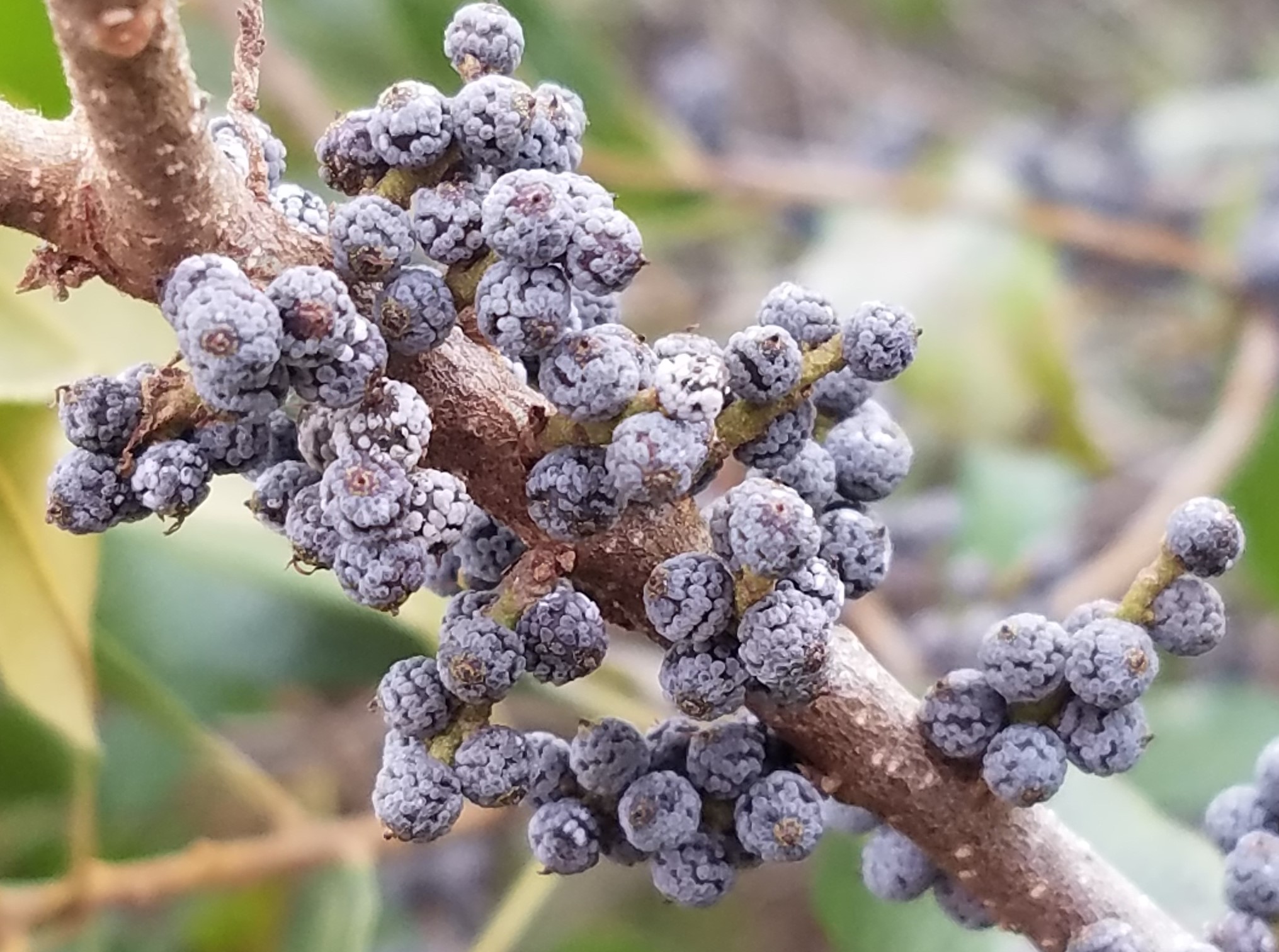
Bayberry Candles

The Herb Society of America's avatarThe Herb Society of America Blog

By Katherine K. Schlosser

The season of lights is upon us. During this darkest time of the year, we gravitate to earthly sources of light to keep things merry and bright.

Drupes2_zoomed in to see waxEarly in our history as a country, many were short on money and luxuries such as candles. Livestock numbers were as yet too low to produce the quantity of tallow needed to make candles affordable, so following the lead of Native Americans, householders turned to candlewood to provide light on winter evenings.
We know candlewood as fatwood or pine knots—the resin-impregnated heartwood of pine trees.  Pines that were cut to clear land, build homes, and provide heat for warmth and cooking left stumps in the ground. Those stumps, full of resin, hardened and became rot-resistant…and were an easy source of candlewood. Slim slivers cut from the wood burned hot and bright.

Alice Morse Earle, writing in the 1800s about…

View original post 898 more words

Honoring the Ancestors of the Bardic Arts: Tools, Techniques, and Legacies

Dana's avatarThe Druid's Garden

Shoemaking Hammer with Spirit

Browsing an antique store a year ago, I found a wonderful shoemaking hammer.  It was an interesting shape, and when I held the tool, I could literally feel the connection this tool had had with its previous owner. Whoever had owned this tool had used it well–the handle was worn, a piece of old, soft velcro partially worn off where someone had placed it for a firmer grip. I could sense the resonance of craft and skill in this hammer. I held the unique hammer in my hand, and turned it a few times, knowing that this tool would find a wonderful home in my art studio.  But more than that, this tool had a bardic ancestral connection to one of the primary bardic arts  I have been pursuing for some time: leatherwork.

In Druidry and broader neopaganism, we often focus on the ancestors in three…

View original post 1,887 more words

Ash Wednesday

Gatekeeper, the God Portunus

Imbolc Symbolism for the North Eastern US: Reflections on the Landscape

Dana's avatarThe Druid's Garden

Imbolc was traditionally a Gaelic holiday celebrated in the holiday celebrating the first signs of spring. When I first started down the path of Druidry, I never felt very connected to Imbolc as a holiday because there seemed to be this huge disconnection between the holiday’s traditional roots and what I was seeing on my own landscape. Part of this is that the weather in the UK is much milder than where I’ve lived and I’m more likely to see at the Spring Equinox–or later–what might be first signs of spring at Imbolc. I thought it was funny when I’d see rituals where I should decorate my altar with snowdrops when they were still another 1-2 months away from coming forth!

Snowfall at our homestead Reflections on Imbolc

My own issue with Imbolc speaks to what I see as one of the major challenges we have in Druidry, here in North America and globally: …

View original post 1,707 more words

Cycles of Nature, Cycles of our Lives: Allowing for Fallow and Abundance in Spiritual Studies

Dana's avatarThe Druid's Garden

Preamble: Now that I’m the Grand Archdruid of AODA, starting in 2020, I will be doing one AODA Druidry-based post a month. A lot of my posts are already tied with AODA practices as it is my core spiritual practice, but I wasn’t always as explicit about it as I will be now! 🙂  All of these posts, while framed in the context of AODA druidry, will be applicable to many different kinds of nature-based spiritualities and druidries.

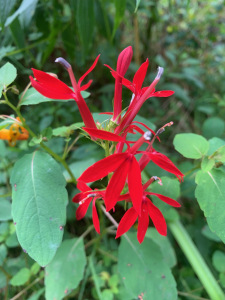
A beautiful cardinal flower in late summer

The Wheel of the Seasons offers us many lessons and one of the core principles in AODA is the principle of the Cycle and Season. In Western Pennsylvania, where I live, we have a growing season that runs from May to late October. That us, from Beltane to Samhain, during the light half of the year, we can grow vegetables, forage berries, and be…

View original post 2,026 more words

Awen, Bardic Arts, and the Ancestors

Dana's avatarThe Druid's Garden

The time between Samhain and Yule is always a time of deep reflection for me.  As a homesteader, this represents the end of the season– the first frost happened in the week I was drafting this post, making everything curl up and die. By the time late November comes around, any major outdoor projects are complete for the year. We anticipate, even embrace, the winter months when snow carpets the ground and all is frozen and still.  While in the light half of the year, I spend most of my spare time gardening, doing various permaculture projects, or just being outside in the summer. In the dark half of the year, this is when I turn to more inward-focused bardic arts, more intense practice of my magic and journeying,  and learning from books of all kinds.  So as we move into the dark half of the year, I’ll be spending…

View original post 1,502 more words

Samhain: Honoring Ancestors of Craft and Tradition | Coby Michael Ward

Crooked Bear Creek Organic Herbs's avatarGood Witches Homestead

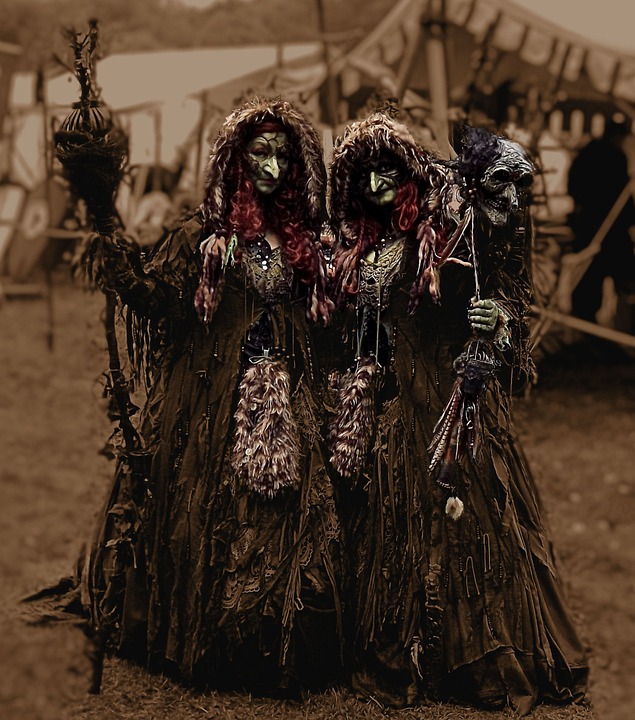
Samhain, the season of the witch, is a time for us to honor the powers that underlie our Craft.  The hidden powers behinds the scenes, guiding our movements and our inspiration.  The Dead guide us; they are present when we weave our magic.  Those who have laid the foundations for our Great Arte, fertilizing our holy ground with their blood.  The Dead are always with us, but this is their time.  The mothers and fathers of our traditions, great witches, teachers, and keepers of lore make their presence known, returning to celebrate with us.  Hallowmas is the great twilight when the worlds of the living and the dead move as one.  The fires we light shine like beacons in the spirit world.  This is also the time to honor spirits of tradition, the collective familiar spirits called egregores that are the manifestation of us coming together.

Honor the Witch Within

View original post 403 more words

Sacred Tree Profile: Chestnut’s Magic, Medicine, Mythology and Meaning (Castanea dentata)

Dana's avatarThe Druid's Garden

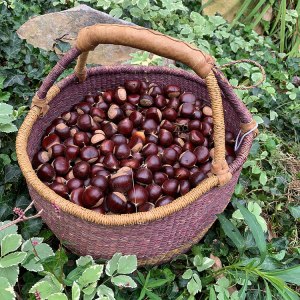
Basket of abundant chestnuts!

Just a few weeks ago, I went and checked the local chestnut trees that are in a field near where I live.  Ever since I moved to the new homestead, I have been eagerly visiting these trees.  Last year, they dropped plenty of husks but with only shriveled nuts inside. This year, I was extraordinarily pleased to find that both trees had produced a bumper crop of the delicious nuts–some almost 2″ across, but most smaller, almost all worm-free, and delicious. I eagerly filled my basket with the nuts, stepping carefully around the extremely prickly husks.  I sat with each of the trees and we conversed as I harvested the nuts. I took home 25 lbs of nuts that day, and these nuts will sustain myself, my geese (who love them), and my friends and family for many a Samhain, Thanksgiving, and Yule feast!  Chestnut trees…

View original post 2,037 more words