Lightning Goddess Perunika’s Daughter – Lepa Mara

Lepa Mara Slavic Goddess of Spring

Ecoregional Druidry: Adapting and Localizing Symbolism

Elemental Wheel with Traditional Animal Symbols

Dana's avatarThe Druid's Garden

To follow up from two posts a month or so ago on ecoregional druidry and the wheel of the year  and celebrating rituals, observances, and activities, I want to continue thinking about how druids can adapt basic practices of druidry to their local ecosystems.  This is particularly important for those of us in diverse ecosystems around the world: part of nature spirituality is being with nature as she is in your region. Thus far in this series, we’ve explored a druid’s wheel of the year that is seasonally-focused on a local ecosystem as well as the different ways we might celebrate this wheel of the year with rituals, observances, and activities.  Also tied to these spiritual practices are symbolism associated with the elements and directions; framing symbolism that weaves its way into our practices in a variety of different contexts. And so, in this post, we’ll delve into thinking…

View original post 1,883 more words

Eleven Traits of Witches and Wizards

Living Magically

Druid Tree Workings: Working with Trees in Urban Settings

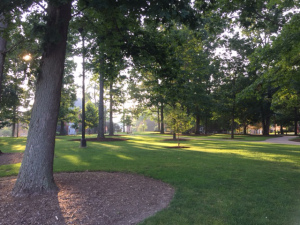
The Oak Grove in the Morning Light

Dana's avatarThe Druid's Garden

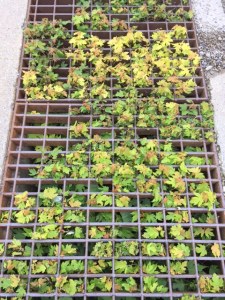
Maples growing up through grate--been there for years! Maples growing up through grate–been there for years!

I walk down the sidewalk of a street in the small town that I call home.  As I journey, I see a crabapple friend with ripening fruit, her leaves rustling in the gentle breeze. I reach out to her, and tell her I look forward to harvesting some in the fall.  She is pleased, as her fruit is largely ignored, and delighted that I will return.  I see others along my walk: horse chestnuts, lindens, mulberries, serviceberries, balsam poplars–many trees that are different species from the forests where I often tread.  Finally, I walk across a grate and wave to the maples growing up from below, in the four foot space below the grate and the drainage channel and into someone’s driveway. These urban trees are often shaped by humans in ways forests are not: an odd growth habit becuase of pruning…

View original post 3,587 more words

The Bindi

Huzzah!

Trinity of Polish Divinity: Summer Solstice, Water Rites & Magical Crowns

Avatar ~ secretsoftheserpent

If you dig far enough into any group’s history, you will find wars and conquest of one people over another. Of course, the victors write the history, but there are always those that have been Guardians to the whole truth.

In my humble opinion, the conflicts today are the same as when the first human bashed another in the head with a rock and took his stuff. Only the weapons, and the ways we communicate those actions have changed. A few have awakened and are trying to make true changes, but mostly it’s just talking heads.

What is Enlightenment? ~ Secrets of the Serpent

By gserperent


I’ve been asked What is Enlightenment? All the so-called gurus give little bits and pieces to keep the people coming back. Most of them make it into a spiritual thing, which is okay, as long as you realize nothing is outside of you. Enlightenment can be very spiritual, but it is an individual experience that must be your own. The ancient sages always put wisdom or knowledge and enlightenment together. You must bring out the fire-breathing dragon. If you don’t have the fire(intellect), you are just a baby dragon who will be led by their chains to do other people’s bidding.

Knowledge should be sought to energize life. Ancient history is very important. Exploring history is exploring the depths within yourself. The strength of a tree begins in the roots. You are a very complex being. The statues in Hinduism that show the deity with many arms is symbolizing that you are many persons within one. The deities are yourself. Most individuals fear the complex depth within. They remain on the superficial and surface layers of the psyche. This is why I always ask “Are you ready to meet yourself”? Very few will descend the depth of their mind. Those that do successfully will create wholeness. The modern individual has lost touch with the subconscious. Getting in touch with your subconscious is literally magic(See Magic).

The past of every culture and way of life flows in to us today. Just observing ourselves is not enough. The past flows on within us. We as a whole do not know history, so it keeps repeating itself. We have lost faith in history and have fallen into a restless, constant search for novelty after novelty. Just like our bodies have relics of early developmental stages, our minds have depths that reach back into the stages of our creation. If you are familiar with my work, you know that an alien race created the human race(see Lemurian Magic). They mixed their DNA with the hominid species that was already here. So our minds and bodies have both the alien and hominid stages built right into them. If you have ever tried to trace your family lineage, you know just how hard it can be to trace your lineage. Do you realize how complex it makes it by throwing in two separate species? Two whole new paths to trace your DNA.  On the alien side you may have to go back billions of years. That is how long this alien species had been around. This is why the ancients said we are thousands, if not hundreds of thousands, of personalities in one being. This is how complex you really are. This world herds us into thinking the same. They know what our minds are capable of and they shackle our minds.

Throughout history ancient philosophers have put people into two categories: the individual or higher human and the herd. Philosophers saw the individual as the most important thing a human can do for enlightenment. They are not talking about the individualism that is spoon fed to the masses. They were talking about real creative, stand alone genius. This is why they refer to them as higher humans. They have goals,are okay with being different, are good with solitude and can live independently. When I say independently, I don’t mean going out and living in the middle of nowhere or the fear based Preppers. I mean they have the freedom to live life to its fullest potential as they desire. When I say solitude, I mean they can be alone with themselves. When they are alone they actually do their greatest work or creating. Then there are the rest or the herd. Philosophers even see the people the herd look up to like sports stars, actors or business leaders as still being in the herd. The only power a herd person has is to band into groups. They saw true individuals as someone who does not want to pluck the fruit from the tree they plant in their own lifetime. No the true higher person will plant their tree of ideas for the fruit to be plucked long after they are gone.

Our morality turns us into a herd animal or someone eager to please and is mediocre. Our morality is anti-natural. People just blindly adopt the judgements of their society. You must understand that when it comes to the universal force there is no wrong or right. Is it wrong for the cheetah to kill the antelope to feed her cubs? Duality is built right into nature. Except it as a whole. The herd wages war on all that is strange, what they see as privileged, the higher human, the abundance of creative power and masterfulness. Herd morality, whether it is religion, political or any other idealism, gives people an escape from themselves. Comfort and contentment are their supreme values. They become judgmental of strangers and lose their love for mankind as a whole. Ideas and Ideals of the herd should rule the herd, but not reach beyond it. The enlightened person says yes to life and accepts life as a whole.

The saying “What does not kill me makes me stronger” has so much truth in it. When people figure out that suffering is a part of this life, they either become a Nihilist or they want to escape it and they make up things like other worlds such as heaven. In other words, they either say life sucks, has no purpose and ends in death or they make up a perfect world, utopia or heaven to work towards. This is why so many people hate when I say that you have to flow with life. I am not referring to flowing by accepting someones elses or some gods decisions, or that you have a predestined fate you have to follow. I am referring to the flowing of your own life. I am of the ancient school that reality, the cosmic energies or nature is alive. Dualism is built right in to our reality. What we consider destruction and chaos is built right into our reality. Which means pain and suffering is something that is natural. It creates life, just look at the birth of a child. Negative and destruction are good, but it requires strength. The Dionysus cult called it ‘Divine Madness’ because it refreshes and replenishes, it keeps you from stagnation. The ancients believed that growing stronger through tragedy is the highest state someone could attain. Knowing this gives you the strength of the cosmic river behind you, but you have a rudder to steer with the current. It is when you go against the current, like the human race does on a whole, you have problems. Flow with nature. Just by seeing the beauty in nature you become enlightened.

Continue reading “What is Enlightenment? ~ Secrets of the Serpent”

On Keeping a Spiritual Journal | The Druid’s Garden

Recently, I took some time to go back through the many spiritual journals I have kept on my journey deeper into the mysteries of the druid tradition and my relationship with nature. These journals spanned over a decade. They included a bit of everything: garden interactions, meditations, nature observations, events in my life of deep spiritual significance, recipes, notes from gatherings and visits, stories, experiences with rituals, and much more. I am so grateful to have kept these journals and re-reading them allowed me to rediscover so many pieces about that journey. They allowed me to see not only my own growth over time, but reminded me of important events and encouraged me further on my path.


Journaling and writing down one’s journey doesn’t come easy for many, and I, too, have to work at it!  Further, in working with those new to the druid path through my work as an Archdruid with the AODA, I’ve come to realize that many folks don’t know how to keep a spiritual journal nor what it can be used for or why they should do it. In my professional work as a writing professor, I know how difficult it is for some people to write anything because they lack the tools, motivation, or inspiration to do so. So, given this, I thought I’d take the time today to write about spiritual journals, why we keep them, and tips and strategies for keeping them (and keeping them well).


Why keep a spiritual journal?

When you are engaging in a spiritual practice of any kind, it is really helpful to document that practice. So let’s start by exploring the reasons why you would want to keep a spiritual journal.


The difference between sacred spaces and mundane spaces. One of the aspects of spiritual practices is that we are in a different head space for the duration of those practices than we are in the regular world. This is true not only of meditation and rituals but also of visits to natural places. We may gain deep insights or have moments of clarity and awakening and retaining those insights are critical for our development. If we don’t write them down, we are very apt to lose them.


I have found that in order to “not lose anything,” I have to write down my experiences in ritual or meditation immediately after they happen (often, I will write in my journal before I even close a sacred grove in ritual or before I leave the forest). This allows me to write about these experiences while they are fresh and in the forefront of my head. If I put off writing down my experiences, the longer that time goes by, the less I will remember and remember accurately–especially because visits to wild places and rituals alter our consciousness.


Inaccuracy of memory. Our memories are imperfect instruments and we can forget many things. If we write our experiences and understandings down (or use one of the other methods I share here), we offer our future selves a record of those experiences, which is a powerful spiritual tool. Trying to keep everything in our heads is a sure way to lose some of the critically important details or insights we gain as part of our spiritual practices.


Some journals that are mixed media/collage with spiritual themes...

To illustrate this, I’ll share a story here. I was out foraging for the day by myself, and I ended up in a really brushy area that required me to slog my way through about a two-acre bramble and brush patch. During this experience, I was in a deep meditative space. I had a critical number of keen insights about nature–all in a row (it must have been the stars aligning). The problem is, I had too many at once! (One of those keen insights about nature became my earlier discussion of weedtending, weedwalking, and weedcrafting while a second became my discussion of first-aid responder plants). I had recently lost my small journal I usually carried in my crane bag (to a river–it carried it away!), so I didn’t have anything to write down my insights on that particular day. And so, lacking any other means, I tried to commit as many as I could to memory. When I finally got back later that evening, all had escaped except the insights on the two posts I included above. Try and meditate as I might, I could not find the other insights anywhere in my brain–they were left in the bramble patch!


Keeping a Record. Documenting your practices and experiences through journals offers your future self a record about what you are feeling, experiencing, and the things you are engaging with at that particular point in time. This is a wonderful tool for tracking and understanding your own spiritual development. I love going back and reading my old journals and seeing just how far I have come! It’s also helpful to look at the journals and get a sense of what I was struggling with then, what I’m still struggling with, and what new things have come up.


Focusing, Expanding, and Reflection on Your Thoughts.  Journaling is not just a process of writing down exactly what happened or what the insights were, but it’s also a powerful tool and opportunity to ponder or sit with those experiences further.  And so, we gain a double benefit from this work. Reflecting on experiences that just happened allows you another way, which I see as another form of meditation, into those experiences. First, I have found often that after I finish a physical journey, spiritual journey, meditation, ritual, or whatever, writing down what has happened and my thoughts and insights about what has happened allows me to further shape and expand those thoughts (and actually, this is why I got into blogging!)  Part of it is that you are not just getting the initial insight, but taking the time to think about it deeper and focus on it through the journaling experience. This helps the insights and experiences come into sharper focus. Second, reflection also allows us to slow down and think about what we experienced, synth sizing our experiences and our own understandings. We can pick things apart, turn them around, wonder about them, and really gain the ability to see them from multiple angles there in our journal.  It might be that this kind of work needs to happen over a longer period of time than one entry, and that is perfectly acceptable as well.  I’ll also mention here that research in writing studies strongly supports both of the above–we learn through writing and we gain much from reflection!


Content of the Journals: What to Write

The question of what should go into a journal is obviously a very personal one.  Here are some possibilities for you to consider:


Documenting regular practices. In many of the esoteric traditions, keeping a “magical journal” is a required practice. It’s very helpful to document regular practices and their effects, especially over time. For example, each day I do the AODA’s Sphere of Protection ritual. In the years I was really learning it, I wrote down daily what happened. Now that my practice has stabilized, I no longer find it necessary to write down each day’s sphere unless something out of the ordinary happens during the sphere; but I still find myself writing about it regularly. I do write about my regular meditations, and that’s part of my habitual journal practice.


Some more spiritually-themed journals with colorful watercolor pages...

Salient, important things. I once spoke with a woman who told me she was spending more time writing in her journals than in her spiritual practices and was frustrated with the length of time it took to journal. I inquired further and discovered that she was writing down literally everything she was doing. While this certainly is an approach that you can take to spiritual journaling, I’m not sure its one I’d advocate. You’d spend more time, as she did, writing than actually engaging in your spiritual practices! Instead, what I advocate is writing down things of meaning, of salience, and of significance. In other words, I don’t write down every little thing (“I drove to the park”) but I do generally document what I did, what happened, and what I thought about it (“in my walk in the woods, this struck me because of…”).


Ideas, Plans, and Goals. I have found it useful to write about goals, ideas, and plans. If you write goals, check in on them regularly and see how you are progressing with them (a simple goal might be to develop a regular daily protective practice, or to spend more time in nature, or to observe the full and new moons in some way).


Nature observations. I have found it particularly helpful to document my observations and interactions with nature, given that I’m on a path of nature-based spirituality. For this reason, I almost always take a journal when I’m going out and about (even a small one I can carry with me, although I have a propensity for small journals getting eaten by bodies of water!)


Some nice leather journals (both filled!)

Reflections over time. At the end of the journal, when I have only 10-20 or so pages left, I find it really useful to go back through the journal and record any patterns in my thinking, any changes, anything that sticks out of significance to me. It may take me a year or more to fill a journal, but is a very good practice and then helps me “launch” the next journal with a vision and goals in mind.


Photos, drawings, plant matter, and memorabilia. You don’t have to be limited to words alone–consider adding drawings, photos, plant matter, and other memorabilia.


The Look and Feel of Your Journal

Especially when you are starting out, the finding or making the right journal is really important. There’s something about opening up a fine journal, one that you are attracted to, and writing in it. It’s nice to see it sitting on our shelf, nice to hold and cherish. Your journal might be something you make or something you buy. (I can write a post on bookbinding and spiritual journal making if there is interest. Let me know!) You may also find that you may develop certain preferences (thickness of paper, lined or unlined, etc).


I think that there is something special about keeping a physical journal and I would strongly recommend you keep your journal physically. For one, if you are taking it into nature and into sacred spaces with you, the last thing you want is an electronic device in those spaces. The screens have a way of pulling you away and into them rather into the space. If the purpose of the journal is to record words, I would suggest using old-fashioned methods.


On the outside: If you are going to go with a purchased journal, You want a journal that lays flat, that is enjoyable to write in, and that is well constructed.  One place to look is on Etsy and similar places and seeing if you can purchase a nice journal that was handmade with care and love.  You’ll support an artist and also have a wonderful journal.   Some journal makers (especially those working in leather) can make a journal cover that you can then replace the insides. This means that you could buy one journal + cover, and then when you are done, put the cover on a new journal and keep going, placing the old journal on your shelf. This is a nice option and represents a limited investment.


On the Inside: One of my very early spiritual journals was a simple affair, but homemade. I began by purchasing some hot press, low quality watercolor paper and folding them in half, making signatures. I bound the journal using a Coptic stitch technique with two boards. Then, in each of the pages, I did a simple watercolor wash. The watercolor pages dried and then, when I opened the journal, I had a variety of colorful surfaces on which to write.

My first dedicated spiritual journal (made when I joined the AODA)

You can do the same thing with cheap watercolors and any journal designed for multiple media or mixed media (these are readily available in arts and craft stores). These kinds of journals will be thicker and contain less pages, but will be sturdy and wonderful for colorful washes and bold printing.

[…]


Source: On Keeping a Spiritual Journal | The Druid’s Garden