How to Make Herbal Dream Pillows

Crooked Bear Creek Organic Herbs's avatarGood Witches Homestead

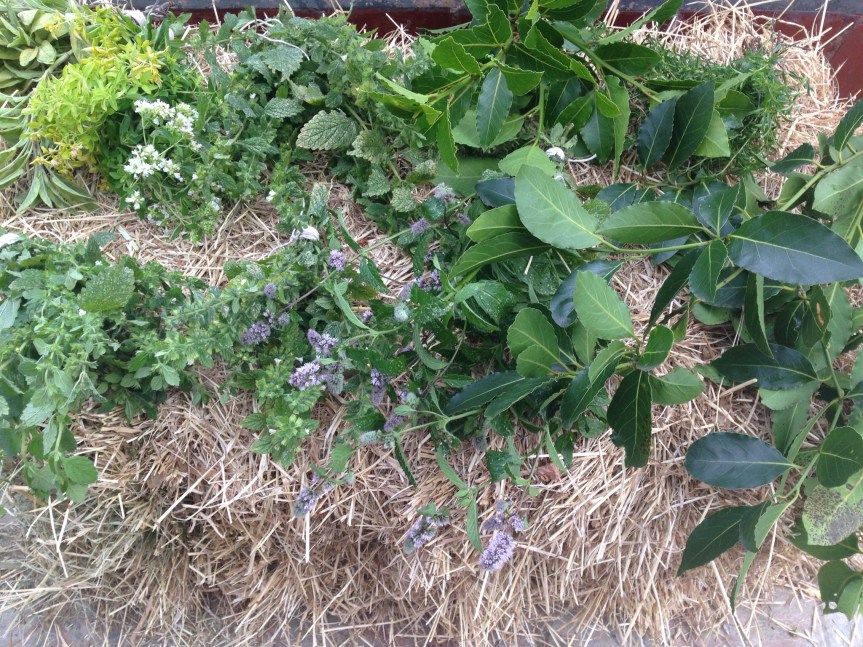
In the modern world, it can be challenging to get a good night’s rest. Keeping a healthy daytime lifestyle as well as a calming nighttime ritual are excellent ways to prepare the body for restful sleep filled with exciting and inspiring dreams! There are even traditions in which herbs are used during sleep, not only to bring about peaceful snoozing, but also to create vivid, lucid dreaming landscapes sure to bring happiness, rather than grogginess, to your waking state.

The practice of placing herbs under one’s pillow dates back centuries and was originally thought to protect against evil, bring good dreams, calm bad dreams, foresee the future, or even conjure a lover into one’s life! No matter the reason, herbal pillows are an easy way to help promote peaceful sleep and encourage dreaming. These pillows are simple to prepare and make a wonderful “crafternoon” with your friends or family. The first step is to…

View original post 203 more words

Ancestral Herbalism and Samhain: Working Deeply with Rosemary

Dana's avatarThe Druid's Garden

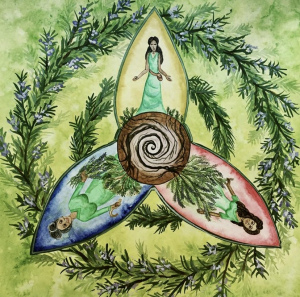
Rosemary from the Plant Spirit Oracle Rosemary Card from the Plant Spirit Oracle

As we quickly approach Samhain, it is a useful practice to spend some time with rosemary (Rosmarinus officinalis) and build here into your Samhain practices. In this post, we look into some of the magic and medicine of Rosemary, and I share a number of ancestor and Samhain-focused practices that you can use with Rosemary.

An Ancestral Ally of Humans: History, Medicine, Magic

Before we get into what you can make or do with rosemary, let’s spend some time exploring and understanding this ancient herb. Rosemary has been with humanity almost as long as we have written records. Native to the mediterranean region, rosemary was first found referenced on cuineform tablets from Ancient Egypt that are from 5000 BCE–thus, humanity has at least an 8000 year old relationship with this herb (but I suspect it is much longer than our written history!)…

View original post 1,368 more words

Samhain in the Devil’s Garden | Coby Michael Ward

Crooked Bear Creek Organic Herbs's avatarGood Witches Homestead

All Hallows Eve is quickly approaching.  The darkness is creeping closer every day.  You can feel the cold grip of the coming winter slithering its way back up from its yearly resting place deep in the Underworld.  The excitement and anticipation on both sides of the veil are tangible.  It is during this time of year that most witches are at their witchiest, reveling in the sensory delights of the coming holiday.  For me, Samhain/Halloween (because I celebrate both) is an entire season, not just one day.  It begins at the autumnal equinox when the scales begin to tip in darkness’ favor.  Then there is the October full moon known as the Hunter’s Moon or Blood Moon.  I look at Samhain October 31st as the culmination of this strange energy that has been building which bleeds into November.  The Sun hangs low in the sky, crows can be heard cawing…

View original post 638 more words

A Culinary Herbal…

Sage the Savior by Susun S Weed

Crooked Bear Creek Organic Herbs's avatarGood Witches Homestead

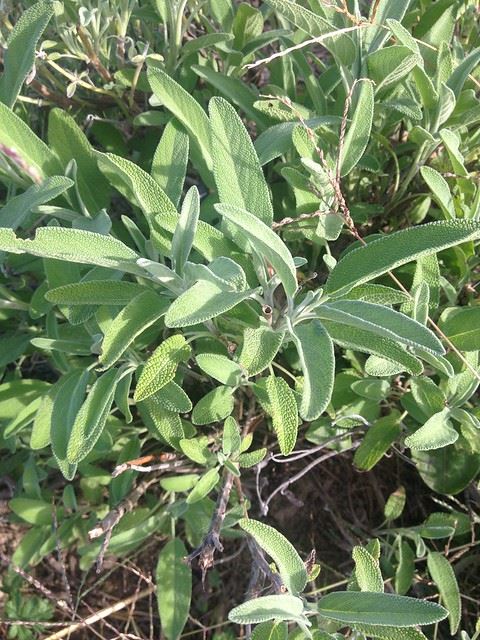
Does the odor of sage evoke warmth, cheer, and holiday feasts for you? Sage has long been used to add savor, magic, and medicine to winter meals. Culinary sage is available at any grocery store, and sage is one of the easiest of all herbs to grow — whether in a pot, on a windowsill, or in the garden. So, grab some sage, inhale deeply, and let me tell you more about this old friend.

Sage is Salvia, which means “savior.” As a member of the mint family, it has many of the healing properties of its sisters. Of special note are the high levels of calcium and other bone-building minerals in all mints, including sage, and the exceptionally generous amounts of antioxidant vitamins they offer us. 

Everywhere sage grows — from Japan to China, India, Russia, Europe, and the Americas — people have valued it highly and used…

View original post 983 more words

Valerian Root Benefits: How to Use Nature’s Wonder Root

Crooked Bear Creek Organic Herbs's avatarCrooked Bear Creek Organic Herbs

When Hippocrates had a headache, it’s possible he enjoyed a nice steaming cup of valerian root tea. The ancient Greek physician was one of the first to describe the therapeutic benefits of valerian root.

Since the early days in Greece and Rome, people sought the benefits of valerian for everything from head discomfort to heart health, nervousness, feminine issues, and the blues. Valerian brings some unique mythological history as well. People once used it to keep away troublesome elves — stay away Dobby! — and folklore experts believe it helped the Pied Piper lure rats away from town.

What Is Valerian?

Garden valerian (Valeriana officinalis) is also known as garden heliotrope, Tagar (in Ayurvedic medicine), cut-finger, and all-heal — funny names for a potent plant! The species originally grew in Asia and Europe, but it now grows throughout North America, as well. Its scientific name derives from the Latin…

View original post 1,544 more words

Thornapple, Gender and Ritual Application | Coby Michael Ward

Crooked Bear Creek Organic Herbs's avatarGood Witches Homestead

Cultivating the Devil’s Apple aka Thornapple

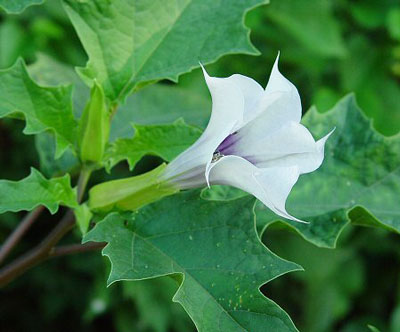
I spent part of this afternoon harvesting my Thornapple plants.  One of them grew to be close to five feet high!  The Thornapple I grew this year is a Datura stramonium var. tatula; similar to the common Datura stramonium only it is less shrubby and has lavender-purple flowers.  I harvested leaves, seedpods, and stems.  I have a few workshops coming up over Samhain season on different aspects of the Poison Path and like to have the actual plants on hand for anyone interested in working with them.  Part of my bargain with said plants is to make them available to others and teach people how to use them.  All parts of the plant are going to be put to various uses.  The leaves are dried and used for spirit offerings, intense personal cleansing and as spell ingredients.  The stems, when dried become hard…

View original post 1,105 more words

Praise of the Pumpkin

Crooked Bear Creek Organic Herbs's avatarGood Witches Homestead

The pumpkin is a fall fruit with a rich heritage and flexible flavor that has been used for centuries.

If the tomato is the queen of garden vegetables, the pumpkin may well be the king. In fact, in some parts of China, it is called “Emperor of the garden.” And why not? No plant produces a larger edible fruit, and what other plants can yield tens (or even hundreds) of pounds of healthful, delicious eating from a single seed in only a few months’ time? Pumpkins are known and loved around the world, for their beauty as well as for the gifts they bestow so generously, asking so little in return.

What’s In A Name?

A pumpkin is a winter squash, but not all winter squash are pumpkins. Confused? So is everyone else. The Oxford English Dictionary defines pumpkin as the large fruit of Cucurbita pepo, “egg-shaped or nearly…

View original post 3,989 more words

A Deeper Look At Forest Roots

Black and Blue Cohosh Forest

Sandy loam, a substance created by the breakdown of minerals (rock) mixed with the breakdown of carbon (tree or grass detritus). Sandy loam is what we all want, because it is the best all around substrate for growing the plants we love the most: GoldensealGinsengBlack and Blue CohoshWild YamTwinleafBloodroot, Stonerooot, Mayapple — the entire interconnected clan of powerfully medicinal shade-loving forest roots. My book “Growing At-Risk” gives a chapter on each of these (and other) herbs of the hardwood forest biome. Let’s look a bit deeper into what can be done to bring these entities down home and help them prosper!

Survey the growing area. It may be a woodland with trees, brush and diverse broadleaf species already intact. If this is the case, identify areas overgrown by weedy species or heavily shaded by dead wood or thin-able trees. Such areas have often been left undisturbed for some time, and the soil may be rich and undisturbed. Clear away dead wood and crowded trees, giving access to the forest floor and providing more light to the growing beds. Forest roots like dappled shade, where sunlight moves across the moist and humus-laden soil in amorphous patches.

After all, even shade-loving herbs eat light! Remove existing weedy species and push your spade into the ground. If you have at least 6 inches of good dirt, then it’s a go. Pull the existing mulch away from the planting bed, which should be at

Mayapple Forest

least 4 feet wide, arranged with a path to the side to guide forest creatures and humans away from the planting, not over the top of the sensitive plants. Pile the mulch in the path, and plant the dormant roots in the bed, then rake the mulch back over the top of the bed. Mark the bed with a heavy stake and a label giving the date and the species planted there. Metal tags may be used for this, so that they do not fade or disintegrate with time. You will be oh-so-happy that you marked your planting spot!


Read full article via Ricoh’s Blog: A Deeper Look at Forest Roots

Staghorn Sumac Sugar Fritters — Gather Victoria

A Bunyol is a Spanish Sugared fritter, so these are Staghorn Sumac Sugar Bunyols. Imagine a warm doughnut (without the hole) rolled in a silky lemony tasting icing sugar and you’ve got the idea. A bunyol (or buñuelo) is a small yeasty bun traditionally enjoyed in Spain on All Saints Day (Nov.1st) which is dedicated to the memory of the…

via Staghorn Sumac Sugar Fritters — Gather Victoria