Living in Lines vs. Living in Circles

By Dana O’Driscoll

Nature is a perfect system.  A tree falls during a thunderstorm.  Within several weeks, the wood is colonized by fungi, bugs, and others who begin the years-long process of breaking down the wood and returning all of the nutrients into the web of life.  Soon, oyster mushrooms are erupting from the log, bugs burrow in deep, and mice make their home under the old roots.  In 10 or 15 years, moss grows thick, and an acorn takes root and begins to grow in the soil that was a stump.  The tree’s trunk becomes a nursery tree for many other plants to get a foothold, off of the forest floor.  Suddenly where there was death, there is life. This circle continues and continues, connecting us all in a great web of life.  There is no waste in this system–every single part of nature can be recycled and reused infinitely.

Serviceberry
Serviceberry is part of this beautiful ecosystem!

One of the challenges humans have in this age is that they have built systems that have disregarded the cycle of life, which includes both creating things that do not easily return to nature and removing ourselves entirely from this system.  Rather than think in a circle or cycle, we think in a line. This embedded linear thinking currently pervades modern Western human society.  The Story of Stuff short film series does a great job of visually describing these problems: many human systems are based on the foundation of greed, quick profit, and short-term linear thinking.  What often happens when someone takes up nature spirituality is that their patterns of shifting slowly change from lines to circles.  This happens with people connecting to many different nature-connected communities: including  nature spirituality, gardening, rewilding, bushcraft, natural building, or permaculture practice.   As soon as you start being part of nature, living with nature, and connecting to nature, you are aware of the cycle.  The longer you take up these practices, the more profound this cyclical thinking becomes.

Continue Reading …

Sacred Trees in the Americas: Paw Paw (Asimina triloba) Medicine, Myths, and Meaning

Dana's avatarThe Druid's Garden

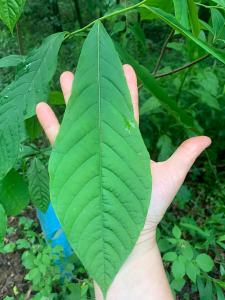
PawPaw leaf - as big as your hand! PawPaw leaf – as big as your hand!

The PawPaw is a tree that is so wild and unique and wonderful, and yet, is often quite unknown–it is the only native citrus tree we have in the upper east East Coast and midwest areas. Like some of the other trees I have recently shared in this series, Paw Paw is an underappreciated and under-recognized tree. Within the bushcraft and permaculture circles, it is quite well known as an amazing tree to find, plant, and tend. One of the reasons that PawPaw is probably not more well known has, unsurprisingly, everything to do with the commercial viability of the fruits. PawPaw fruit is absolutely delicious but it only stays good for a few days after picking–so it would never survive the rigors of modern industrial agriculture.  You can occasionally find it at a good farmer’s market, and it is well worth…

View original post 2,240 more words

Starting a Successful Front Yard Garden and Avoiding Legal Trouble: Interview with Linda Jackson of Natures Harvest Urban Permaculture Farm

Dana's avatarThe Druid's Garden

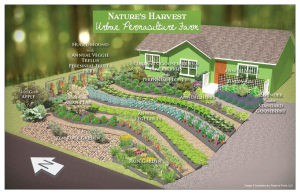
Original design for Nature’s Harvest Urban Permaculture Farm

Six years ago, I shared about Natures Harvest Urban Permaculture Farm, a front-yard garden located in the Detroit metro area. When I shared this post, Linda was in her first year of gardening in this new location, and was regularly selling her produce at a local farmer’s market and engaging with her community.  Here are links to my first two posts about her incredible garden that discusses the original process, design: Nature’s Harvest Urban Permaculture Farm and Return to Nature’s Harvest Urban Permaculture Farm.

A few weeks ago, when I was visiting Linda, I shared some photos of her garden to my social media, and many people responded by saying “she must not have a homeowners association”, “ how did she not get in legal trouble?”, or “my township would make me tear that down!” The questions and comments of…

View original post 3,138 more words

Readers Choice: Ringing in the Best of Blog Castanea

As we spin forward into 2021 (are we there yet, mom?!?), it’s exciting to reflect on what you—our friends, fans, and phenomenal plant family—went herb-wild for through the seasons.Did you know we serve up a splendid spread of free herbal content on our blog?In 2020, we decked the halls of Blog Castanea with garlands of new articles, and re-polished our most popular blogs from seasons past. We brought in new contributors and the blog officially became a team sport. Are you curious which topics were herbally admired and adored this year? And which plants people felt positively passionate about? Get caught up with our Best of 2020 Roll Call:
Continue reading “Readers Choice: Ringing in the Best of Blog Castanea”

Forest Regeneration at the Druid’s Garden Homestead: Forest Hugelkultur, Replanting and More!

Dana's avatarThe Druid's Garden

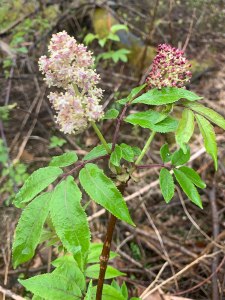
Red Elder – helping the forest recover

The property was almost perfect: in the right location, a natural spring as a water source, a small and nice house with a huge hearth, areas for chickens and gardens, a small pond and a stream bordering the edge of the property….pretty much everything was exactly what we hoped.  Except for one thing: right before selling the property, the previous owners did some logging for profit, taking out most of the mature overstory of trees on 3 of the 5 acres. This left the forest in a very damaged place: cut down trees, lots of smaller limbs and brush, often piled up more than 5-8 feet high in places. I remember when I went to look at the property and started walking the land and just saying, “Why would they do this?”  It hurt my heart. Could I live here, seeing what had…

View original post 3,674 more words

Druidry for the 21st Century: Plant-Based Spiritual Supplies and Global Demand

Dana's avatarThe Druid's Garden

Can you even imagine druidry without plants or trees?  Plants and trees are some of our strongest allies for the work that we do, and are often connected to almost everything that we do spiritually. Plant spirits are teachers, guides, and allies.  From before we had recorded history in any culture, the plant spirits were there, growing with us, guiding us, healing us, and supporting us on our journey. Today’s modern druid practice continues that tradition: we burn plants for smoke cleansing, clearing, and helping to energize spaces. We use trees as part of divination and sacred rites. We use plants as healers, for magical healing and physical healing, and to connect with on deep levels.  Plants have long been friends of humans–and have long walked beside us, hand in hand, as we do our sacred work.  And today, we’ll explore ways we can offer that same kind of honor…

View original post 3,203 more words