A Druid’s Guide to Connecting with Nature, Part IV: Nature Reciprocity

Dana's avatarThe Druid's Garden

The principle of “seven generations” comes to us from the Iroquois nation, where is considered to be the “Great Law of the Iroquois.”  This principle said that each decision that was made needed to consider not just the immediate future but the 7th generation, those yet unborn. This principle has become closely tied with modern sustainability movements, where there is a growing understanding that for any society and ecosystem to endure, they must be treated in a way that nurtures and sustains, rather than pillages and depletes. This is a fairly radical idea to a Western culture, where concepts like manifest destiny and the relentless pursuit of growth that have driven westerners literally spent centuries pillaging the land, colonizing new places, driving out native peoples, stripping forests bare, and so forth. This idea of recirpocation is essentially foreign to most growing up in the shadows of that exploitative past.
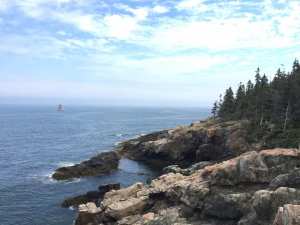
Land and ocean worth protecting! Land…

View original post 2,436 more words
A Druid’s Guide to Connecting With Nature, Part VI: Nature Reverence

Dana's avatarThe Druid's Garden

Respect.  Honor.  Reverence.  Admiration–these words are often used to describe people, in our lives, afar, or in history that we hold in high regard.  But these same words can also be used to describe many druids’ feelings towards the living earth–plants, animals, oceans, rivers, forests, trees, natural wonders, insects, mycelium–the soil web of all life.  The world is a wonderous, incredible place, and those of us who follow a path of nature-based and nature-rooted spirituality recognize this. Reverence is having deep resepect for something, treating it with value and worth. Those of us who are drawn to druidry and nature-based spirituality inherently have reverence to the living earth–it is part of what sets us on this path and encourages us in this direction. But as we deepen our spiritual connection with nature, I believe that our reverence also deepens over time.

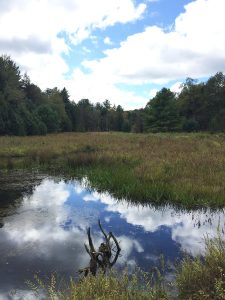
A beaver dam in the early fall at Parker Dam State Park, Pennsylvania A beaver dam in the early fall at Parker…

View original post 1,946 more words

A Druid’s Guide to Connecting With Nature, Part III: Nature Engagement

Dana's avatarThe Druid's Garden

Leading you in deeper! Leading you in deeper!

I’ve heard a lot of conversation in the nature spirituality community, including the druid community, about not touching nature, leaving it alone, to simply “be”.  I remember one influential druid speaking at an event and saying, “The best thing you can do in nature is pick up the garbage and get out.”  From a certain standpoint, this perspective makes a lot of sense. It is the same perspective held by many conservationists trying to preserve pristine lands or lands that have been replanted and are healing; the best thing that can be done is figure out how to keep people from mucking them up, pick up garbage, and leave them undisturbed. Because people have a tendency to come in, move things about, pick things, disrupt ecosystems, and generally cause havoc.  Or worse, much, much worse. Further, in a world where most humans can’t identify even five…

View original post 2,628 more words

A Druid’s Guide to Connecting with Nature, Part II: Nature Wisdom

Dana's avatarThe Druid's Garden

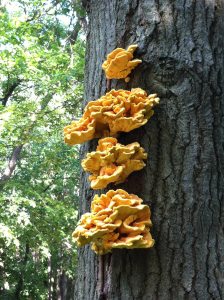
One of my favorite mushrooms- the Chicken of the Woods One of my favorite mushrooms- the Chicken of the Woods

As any mushroom hunter knows, mushrooms are tricksy little buggers.  What one looks like in one setting may not necessarily be what one looks like in another, depending on soil conditions, moisture, sun, size of the mushroom, insect damage, and/or regional variation. Mushroom species can vary a lot, even from one small region to another, and that variation can spell trouble for someone who hasn’t yet gained the wisdom to understand such variation.  Mushroom books offer perhaps 1-2 photos of mushrooms, and a good book will also offer a mushroom hunter the “keys” (features that distinguish one mushroom from another, like attached gills, color, etc).  However, only lived and true experience can help you not make a dangerous mistake when it comes to the mycelium kingdom.  The difference here, I think, epitomizes two key things: the different aspects of nature…

View original post 1,978 more words

A Druid’s Guide to Connecting with Nature, Part I: A Framework

A Druid’s guide to connecting with Nature – Part I:  A Framework

Dana's avatarThe Druid's Garden

A lot of people find druidry because they want to “connect” with nature.  They want to attune to nature, feel part of it, gain knowledge and wisdom about it. But what does “connecting” to nature look like in practice?  Going out in the woods and feeling good?  Knowing the name of trees?  Walking with sacred intent in a natural place?  Spending time in nature?  All above the above? And so, over the next few posts, I want to spend more time with the concept of “connecting to nature” and share some strategies for what people can do to connect with nature in a multitude of ways.

As I’ve written about earlier, part of what I see as the core of druidry as a spiritual tradition is the work of “connection.” In that post, I talked about connecting to nature, connecting to the spirit, and connecting to the creative practices as…

View original post 1,761 more words

Establishing Sacred Land: Shaping A Shared Vision

Dana's avatarThe Druid's Garden

In Tending the Wild, a book that has deeply shaped my thinking about humans, nature and relationship, M. Kat Anderson reports in her introduction that the concept of “wilderness” had a very different understanding to the native peoples of California.  To the native peoples, “wilderness” was a negative thing; it was land that was essentially “untended” and left on its own. Native peoples saw tending the land–scattering seeds, selective burning, cultivating various kinds of perennial and annual spaces–as necessary for the health and growth of the land.  And the abundance that is reported by early western visitors to California and all of what is now known as North America certainly supported that fact: the land was incredibly rich, diverse, and abundant.

Of course, today, we see “wilderness” as a good thing. It is something that humans haven’t touched, it remains pristine and unbroken. In the post-industrial western…

View original post 2,507 more words

Eleven Traits of Witches and Wizards

Mother and Child