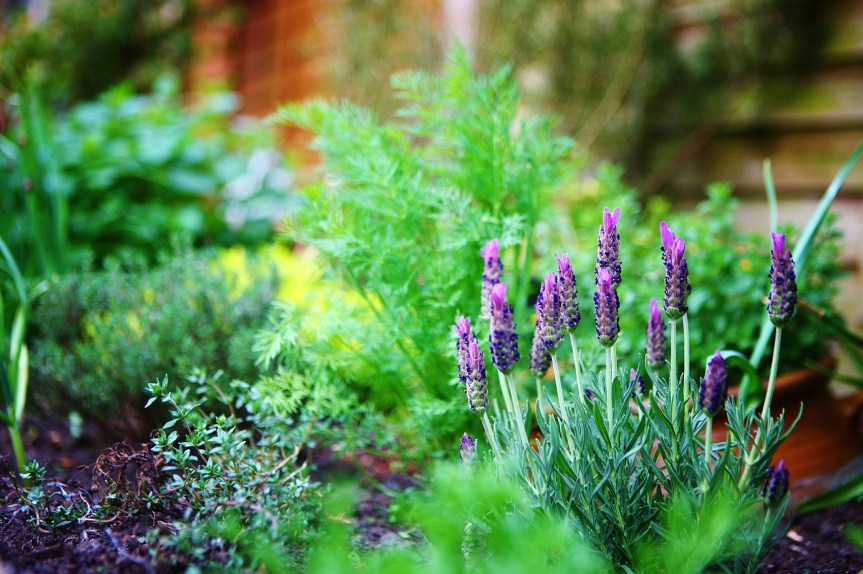
There is nothing like cake to celebrate a special occasion and Imbolc (on February 2nd) is no exception. And I think this “naked” sponge cake would be a wonderful addition to any Imbolc Feast! It’s kept gorgeously moist with brushings of lavender and rosemary syrup (between cake layers) but the slight tang of the Mascarpone…
Tag: Herbs
WHAT ARE HERBAL TINCTURES?
January is here with its fresh start, and we are enjoying our snowy Utah landscape, cozy fires and turning inward. This time of year is about resetting, refreshing, finding balance and focusing on self-care and the care of loved ones. This is a wonderful time to start new healthy habits that can stay with you all year long. It’s also a great opportunity to share the beauty and accessibility of herbal tinctures with friends and family, resolving to build good health within your community!
When we think about using herbs in our everyday life, there are a few ways that come to mind; fresh harvest from the garden, herbal infusions (tea) and herbal tinctures. While many of you know what a tincture is and use them often, many folks don’t, and our goal is to get more people comfortable using plant medicines and to be inclusive in our information; we…
View original post 656 more words
Thinking About Planting a Dye Garden?
Traditional dye plants offer intriguing materials for the gardener who is also a spinner or weaver, or who just wants to experiment with the vast usefulness of the natural world. Nature has its own subtle palette of colors and this little garden represents a few of the dozens of plant dye possibilities, which even include some nuts, fruits, vegetables, and other common foods.
And even if you’re more inclined to pick up some easy powdered dye at the corner store than to make a dye bath from the plants in your garden, you still might appreciate this connection to history and tradition. All of these plants are desirable garden plants.
About Dye Plants
A separate garden isn’t necessary to grow dye plants, as you can incorporate them into an existing flower border or bed (and you might unknowingly be growing dye plants already), but this small corner bed can give…
View original post 901 more words
A Passion For Herbs
Herbs are a fascinating group of plants with a history of cultivation stretching back to the dawn of civilization. Once the herb garden was a practical project, necessary for supplying flavorings for the kitchen and medicines for the family. Today, gardeners are growing herbs for medicinal purposes and for their attractive looks, pleasing fragrances, and tasty flavors. Whether your interest is kindled by taste, aroma, beauty, or history, you’ll find herbs a satisfying addition to your garden.
What is a Herb?
Traditionally, herbs have been defined as plants that are useful to people. The oregano and thyme on your pizza are herbs just as the ornamental foxglove, from which we once extracted the medicine digitalis, is a herb. The insecticide pyrethrin is derived from the painted daisy, making it a herb as well. The list goes on and on; we use herbs and herb products every day.
Choosing Herbs:
In…
View original post 1,672 more words
Already Thinking About Designing A Herb Garden?
There are many books written on the various types of herb gardens. Invest in at least one good book on growing herbs that includes garden tips, what herbs to use for what purpose, and harvesting guidelines. Several types of gardens with plant suggestions are outlined below. You may notice that some herbs appear in more than one garden type. This is because herbs are versatile and have many uses.
Culinary Herb Gardens
Historically, a culinary garden is planted as close to your kitchen door as possible. This allows you to step outside and harvest the particular herb you need for the dish you are preparing. If you have too much shade, or your hardscaping won’t allow you to plant right outside your door, you can add culinary herbs to the vegetable garden or plant a container garden instead. Culinary gardens are generally governed by what the planter uses the most…
View original post 1,803 more words
MAKING YOUR OWN HERBAL MEDICINE
Perhaps you have been thinking about making your own herbal medicine, but you have questions. Isn’t it dangerous? Do you need lots of sophisticated equipment? And what about training? You need to be highly skilled to make your own medicines – right?
Actually, making safe and effective herbal medicines at home is an ancient tradition practiced worldwide. In many cultures, everyday ailments have been treated with handmade herbal medications for generations; in fact, only recently have medicines not been made in the home. Are herbal medicines safe? Yes, they are perfectly safe – especially when you prepare and use them as recommended by an experienced herbalist. The recipes and procedures on this website are ones we’ve enjoyed and tested for years, and the herbs suggested are time-honored and effective.

All it takes to make herbal preparations like salves, creams, and tinctures is a kitchen with common appliances like a blender, measuring spoons, and saucepans…
View original post 633 more words
Why Is Peppermint Like Rudolph the Red-Nosed Reindeer
The Herb Society of America Blog
By Kathleen M Hale, Western Reserve Herb Society
My herb spiral is my mad scientist laboratory. Just outside my kitchen door, it is the only part of my garden to experience full sun. The soil is much-amended with compost. And, that is where I plant essential kitchen herbs and the occasional experiment, like a new herb that bears close watching.

However, over the last few gardening seasons, it has devolved largely into a jungle of mint. Mystery mint. Muddle mint. A promiscuous genetic mix of whatever mint I have ever planted, plus whatever mint blew in on its own. In my defense, that’s what mint does. And sometimes, the result is something else.
Peppermint (Mentha x piperita) is a hybrid plant, a cross between water mint (Mentha aquatica) and spearmint (Mentha picata). It was first mistakenly identified by Linnaeus in 1753 as a separate…
View original post 379 more words
HERBS That Will SHAKE the Blues and Make You HAPPY
Eleven Old-Fashioned Potpourri Mixes You Can Make {Lavender Potpouriis}
Cottage Garden Potpourri
View original post 2,361 more words
Making Potpourris for Yule Celebrations {DIY Recipes Included}
Potpourris {‘fermented in a pot’.}
The term potpourri (pot-pour-ri) is basically a French expression. When literally translated into English, it denoted ‘fermented in a pot’. And this is what actually makes a damp potpourri – a moist, aromatic, herb-like substance that is fermented, normally with salt and in a pot. The dry potpourri, a companion of moist potpourri, is a blend of dried up aromatic herbs, spices, flowers, and additional bits and pieces. The majority of the dry potpourris do not contain any salt and the method of making them is easy in comparison to the process involved in making moist potpourris.
The ingredients of any potpourri – dry or moist, largely depend on the preference of the individual making it. In fact, one has a great scope of experimenting while making a potpourri. Since the aptitude to distinguish scent as well as the individual reaction to aroma is an…
View original post 3,709 more words


You must be logged in to post a comment.