More Earthworms = Less Lyme Disease?

Cases of tick-borne diseases are on the rise, and people are wondering what to do.

Spray more repellent on clothes?  Wrap more duct tape around socks?  Ingest more Japanese knotweed?  Cull more deer?

How about introducing more earthworms into tick-prone landscapes?

It sounds bizarre, but some ecologists are researching this latter strategy.  According to a few studies, the prevalence of earthworms is associated with fewer ticks in certain ecosystems.

How is this possible?  Why are earthworms associated with fewer ticks?  Could the intentional release of earthworms into wild landscapes work as a viable tick-reduction strategy?

In a brand-new video, I address these fascinating questions.

You can watch the video here.

Thanks for reading and watching!  Do you have any unique tick-reduction strategies?

— Adam Haritan

Brilliantly Blue: The Wonders of Butterfly Pea

Garlic: Rooted in Folklore

Medicinal Mushrooms: Reishi or Hemlock Varnish Shelf (Ganoderma Tsugae)

Holistic Herbalism and Pennsylvania School of Herbalism Announcement

The 10 Natural Laws of Cellular Health – Foreword

Genetic Caution — Dr. Gary Samuelson

In the past few years, we have become aware that some people in power (we are not exactly sure who) are developing genetic engineering technologies capable of synthesizing genetic code and testing it out on global societies.  During the pandemic crisis, mRNA vaccines were developed (with much fanfare) containing genetic coding that forces our human […]

Genetic Caution — Dr. Gary Samuelson

Gather Ye Redbuds While Ye May – A Colorful Harbinger of Spring…and Edible, Too!

The Herb Society of America's avatarThe Herb Society of America Blog

by Karen Cottingham

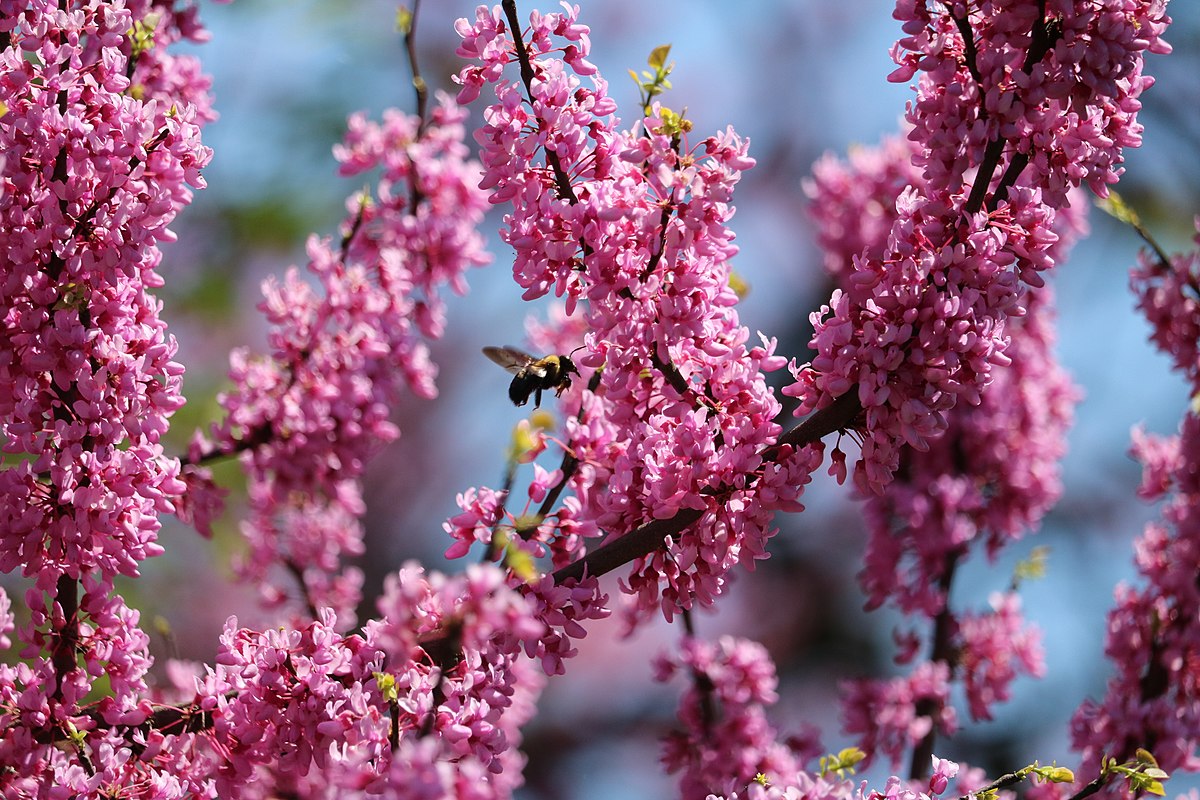
Eastern_Redbud_by Dan Keck via wikimediaHere in Texas, there’s a saying: “We have two seasons – summer and winter.” That’s not quite true; but if you’re not paying attention, spring can slip right past. And the last thing I want is to miss a single day of our glorious, but ephemeral, spring. 

The nights here are still cold – sometimes approaching freezing – but the robins have arrived, so I know springtime is near. It’s time to listen for a hushed prelude to seasonal change, time to look for intimations of life beginning to stir. Every few days, this calls for a visit to the two redbud trees in my Houston neighborhood to check the trunks and bare branches for any evidence of tiny pink flowers. Nothing to see for weeks on end; then suddenly, here they are – scattered crimson buds emerging straight from the furrowed bark, swelling with life, and…

View original post 1,842 more words

A 21st Century Wheel of the Year: Reskilling at Imbolc

Dana's avatarThe Druid's Garden

Imbolc–the first signs of spring (artwork by myself and my father, Mark Driscoll)

In a traditional neopagan Wheel of the Year, Imbolc is the holiday that offers the first signs of spring.  Most traditionally, this is when the ewes began to lactate, and the snowdrops appeared on the landscape in the British Isles.  In the age of climate instability, traditional seasonal interpretations become challenged for many reasons–not the least of which are climate disruptions.  So how might we bring the holiday of Imbolc into the 21st century and think about what this holiday means to us today?

As I’ve discussed in earlier posts in this series, the 21st Century, the Age of the Anthropocene, offers us a set of unprecedented challenges and yet opportunities.  As a permaculture designer, I think it’s important to recognize that while the problems we already face are unavoidable, these problems give us a…

View original post 2,833 more words

A 21st Century Wheel of the Year: Restoration at the Winter Solstice

Dana's avatarThe Druid's Garden

The time of the greatest darkness is upon us at the winter solstice. Each morning, the sun seems to struggle to rise and hangs low in the sky. The world is covered in frost, cold, and snow, and the darkness of winter sets in. This is a hard time for many, perhaps more so now than before, given the cultural darkness and challenges that so many of us are facing globally and locally. So facing the darkness, in this very challenging time, takes something extra.

Winter Solstice Snow Winter Solstice Snow

In my first post on this series (Receptivity at the Fall Equinox), I made the case that the traditional Wheel of the Year was developed and enacted under very different conditions than our present age. We now live in the Anthropocene, a period of human-driven climate change and cultural unrest which is very different than the Holocene, the period of…

View original post 2,139 more words