They may be small, but these extracts pack a powerful herbal punch. Discover the multiple benefits of tinctures, and how to make and use them to stay healthy.
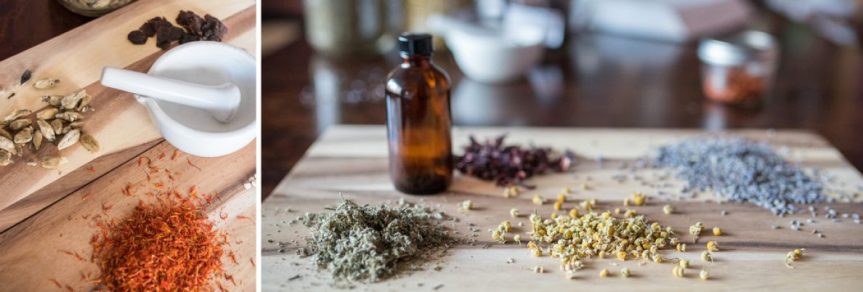
Crafting stellar herbal remedies in your kitchen that surpass anything you can buy in stores is easy and fun. The basic method simply entails packing herbs in a jar, covering them with something, such as alcohol, vinegar, or honey and then straining them after a few weeks. Alternatively, they can be simmered on the stove and then strained.
Here, we’re going to talk about tinctures, a liquid extract made with alcohol. Alcohol is as good as water, and sometimes better, for extracting most plant constituents, and it makes a far more concentrated product. Instead of drinking a whole cup of tea, you take just 1/5 to 1 teaspoon of the tincture. Dilute your tincture in a…
There in Misali, I was discovering my own circular route, from childhood familiarity with Aloe vera in America, to the splendid diversity found in Africa, and eventually… back home again.
RICHO CECH
The popular story goes that long ago, somewhere in North Africa, grew a smallish yet handsome, robust and edible aloe, plump of leaf and yellow of flower. This unique plant was taken from a wild stand which has since been extirpated, leaving no parent population to be found. In the process of domestication, the plant lost its ability to reproduce from seeds, and is thus currently propagated by pups (lateral offshoots) only. This aloe became known as “Aloe vera,” a common name that eventually came to be accepted as the scientific name. Lovely Latin, it means “True aloe.”
Aloe vera Plants
However, the story makes little botanical sense, and although charming, has always left me with a number of questions unanswered. How true is this true aloe? If true, then I’d like to know where it is from, and why it is more true than the rest? If Aloe vera came originally from the wild, then why has it lost its ability to reproduce from seed? Because the ability to reproduce from seed is one of the main earmarks of a wild-derived species aloe. And, why is common Aloe vera so very consistent in form? Wild aloes are not like that–they show some variability in form, and indeed require pollination with plants of different parentage in order to make viable seed. Finally, why is the plant so very vigorous? One can hardly keep up with transplanting all the pups. This trait looks a lot like hybrid vigor. All these questions are satisfied by this one hypothesis: Aloe vera is a hybrid!
Overview: The Aloe family (the Aloaceae) is represented by about 550 species growing in mainland Africa and Arabia as well as the islands of Socotra, Zanzibar, the Mascarenes and Madagascar. Aloes are in general rosette-forming, polycarpic, drought-tolerant succulents.[1] Their leaves are toothed on the margin, boat-shaped in cross-section, non-fibrous and filled with gel. The vascular bundles that occur just beneath the epidermis of the leaf are filled with a bitter, yellow latex. The flowers are drooping, tubular and brightly colored; arranged in terminal, sometimes branched, racemes. The seeds are dark-colored, occur in capsules, and are winged to encourage dispersal by wind. Beyond these commonalities, aloes come in a fantastic array of forms. There are tree aloes, single-stemmed aloes, multistemmed aloes, bushy aloes, stemless aloes, dwarf aloes, creeping aloes…[2] Aloes are the most common medicinal herb in Africa.[3] Many African mothers living in the bush know to use aloe leaf for treating conjunctivitis, a use that has rarely been understood by Western practitioners. Aloe in Africa is also used for treating burns and wounds, as a bitter tonic to the digestion, as an antiparasitic, for treating malarial fever, HIV/AIDS, jaundice, yellow fever, hepatitis, high blood pressure, etc. Ethnobotanical uses range from snuff ingredient (Aloe marlothii) to harborage of ancestral spirits (Aloe dichotoma). Aloe vera itself is a clumping aloe that will make a woody stem with age. The leaves are filled with mucopolysaccharide-rich gel that is used topically to treat burns or other skin injuries, promotes fibroblastic activity and speeds healing–a soothing and antiinflammatory emollient. The mucilage contains acemannan which is anti-tumor and beneficial against HIV. The skin of the leaves contains anthroquinone glycosides that are hydrolyzed in the intestines, speeding peristalsis and producing a stomachic and laxative effect. [4] [5]
Summer has arrived, filled with a joyful abundance of all the sweetest of things. It makes me want to run barefoot and wild, as I listen to the sounds of the forest: the chirping birds and crickets, the rush of leaves when a gentle breeze comes to play. I fill my lungs as long and as wide as I can, dancing upon the warm winds of this season of flourishing.
Here we are met with the season of being alive — of letting go of all fears. Of letting the sun heal us with her gentle glow: restoring our hopes and our dreams. By now we are full-grown, in full bloom, but are also all still children with dirty feet and sparkling eyes. Summer is the season of starlight, of hikes through the forest, of a mountain lake, swims, bursts of laughter, long books of poetry, long days by the…
Slippery Elm is a perennial tree native to the central and eastern United States and Ontario, Canada, and can reach a height of 60-80 feet. They can live up to 200 years. Slippery Elm is also called Red Elm or Indian Elm. Native Americans used the inner bark for its soothing effect on the digestive tract and to heal wounds. Today, Herbalists use Slippery Elm for its mucilaginous and nutritive properties, for a sore throat, and for soothing the mucous membranes lining the stomach and intestines. The inner bark is the only part used for therapeutic purposes. When it is moistened, the gummy mucilaginous substance surrounding its fibers swell, producing a soothing softening remedy. This gooey ingredient is very similar to Flaxseed. Slippery Elm is known by Herbalists for its soothing effect on whatever part of your body it comes into contact with. Slippery Elm has also been used during times of stress. Given that our mental…
According to a study published in the journal Digestive Diseases and Sciences, marijuana consumers with Crohn’s disease who are seeking hospitalization possess fewer disease-related complications compared to those who don’t use cannabis. For the study a team of investigators from the John H. Stroger Hospital in Chicago, the SUNY Downstate Medical Centre in New York City, and the Digestive […]
Spring has arrived in our mountain forest. The emergence from the long cold nights of winter gives way to spring and the eternal reminder of rebirth and renewal. Dandelion flowers are everywhere, basking in the warming of the earth, opening to the sun. I’ve been gathering the young leaves for cooking and adding to smoothies. The grosbeaks have returned and our bears have awoken; hungrily eating the young grasses and soaking in our pond. This year the “fever” has been strong. I’ve cleaned the closets, put away winter clothes, worked compost into the garden beds, sowed seeds, and bulbs, put out the hummingbird feeders, spent hours brushing out the horses, changed the shavings in the coop, and am hiking longer.
This strong drive seems ancient. Many cultures believed springtime was the optimal season for “cleansing” – home, land, mind, and body. People would eat the early bitter greens, aiding digestion…
Little Granddaughter has developed a way to utterly gross out her mommy, but also adds to the many reasons why we are an herbalist. Herbal infusions come to play and thank goodness she takes her herbal vitamins every day.
We also raise and rescue German Shepherds, Bones is a rescue, but maybe in this video, Bones again needs rescuing from one very precocious Granddaughter…
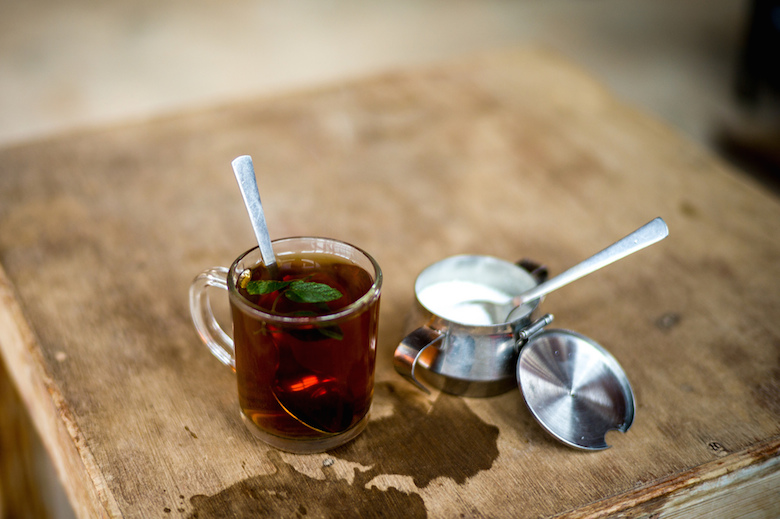
Herbal infusions, which are basically strong teas, are incredibly useful for providing the body with easy to assimilate nutrition. It is best to use gentle, nutritive and tonifying herbs which act mostly as food for the body. Examples are nettles, chamomile, oatstraw and raspberry leaf. This type of herbal preparation is used for extracting and making bio-available the richness of vitamins and minerals found in many plants. It is important to note that herbs work overtime to bring about health and increased vitality. They do not offer quick fixes, but…
The dandelion is a common garden herb, with easily recognized flowers. During the spring season, the leaves and the root of the dandelion begin to produce mannitol, which is a substance utilized in the treatment of conditions such as hypertension and a weakened heart in continental Europe – where it is often prescribed by herbalist for patients with these conditions. An herbal dandelion tea made using the roots and the leaves of the herb are good to take from about the mid of March to about mid-May in the treatment of such conditions. Prepare the herbal dandelion tea in this way, first, boil a quart of water in a pot, slowly reduce the heat and then add 2 tbsp. of cleaned and chopped fresh…
Native to South-East Asia and India is the butterfly blue pea, a beautiful cerulean floral creation, which has been an important ingredient of traditional medicine in this part of the world since the era of ancient civilizations. For a flower, to have endured through several centuries is indeed credible and what is more noteworthy is the fact that its importance remains undiminished and unaffected by the passage of time. There could only one explanation for this continued sustenance – the natural presence of curative and therapeutic attributes that easily transit into lukewarm water like its color and can be consumed as such.
Amongst the several exotic beverages that are prepared with the butterfly blue pea flowers, one of the simplest as also the most appealing is organic blue tea. In the phrase ‘organic blue tea’, while the word ‘blue’ owes its presence to the color that is typical of the…
A cup of joe is a key part of many people’s morning routine. Coffee isn’t just aromatic and delicious — it promotes alertness and focus, suppresses appetite, and even aids with digestion.
Coffee acts as a stimulant, which means that it can increase your blood pressure and heart rate; it also gives some people headaches. And while it helps digestion in some people, it can cause stomach pain and indigestion in others, especially people who drink several cups a day.
Maybe your healthcare provider recommended that you reduce your coffee intake or remove it from your diet entirely. Or perhaps you just want to live coffee-free for personal reasons. No matter the reason, we have good news.
Several delicious drinks can ease your transition away from coffee while still providing some or all of the same effects. Many of these coffee substitutes have more natural sugar and no bitter taste, unlike coffee. Here…








 Paths I Walk
You must be logged in to post a comment.