Mace is a wonderfully unique spice. It derives from the Myristica fragrans tree and is native to Indonesia’s Banda Islands—the legendary “Spice Islands”—though it is now also cultivated in Grenada and other tropical regions. You can’t talk about mace without mentioning its twin, nutmeg, because, even though they are different spices, they grow together hidden inside the fruit of the Myristica tree. When the fruit is ripe, it splits open to reveal the seed (nutmeg), which is covered in a delicate, lacy, red membrane, called the aril, otherwise known as mace.
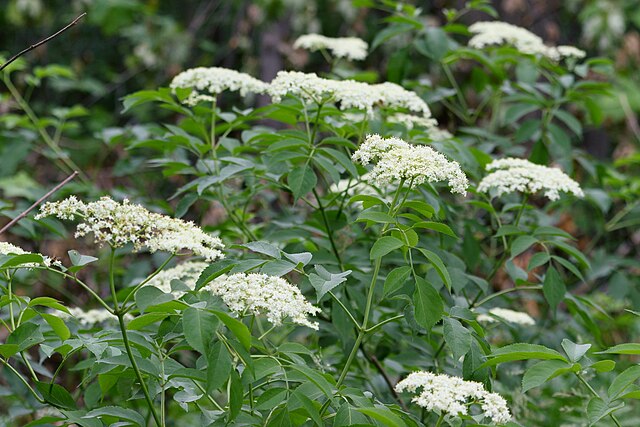
Elderberry (Sambucus canadensis) is an herb of many faces. In spring, its white, lacy blossoms brighten woodlands and hedgerows, attracting bees and butterflies with their sweet fragrance. By autumn, those delicate blooms transform into heavy clusters of deep purple berries — a feast for birds, wildlife, and humans alike. Every part of the elder — flowers, berries, leaves, and even wood — has long been treasured for food, craft, and healing.
A Storied Past
The story of elderberry stretches back to the Ice Age, between 12,000 and 9,000 BCE, when glaciers carried its seeds across North America, Europe, and Asia. By 2000 BCE, early peoples were already cultivating the plant for its medicinal and culinary gifts.
These are only a few of the many illnesses associated with tick bites.
Interestingly, these illnesses are much more common today than they were even just a few decades ago. Why is that?
One way to get some answers is to figure out why tick populations are increasing. According to the CDC, the number of U.S. counties with an established population of blacklegged ticks has more than doubled since 1998.
How did this happen? What factors contributed to the explosion in tick populations? Did the U.S. government have something to do with this? Or did this all happen by chance?
A growing number of people are taking an interest in herbal medicine. Why learn herbalism now? For many, it is a way to deeply learn and lean into the nature right outside their door. Further, learning how to identify, prepare, preserve, and use medicinal plants helps you take health into your own hands. A lot of people who live in the US (especially in rural areas) recognize that healthcare is more costly and more difficult to access: it is harder than ever to keep a family doctor or get specialist care, and it is so costly that a lot of people can’t afford visits, tests, or medicines.
Lately, I’ve been exploring how to build relationships with all plants in the ecosystem, including opportunistic (invasive) species and in and in re-orienting our view away from just a human-centric one and re-centering nature. Just like anything else in nature, opportunistic plants have much to offer us, and learning to honor them, their uses, their medicine, and how to work with them is an important part of aligning with our local ecosystem. In today’s post, I want to do a deep dive into one such common opportunistic species throughout Eastern North America – Japanese Barberry (Berberis thunbergii)–and create a comprehensive guide. First, I will share a story of an event I recently hosted in collaboration with two organizations to help remove and educate the public on Japanese Barberry and European Barberry (two opportunistic species listed on Pennsylvania’s Invasive Species list). I’ve had multiple readers ask for how to do this and to share resources to organize.Then, I will will offer resources for this specific plant in terms of identification, harvest, processing, and medicine making.
I have intentionally made this guide very comprehensive with the goal of making this a primer for people who want to offer a similar kind of event. You have my permission to reproduce and adapt parts or all of this post and the additional PDFs and photos to help teach about barberry and the medicine of the plant.
Green isn’t always good. In fact, green can sometimes be associated with neurodegenerative diseases.
This is especially true when we take a look at golf courses. Golf courses use heavy amounts of pesticides to maintain uniform conditions. These chemicals kill undesirable plants and insects, but they also weaken human health.
Researchers have known for a long time that pesticides pose significant risks to human health, ranging from acute poisoning to chronic issues like cancer and reproductive problems. A brand-new study adds even more evidence to the growing body of research.
Published a few weeks ago, this latest study found an association between living close to a golf course and the odds of developing Parkinson’s Disease. People living within 1 to 3 miles of a golf course were found to be at greatest risk.
What is it about living close to a golf course that’s associated with developing Parkinson’s Disease? Is it breathing in airborne chemicals? Is it groundwater contamination? Does geology have anything to do with it?
In a brand-new video, I answer these important questions. I also address whether or not it’s safe to forage and hunt near golf courses.
First, I want to say thank you to everyone who registered for the upcoming Old-Growth Forest Ecology Outing on May 31 and June 1. Both programs are sold out. Stay tuned for more Learn Your Land events this year!
I also want to mention that Exploring Wild Ecosystems will be open for enrollment on Monday, May 12. Thisis my newest online course intentionally designed to improve your practical knowledge of ecology. If you’re looking to develop ecological literacy and become a better naturalist, consider enrolling on Monday, May 12.
And now on to the newest video…
If you’ve spent enough time in tick-prone areas, you’ve probably seen ticks sucking the blood of deer. Logically, it makes sense that deer would at least be carriers of the Lyme disease spirochete. After all, white-footed mice and other mammalian tick hosts can be reservoirs for the bacteria.
But white-tailed deer are different. Their blood isn’t like the blood of other animals.
Scientists have been studying the relationship between deer and Lyme disease for decades. The newest research is quite fascinating, and in a brand-new video, I address some of the misconceptions surrounding the role of deer in transmitting Lyme bacteria.
Do deer ever get Lyme disease? If they don’t, what is it about deer that makes them immune? If deer are immune, why do ecologists still advocate for a reduction in the deer herd as a way to reduce Lyme disease rates in humans?
Cases of tick-borne diseases are on the rise, and people are wondering what to do.
Spray more repellent on clothes? Wrap more duct tape around socks? Ingest more Japanese knotweed? Cull more deer?
How about introducing more earthworms into tick-prone landscapes?
It sounds bizarre, but some ecologists are researching this latter strategy. According to a few studies, the prevalence of earthworms is associated with fewer ticks in certain ecosystems.
How is this possible? Why are earthworms associated with fewer ticks? Could the intentional release of earthworms into wild landscapes work as a viable tick-reduction strategy?
In a brand-new video, I address these fascinating questions.





 Paths I Walk
You must be logged in to post a comment.