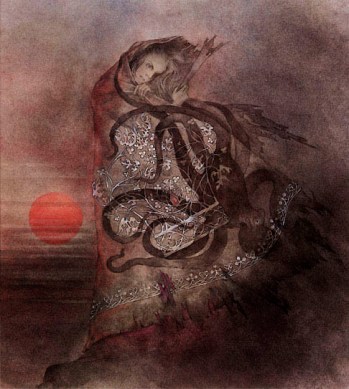
How to Work with Your Shadow Self

sulamith-wulfing-german-artist-childrens-book-illustration-5

“One does not become enlightened by imagining figures of light, but by making the darkness conscious. The latter procedure, however, is disagreeable and therefore not popular.”― C.G. Jung

FEEDING THE SHADOW SELF

Disconnected from our empowerment the shadow (those unloved, unacknowledged parts of us) grows stronger and thrives on more of the same. Rather than interacting with life, we react. Reactionary living is acidic, corrosive and destructive. That is not to say we can live without reaction… It is a human response. It serves to keep us alert and alive. But, you can learn to interact with the world, befriending experience and still remaining safe.

First you must listen to the shadow.

Check Out: 4 Ways to Befriend Your Shadow-self to Find Your Truest Voice 

You may say, “Well how do I befriend my shadow?”  It’s simple, what are you afraid of? Go there. If you fear talking to strangers, take that feeling deeper and explore why. Maybe that’s why you’ve been unable to meet a partner. Maybe at your core you fear rejection. So take the power back, muster the strength and go talk to someone.

Be bold, be brave and step out there and walk the middle ground. Let your darkness show you something you never knew before, or never wanted to know. If you let it consume you, you become numb, you lose passion, and without passion nothing can live.

So you don’t know how to get past that anxiety. Leap before you think. In that in-between space is where passion lives. That is the instinctual part of you, devoid of ego and preconceived notions. You act from your center, where light and shadow come together like two great streams flowing into a river.

Begin asking, why?

Once you befriend your shadow parts, your pain, you find yourself dancing in the dark. You move into the sacred communion with your light and your shadow. Born of rhythm and fluidity. Because the shadow is not bad, rather it is the unwelcoming of the shadow that causes pain.

Take some time to express to your shadow all that you feel. Be open, honest and candied with your shadow. Express your deepest feelings of pain, disappointment and even resentment.

“What makes night within us may leave stars.” ― Victor HugoNinety-Three

What do you feel about your shadow? What has she done to you? Where have you felt held back in your life? What have you missed out on? Why, and how do you feel small in your life?

Openly express this to your Shadow self.

Check Out: The Alchemical Path of Expressing the Shadow 

LAYING YOUR GHOSTS TO REST

You have slipped into the Dark, and surrendered to her groove. Let her pulse through your heart, body and soul. You are losing old parts, and uncovering hidden ones. You are brave enough now for inner alchemy…Soul work!

In this dark, fertile place where transformation begins we must surrender ourselves to the experience. Which means we must move through our cycles of limiting thoughts, and crushing feelings… To get to the more inspired ones. You are detoxing from the high of resistant, fear based living.

“Intense, unexpected suffering passes more quickly than suffering that is apparently bearable; the latter goes on for years and, without our noticing, eats away at our souls, until, one day, we are no longer able to free ourselves from the bitterness and it stays with us for the rest of our lives.” ― Paulo CoelhoThe Alchemist

Now is the time for honesty. Come to terms with where you are inside and out. You do not have to be frightened anymore. Don’t deny yourself your sadness, or your rage. Just move into the feeling so that it can be cycled out and returned to the Earth, and the Universe as fertilizer for new intentions.

Check Out: Falling Curious, Finding Your Rhythm, and Making Peace with Your Ghosts 

MOVE INTO THE STORM OF YOUR SHADOW

After breathing into the chaos, the darkness… And asking these questions I find myself growing calmer, clearer and more able to move with the storm. The skies begin to brighten, and the world becomes more serene. My uncertainty and anxiety magnified the storm…. Because the Universe is a big mirror.

I like to move into the storm. Wrap myself in the water. And compassionately ask:

  • What do I have left to learn here?
  • How can I honor my highest good?

Check Out: Riding the Waves of Chaos and Confusion

WHERE TO GO FROM HERE?

Your shadow, your darkness, your forgotten hungry ghosts are your friends. They hold bright blessings and paths to healing. You have begun to cultivate awareness. Breathing life and sustenance into these arid, darkened places. Begin to cultivate daily time with yourself. Before the shadow can grow hungry and despondent… you can dialogue with the inner self to find what hurts, what feels wrong and what needs fixing.

The shadow is born when you allow something that opposes your goodness to become your truth!

Journal on the shadow. And your personal light.
Source: How to Work with Your Shadow Self | Shaheen Miro

Ten Alternative Cold and Flu Remedies to Try – Crooked Bear Creek Organic Herbs

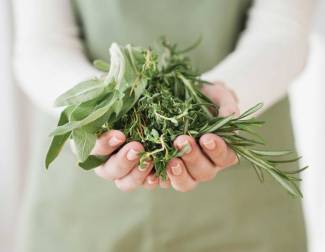
handful-herbs

Homeopathic medicine has great potential when used in conjunction with conventional medicine. Here are ten simple remedies you can try to help stop colds and flu symptoms in their tracks.

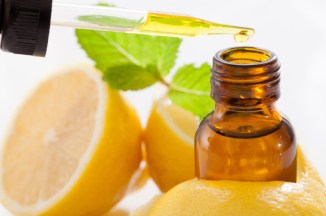
lemon-essential-oil1. Lemon

Even though lemons taste acidic, their juice helps to alkalinize the body. Lemons are loaded with vitamin C, which is known to support the body’s immune system. Lemon, as well as lime, is reported to decrease the strength of the cold and flu virus in the body and reduce phlegm.

How to use: Drink the juice of a lemon, or a few drops of lemon essential oil, squeezed into a cup of water or tea every few hours to build resistance or speed up healing.

garlic-for-cold2. Garlic

Garlic is great in treating sore throats and infections. Garlic contains the immune-boosting compound allicin, also known to relieve cold and flu symptoms.

How to use: Crush five cloves and mix with half a cup of honey.  Let it sit for a couple of hours and the mixture will become runny and thin. Take a teaspoonful at a time, as needed. If you’re worried about a severe odor or taste, crush a couple of cloves of garlic and “steep” them in hot water. Drink it like a mug of tea.

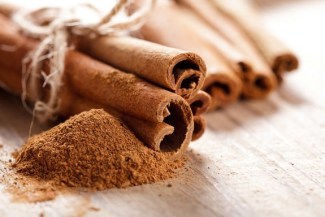
cinnamon-stick-powder-1309093. Cinnamon

Cinnamon is known as a natural antibiotic, is a powerful antioxidant.

How to use: A teaspoon of raw honey and a 1/4 teaspoon of cinnamon can knock out a cold within a day or two.

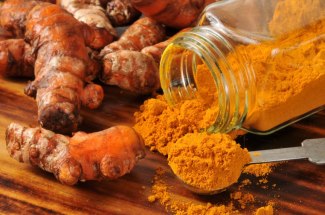
turmeric4. Turmeric

Turmeric contains an anti-inflammatory compound called curcumin, which has a strong cold and flu-fighting properties. Turmeric has strong anti-inflammatory and antioxidant properties and turmeric tea has been used for extensively worldwide for colds, congestion, headache, and sore throats.

How to use: Stir a teaspoon into a glass of water or use it in your cooking. In addition, the combination of honey with turmeric powder is an excellent remedy for a cough.

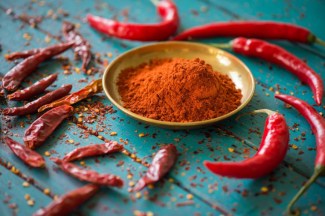
cayenne-pepper-metabolism_15. Cayenne pepper

Peppers are a heart-healthy food with the potential to protect against cancer, as well as common cold and flu viruses. Cayenne pepper is a natural remedy for a sore throat that can often precede a cold or flu.

How to use: A mixture of hot red chili powder and orange juice is an effective remedy for sore throats and congestion. Or take a teaspoon of pepper in a glass of water immediately when you feel a cold or a sore throat coming on. Its strong stimulatory effect can be enough to knock a cold out in the early stages.

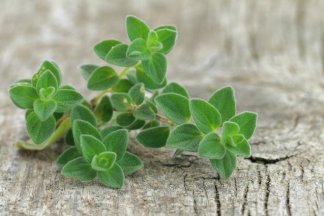
oregano-herb6. Oregano

Oregano is one of the best herbs for a cold. It is an excellent anti-inflammatory that contains phenolic acids, flavonoids, and color compounds that increase resistance and boosts immunity. Oregano is known for its antibacterial, antivirus, anti-fungus, anti-tumor, anti-inflammation, and anti-parasitic properties.

How to use: Oil of oregano is even more potent, and traditional healers since ancient times have used oregano extract to treat respiratory issues such as coughs, colds, flu, sore throats, and bronchitis. Add three to 10 drops of oil to a glass of water twice a day and continue until symptoms subside.

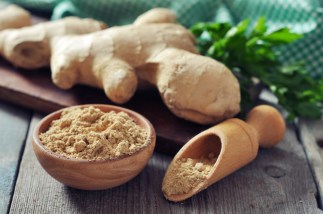
ginger-essence7. Ginger

Ginger is a stimulant that will also warm you if you’re feeling chilled with your cold. It’s best used fresh rather than as a powder.

How to use: Peel and grate a small piece of ginger root and place in a cup of boiling water. Allowed it to steep for five minutes, sweeten with honey if desired, and sip whenever needed to soothe a scratchy throat or a cough.

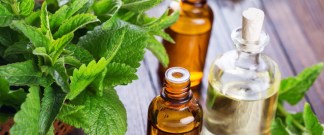
peppermint-oil8. Peppermint

Peppermint can clear blocked noses and sinuses. It can also help the body fight off illnesses.

How to use: Enjoy it as a stimulating tea or add some peppermint teabags of it to your bath. A few drops of peppermint essential oil in a glass of water, or diffused, can also work wonders.

apple cider vinegar9. Apple cider vinegar

Apple cider vinegar can fight off infection, ease digestion, reduce inflammation, kill fungus, regulate pH balance, and wash toxins from the body. It’s also known to restore alkaline acid balance.

How to use: Add a tablespoon or two of apple cider vinegar to a tablespoon of honey and a cup of hot water to create an elixir to help ward off cold and flu symptoms.

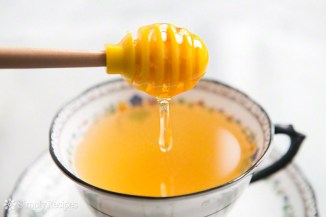
honey-lemon-tea-a-800-dm10. Honey

A daily dose of honey can help you to feel energetic and stay healthy. It also has antibacterial and antimicrobial properties, so, if you do develop a sore or scratchy throat, honey will soothe and help heal. Research shows that children who take a spoonful of honey before bed, cough less and sleep better than those who take over-the-counter products for coughs and colds.

How to use: Adding a little lemon to the honey will increase its anti-microbial effect. Honey and lemon can also be combined with hot water to make a soothing tea.

Source: Ten Alternative Cold and Flu Remedies to Try – Crooked Bear Creek Organic Herbs

Ground & Center | Witchery Wednesday

Ground & Center

groundandcenter_edit

Whether you’re practicing magic or yoga, in many spiritually aware circles you will hear the term “ground and center” thrown about a lot.  Or maybe you’ve heard the phrases “live in the moment” or “be present in the now”?  This practice is essential to a successful casting, and can also help us deal with stressful moments in the more mundane parts of our lives. But rarely do we talk about what that actually means, and how to get there.  While the concept is simple, sometimes we struggle with how to accomplish it.  Especially if the traditional methods don’t work for you.  By understanding the goal of “ground and center” it’s easier to go off the beaten path when searching for a way to get there.  Remember, there is no “wrong” way to do this, there is only what works for you personally and what doesn’t.  Centering is all about connecting within yourself; finding that space of calmness within the chaos (as we wrote about here in our article The Importance of Keeping Balance).  Grounding is about connecting with the life flow outside of yourself.  By reaching for those connections, both internal and external, and strengthening them, we can reach a state of mind that makes casting easier.

Here are some of our favorite methods for grounding and centering.

Meditation:  This is probably the most widely practiced method.  It’s what everyone is familiar with, and as we’ve talked about before, Everything Is Meditation.  Even the rest of the methods we talk about for grounding and centering are essentially forms of meditation.

Visualization:  For many of us, especially those of us who are creative, visualization is a key part of any casting, and we can use it to ground and center as well.  Everyone generally finds their own image that resonates with them, but I am partial to the Tree.  If you’ve never tried visualization before, this is a good way to start as it’s an easy image to hold.  Relax your body and your breath, and imagine you are a tree.  With your first breath in, imagine you are drawing strength up from the Earth through your roots.  With your next breath out, “push” your roots down, deeper into the Earth.  Next breath in, reach towards the sky, drawing in sunlight through your leaves.  Breath out, and release any tension you’re holding out through your leaves.  Repeat this as needed until you feel calm and centered.

Chants:  Sometimes a spoken element can help us focus our minds on the task at hand.  Simple chants are often used in tandem with meditation for that reason.  It can be a soft sound that has no real meaning, like the traditional “ohm” you may have heard, or something more akin to a positive affirmation, like repeating “I am grounded.  I am centered.”  Or if you want to be a bit more poetic try “Earth below, sky above, I am still, and I am one.”

Physical connection with Nature:  Do you enjoy hiking, nature walks, kayaking or just being outdoors?  This method might be for you.  While most people find it easiest to ground and center while being still and calm, this isn’t always the right approach for everyone.  Sometimes activity can also be a kind of calmness.  However, we can’t always take the time to go on a 10 mile hike before a casting, so some quicker ways to achieve this would be standing barefoot in the grass, dipping your hands or feet in running water, or hugging a tree. (Yup, we went there!  But it works!)

Rituals:  Let me guess; you just pictured someone in a hooded robe, surrounded by candles and chalk pentagrams?  (Thanks, Hollywood!)  Often we already have small rituals in our every day lives and don’t realize it.  For example, do you find vacuuming soothing?  Maybe organizing your junk drawer brings you a sense of peace and order?  Or maybe you drink your first cup of coffee on your porch every morning, listening to the sound of the neighborhood waking up and enjoying the silence before you have to wake your monsters  … er… wonderful children for school?  All of these things could be considered rituals.

Worry Stones:  Worry stones, or similar devices such as stress balls or sensory toys, can serve to help you ground and center.  We’re partial to using actual stones ourselves, but again, choose what works best for you.

Repetitive Tasks:  We personally believe that this is one reason that knitting, and many other crafts, have such positive effects on mental health.  Remember, everything is magic! (Or at least, it has the potential to be magic.)  Knitting, crocheting, coloring, embroidery, macrame… all of these can be used to ground and center.

Do you have a favorite method not mentioned here?  Let us know in the comments or on our Facebook page!

Source: Ground & Center | Witchery Wednesday

~ The government’s real war on natural health ~

by Jon Rappoport

February 6, 2017

In 1994, after a lifelong aversion to politics, I ran for a seat in the US Congress out of the 29th District in Los Angeles. My platform was Health Freedom.

At the time, the FDA was raiding offices of natural practitioners, and threatening to cut off citizens’ access to a full range of nutritional supplements.

I watched a trial, if you can call it that, in downtown Los Angeles, in which the federal government was prosecuting a young man for selling, and making health claims about, a substance that occurs naturally in the body.

The defendant told the Judge he was prepared to present extensive evidence that the substance was safe and effective. The Judge refused, saying the only issue was: did the defendant violate an FDA rule? If so, he was guilty. At that point, the trial was over, and indeed, the Judge soon pronounced a verdict and the young man was led away to serve a prison sentence in a federal lockup.

At that moment, I began to construct my case against the State, and consider what Health Freedom was all about.

Let’s start here. The FDA, the CDC, and several other federal agencies have blood on their hands. This blood doesn’t wash away. On July 26, 2000, Dr. Barbara Starfield, a revered public health expert at the Johns Hopkins School of Public Health, published a review in the Journal of the American Medical Association: “Is US Health Really the Best in the World?”

Starfield concluded that that US medical system kills 225,000 Americans a year. That would extrapolate to 2.25 MILLION deaths per decade. I subsequently interviewed Starfield (2009), and she told me the US government has never made a significant effort to end this ongoing holocaust.

So, when the government talks about FDA rules governing safety and efficacy of treatments, they should be referring to their own crimes, since, for example, FDA-approved medicines are responsible for roughly half the 2.25 million deaths per decade.

On the other hand, natural health treatments kill virtually no one.

And here is where the situation becomes basic. The decision by a responsible adult, to manage his own health, by his own measure, and to seek out any other person to help him in that regard, is not the business of the State.

The State can license anyone it chooses to, as a health practitioner. Who cares? But there is no exclusive monopoly on healing. There is no monopoly on recovery from illness. There is no monopoly on the quality of a life.

The legal aspect of this is clear: contracts vs. licenses. The State has no Constitutional right to turn its licensing procedures into monopolies. On the other hand, two consenting adults can designate each other “patient” and “healer,” accepting full responsibility, with no future liability attached, for the outcome of their treatment-arrangement (contract).

The State has no Constitutional right to stick its nose into this business.

The State needs to clean up its own act, which is a euphemistic way of saying the State needs to stop killing 2.25 million Americans per decade. Obviously, the government front of “we can’t let people try to heal themselves apart from licensed practitioners, we must protect the people” is a piece of phony propaganda.

It’s a piece of Nanny-Mommy-Daddy State bullshit. This country wasn’t founded on the premise of the government protecting everyone everywhere all the time.

The State has no right to presume it knows, in advance, what will happen when two responsible citizens decide to engage in their own healing contract.

There’s more. If one state in the Union decided to allow this form of responsible contract in the field of healing, people from all over the country would move there—seeking freedom. As a result, the economy of that State would bloom. Other States, seeing this, would follow suit. There would be a genuine Health Freedom revolution…

And the government of the country could focus on an effort to stop killing people through medical interventions.

As for the people of America, their job is to stop giving in to a reflex- reaction of fear when they contemplate health freedom. “Oh, we can’t just let people decide, on their terms, which health treatments to choose. That could lead to terrible consequences.”

The terrible consequences are right in front of your face. They’re already here. They stem from the federal government’s attempt to run a monopoly on healing, which turns out to be a killing field.

That’s the result of rules and regulations set by the experts.

People either have freedom to choose or they don’t. They have a right to be right or wrong in those choices, or they don’t.

There is no State Mommy or Daddy decreed by some higher power.

Source: The government’s real war on natural health « Jon Rappoport’s Blog

Cannabis medicine will soon be legally available in UK : RT Question More. – DWPExamination.

Cannabis medicine will soon be legally available in UK

CBD has been used in trials to fight epilepsy. © Mario Anzuoni / Reuters

One of the main ingredients in cannabis, cannabidiol (CBD), is to be classed as a medicine in the UK. The decision by the Medicines & Healthcare products Regulatory Agency (MHRA) stems from claims that the drug successfully treats serious diseases.

The new classification means products containing CBD can now be legally distributed across the UK. Gerald Heddel from MHRA told Sky News that the change came about “based on the fact that we noted that people were making some quite stark claims about serious diseases that could be treated with CBD.”

Alongside Tetrahydrocannabinol (THC), CBD is one of the main components of cannabis, accounting for 40 percent of the marijuana plant’s extract. Unlike THC, which is psychoactive, CBD is non-psychoactive, antipsychotic and does not cause anxiety.

READ MORE: Marijuana use jumps among pregnant women in US – report

The compound’s lack of a high makes it less appealing to recreational users but of particular interest to the medical community, with campaigners claiming it aids in easing pain related to diseases including cancer, depression, Crohn’s disease, and post-traumatic stress disorder (PTSD).

“It was clear that people are using this product with the understandable belief that it will actually help,” Heddel said.

Read More : RT Question More.

Source: Cannabis medicine will soon be legally available in UK : RT Question More. – DWPExamination.

Echinacea 101 – Crooked Bear Creek Organic Herbs

If you taste echinacea’s powerful root, you’ll be surprised by the tingling sensation that soon follows. While many herbalists enjoy echinacea’s root, the entire plant can be used for its immune boosting properties.* The alkyamides in echinacea help stimulate the immune system, but this is only one set of constituents that work in harmony with many others in the plant. Perhaps this is why it is one of the most studied plants in Western herbalism. The true identity of all the active principles still remains open, making echinacea’s true powers another plant mystery!

All the plants in the echinacea genus are indigenous to North America and originally dwelled in prairie lands. In the mid-1800s, the American Eclectic physicians began to use echinacea and its healing powers reached beyond the New World.  By the beginning of the 20th century, it was one of the most frequently used herbal preparations in the United States, and overharvesting of the wild perennial flower soon followed.

Fortunately, United Plant Savers works to restore native populations of plants, and echinacea can now be cultivated in many different regions of the world. The best way to start your echinacea seeds is to have them endure a period of cold, moist stratification. What’s that, you ask? Some seeds are very hardy and lay dormant until awakened by the cold weather. Stratification either stimulates or creates winter conditions to encourage germination or sprouting. In the wild, echinacea’s dormancy is naturally overcome by spending time in the ground and enduring long winters.

The easiest way to start echinacea at home is to sow echinacea seeds about ¼ inch deep in fall, cover with a thin layer of rich compost and let nature take its course over the winter. Another option is to place the seeds in a small jar with some sawdust, vermiculite or peat moss. Then moisten and place the jar in the refrigerator for about a month. Once spring arrives, the seeds can be planted a ¼ inch deep into a large pot or directly into the soil. These purple coneflowers enjoy partial to full sun, ample water (but can handle some drought) and good drainage. You can expect the perennial to bloom fully by the summer of its second year.

tradmed_bp_november_embed_echinacea101_04-web

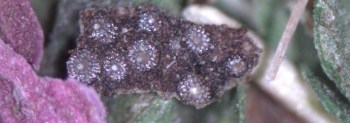
The leaves of Echinacea purpurea sometimes have “covering trichomes,” which are hairs, emerging right from the skin (or epidermis) of the leaf. Our microscopist helps to identify plants and saves photos like the above to deepen our knowledge of key plant identification features.

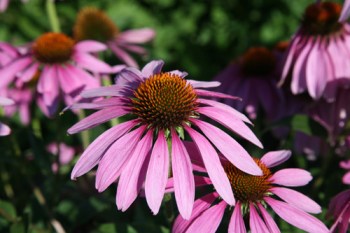
If you think you have found this plant in the wild, you will be able to identify it by some of its most pronounced features. All members of the Echinacea genus are perennials that bloom with both disk and ray flowers. The purple ray flowers attach to a round, high and spiky cone – hence the common name “purple coneflower.” Technically speaking, this thick and spiky cone is actually hundreds of more flowers, all tightly packed together.

So when you’re feeling like you need a plant ally to give you a boost, think of echinacea.

Now when you see a beautiful echinacea flower while you are out and about, its radiant purple flowers and sturdy structure will remind you of just how powerful this plant really is.

echinacea02Cold Stratification of Seeds for Growing Echinacea Purpurea
Attract goldfinches and butterflies to your garden with a healthy stand of Echinacea purpurea, or purple coneflower. The plant is a native perennial that thrives in U.S. Department of Agriculture plant hardiness zones 3 through 9. Purple coneflower grows from 2 to 4 feet tall, depending on variety, producing purple petals around a cone-shaped center in late summer that first draws butterflies, then finches as it becomes a bristly seed head. Once established, the plant is easy to care and readily self-seeds in place. When starting purple coneflower from seed indoors, you’ll get the best germination rates if seeds are cold stratified.

Cold Stratification

Cold stratification is a seed treatment developed to help gardeners mimic the winter conditions many seeds need to break dormancy and germinate. Many plants, both perennial and annual, that grow in a cold-winter climate evolved winter seed dormancy to keep them from sprouting when conditions are too cold or dry for sprouts to survive outdoors. Some seeds need only dry stratification — exposure only to temperatures between 33 and 50 degrees Fahrenheit — to germinate, while others need moisture in addition to the cold treatment. The length of stratification required also varies by plant species.

Purple Coneflower Stratification

Purple coneflower seed germinates best with moist stratification. Mixing the seeds with a small amount of sawdust, vermiculite or peat moss inside a plastic zipper bag or small jar for cold stratification keeps the seeds moist without hindering germination later. Seeds are sown one-quarter inch deep in containers of moist potting soil and covered with plastic to retain moisture. These containers go inside a refrigerator or other area where the temperature is consistently between 33 and 60 F for the entire stratification period. The temperature experts specifically recommend for E. purpurea coneflowers varies from 40 through 59 F, with the majority at the lower end of the range. Gardeners in areas with winter temperatures consistently in this range can place trays outdoors. Packaged seed often is pre-stratified and does not require any chilling to germinate.

Timing Stratification

The time required for stratification to be effective varies as well, from as little as two weeks up to a month for the seed to break dormancy. Planning for four weeks of cold prevents any question, as chilling for too long is not harmful to the seeds. Stratification time should be figured into your propagation time so that seeds are removed from chilling when it is time to sow. Seeds germinate in 10 to 30 days at 65 to 70 F and are often ready for transplanting within 30 days. The higher the temperature for both the seed and the seedling, the faster the germination and early growth. Purple coneflowers prefer slightly cool temperatures as seedlings and can be planted out just after the last predicted frost. Stems may be stronger and develop more flower buds when they experience cool temperatures of about 40 F after planting out.

Growing Purple Coneflower

Purple coneflowers grow in full sun to partial shade — dappled shade is ideal — in pH neutral, well-drained soil. Plants started from seed may not bloom for two years after planting. Transplants need at least 15 inches between them for the air circulation necessary to avoid disease, but no more than 24 inches to avoid spindly growth that requires staking. They are drought tolerant once established, but low to moderate water throughout the summer results in the prettiest plants. Like most natives, coneflowers have low fertilizer requirements, although a slow-release, high nitrogen fertilizer, like a 12-6-6, is beneficial in early spring as new growth begins. Deadheading keeps the plant blooming and compact and prevents self-seeding. Basal foliage is evergreen in zone 9 but can be cut back in early spring if it needs to be refreshed.

Source: Echinacea 101 – Crooked Bear Creek Organic Herbs

Crystal of the Week: Serpentine

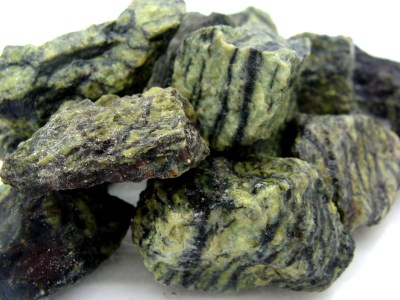
Although it considered a common stone and is often overlooked, Serpentine or New Jade has a strong stone to work with. It is found in places such as New Zealand, China, Afghanistan, South Africa, The United States, and England and it’s associated primarily with the heart chakra.

Serpentine is a useful stone for aiding blockages in any chakras since it clears blocked or stagnant energies and it stimulates the arousal of the Kundalini energies. We’ll be talking more about Kundalini energies later on, so stay tuned!

This stone is known for helping the user understand the spiritual basis of their life and wonderful to help attract or manifest what we want in our lives.

Source: Crystal of the Week: Serpentine

Health Benefits of Bitters – Crooked Bear Creek Organic Herbs

Including bitter foods in the diet isn’t simply a matter of reviving tradition or taste — bitter-flavored foods have a history of healing. From the wine-infused herbal concoctions used by ancient Egyptians to the 16th-century prescriptions of famous physician Paracelsus, elixirs brewed from carefully selected bitter herbs have been treasured as helpful remedies throughout the ages. Studies have confirmed that getting an adequate amount of bitter flavor is important for digestive balance and is linked with many health benefits. Digesting bitters regularly has been shown to:
• Curb sugar cravings
• Soothe gas and bloating
• Relieve occasional heartburn
• Encourage digestive enzymes, bile, and necessary stomach acids
• Calm upset stomach and nausea
• Increase absorption of fat-soluble vitamins A, D, E, and K
• Help maintain healthy blood sugar levels
• Balance appetite
• Ease constipation and regulate bowel movements
• Support liver function and healthy skin …

Read the article at the Source: Health Benefits of Bitters – Crooked Bear Creek Organic Herbs

Hippocrates – ” Let food be thy medicine and medicine be thy food”

Herbs as Cleansers:

The disinfectant qualities of certain plants would have been of great importance to humans, and may have been one of the triggers for a recognition of the other medicinal uses of plants. A large number of ancient cultures used herbs and plants in the cleansing rituals and preparation of the dead. Throughout history, the burning of natural substances has been used for cleansing, healing and in spiritual ceremonies and rituals.

Smudging: Shamanic smudging or just ‘smudging’ is an age-old tribal tradition which has been used for centuries for cleansing and to create harmony and peace. There are many different shamanic smudging ceremonies, and different tribes use a variety of herbs for smudging.  Smudging was used for centuries by the native people of both North and South America, Europe, the Middle-east, Africa, Asia and the Siberian shamans to open the doors of the soul to the spirit world. In all cultures, the burning of certain herbs and incense was seen as a way of gaining access to the soul and power of the plants for cleansing, purification, protection spiritual, ceremonial and magical use, the banishment of negative energies and creation of sacred space. In modern use, incensing is still used as a symbol of purification and sanctification.

One of the earliest recorded uses of smudging can be traced to ancient Egypt where herbs were burned in religious ceremonies, being mentioned on an inscribed tablet from Giza, Egypt, c. 1,500 BC. The Babylonians also regularly used smudge/incense extensively while offering prayers or divining oracles. It was imported to Israel in the 5th century BC to be used in religious offerings. It spread from there to Greece, Rome and India, where both Hindus and Buddhists still burn it in their rituals and at festivals. The smudging tradition dates back millennia and connects all traditional cultures, from the Native Americans to the Druids, from the Zulus to the Maoris, from Aboriginals to the Mayans, from the Chinese to the Balinese, which have age-old forms of cleansing and blessing rituals. Smudge (Incense) is widely used in Oriental religions (Buddhism, Hinduism, Islam, and Taoism) and in the ceremonies of the Anglican, Roman Catholic, and Orthodox churches. Smudging can therefore be seen as a universal spiritual component that runs through and connects all the worlds great cultures and religions throughout time.

Read the entire article at the Source: Herb-Lore (Herbalism).

Crystal of the Week: Obsidian

Obsidian has no crystalline structure and is formed from molten lava that did not have time to form into glass. Often known as a powerful cleanser of psychic smog, it can shield against negativity and was often used as a scrying tool in the past.

As a protective stone, it shields against negativity and absorbs the negative energies from the environment. It is often used to block psychic attacks and negative spiritual influences.

It is often used for spiritual or healing work and it’s a wonderful grounding stone. Obsidian brings clarity to the mind and clears any confusion as well as constricting beliefs, it can also make it absolutely clear in what lies behind any mental distress or disease.

Read the article at the Source: Crystal of the Week: Obsidian