Lemongrass: A Resourceful Herb and Essential Oil

Crooked Bear Creek Organic Herbs's avatarCrooked Bear Creek Organic Herbs

Lemongrass {Cymbopogon citratus}

Also, Known As:

  • Citroengrass
  • Fever Grass
  • Lemongrass
  • Sereh
  • Te Limon
  • Zacate Limon

Cymbopogon citratus, generally known as lemongrass, is a resourceful herb, a natural source of aroma, mosquito repellent as well as a plant that is widely used to decorate gardens. Lemongrass belongs to the grass or Poaceae family (formerly known as Gramineae) and has several functions – an effective herb, aromatic or container garden, or as a medication for various conditions. One may find a number of the variety of lemongrass and each of them possessing dissimilar chemical compositions. However, citral is the major chemical ingredient found in all varieties of essential oils of lemongrass.

Lemongrass is native to tropical regions and grows in clusters. The plant has globular stems that eventually become leaf blades. This herb belongs to the herb family which also includes citronella and palmarosa and possesses a lemon essence. When the leaves of the herb are compressed…

View original post 2,240 more words

Where And How To Grow An Herbal Groundcover

The urge to muck about and create plant habitat goes hand-in-hand with the urge to grow more and more species of plants that need individualized growing conditions.   As your species list increases, you will probably feel motivated to prepare specific plant habitats.  After all, making your plants happy is a way to spread a groundcover of happiness into yourself.

RICHO CECH

Bugle (Ajuga reptans)

Living groundcovers can be of great benefit to the garden and the gardener.  The best ones are evergreen or at least remain trim and green for most of the year: pleasing to the eye, softening the edges of the landscape around pathways, beds and walls; discouraging weeds; preventing erosion; conserving water and nutrients, these are the many attributes of the groundcover.   Classic examples are: the Roman Chamomile lawn that dresses rich soils in full sun; Corsican Mint or Creeping Thyme grown on rocks,  over steps or between stepping stones;  Rupturewort grown over rock, gravel and scree; European Speedwell or Brahmi growing in muck at the margins of the pond;  Bugle or Self-Heal grown in loose mulch under trees in acidic woodlands or in moist, open meadows.  An added benefit is that each of these and other groundcovers also has medicinal use, uses as diverse as their preferred environmental niche, uses as diverse as the gardeners that choose to live with these groundcover allies.  This article will give an overview of herbal groundcovers and how to get them established, including a few notes on their medicinal uses and preferred habitats.

Site preparation and planting.  A good groundcover can be achieved only if the slate is wiped clean.  A monotypic stand cannot be achieved by sprinkling seeds into an existing lawn, grasses or weeds.  These must be removed prior to the planting of the groundcover.  Various options exist, but the general plan is to grub out the weeds and prepare a new seedbed, either by working the existing ground or by bringing in soil, sand, compost, pumice, coir and/or peat.  Although gardeners sometimes have success with direct-seeding groundcovers into a prepared seedbed, the reality is that more control gives more results.  Most groundcover species have very small, sometimes dust-like seeds, and in most cases it works better to start the plants indoors and transplant young bare-rooted or potted groundcover plants into the receptive soil.  A six-inch spacing is usually very effective–the groundcover will root in, spread and interlock.

View original post at:  Richo’s Blog ~ Where and How to Grow an Herbal Groundcover

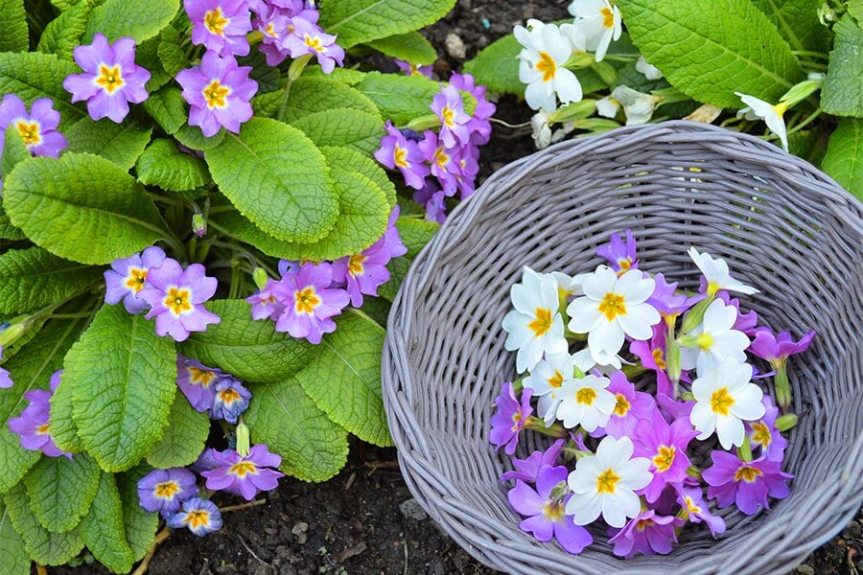
Primrose is Considered the Flower of February.

Crooked Bear Creek Organic Herbs's avatarGood Witches Homestead

COMMON NAME:  primrose
GENUS:  Primula
SPECIES, HYBRIDS, CULTIVARS:
P. denticulata-lavender, purple, or white flowers; grows to 12 inches. P. japonica ‘Millar Crimson’-flowers whorled around the 24-inch stem; blooms May-June. P. polyanthus-best known; colors are red, pink, blue, gold, and white, all with small yellow eyes.
FAMILY:  Primulaceae
BLOOMS:  spring
TYPE:  perennial
DESCRIPTION:  Primroses form an attractive rosette of crinkly, light green leaves. The flowers are generally brightly colored and occur in tight bundles on individual stems above the leaves.
CULTIVATION:  Needing partial shade, primroses thrive in well-drained, rich soil. They are indigenous to cool, moist meadows and woodland environments  Duplicating these conditions as closely as possible will create the best growing conditions for primroses. The soil should not be allowed to dry completely. To retain vigorously blooming plants, divide clumps every four to five years. Seeds should be sown in midsummer for bloom the following spring.

Primrose is…

View original post 2,309 more words

Raspberry, Herb of the Year and Herb of the Month: History and Lore

The Herb Society of America's avatarThe Herb Society of America Blog

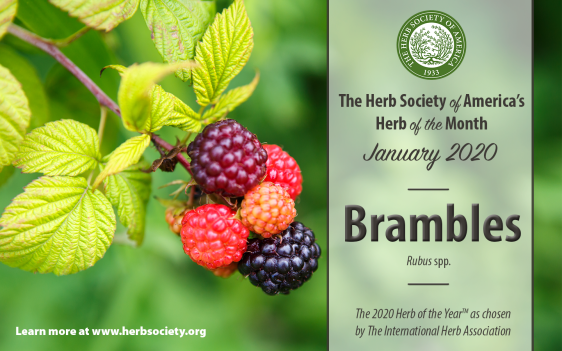
HOM Brambles

By Pat Greathead

Raspberry, Rubus spp., is the International Herb Association’s Herb of the YearTM for 2020 and The Herb Society of America’s Herb of the Month for January (Brambles). The genus Rubus includes both the red and black raspberry and the blackberry as well as almost 700 other species. Rubus is in the Rosacea family.

My Wisconsin Unit of The Herb Society each year examines the IHA Herb of the Year.TM In this blog post, I have mainly focused on red raspberry leaf and have used information from many websites in writing this article. I hope you enjoy reading it as this is the year of the raspberry!

Raspberry leaves are among the most pleasant tasting of all the herbal remedies, with a taste much like black tea, without the caffeine. Raspberries are native to Asia and arrived in North America via prehistoric people, with the first…

View original post 1,425 more words

Do Plants Scream When Stressed? A Brand New Study Has Some Answers

Noises associated with plants aren’t unfamiliar to those of us who spend time with plants.  We hear plants in the wind, in the rain, and even when fruit capsules explode to release seeds.

Generally, plant noises are considered to be the by-products of mechanical processes, rather than the ways in which plants intentionally communicate with other organisms.

In fact, it almost seems too esoteric to suggest that plants communicate using sounds, yet new research offers insights into the unique ways in which plants may do just that.

Interestingly, many news outlets have picked up on this story and are now reporting on the ability of plants to “scream” in stressful situations.  These situations include drought-like conditions and the physical cutting of stems.

But is that what plants are really doing?  “Screaming” when cut or deprived of water?

That’s the topic of this week’s video, so if you’re unfamiliar with the ability of plants to emit informative airborne sounds in stressful situations, check it out!

Mushrooms utilize all kinds of organic material for sustenance… including the stems and leaves of moss.  If you’re unfamiliar with this particular moss-loving fungus, check out the recent Instagram post!

Thanks for reading and watching, and as always, thank you for your continued support.

-Adam Haritan

KidsGardening Program Spotlight – The Klamath Food Forest

Crooked Bear Creek Organic Herbs's avatarCrooked Bear Creek Organic Herbs

This Gro More Good Grassroots Grant winner created a food forest to help Klamath youth learn about local food, revive traditional sustainable food, and more

Source: KidsGardening Program Spotlight – The Klamath Food Forest

One of the 2019 Gro More Good Grassroots Grant Winners, The Family Resource Center of the Redwoods, is partnering with the Community Food Council for Del Norte and Tribal Lands (DNATL) to help create new and sustainable sources of food for members of their community. Located in the far northwest corner of California, they serve rural areas that are isolated and do not have grocery stores readily available. One of the projects their Grassroots Grant money assisted with was the Au-Minot ‘we-nue-nep-ueh (Klamath Food Forest) at Margaret Keating Elementary School.

The Klamath Food Forest is one of four food forest sites developed in the region. This particular program is located on an elementary school campus…

View original post 306 more words

Strawberry Tree Crumble Cake…The Magical Forgotten Fruit! — Gather Victoria

The Strawberry Tree (Arbutus unedo) is an ornamental shrub that grows all over Victoria but its abundant, plush, juicy fruits just end up littering sidewalks. Seems no one remembers we’ve been eating these succulent fruits for thousands of years! Right now in the PNW the fruits are bright red, ripe and sweet (up to 40% sugar!)…

via Strawberry Tree Crumble Cake…The Magical Forgotten Fruit! — Gather Victoria

Roselle Hibiscus– An Herb with Many Names — Crooked Bear Creek Organic Herbs

Originally posted on The Herb Society of America Blog: By Maryann Readal With its bright red calyces, green leaves, and okra-like flowers, Hibiscus sabdariffa, also known as red zinger, red sorrel, sour tea, Florida cranberry, and roselle, makes an unusual and striking accent plant in the garden. On a recent trip to Montreal, I was…

via Roselle Hibiscus– An Herb with Many Names — Crooked Bear Creek Organic Herbs

Ancestral Herbalism and Samhain: Working Deeply with Rosemary

Dana's avatarThe Druid's Garden

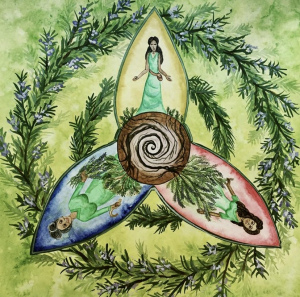
Rosemary from the Plant Spirit Oracle Rosemary Card from the Plant Spirit Oracle

As we quickly approach Samhain, it is a useful practice to spend some time with rosemary (Rosmarinus officinalis) and build here into your Samhain practices. In this post, we look into some of the magic and medicine of Rosemary, and I share a number of ancestor and Samhain-focused practices that you can use with Rosemary.

An Ancestral Ally of Humans: History, Medicine, Magic

Before we get into what you can make or do with rosemary, let’s spend some time exploring and understanding this ancient herb. Rosemary has been with humanity almost as long as we have written records. Native to the mediterranean region, rosemary was first found referenced on cuineform tablets from Ancient Egypt that are from 5000 BCE–thus, humanity has at least an 8000 year old relationship with this herb (but I suspect it is much longer than our written history!)…

View original post 1,368 more words

Food as Medicine: Black Chokeberry (Aronia melanocarpa, Rosaceae)

Crooked Bear Creek Organic Herbs's avatarCrooked Bear Creek Organic Herbs

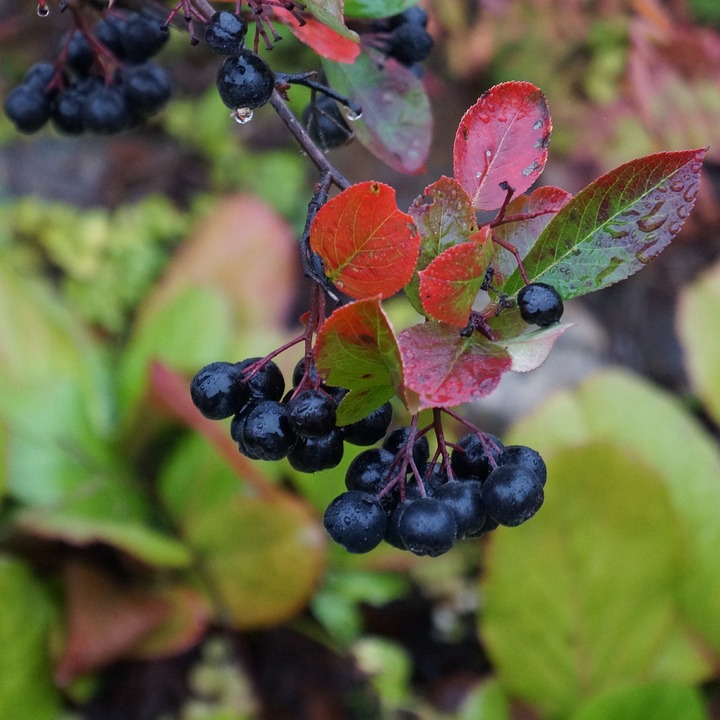
Black chokeberry (Aronia melanocarpa), also known as aronia berry, is a member of the economically important rose (Rosaceae) family, which includes other pome-producing plants like apple (Malus spp.), pear (Pyrus spp.), and quince (Cydonia oblonga). A pome is a fruit produced by the Malinae subtribe within Rosaceae. The genus Aronia includes two species of shrubs that are both native to North America: A. melanocarpa (black chokeberry) and A. arbutifolia (red chokeberry).1 Aronia melanocarpa grows to a height of 4-8 feet (1.2-2.4 meters) and is a cold-hardy, deciduous, thicket-forming shrub that prefers full sun and woodland edges.2,3 Black chokeberry’s natural range extends from the northeastern part of North America and the Great Lakes region to the Appalachian Mountains.1

In spring, black chokeberry shrubs produce clusters of white-to-pink flowers that are 2-2.5 inches long and each form 10-15 pea-sized, purple-black pomes after…

View original post 3,344 more words