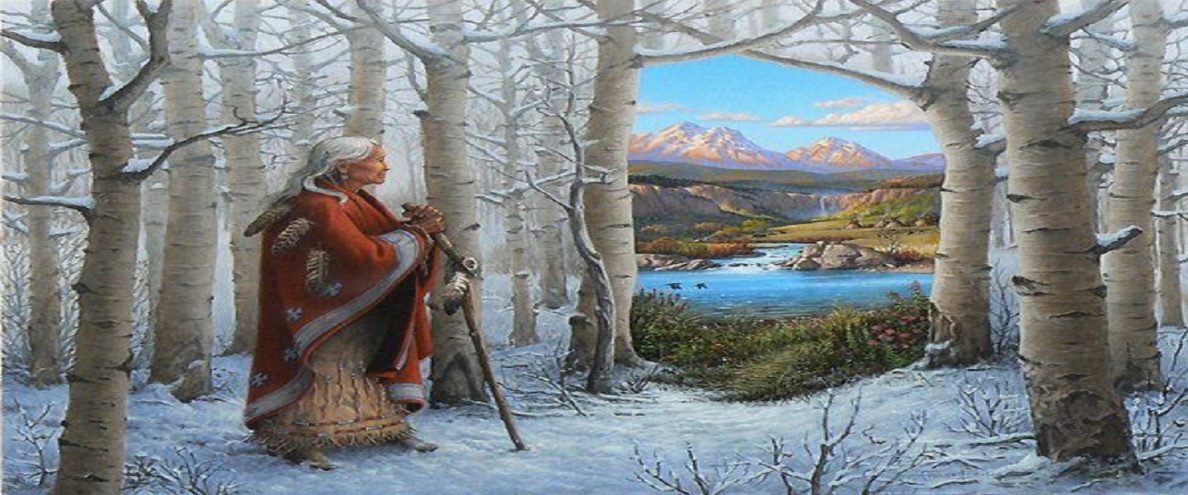
Exploring Wild Ecosystems — New online course coming this spring!

There’s a hidden benefit to joining nature clubs that few people discuss.  Once gained, this benefit can be wasted if you don’t take action on it.  If you have no idea what I’m talking about, let me explain.

Early on, I realized that an easy way to learn mushrooms is to join a mushroom club.  An easy way to learn plants is to join a botanical club.  This is true for nearly any skill that can be taught.  Join an organization and participate in its activities.

This sounds pretty obvious, but what is the hidden benefit that I mentioned earlier?

The hidden benefit is this:  Nature clubs often take you to places that you’ve never been to before.  A botanical club might botanize a rare northern white-cedar fen.  A mushroom club might explore a remote red spruce forest.  

The reason I call it a “hidden” benefit is this:  many nature clubs never mention it.  In fact, some nature clubs never draw attention to the place itself.  Instead, they devote their attention solely to an isolated group of organisms that inhabit the place.

Now of course, organisms are vital components of a place, and we must learn them.  But the place itself, and the relationships that build the place, are things we also must learn if we are to improve our ecological literacy.

What is this place?  Why does it look like this?  Who is responsible for its existence?  How is this place any different from other places with similar names? 

If we don’t ask these questions, we fail to see how any of its organisms are connected.  If we don’t see the connections, we don’t see the place.  If we don’t see the place, we act in strange ways — almost like hungry people who taste only ingredients, but not the meal itself.

All this to say, I decided to bring awareness to this issue by creating a new online course devoted to this topic.  Exploring Wild Ecosystems is an educational resource I spent all of 2023 creating.  I am excited to announce that it will be released in May.

If you want to improve your ecological literacy while studying fascinating ecosystems (alvars, barrens, bogs, glades, prairies, swamps, and more), consider joining the notification list.

I’ll have more information to share in the upcoming weeks.

Thanks for your support!
—Adam Haritan

Two Winter Opportunities To Learn Valuable Nature Skills

Greetings,

In anticipation of the winter season, I am excited to let you know that the Learn Your Land online courses are currently open for enrollment.

Additionally, both courses are on sale this week ($100 off each course).

If you are interested in learning how to forage mushrooms, consider enrolling in Foraging Wild Mushrooms.  This 4-season online course is designed to help you safely and successfully harvest wild mushrooms from the forest, from the field, and even from your backyard.

To improve your knowledge of trees, consider enrolling in Trees In All Seasons.  This online course teaches you how to identify over 100 trees in every season.  If you want to develop the confidence to be able to look at a tree and say, “That’s black spruce,” or “That’s sourwood,” or “That’s mockernut hickory,” consider enrolling today.

These courses are self-paced and presented entirely online.  Once enrolled, you can start, stop, and resume at any time.

Please note that both courses are on sale ($100 off each online course) for one week only — from today until Monday, December 18. 

You can register and learn more about the courses here.

If you have any questions, please reply to this email and a response will be given shortly.

Remember, this sale expires on December 18th.  Enroll today and let your winter season be filled with learning, adventure, and connection!

Thank you!

—Adam Haritan
How To Find Mushrooms In Dry Weather

Any forager will tell you that mushrooms are abundant when rainfall is plentiful.

The reason for this correlation is simple:  fungi love water.

Nearly every stage in the life cycle of a fungus requires water — from spore germination, to nutrient uptake, to reproduction, to spore dispersal.

But water isn’t always plentiful.  Sometimes it’s scarce.  During prolonged absences of rain, many foragers have difficulty finding mushrooms.

I count myself as someone who finds fewer fungi during dry spells, but I’ve also learned how to improve my chances of finding at least a few prized mushrooms when rain is scarce.

In a brand new video, I share 5 tips that will help you find mushrooms in dry weather.

You can watch the brand new video here.

Even when rainfall is plentiful, you probably won’t find many mushrooms in alvars.  Instead, you’ll see rare plants that grow nowhere else.  To learn about a federally endangered plant that thrives in alvars, check out this recent Instagram post.

Thanks for reading and watching!

— Adam Haritan

Is This Edible Mushroom Toxic On Certain Trees?

Greetings,

Before I share a brand new video, I’d like to remind you that Trees In All Seasons is currently open for enrollment until Monday, May 22. 

This online course teaches you how to confidently identify over 100 trees in every season — spring, summer, fall, and winter.  When you enroll, you gain immediate and unlimited access to over 75 exclusive videos that lay the groundwork for successful tree identification.

You can register and learn more about the course here.

Tree identification is an excellent skill to learn if you are interested in foraging mushrooms.  Many edible mushrooms grow in association with trees.  When you learn the basics of tree identification, your understanding of fungal ecology improves.

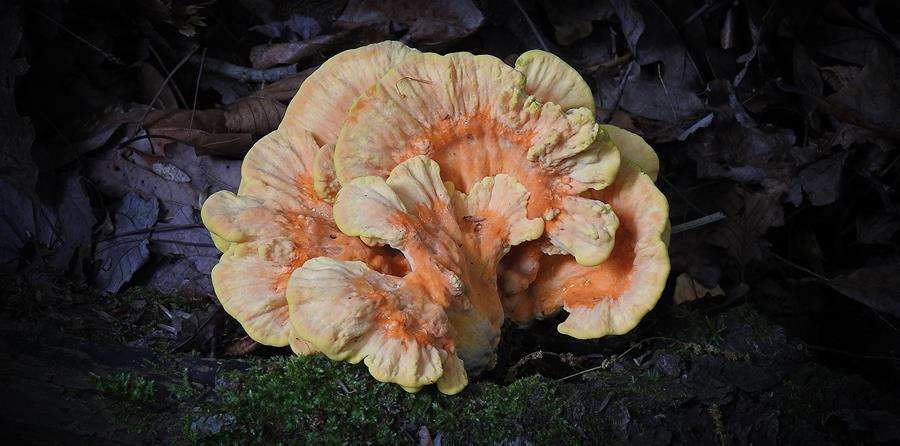
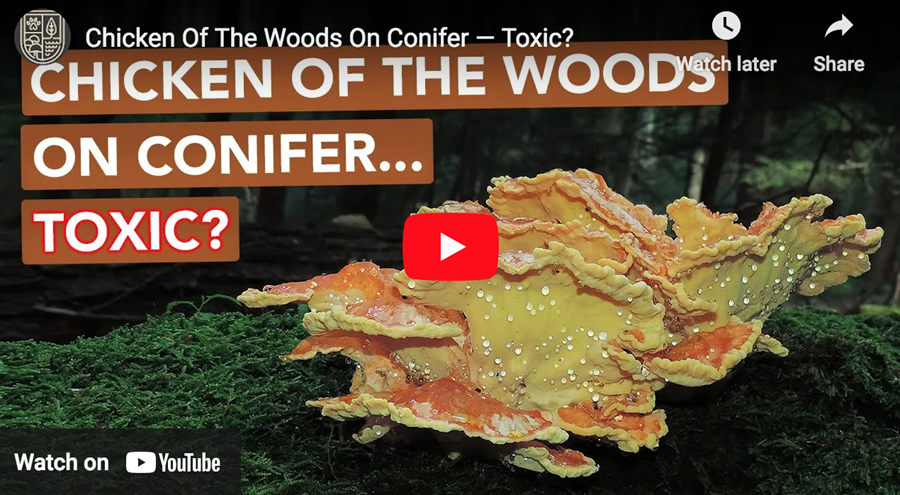
One popular mushroom that grows in association with trees is chicken of the woods.  Despite its popularity, chicken of the woods sometimes has a questionable reputation.  When this mushroom grows on certain trees (e.g., angiosperms), foragers praise it and consider it undeniably edible.  When this mushroom grows on other trees (e.g., conifers), some foragers vilify it and consider it suspect.

I recently spent some time in a conifer-rich woodland and decided to film a video in which I share my thoughts on this controversy.

Is there any truth to the claim that conifer-derived chicken mushrooms are potentially toxic?

You can watch the new video here.

Thanks for reading and watching.  If you’d like to improve your foraging skills by learning how to identify trees, consider enrolling in Trees In All Seasons by Monday, May 22.

—Adam Haritan

Mushrooms as Nature’s Alchemists: Cycles, Connections, Healing, and Vision — The Druids Garden

When I feel lost and feel like the hope is gone in the world, I go spend time with some mushrooms.  Mushrooms, more than any other organism on this planet, give me hope.  So much so, I’ve been doing an intensive year-long study of the fungi kingdom, learning their medicine, their magic, their visionary properties,…

Mushrooms as Nature’s Alchemists: Cycles, Connections, Healing, and Vision — The Druids Garden

What Field Guides Don’t Tell You About Mushrooms

Gary Lincoff said something interesting to me 8 years ago.

We were sitting at a picnic table during a mushroom foray in Pennsylvania.  He just finished giving a presentation on edible mushrooms and agreed to sit down for an interview.

My plan was to ask him several questions about his life as a mycologist.  The interview turned into a monologue instead.  I asked Gary two questions and he spoke for 30 minutes.  I didn’t mind.  Almost everything he said was quote-worthy.

One statement in particular really caught my attention.

“Just to name mushrooms… after a while it gets boring.”

This surprised me.  Gary was the author of one of the greatest mushroom field guides of all time.  He must’ve thought that mushroom identification deserved at least some recognition.  He led mushroom identification walks.  He taught mushroom identification classes.  He had a name for almost every mushroom he saw.

Yet there he was, admitting to me that names become boring after a while.

Before I could ask Gary to elaborate on his statement, he was already talking about the connections between plants and mushrooms, how he liked finding things that puzzled him, and how he really wanted to know the roles of organisms in the forest.

Collecting names, I realized, wasn’t Gary’s goal.  It wasn’t mine either, and as I listened to his picnic table sermon, I was oddly reassured.  Gary preached ecological literacy.  His words were confirmation that humans are capable of connecting with nature in more fulfilling ways.

In a brand new video, I show you all the amazing things a single mushroom can teach you when ecological literacy is your goal.

You can watch the video here.

Thanks for reading and watching, and thanks for your continued support!

-Adam Haritan

A Winter Tip To Help You Find Morel Mushrooms

Nature is full of signs.

Tracks, pellets, and clouds reveal information to the astute observer who pays attention.  Nothing is meaningless when awareness is practiced.  Every track, tree, and titmouse means something.

So it goes with mushrooms.  Every mushroom relays information to the person who pays attention.

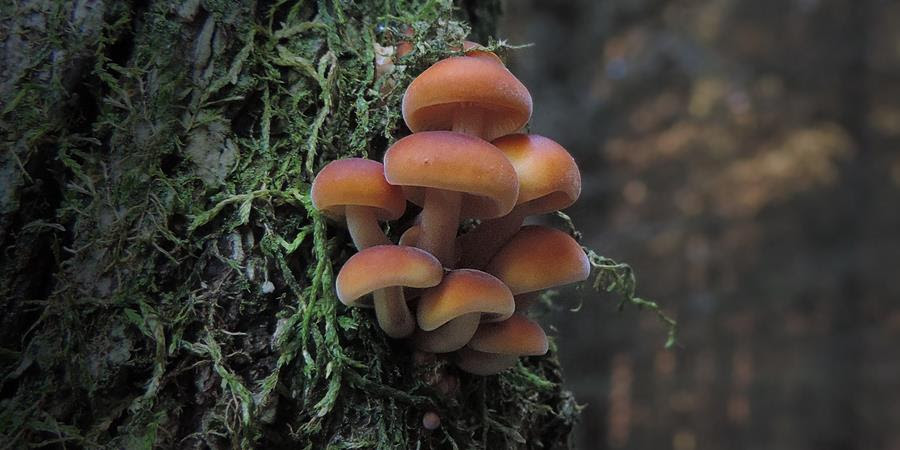
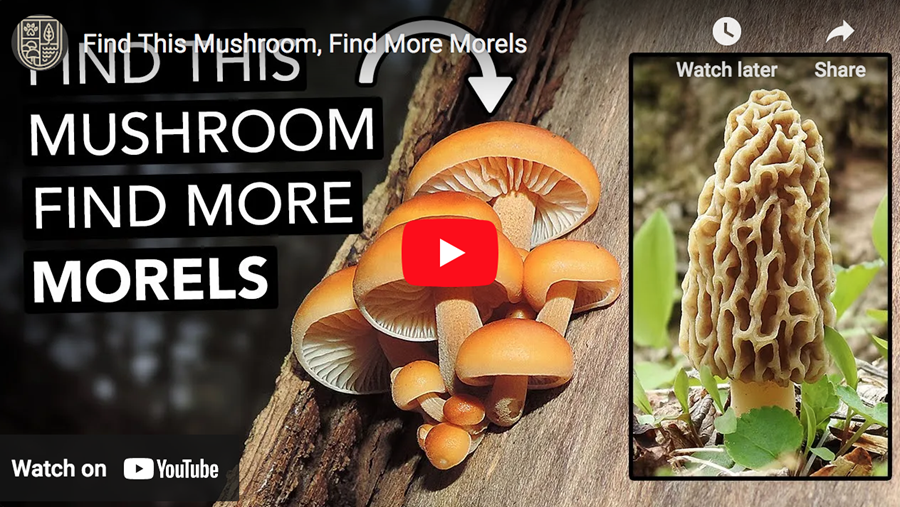
As an example, consider velvet foot (Flammulina velutipes) — a cold-loving mushroom that provides food and medicine.  This mushroom reveals something that field guides and educators rarely mention:

Velvet foot can easily help us find morel mushrooms.

How so?  In this brand new video, I explain the connection.

I’d also like to mention that today is the last day to receive $100 off your purchase of Foraging Wild Mushrooms.  This online course is designed to help you safely and successfully harvest wild mushrooms from the forest, from the field, and from your own backyard — even during the winter season!

You can register here.

Thank you for your continued support.

— Adam Haritan

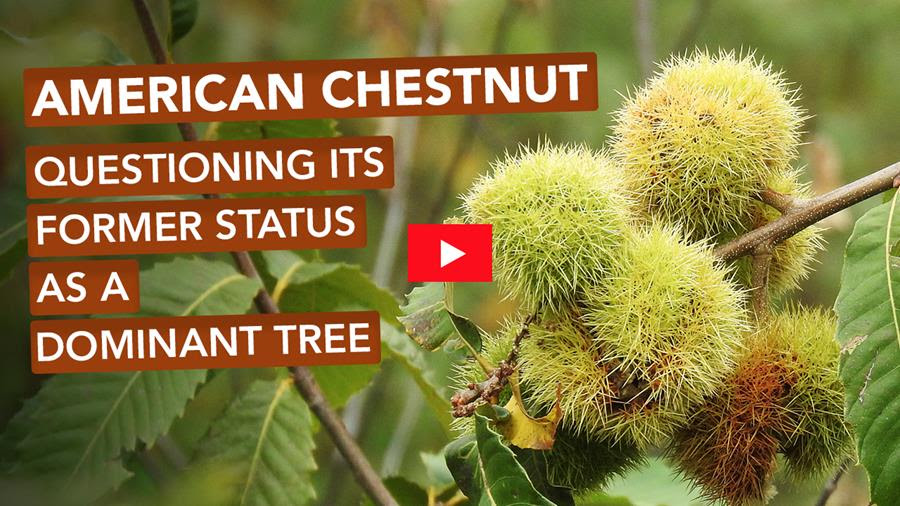
American Chestnut — Questioning Its Former Status As A Dominant Tree

What did the land look like before you were born?

This is a good question to ponder, but it’s a difficult question to answer unless clarification is provided.

How much land are we talking about?  And what is the time frame in question?

Even with such clarification, answers do not come easy.  The original question often persists and we are prompted to further refine our inquiry.

What did the eastern forests look like 300 years ago?  Which trees were present, and what was the composition of the trees in these earlier forests?

American chestnut, it turns out, can help us answer those questions. 

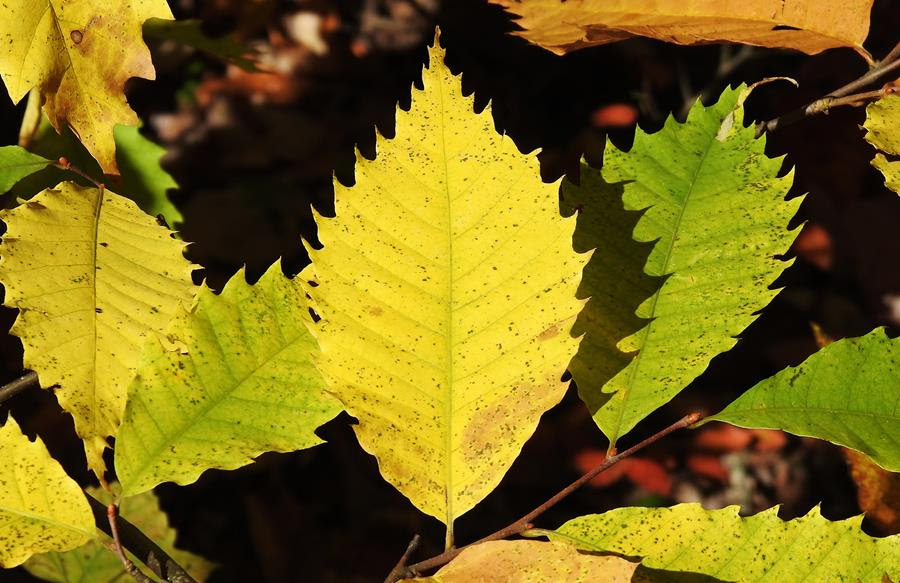
American chestnut (Castanea dentata) is a tree whose numbers have dwindled over the past 100 years.  A fungal disease known as chestnut blight has been the major culprit, but other factors have contributed to the decline of mature American chestnut trees in eastern forests.

When we study accounts of American chestnut, we routinely hear the same thing:  “American chestnut was a dominant tree in eastern North America prior to the introduction of chestnut blight.” 

We also hear this: “One in every four hardwood trees in eastern North America was an American chestnut.”

Believing both statements to be true, we might imagine an unbroken expanse of chestnut trees in eastern North America.  The proverbial squirrel might have been able to travel from Maine to Florida on chestnut tree limbs without ever touching the ground.

But was that ever the case?  Was American chestnut really the most dominant tree in eastern North America? 

Or, have the claims been exaggerated?  Could it be possible that American chestnut was not so dominant of a tree in these earlier forests?

That’s the topic of this week’s brand new video.  If you are interested in learning what the land might have looked like in the not too distant past, check it out!

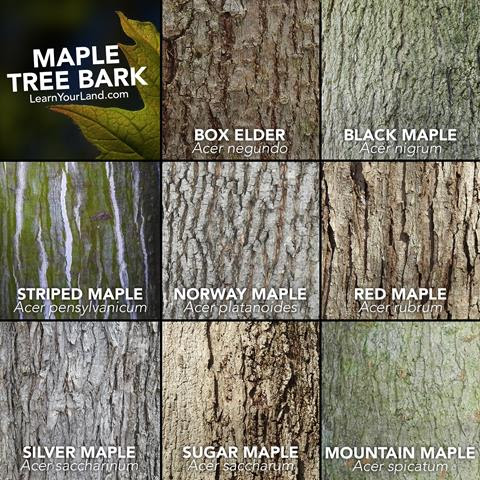
Most maples are leafless this time of year in eastern North America. Fortunately, bark features are still available and very useful for proper identification. Check out these side-by-side images of 8 different maple trees to assist you with your winter identification skills.Click to view post

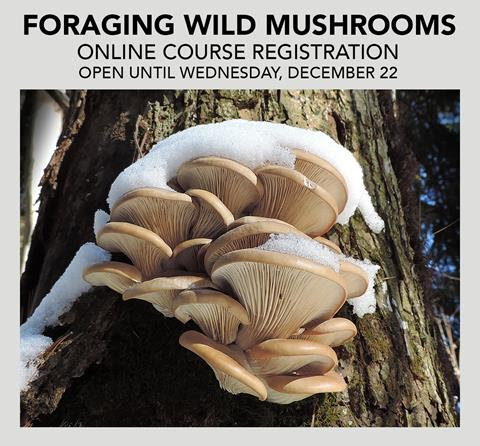
If you are eager to pursue educational opportunities during the winter months, check out Foraging Wild Mushrooms.  This 4-season online course is designed to help you safely, successfully, and confidently forage wild mushrooms from the forest, from the field, and from your own backyard.Click to learn more

Thanks for reading and watching, and thanks for your continued support!

-Adam Haritan

12 Mushrooms That Grow In Your Yard

Before I share a brand new video with you, I want to provide a reminder that today — Tuesday, September 28th—  is the last day to register for Foraging Wild Mushrooms

After today, registration will be closed for the season.  If you want to learn the skills involved in safely and successfully harvesting wild mushrooms with confidence, Foraging Wild Mushrooms can help you achieve that goal. 

Click here to learn more.

And now on to this week’s brand new video…

The best mushroom books aren’t always mushroom-related.

Take the Tao Te Ching, for instance.  This piece of Chinese philosophical literature was written approximately 2,500 years ago.  The word “mushroom” is not mentioned anywhere in the text, but the Tao Te Ching might be one of the best mushroom books I have ever read. 

To see what I mean, let’s look at a few words from verse 47.

“The world may be known without leaving the house…
The further you go, the less you know.”

How does this apply to mushrooms? 

Replace world with mushrooms, and we soon realize that we do not have to travel too far to understand the fungal kingdom.

Tropical jungles, alpine bogs, and distant countries might seem like they have what a mushroom hunter needs.  But that’s almost never entirely true.  If we haven’t learned as much as a human is capable of learning at home, then we have work to do… at home.

In other words, if we have not learned the mushrooms that grow in our yards, then it might be a good idea to focus on those particular mushrooms before leaving the house (to use the Taoists’ words).

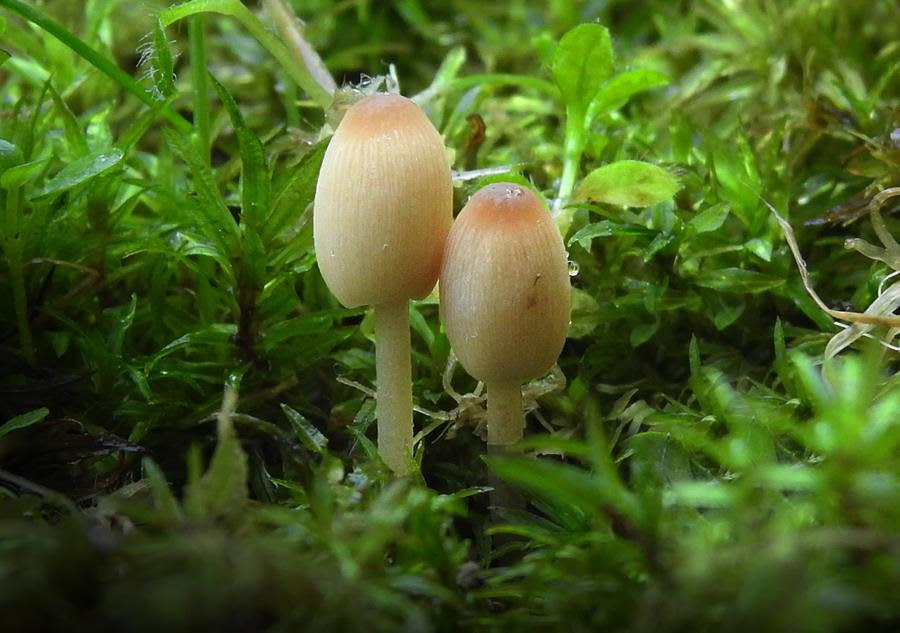
To inspire you to do this kind of work, I filmed a video that focuses only on yard-dwelling mushrooms.  Some of the mushrooms grow in the grass.  Others grow in your flower beds.  All of the mushrooms can be found at home.  

You can watch the brand new video here.

Thanks for reading and watching, and thanks for your continued support!

-Adam Haritan

Be On The Lookout For This Elusive Edible Mushroom (It Looks Like A Spaceship)

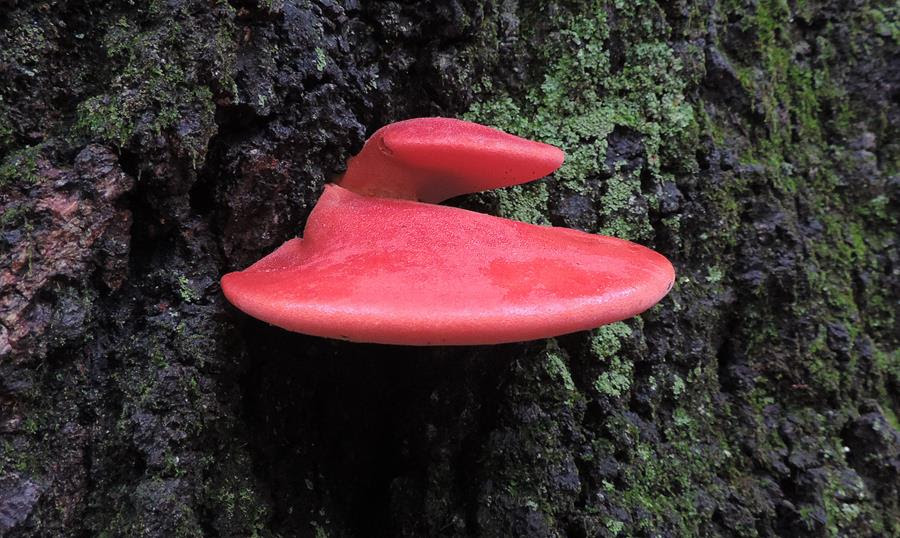
Over the next few weeks, a strange wild mushroom will appear from the trunks of oaks and other deciduous trees. 

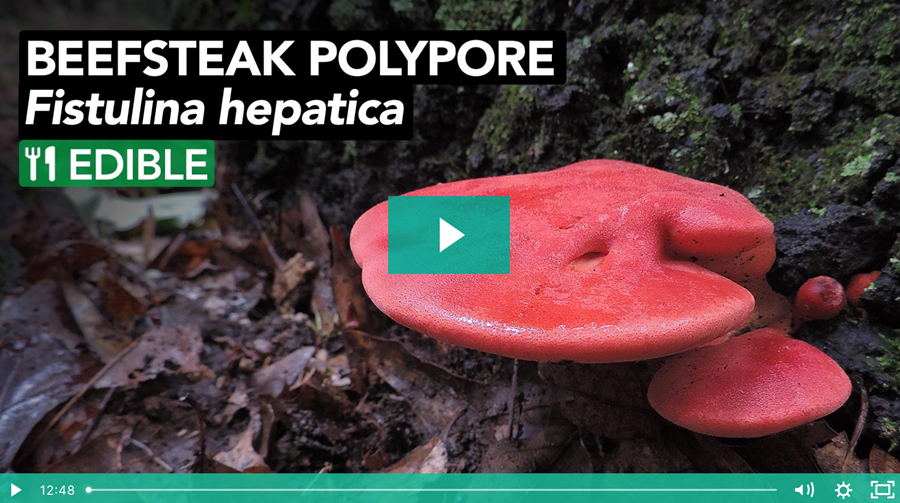
At first glance, this fungus resembles a scarlet-colored spaceship.  Upon closer inspection, and especially upon internal inspection, this mushroom literally looks like raw meat.  Its taste — a bit sour, a bit mushroomy — is reminiscent of a tangy portobello mushroom.

The Beefsteak Polypore is a mushroom unlike any other.  In some parts of Europe, this species is considered to be rare.  Here in North America, summer and autumn sightings of the Beefsteak Polypore aren’t infrequent, though they’re not incredibly common either. 

Needless to say, the Beefsteak Polypore is one mushroom worth adding to your must-see list of 2021.

To learn more about this fascinating fungus, you can view the following video for the next few days.

This video is one of over 80 exclusive videos featured in Foraging Wild Mushrooms — a four-season online course designed to help you confidently and successfully forage wild mushrooms.

Registration for Foraging Wild Mushrooms is open until Tuesday, September 28th.  After that, registration will be closed.

To get a sneak peek into the kinds of content found within the course, please enjoy this video.

Please note that the video will only be publicly available until September 28th, after which it will only be available to students.

-Adam Haritan