A Witches Garden | Why You Need One and How to Make it

Happy Full Moon!

Spirit de la Lune Seed Moon A Witches Garden | Why You Need One and How to Make it

This full moon takes place in the earthy sign of Virgo. We can feel the earth begin to wake up as we shift from the colder, darker months into the warmer season of spring.

You might feel yourself beginning to wake up from your own winter season too. Move your body and stretch often. Drink plenty of water (especially during the full moon) to help facilitate movement for changes that are surfacing at this time.

The Full Seed Moon falling in the sign of Virgo this cycle can be beneficial towards the transformation you’ve been yearning for.

Virgo is the healer of the zodiac. Her eye is sharp and she is able to see the things others may miss. Virgo sharpens our eye as well and makes us more detail oriented. This full moon helps shine light on the areas in our lives that are going well, and on the areas that may need some cleansing or weeding.

Virgo is an earth sign, making this full moon the perfect time for working with the element of earth. As the earth wakes up, we wanted to do a Full Moon Ritual that helps honor the rebirth of Spring…

Read full article at: Spirit de la Lune ~ A Witches Garden | Why You Need One and How to Make it

Exploring Vanilla in the Rainforest and in the Kitchen: Part I

The Herb Society of America's avatarThe Herb Society of America Blog

By Susan Belsinger

(Adapted from her article, “Exploring Rainforest Spices at Villa Vanilla,” featured in the 2019 issue of The Herbarist, the annual journal of The Herb Society of America.)

Vanilla in the Rainforest

P1110204Before going to Costa Rica, I researched gardens, restaurants, herbs, spices, botanicals and the rainforest—places where I wanted to go, see, and experience. Once I visited Villa Vanilla’s website, https://www.rainforestspices.com/, I knew that I had to go there. I made reservations for the farm tour in advance. It was one of my favorite things in Costa Rica—I loved seeing the tropical spice plants up close and personal—and I got to smell and taste so many things, which was a memorable sensory experience!

During the half day Spice Plantation Tour, visitors experience the sights, tastes, and aromas of vanilla, cinnamon, pepper, and other tropical spices, essential oil plants, and a wide variety of…

View original post 1,181 more words

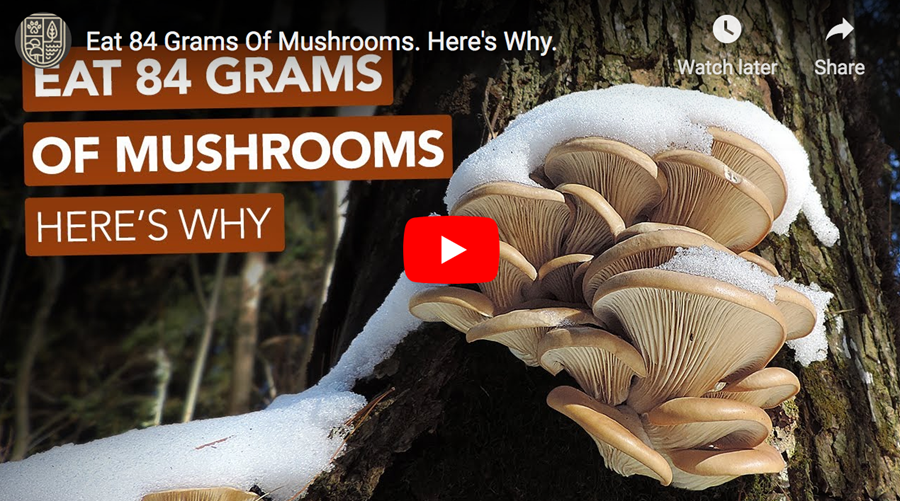
Eat 84 Grams Of Mushrooms. Here’s Why

Mushrooms have come a long way in recent years.

Formerly classified as primitive plants in the taxonomic sense and as white vegetables in the culinary sense, fungi have since risen above their woefully outdated labels.

In the ecological context, we’ve learned that mushrooms are anything but primitive.  In the nutritional context, we’ve learned that mushrooms are dietary superstars.

Subsequently, it seems that there are just as many reasons to appreciate mushrooms as there are to eat them.  Human health, it turns out, is one overlapping reason.

Corroborating this motive is new research published in the journal Food, Science, & Nutrition.  In a recent study, researchers concluded that eating a small serving of mushrooms can have measurable and positive effects on human health.

In a brand new video, I discuss four important findings revealed in this study.  If you’re interested in learning the ways in which mushrooms can improve your health, check it out!

Like fungi, the American beaver has made considerable progress in recent years.  Formerly classified as extirpated in many states, beavers can now be found in urban parks.  To read about a morning encounter I had with North America’s largest rodent, check out the latest Instagram post!Click to view post

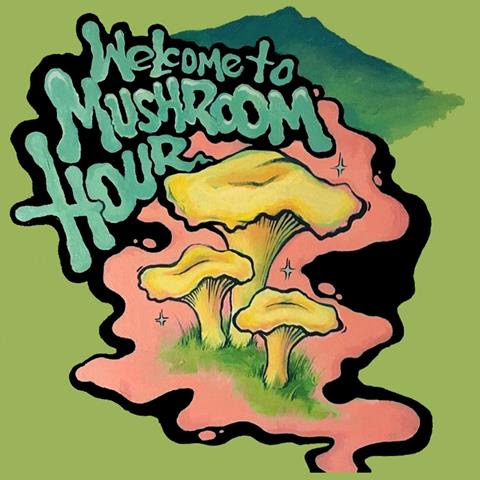
I was a recent guest on The Mushroom Hour podcast.  In the interview, we discuss many topics related to nature connection, supporting land conservation trusts, foraging wild water, and more.  You can listen to the interview through one of the following links:

Thanks for reading and watching, and thanks for your continued support!

-Adam Haritan

Magickal Properties and Uses of Viola, Violet Magic

Crooked Bear Creek Organic Herbs's avatarGood Witches Homestead

Viola is a quiet, little magic. She springs up in fields, lawns, and at the edges of forests. Before her companions begin to bud, she’s blooming away, gathering in the cool, damp spring days. In spring’s quiet while everyone else has yet to awaken, Viola works her magic.

Violas come in a variety of colors and shapes. The ones herbalists are most sweet on are a species called Viola odorata, although we may well fall in love with some of her close cousins, too. Viola odorata sports blue blossoms. Viola tricolor, like the ones in my garden, bloom in deep purples, sometimes sporting a few yellow or white petals. Sometimes they’re called Johnny Jump-ups, Hearts-ease Violets, Sweet Violets, or Pansies by garden centers, sometimes just plain violets. Part of what makes V. odorata and her medicinal cousins particularly special is her scent.

Viola odorata or Violet is a…

View original post 39 more words

Herbs are expensive – Grow your own

pobept's avatarTown & Country Gardening

Herbs Fresh or Dried purchased from your local Supermarket or Farmers Market are exceeding expensive.

These are sample prices taken from Walmart

The best solution is to grow your own Herbs. Herbs take up little space and are very forgiving if neglected.
Most herbs will do well in containers, window boxes and planted directly in your garden soil.
If herbs are conventionally located to you and your kitchen you are more willing and more likely to use them when cooking and serving meals.

Herbs Make Common Foods Taste Special

Sage is a herb that does well if properly cared for. It requires a lot of pinching and cutting to keep it from becoming woody. As a rule, sage will need to be replanted about every 3 years since it will become woody with few leaves no matter what, so keeping it in a pot makes this change that much easier…

View original post 545 more words

Brigid’s Magical Blackberry Scones w/ Bay Leaf Infused Custard Sauce: A Matter Of Celestial Timing — Gather Victoria

This Imbolc recipe might appear to be late (considering it is February 3rd) but I suggest it is right on time. After all, Imbolc or Imbolg, ( an ancient Celtic holiday welcoming the first stirrings spring) was originally a “moveable feast” determined not by fixed dates on the calendar but by shifting heavenly events, specifically…

Brigid’s Magical Blackberry Scones w/ Bay Leaf Infused Custard Sauce: A Matter Of Celestial Timing — Gather Victoria

The Trick To Finding Edible Winter Mushrooms

Cloudy skies.  Frigid temperatures.  Frozen soils. 

Winter in my neck of the woods is a faithful provider of all those conditions and more.

Most wild creatures left the scene months agobut a handful of them — fungi included — remain active and reveal themselves to anyone with a desire to look.

Take Flammulina velutipes, for instance. 

Also known as Enoki, this wild edible fungus actually thrives in cold weather.  While many wild fungi retreat as temperatures fall, Enoki fruits prolifically with the help of antifreeze compounds produced within its tissues.

Enoki is also a fairly predictable fungus.  It associates with a particular tree that commonly grows in eastern North America.  If you know the name of this tree, you’ll have no trouble locating wild Enoki mushrooms.

In a brand new video, I discuss a few tips to help you identify and find this tree in the wild.  If you’re interested in learning more, check it out!

Another wild creature that hasn’t fled the scene completely is the Cedar Waxwing.  I recently observed a flock of these beautiful birds feasting in a local apple orchard.  To read about this encounter, check out the latest Instagram post.Click to view post

Thanks for reading and watching, and thanks for your continued support!

-Adam Haritan

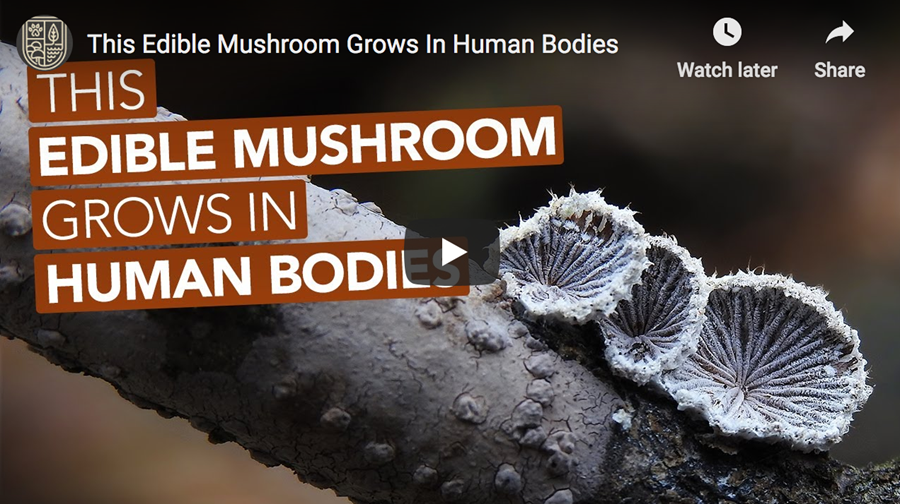
This Edible Mushroom Grows In Human Bodies

For better or for worse, untold numbers of fungi live on and within our bodies. 

Some of these fungi are faithful allies.  Others can harm our bodies only under certain circumstances.  Almost all of them, it turns out, are microscopic and mostly undetectable to the naked eye.

But what about the larger mushrooms that live in forests?  Do they ever engage in any sort of physical relationship with humans?

For a very long time, mushroom-forming fungi were never known to grow inside human bodies.  Instead, molds and yeasts — including species of Candida and Aspergillus — were almost always the main culprits implicated in human disease.

And then something strange happened.  In 1950, a doctor treated a 33-year-old man for fungal overgrowth of his toes.  Upon isolating the fungus, the doctor discovered that his patient’s foot infection was attributed not to any of the usual mold-producing suspects, but instead to a mushroom-forming species that commonly grows on trees.

Since that shocking discovery 70 years ago, researchers have documented this wild fungus growing on and within other human bodies.  To date, almost 100 cases of infection and a few unexpected deaths have been reported.

During a recent walk through a local floodplain, I encountered this fascinating mushroom and decided to film a video regarding its bizarre tendency to do such a thing — to colonize human bodies and cause infection.

Check out the brand new video to learn more!

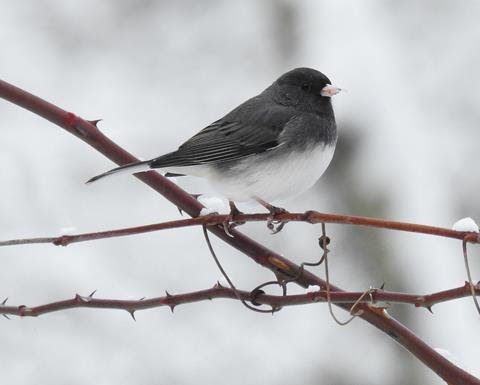
In addition to the sights of tree-eating mushrooms, a January walk through my local woods is likely to yield splendid sightings of wintering songbirds.  Pictured here is one such bird who demonstrates something known as differential migration.  In short, males overwinter farther north than females.  Why is this?  Check out this recent Instagram post to learn more.Click to view post

Thanks for reading and watching, and thanks for your continued support!

-Adam Haritan

HSA Webinar: A History of Chocolate

The Herb Society of America's avatarThe Herb Society of America Blog

By Jen Munson, HSA Education Chair

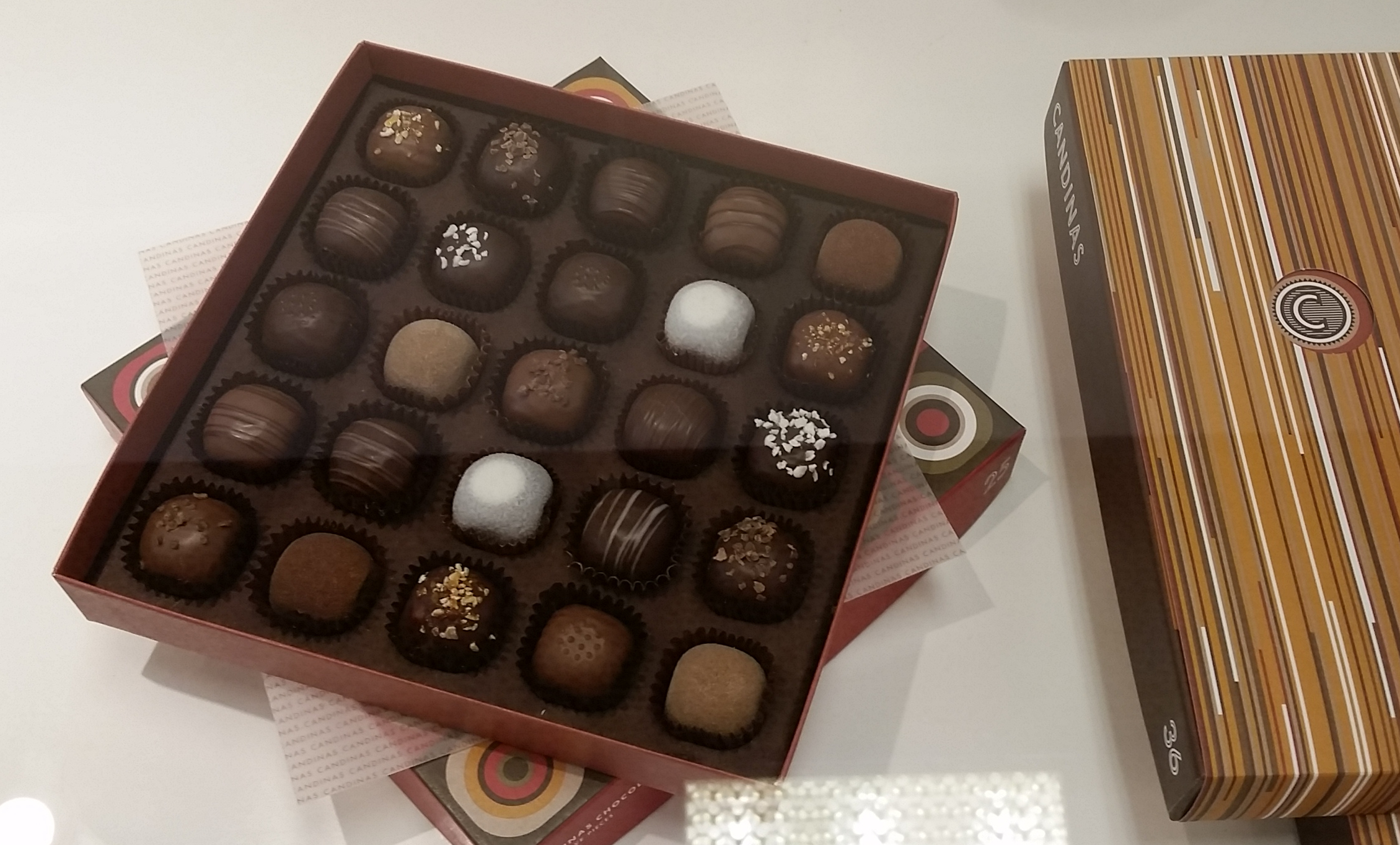
20190613_150017Chocolate: food or medicine? For centuries, chocolate was consumed primarily as medicine. Cacao, from which chocolate is derived, was the basis for prescriptions promising relief from such ailments as anemia, alopecia, fever, gout, heart disease, kidney and liver disease, along with tuberculosis. Prescriptions from the 16th and 17th centuries would combine cacao with cinnamon, sugar, pepper, cloves, vanilla, and/or anise to ease common complaints. Certainly modern day amoxicillin could benefit from such a delicious concoction.  

It was only in the 19th century that chocolate became more of a food staple and less of a medicine. This was in part because of the expansion of where cacao could be grown. Cacao is a New World food, but the Portuguese brought the cacao tree to the African tropics. The development of machinery made it easier to separate cacao butter from the seeds, and so the making…

View original post 360 more words

Parsley – Herb of the Month and Herb of the Year

The Herb Society of America's avatarThe Herb Society of America Blog

By Maryann Readal

The spotlight is shining on parsley this month. Parsley (Petroselinum crispum) is The Herb Society of America’s Herb of the Month for January and the International Herb Association’s Herb of the Year for 2021. The three most common varieties of parsley are P. crispum or curly-leaf parsley,  P. crispum var. neapolitanum or flat-leaf Italian parsley, and P. crispum var. tuberosum or turnip-root parsley which is grown for its root and is used in soups and stews.

Parsley has an interesting history dating back to Greek and Roman times. To the Greeks, parsley symbolized death and was not used in cooking. However, according to Homer, the Greeks fed parsley to their chariot horses as they thought it gave them strength. The Greeks believed that parsley sprang from the blood of one of their mythical heroes, Archemorus, whose name means “the beginning of bad…

View original post 1,001 more words