Benefits and Use of Peppermint Oil

Crooked Bear Creek Organic Herbs's avatarCrooked Bear Creek Organic Herbs

The next few posts will be about an herb we grow commercially on our farm in Oregon. I can not bestow enough accolades for the use of peppermint whether it be the plant or the essential oil. We have grown peppermint for over 30 years on 2400 acres, grown commercially and shipped worldwide, it has to be one of the most commonly used oils in the world, but few really know the virtues of peppermint.

I and my daughter are constantly creating uses for this oil, from salves {we created a muscle salve for Hubbie after his farming accident when a water line {wheel} came down on top of him and crushed his spine. If it had not been for our German Shepherd Mountain my husband’s injuries would have been far more severe than what had initially occurred. He would have been stuck in a foot and half of the…

View original post 3,653 more words
What Are The Health Benefits of Clary Sage Oil?

Crooked Bear Creek Organic Herbs's avatarCrooked Bear Creek Organic Herbs

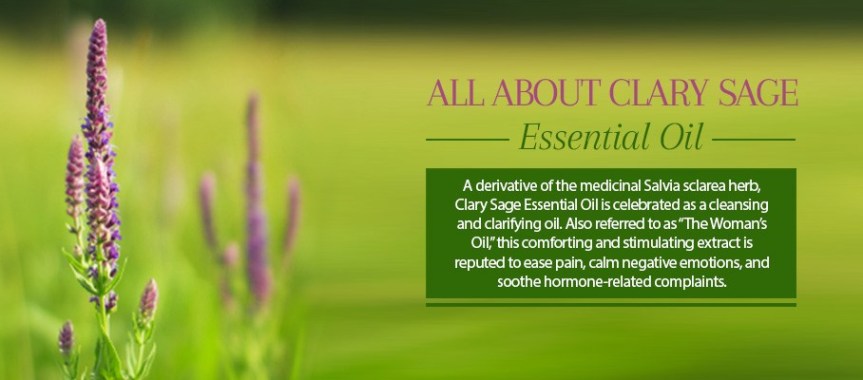
Clary sage, also known as Salvia sclarea, is a plant native to the northern Mediterranean Basin. It is widely used for medicinal purposes and as a spice.

Many parts of the clary sage plant can be used, including the leaves, flowers, stems, and seeds. In alternative health practices, clary sage essential oil is used in aromatherapy.

In this article, we take a look at the uses and suggested health benefits of clary sage oil. We will also look at whether there is any scientific evidence to back these claims up. We also examine how the oil is used, and what side effects could occur.

Uses for clary sage oil

Clary sage oil

Clary sage oil may have properties such as antidepressant effects, improved digestion, and stress relief.

Aromatherapists and related alternative health practitioners often use clary sage as an essential oil in their treatments, and supporters believe it has many health…

View original post 1,044 more words

Health Benefits of Myrrh {Commiphora molmol syn. C. myrrha}

Crooked Bear Creek Organic Herbs's avatarCrooked Bear Creek Organic Herbs

Also, Known As:

  • Bola
  • Gum Myrrh Tree
  • Mu-Yao
  • Myrrh

Myrrh is indigenous to Ethiopia and Somalia in Africa as well as the Arabian Peninsula and belongs to the small trees of the family Burseraceae. Basically, myrrh is said to be an oleo-gum-resin or a combination of capricious oil, gum, and resin (a semi-solid substance contained in the sap secreted by plants) and acquired from the Commiphora myrrha, Commiphora molmol (popularly known as the Somali myrrh), Commiphora mada, gascariensis (also known as the Abyssian myrrh or syn. C. abyssinica, and other different species of Commiphora. Myrrh comprises asymmetrical masses or tear-fashioned portions that are either reddish-brown or dark yellow in color. These substances either radiate involuntarily or from the openings in the bark of the plants. The different varieties of the herb, like the Somali and Arabian myrrh, are termed according to their respective sources of origin.

Most present-day herbal medicine…

View original post 1,669 more words

STRENGTHEN WITH FRANKINCENSE

Crooked Bear Creek Organic Herbs's avatarCrooked Bear Creek Organic Herbs

Frankincense Essential Oil is an eminent and versatile oil that can be used on almost any part of the body for almost any ailment. The positive effects of Frankincense Oil are powerful and have beneficial impacts on interconnected body systems. It is famed for its ability to strengthen and invigorate the respiratory system, stimulate the immune system, reduce the appearance of aging, diminish anxiety, and eliminate bacteria, both on surfaces and in the air. It can be used in numerous body care products ranging from skin and hair care to emotional care through aromatherapy. This article highlights what can be achieved with natural homemade recipes that use the advantages of Frankincense Essential Oil.

USING FRANKINCENSE OIL IN A DIFFUSER TO RELIEVE STRESS AND ENHANCE FOCUS

Frankincense Essential Oil can be added to a diffuser or vaporizer and inhaled for its sedative, earthy fragrance that is known to enhance the mood…

View original post 2,484 more words

Cedarwood Essential Oil, Uses, Benefits, Skin Care, Hair Care, Aromatherapy

Crooked Bear Creek Organic Herbs's avatarCrooked Bear Creek Organic Herbs

HISTORY OF CEDARWOOD OIL USAGE

Cedarwood Essential Oil is steam distilled from the wood of the Cedar tree, of which there are several species, such as Cedrus atlantica, Cedrus deodara, Juniperus Mexicana, and Juniperus virginiana, which are more commonly recognized as Atlas, Himalayan, Texan, and Virginian Cedarwood, respectively.

Throughout history, Cedarwood Essential Oil has been used by various cultures, such as Native American and Tibetan communities, to address ailments ranging from minor discomforts, including coughs and hiccups, to more severe illnesses. In Ancient Egypt, Cedarwood Oil’s antimicrobial and insecticidal properties made it valuable for use in mummifying procedures. In these and other societies, Cedarwood was also known to relax the body and mind, making it ideal for use in religious ceremonies and spiritual practices, such as communal prayer and independent meditation. Today, it continues to be used for similar applications as well as for cosmetic applications.

This article highlights…

View original post 1,953 more words

Essential Oil Spotlight: Clove Oil

Crooked Bear Creek Organic Herbs's avatarCrooked Bear Creek Organic Herbs

Clove oil uses are incredibly impressive, ranging from improving blood circulation and reducing inflammation to helping acne and boosting gum health. One of the best-known clove oil uses is to reduce the pain associated with dental problems. Even mainstream toothpaste makers agree that clove oil reduces the pain and swelling that comes with a toothache.

In addition to being a proven anti-inflammatory and pain reducer, one of the common clove oil uses is as a broad-spectrum antimicrobial to keep countless diseases at bay, which is why it can be such a wise choice for boosting your immune system as well as a powerful addition to homemade cleaning products.

Plant Origin of Clove Oil

Indigenous to Indonesia and Madagascar, clove (Eugenia caryophyllata) can be found in nature as the unopened pink flower buds of the tropical evergreen tree. Picked by hand in late summer and again in winter, the buds…

View original post 2,732 more words

LAVENDER’S MEDICINAL AND AROMATHERAPY USES

Crooked Bear Creek Organic Herbs's avatarCrooked Bear Creek Organic Herbs

There are few scents in this world that evoke the feeling of clean – lavender is one of them. Its common and scientific name originates from lavare, the Latin word for wash or bathe. Lavender was popular as a linen-washing herb in Europe, no doubt due to its pleasant aroma, but it also possesses antiseptic qualities and can help to keep insects at bay. Discouraging or killing insects was paramount before the invention of glass windows and screens, a time when humans often shared the same roof with flea and lice-ridden livestock. Maude Grieve writes in A Modern Herbal (no longer especially modern, as it was written in 1931):

Dried Lavender flowers are still greatly used to perfume linen, their powerful, aromatic odour acting also as a preventative to the attacks of moths and other insects. In America, they find very considerable employment for disinfecting hot rooms and keeping away…

View original post 5,221 more words

A Powerful Stimulant For Body And Mind: Sage Oil

Crooked Bear Creek Organic Herbs's avatarCrooked Bear Creek Organic Herbs

Native to the southern European and Mediterranean regions, the Sage herb was highly valued in both the ancient Greek and Roman societies, which considered it to be sacred. For centuries, it has been believed that Sage had the ability to grant a longer life, and in China, it was traditionally used as a remedy for addressing infertility and symptoms of menopause. According to historical records, in some communities, the Sage herb also had culinary applications and was used as a preservative for foods such as meats. The oil of the Sage herb was also considered to be beneficial for both the mind and the body, hence it was used to quicken the senses by addressing negative emotions, such as sadness, and shifting them into positive moods, such as the sense of courage. It was believed that Sage Oil had a positive influence on the individual’s inner lifeforce, thus it was…

View original post 2,677 more words

Oregano Essential Oil: For Colds and Respiratory System

Crooked Bear Creek Organic Herbs's avatarCrooked Bear Creek Organic Herbs

Organic Oregano Essential Oil is derived from the Origanum Compactum plant, a species native to Morocco where it is more commonly known as Zaatar – a valued domestic plant with a strong, spicy, tangy aroma and a multiplicity of therapeutic benefits. There are approximately 3 to 4 dozen species of the perennial Oregano herb, which is also sometimes referred to as Wild Marjoram due to its relation to the herb Marjoram. The name Oregano, however, is derived from the Greek term origanon, which means “acrid herb.” When the word is further dissected, the etymology given is that the word compounds the Ancient Greek terms “oros” meaning “mountain” and “ganos” meaning “joy.” When combined, they mean “mountain brightness” or “joy of the mountains.”

Both the herb and the essential oil of Oregano have been used since ancient times for medicinal purposes. Greek physicians including Hippocrates and Maimonides prescribed it for…

View original post 1,767 more words

Spring Aromatherapy: Essential Oils for the Season of “Wood”

Crooked Bear Creek Organic Herbs's avatarGood Witches Homestead

Classical Chinese Medicine recognizes five steps in the transformation of matter (Yin) into energy (Yang) and energy back into matter. Yin and Yang are primordial forces that together form the basis of everything that exists and their ceaseless transformation from one into the other is what creates and destroys everything around us, including our health. This process of transformation is reflected in the cycles that we see all around us, including the cycle of birth, growth, and death as well as the cycle of the changing seasons.


These five phases correspond with the five seasons: Spring, Summer, Late Summer, Autumn, and Winter.
Each season relates to a specific element, specific bodily organs, specific emotions and other factors that are briefly described, in part, in the accompanying infographic. According to this traditional system, each season presents characteristic challenges to our health and psychospiritual well-being and an understanding of seasonal challenges can…

View original post 917 more words