Golden Bread Magic for The Feast of The Ovens — Gather Victoria

When the landscape outside your window resembles an arctic tundra – as mine currently does – there is nothing better to turn to than warm bread fresh out of the oven. So appropriately, this hearty and flavour-filled loaf is dedicated to the Roman Goddess of Ovens, Fornax, and her February festival of baking. It’s a…

via Golden Bread Magic for The Feast of The Ovens — Gather Victoria

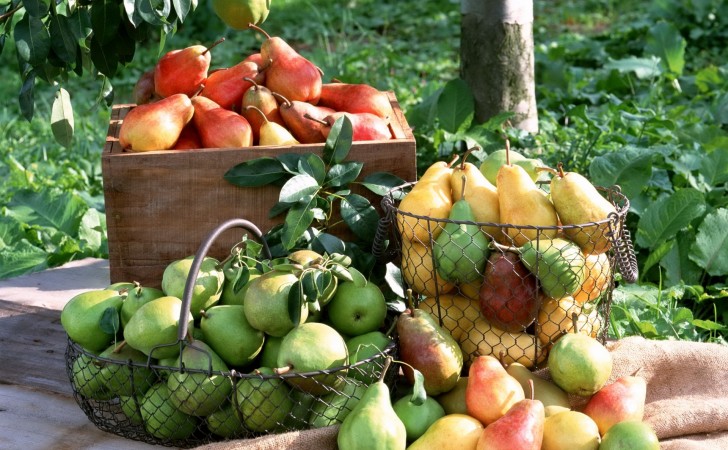
Food as Medicine: Pear (Pyrus communis and P. pyrifolia, Rosaceae)

Crooked Bear Creek Organic Herbs's avatarCrooked Bear Creek Organic Herbs

The genus Pyrus consists of 30 deciduous species and is closely related to the genus Malus, which includes apples (Malus spp.). Both genera are part of the economically important Rosaceae family.1,2 Similar to apples, Pyrus fruits are classified as pomes, where the seeds are contained in a central, compartmentalized core.3 The Pyrus genus is native to Europe, Asia, the Middle East, and North Africa.Capable of living for more than 250 years, the pear tree is one of the longest-living fruit trees.1 Cultivated pears are derived from one or two wild pear species widely distributed in Europe and western Asia.2 Of the 5,000 varieties cultivated worldwide, the two species grown commercially are the European pear (P. communis) with its juicy, aromatic, bell-shaped fruit, and the Asian pear (P. pyrifolia) with its crisp and crunchy, apple-like shape and texture.1,2,

The…

View original post 3,242 more words

5 Things You Didn’t Know About Cardamom

Crooked Bear Creek Organic Herbs's avatarCrooked Bear Creek Organic Herbs

f you have ever tasted Biryani (Indian flavored savory rice) or kheer (Indian rice pudding) or the famous Finnish pulla, you would probably identify the aroma of cardamom. The sweet and mystical spice was used by the Greeks and Romans in their perfumes and the ancient Egyptians as mouth fresheners. Even today, Cardamom (green) is one of the most expensive spices. It’s not just native to the South-East Asian belt, it’s increasingly used in Europe as well.

1- Cardamom, ginger, and turmeric belong to the same botanical family Zingiberaceae: cardamom is part of the Zingiberaceae family and is sold in pods, seeds, and powder form. The pods can be split open to expose the aromatic seeds. Both turmeric and ginger are roots, or rhizomes, while cardamom is the seed of the plant. It pairs very well with turmeric and ginger. Turmeric imparts a deep yellow color to curries, ginger…

View original post 766 more words

Old-fashioned Graham Pop-overs

Sheryl's avatarA Hundred Years Ago

I recently made a hundred-year-old recipe for Graham Pop-overs. The pop-overs did not rise as much as anticipated, but nevertheless they were a delightful bread that seemed more like a muffin than a pop-over. The Graham Pop-overs had a slightly nutty flavor, and were wonderful when served warm with butter or honey.

Graham flour is a coarsely ground whole wheat flour that contains the endosperm, the bran, and the wheat germ. Modern graham flours sometimes have most of the wheat germ removed to prolong shelf life and to help keep it from going rancid.

Year ago graham flour was considered a health food, and I regularly see recipes that call for it in hundred-year-old cookbooks.

Graham flour is named after its inventor Sylvester Graham. He began making graham flour in the 1830s, and promoted it as part of a health movement which encouraged eating vegetarian meals and unseasoned foods.

It…

View original post 58 more words

Imbolc Lavender & Rosemary Seed Cake — Gather Victoria

There is nothing like cake to celebrate a special occasion and Imbolc (on February 2nd) is no exception. And I think this “naked” sponge cake would be a wonderful addition to any Imbolc Feast! It’s kept gorgeously moist with brushings of lavender and rosemary syrup (between cake layers) but the slight tang of the Mascarpone…

via Imbolc Lavender & Rosemary Seed Cake — Gather Victoria

Already Thinking About Designing A Herb Garden?

Crooked Bear Creek Organic Herbs's avatarGood Witches Homestead

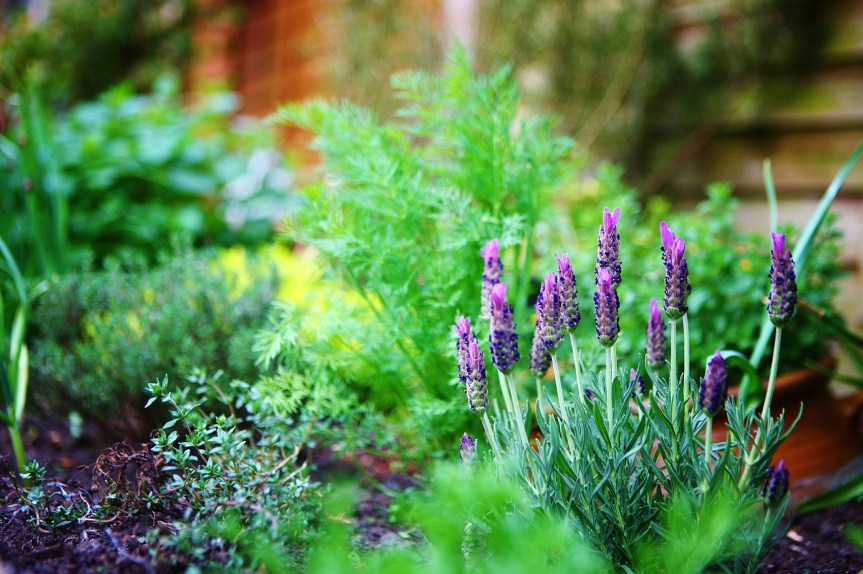
There are many books written on the various types of herb gardens. Invest in at least one good book on growing herbs that includes garden tips, what herbs to use for what purpose, and harvesting guidelines. Several types of gardens with plant suggestions are outlined below. You may notice that some herbs appear in more than one garden type. This is because herbs are versatile and have many uses.

Culinary Herb Gardens

Historically, a culinary garden is planted as close to your kitchen door as possible. This allows you to step outside and harvest the particular herb you need for the dish you are preparing. If you have too much shade, or your hardscaping won’t allow you to plant right outside your door, you can add culinary herbs to the vegetable garden or plant a container garden instead. Culinary gardens are generally governed by what the planter uses the most…

View original post 1,803 more words

La Befana Cake: Honouring The Old Witch of Winter – Gather Victoria — Good Witches Homestead

According to Italian anthropologists and authors Claudia and Luigi Manciocco, Befana’s origins back to Neolithic beliefs in a great goddess associated with fertility and agriculture. Author Judika Illes writes, “Befana may predate Christianity and may originally be a goddess of ancestral spirits, forest, and the passage of time.” In the book Vestiges of Ancient Manners […]

via La Befana Cake: Honouring The Old Witch of Winter – Gather Victoria — Good Witches Homestead

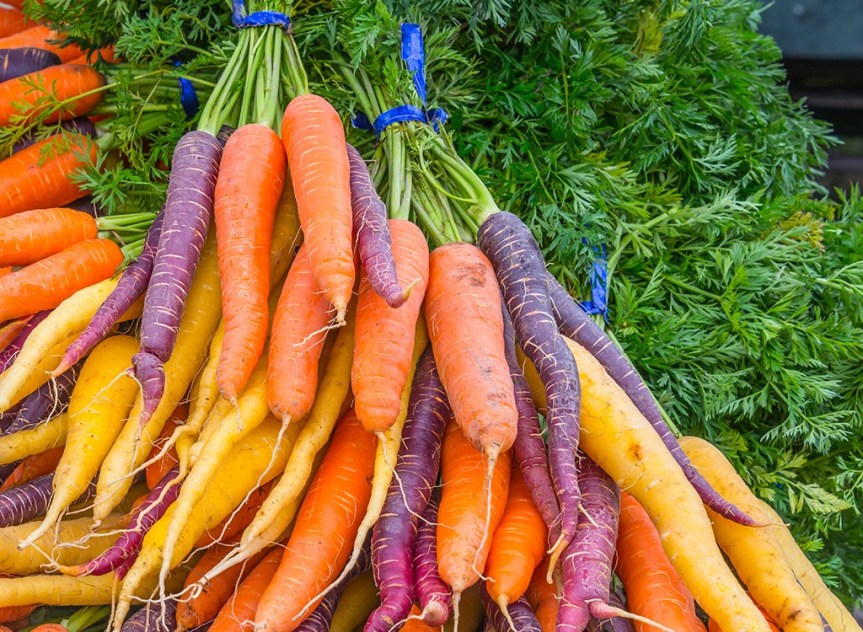
Food as Medicine Update: Carrot (Daucus carota subsp. sativus, Apiaceae)

Crooked Bear Creek Organic Herbs's avatarCrooked Bear Creek Organic Herbs

Widely available at most supermarkets, the common root vegetable carrot (Daucus carota subsp. sativus, Apiaceae) is a biennial plant with erect, green stems and fine, feathery leaves.1 The plant produces densely clustered white blossoms in an umbrella shape, which is typical of plants in the Apiaceae family. The edible taproot comes in a variety of colors: orange is the most widely available in stores, but the root can also be white, yellow, red, or purple.2

The modern carrot is a domesticated cultivar of wild carrot, Daucus carota, also known by the common name Queen Anne’s lace. Indigenous to Europe and southwestern Asia, frost-tolerant carrots are now cultivated in a wide range of environments.1 Carrots are popular with home gardeners due to their colorful varieties as well as their hardiness.

Phytochemicals and Constituents

Favored for their sweet flavor and versatility, carrots contain a vast array…

View original post 1,435 more words

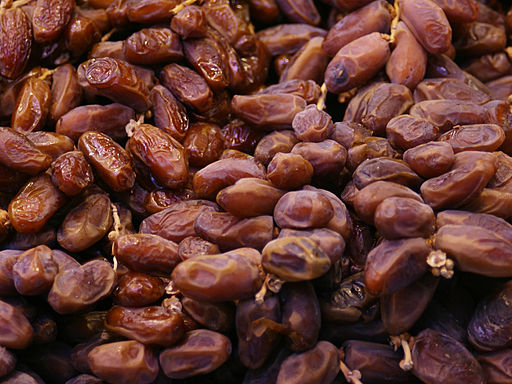
Food as Medicine: Date (Phoenix dactylifera, Arecaceae)

Crooked Bear Creek Organic Herbs's avatarCrooked Bear Creek Organic Herbs

The date palm (Phoenix dactylifera, Arecaceae) has been cultivated for more than 5,000 years.1 Because of this long history of use and cultivation, the exact origin of the date palm is difficult to pinpoint. Dates have been harvested for centuries in northern Africa and the Arabian Peninsula, and have played a large role in the economies of countries where the plant grows.1,2 The largest global producers of dates are Iraq, Egypt, Saudi Arabia, Tunisia, Algeria, the United Arab Emirates, Oman, Libya, Pakistan, Sudan, and the United States.3

The date palm is a large palm tree and grows about 49-82 feet tall.1 The palm leaves are 1.5 to 11.5 inches long.1 Around the trunk of the date tree, the palm branches grow in a spiral pattern and form a crown with hundreds of leaves that are gray in color.2,4 The leaves have a…

View original post 2,299 more words

Add Lemongrass to Your Garden Plans — The Herb Society of America Blog

Lemon grass is probably one of the easiest, cheapest herbs you can grow.

via Add Lemongrass to Your Garden Plans — The Herb Society of America Blog