~ Imbolc – Candlemas – Lupercalia ~

imbolc

Candlemas (Imbolc, Imbolg and Oimelc) is a Major Sabbat that is a celebration to mark the return of the sun and the end of winter. We celebrate the waxing sun and the beginning of Spring. Candlemas is a celebration of hope, the light returns and Spring is just around the corner.

Altar: Candles, Grain Dolly, Sun Cross

Animals: Wolf, Snake, Swan, Vulture, Robin, Burrowing Animals, Sheep, Lamb, and Deer

Birds: Cockerals, Cranes, Crows, Ducks, Eagles, Goose, Owls, Ravens, Swans and Wrens

Colors:  White, red, pink, yellow, blue

Deities: Aradia, Arachne, Arianrhod, Athena, Brighid, Blaize, Branwen, Cupid/Eros, Diancecht, Dumuzi, Februa, Februus, Gaea, Inanna, Lucina, Vesta, and Oya

Foods: Pumpkin seeds, Sunflower seeds, Poppyseed Cakes, muffins, scones, and breads, all dairy products, Peppers, Onions, Garlic, and Raisins.

Herbs: Angelica, basil, bay Laurel, blackberry, celandine, coltsfoot, heather, iris, myrrh, tansy, violets, and all white or yellow flowers.

Incense: Basil, myrrh, frankincense, wisteria, jasmine, camphor, cinnamon, and lotus.

Oils: Jasmine, Apricot, Carnation, Sweet Pea, Neroli and Olive

Stones: Amethyst, bloodstone, garnet, onyx, ruby, turquoise

Trees: Rowan

Zodiacs: Aquarius and Pisces


Imbolc Traditions and Symbols

Brigid Corn Dolly – a very old custom involved making a “Brigid” corn dolly that can be placed in a “Bride’s bed” to bring fertility and good fortune to the home.  If you made a “Corn Mother” at Lammas, you may simply re-use it.  Dress the Corn Mother as a bride in colors of white, red and or gold, and your Harvest Crone transforms herself into the Brigit Spring Bride. Place the Bride in a “Brigit’s bed” along with a priapic wand to symbolize fertility.  A priapic wand is a be-ribbonned fruit wood wand with a pine cone on the end which symbolizes the God.

Brigid’s Bed – to show your hospitality and to encourage the Goddess to spend the  night at your home, create a “Brigid’s Bed” near the hearth fire.  By inviting Brigid to stay overnight in your home you’re symbolically asking that her powers of fertility, blessing and healing be with your family all year long.  A Brigid’s bed can be a pretty wooden or cardboard box, a wicker basket or anything large enough to hold your Brigit corn dolly.  Be sure to decorate it with ribbons, flowers, herbs etc. and place a comfy blanket on the bottom of the bed. Don’t forget to place the priapic wand in the bed so that the Goddess will not be lonely.

Hearthfire  – the hearthfire is sacred to Brigid and is her altar in every home.  At Candlemas in the depth of winter the fire was more important than ever.  It was not allowed to go out and in the evening the fire was smoored ( covered with ash to preserve the hot coals) by the lady of the house

Brigid’s Crosses – are a form of woven straw or rushes symbolizing the Sun and used as talismans to bring fertility, prosperity and protection to the home.  They would be created at Candlemas and hung on the door, near the hearth, under the eaves or in the barn to bring luck and protection.

Burning the Yule Greens– the evergreens for Yuletide decoration are gathered and burned by Candlemas.  It is a symbolic way to let go of the old year and make way for the new.

Springs and Wells – toss coins in wells springs, fountains or any running water as an offering the the Goddess Brigid

Source: ~ Imbolc – Candlemas – Lupercalia ~ – Ye Olde Dark Arts
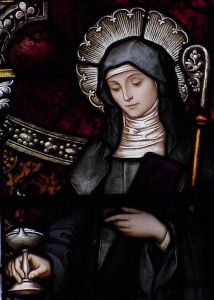
~ Saint Magick – Saint Brigid of Kildare ~ – Ye Olde Dark Arts

saint-brigid

FEAST DAY: February 1

DAY OF THE WEEK: Sunday

CANDLE COLOR: Yellow

LEGEND: Daughter of Dubtach, pagan Scottish king of Leinster, and Brocca, a Christian Pictish slave who had been baptized by Saint Patrick. Just before Brigid’s birth, her mother was sold to a Druid landowner. Brigid remained with her mother till she was old enough to serve her legal owner Dubtach, her father.

She grew up marked by her high spirits and tender heart, and as a child, she heard Saint Patrick preach, which she never forgot. She could not bear to see anyone hungry or cold, and to help them, often gave away things that were Dubtach’s. When Dubtach protested, she replied that “Christ dwelt in every creature”. Dubtach tried to sell her to the King of Leinster, and while they bargained, she gave a treasured sword of her father’s to a leper. Dubtach was about to strike her when Brigid explained she had given the sword to God through the leper, because of its great value. The King, a Christian, forbade Dubtach to strike her, saying “Her merit before God is greater than ours”. Dubtach solved this domestic problem by giving Brigid her freedom.

Brigid’s aged mother was in charge of her master’s dairy. Brigid took charge ,and often gave away the produce. But the dairy prospered under her (hence her patronage of milk maids, dairy workers, cattle, etc.), and the Druid freed Brigid’s mother.

Brigid returned to her father, who arranged a marriage for her with a young bard. Bride refused, and to keep her virginity, went to Bishop Mel, a pupil of Saint Patrick’s, and took her first vows. Legend says that she prayed that her beauty be taken from her so no one would seek her hand in marriage; her prayer was granted, and she regained her beauty only after making her vows. Another tale says that when Saint Patrick heard her final vows, he mistakenly used the form for ordaining priests. When told of it he replied, “So be it, my son, she is destined for great things.”

Her first convent started with seven nuns. At the invitation of bishops, she started convents all over Ireland. She was a great traveller, especially considering the conditions of the time, which led to her patronage of travellers, sailors, etc. Brigid invented the double monastery, the monastery of Kildare that she ran on the Liffey river being for both monks and nuns. Saint Conleth became its first bishop; this connection and the installation of a bell that lasted over 1000 years apparently led to her patronage of blacksmiths and those in related fields.

PETITION SAINT BRIGED: for childbirth, protection from fires, fertility, the hearth, healing, physcians, agriculture, animal husbandry, inspiriation, learning, poetry, prophecy, smithcraft, love.

PATRONAGE: babies; blacksmiths; boatmen; cattle; chicken farmers; children whose parents are not married; dairymaids; dairy workers; fugitives; infants; Ireland; Leinster, Ireland; mariners; midwives; milk maids; newborn babies; nuns; poets; poultry farmers; poultry raisers; printing presses; sailors; scholars; travellers; watermen

REPRESENTATION: abbess, usually holding a lamp or candle, often with a cow nearby

Source: ~ Saint Magick – Saint Brigid of Kildare ~ – Ye Olde Dark Arts

Four Thieves Vinegar – Good Witches Homestead

From what evidence we have, infused vinegar have existed almost since we first discovered vinegar. It’s so useful by itself, and infusing it increases its effectiveness and potency. Its many functions include:

– culinary
– preservation
– beauty regimes
– cleansing
– disinfection
– anti-infestation

Herb-infused vinegar is natural, organic, non-toxic, inexpensive, traditional technology that used to and still can replace so many of our modern products. They can be full strength for cleaning and disinfect, as an insect discouragement or anti-fungal. With the proper ingredients, they are remarkably effective against bacteria, as well as an efficient cleanser, which leaves a refreshing scent. I personally have used the diluted spray to cure my apple trees of a debilitating fungus that had been plaguing them for years. I also got rid of the aphids on my Virginia Creeper and created a scent barrier against ants getting into my house.

Diluted, often with rosewater, it was used as a cosmetic, to tone the face, clear up eruptions, refresh clothing, and in a sponge nosegay, was kept near the face to ward off the Plague. Certain physicians are still called quacks due to the medieval practice of wearing a duck-like mask with a sponge of aromatic vinegar resting in the beak when visiting areas of contagion. Perhaps it’s currently an insult to call a doctor a quack because it implies their techniques are right out of the Middle Ages.

*It should be used only with extreme caution during pregnancy, * as some of the herbs are abortifacient. I used it when I was pregnant with my son to no ill effects, but I took care not to get any on my skin.

Four Thieves Oil is a very modern invention, and not the same thing at all. It usually contains essential oils of similar herbs, but oils and aqueous infusions do not often share the same properties. It cannot be used for all the same purposes as the vinegar formulations, and are often far more expensive. Though it apparently can be used for similar magical purposes, such as banishment, in Vodun and other systems…

The first actual record we have for the version known as Four Thieves is not medieval. If it is indeed an actual record. Most of the “documentation” is really stories. I will take the liberty to re-post this excellent history. (I’d credit it if I knew the original source, but this exact version is all over the ‘net.) :

“The famous French aromatherapy doctor, Jean Valnet, has two recipes in his book. He claims corpse robbers who were caught red-handed in the area around Toulouse in 1628-1631 revealed the original recipe. His story is the more credible of the many ones can find. Given the virulence and deadliness of the plague, the judges were astonished by the indifference of the thieves to contagion. Valnet quotes the archives of the Parliament of Toulouse:

“During the Great Plague, four robbers were convicted of going to the houses of plague victims, strangling them in their beds and then looting their dwellings. For this, they were condemned to be burned at the stake, and in order to have their sentence mitigated, they revealed their secret preservative, after which they were hanged.”

Here’s one of the versions stated to be original.

Four Thieves Formula

3 pints white wine vinegar
handful wormwood
handful meadowsweet
handful juniper berries
handful wild marjoram
handful sage
50 cloves
2 oz. elecampane root
2 oz. angelica
2 oz. rosemary
2 oz. horehound
3 g camphor

Dr. Valnet has a variation of his own described as an antiseptic vinegar.

Marseilles Vinegar

40 g. greater wormwood, Artemesia absinthium
40 g. lesser wormwood, Artemesia pontica
40 g. rosemary
40 g. sage
40 g. mint
40 g. rue
40 g. lavender
5 g. calamus
5 g. cinnamon
5 g. clove
5 g. nutmeg
5 g. garlic
10 g. camphor (not synthetic camphor)
40 g. crystallized acetic acid
2500 g. white vinegar

Instructions: steep the plants in the vinegar for 10 days. Force through a sieve. Add the camphor dissolved in the acetic acid; filter.

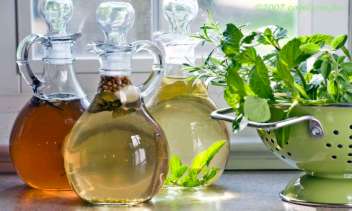
Years of experimentation using historical and modern recipes have helped create my interpretation of this legendary liquid. My version is an amalgam of several different recipes, taking into account what was commonly available, especially in England, during the medieval period, and what was in my garden fresh. It is a concoction of white wine vinegar steeped in aromatic and antibacterial herbs such as garlic, rue, and wormwood for a number of days, then filtered and used for dilution with water for cleansing the house and other areas.

Remember: Only use real, brewed vinegar for all infused vinegar recipes. Ordinary store-bought white vinegar is just lab-created Acetic Acid diluted to 5%. It doesn’t have the same richness of composition or balance of acids as real brewed vinegar or the same sustainability. Try these recipes with other base vinegar, too, such as apple cider and rice wine!

Here is my exact recipe, for those that want to try it at home.

My Four Thieves Vinegar Recipe:

Approximately the same sized twig piece of each:

fresh peppermint
fresh thyme
fresh rue
fresh rosemary
fresh wormwood
fresh sage
four cloves garlic (slightly crushed to release the allicin)
3 bay leaves
4 cloves
4 small pieces cinnamon bark

Place ingredients in old, clean, spaghetti jar. Fill remainder of jar with white wine vinegar, stir to get rid of bubbles. Add lid, and place in sunlight, like windowsill. Herbs will lose color after a few days. Then you filter and can add a bit more herbs for a really strong batch.

Filter out completely in a few weeks; bottle and label.

Source: Four Thieves Vinegar – Good Witches Homestead

That Magical Tree {January 2017}

birch-beithe

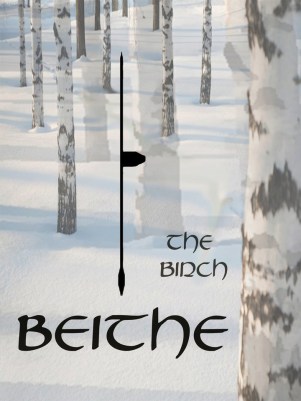
Birch  –   Beith Ogham letter B … Ruler of the 1st Lunar Month 24th December – 20th January Powers:  Purification, A Guardian of New Beginnings, Bringer of Hope, 

The Druid tree symbol for the Bards

– ‘The Goddess Tree’ – ‘The Lady of the Woods’,  the Birch tree, Betula Pendula is the bringer of promise, light, and new beginnings.

  An elegant native of British woods, of all Northern European countries and of North America, the birch is tall, up to sixty or so meters in height, with a slender pale trunk. It grows in clearings, preferring sunlight, but is not fussy about soil and is very hardy although not especially long-lived.
The birch is known as a ‘Pioneer Tree’ – meaning that it can restart the colonization of woodlands after long-term natural disasters.

Its soft green deciduous leaves have serrated edges and are held on thin branches which move and bow in the breeze. Its striking white, peeling bark gives it a faery-like beauty in all its seasons.

As the sap rises in early March, it’s possible to cut the bark, tap the trees and use the sweet liquid collected neat and cold as a water, or as the basis for a birch wine or beer. (Find out how to tap for birch sap in the bushcraft video below).

  In early spring the small male flowers develop into long catkins (pictured right) and the female flowers grow into tiny cones (pictured left).

The rest of the article at the Source: That Magical Tree {January 2017}

MAGICK and MEDICINE | hocuspocus13

OLDE FOOT REMEDIES

As long as anyone can remember humanity has had beliefs in a higher power through the use of magick ~ spells ~ curses ~ cures ~ incantations ~ remedies that have been preserved across many different cultures

Grimoires were then developed over the centuries which became the books of choice for secrets societies

Writing down ones magick did vary in style some written down in tiny pocket notebooks others in hugh ledgers and those who wrote their secrets upon odd scraps of paper

Many preserved and available
Many burned upon administering the cure

[…]

Read the rest of the article at the Source: MAGICK and MEDICINE | hocuspocus13

Mental Meanderings – blackmadonna-juju: “Ancestor worship is tenable…

https://yanzadracan.tumblr.com/post/154892149593/blackmadonna-juju-ancestor-worship-is-tenable

Mental Meanderings – Have you elevated your ancestors? When is the last…

https://yanzadracan.tumblr.com/post/154892182923/have-you-elevated-your-ancestors-when-is-the-last

Elder Mother, The Wild Hunt, And The Winter Solstice

If you follow the sun, you’ll find that, as fall edges into winter, it slips further and further south. The angle of the sun’s rays gets shallower, and the days become shorter with the sun in southern skies. But every year, it turns back and begins its northward course right around the time of the winter holidays: a new light is reborn, and we can start fresh in a new year. The Winter Solstice.That said, many traditional cultures used the moon as an easier form of time-tracking. Her course, when accounting for the earth’s orbit around the sun, runs about 29-30 days from full moon to full moon. The moon cycle also divides neatly into four segments of about 7-8 days each, making it a useful way to mark the more practical weekly calendar. The moon traces more intimate rhythms, while the sun holds the broad, seasonal cycles.But the lunar and solar calendars are offset: while there are about twelve full moons in a year, that’s not quite enough to account for all the days between one winter solstice and the next. In fact, there are about 11-12 extra days after twelve lunar cycles before the sun synchronizes with the calendar again. So, in order to keep the daily household rhythm and the seasonal agricultural rhythm aligned, our ancestors simply inserted twelve extra days at the beginning of the year, right after the Winter Solstice. These days existed outside of the normal lunar calendar, and after they were over, the weekly reckoning could recommence and be in line with the solar cycle again. This, of course, is the origin of the “twelve days of Christmas”.

Source: Elder Mother, The Wild Hunt, And The Winter Solstice

21 Ways to Celebrate Winter Solstice

Winter Solstice – also known as Yule – is one of my favourite times of the year…. okay, my absolute favourite time of year. But maybe I say that for all holidays!

And while I love the major celebrations of Samhain (the start of the Dark Half of the year in the Celtic Wheel of the Year) and Beltaine (the beginning of the Light Half of the year), there is something about Winter Solstice that touches so many. Virtually all cultures and faiths celebrate Father Sun and the return of the light at Solstice.

So what is Solstice? The word solstice comes to us from two Latin words, sol  (the Sun) and sistere (to stand),  referring to the standing sun that we experience twice a year. During the days around the solstice, the Sun appears to stop in its travels (particularly dramatic in polar regions!).

On Solstice, our ancestors celebrated the return of the Sun with feasts, music and art, rituals, greenery, camaraderie and – most importantly – symbols of the Sun such as bonfires and candles. And many carried on the tradition for a full 13 nights / 12 days (in the Celtic world, the day began and ended at sunset), a tradition some of us may recognize as the root of the Twelve Days of Christmas. […]

Read entire article at the Source: 21 Ways to Celebrate Winter Solstice

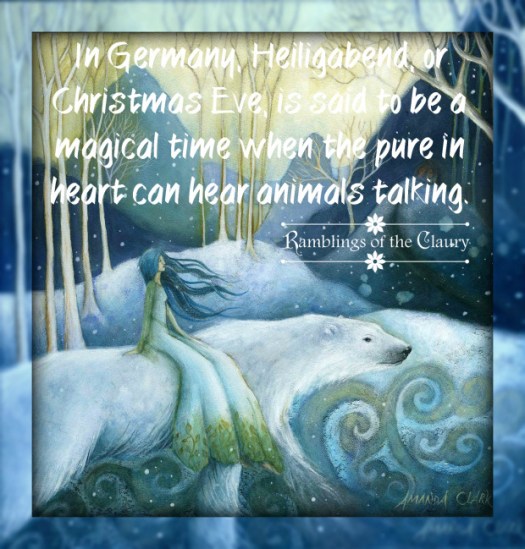
Christmas Facts Advent Day 12

Photo post by @Ramblings_Claury.

Source: Christmas Facts Advent Day 12