Food as Medicine: West Indian Lemongrass (Cymbopogon citratus, Poaceae)

Crooked Bear Creek Organic Herbs's avatarCrooked Bear Creek Organic Herbs

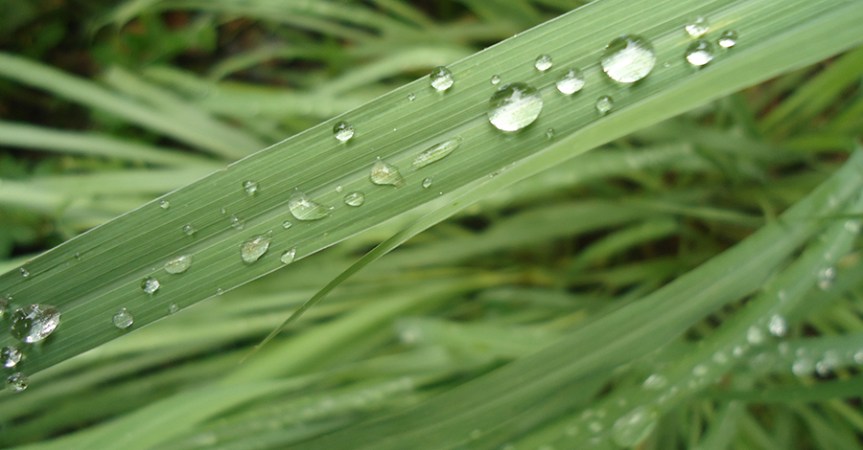
West Indian lemongrass (Cymbopogon citratus, Poaceae) is an aromatic tropical perennial with long, slender, light green leaves that grow in groups with bulbous and fibrous stems at the base of the plant.1-3The grass can grow from two to six feet tall, and its leaves are approximately one inch wide with slightly toothed, saw-like margins.2 West Indian lemongrass likely originated from India, Malaysia, or Sri Lanka.1,2,4,5 It is now cultivated in tropical and subtropical countries.4 The largest exporter of lemongrass leaves and stalks is Guatemala,5 while India is the largest producer of lemongrass essential oil, 80% of which is exported annually.6Lemongrass grows well in warm and humid areas with plenty of sunshine and moisture.4 The leaves and fleshy part of the stem are used for flavoring teas and broths in many Asian cuisines, and its essential oil is used in…

View original post 2,696 more words

Linden Sends Soft Sleep

The Herb Society of America's avatarThe Herb Society of America Blog

By Beth Schreibman-Gehring, Chairman of Education for The Western Reserve Herb Society unit of The Herb Society of America

6a00d8349ca72c53ef017c36657a78970b-320wiMeet one of my favorite wellness remedies — the flowers and leaves of the lovely linden tree. You may know it by its other names, lime tree or American basswood. It’s an easily identifiable tree with lovely boxy leaves and pretty seed pods. It’s easy to identify when blooming. Just use your ears and nose.  A linden tree may be called a “bee tree” for good reason. Walk under it and look up. If it’s covered with flowers it will undoubtedly be covered with busy, buzzy honeybees. I have been obsessed with its clean yet sweet and floral fragrance. A stand of linden in full bloom is the scent of warmed raw floral honey and freshly mown hay.


In European countries it’s commonly referred to as the linden and in America as…

View original post 650 more words

Geographical Variation in Nutritional Content of Baobab

Crooked Bear Creek Organic Herbs's avatarCrooked Bear Creek Organic Herbs

The baobab (Adansonia digitata, Malvaceae) tree is indigenous to sub-Saharan Africa and is an important source of food and economic generation. Leaves, fruit, and seeds are eaten, and timber, fodder, and fibers from the tree are marketed. With roles in traditional medicine, culture, and religions, it is widely considered a sacred tree and often allowed to thrive in agricultural lands. Baobab is known to be high in vitamin C and other nutrients. However, nutritional studies on baobab vary greatly by sourced material and analytical methods. In addition, data on nutrients from east and south African baobabs have not been previously reported. Therefore, the authors analyzed fruit pulp and seeds from 17 populations in east, south, and west African nations (Kenya, Tanzania, Mali, Zambia, Zimbabwe, and Malawi) to determine if the region of origin affects nutrient content.

Provenances were from 8-1114 meters above sea level with rainfall of 463-1125…

View original post 816 more words

Useful Links and Resources

Crooked Bear Creek Organic Herbs's avatarCrooked Bear Creek Organic Herbs

For more information and updates on the work of the three partner organizations of the ABC-AHP-NCNPR Botanical Adulterants Program, please visit ABC at www.herbalgram.org, AHP at www.herbal-ahp.organd NCNPR at www.pharmacy.olemiss.edu/ncnpr/.

Other Helpful Resources and Links: 

AHPA’s Botanical Identity References Compendium:
http://www.botanicalauthentication.org/index.php/Main_Page

AHPA’s Keep Supplements Clean Website:
http://www.keepsupplementsclean.org/intl_enforcement.html

Botanical Nomenclature Resource – Royal Gardens-Kew:
http://mpns.kew.org/mpns-portal/

Chinese Medicinal Plants Authentication Centre:
http://www.kew.org/science/ecbot/ecbot-cmpac.html

European Commission’s Rapid Alert System for Food and Feed:
https://webgate.ec.europa.eu/rasff-window/consumers/

Food and Drug Administration’s Center for Drug Evaluation and Research (CDER) List of Tainted Products Marketed as Dietary Supplements
http://www.accessdata.fda.gov/scripts/sda/sdNavigation.cfm?sd=tainted_supplements_cder

Safety Alerts and Products Recalls: Products found to contain undeclared medicines. Drug Office, Department of Health, The Government of the Hong Kong Special Administrative Region:
http://www.drugoffice.gov.hk/eps/do/en/consumer/safety_alerts_and_medical_recalls/undeclared_medicines.html

US Botanical Safety Laboratory:
http://www.botanical-safety.com/us-botanical-safety-laboratory/85-botanical-identity-testing

USP Food Fraud Database:
http://www.foodfraud.org/

View original post

Honeysuckle {Lonicera caprifolium / Lonicera japonica}

Crooked Bear Creek Organic Herbs's avatarCrooked Bear Creek Organic Herbs

Also Known As,

  • Honeysuckle
  • Jin Yin Hua

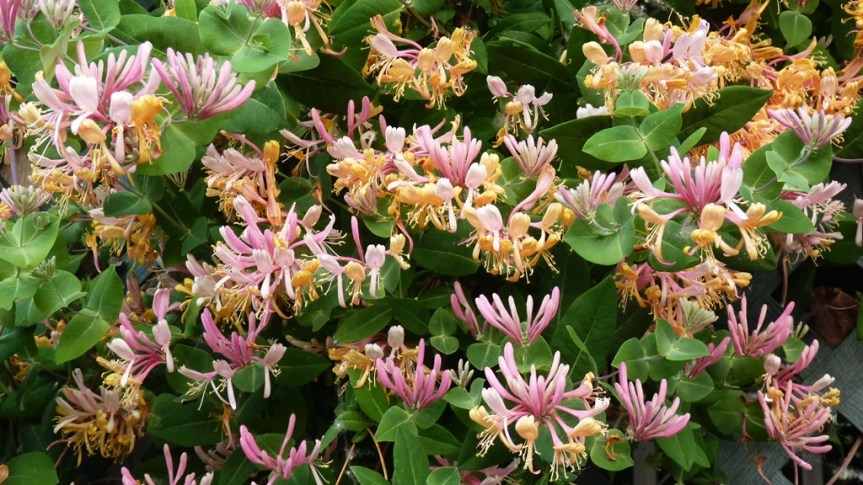
The herbal plant called the honeysuckle is a climbing plant that can grow to twelve ft – four meters – in length. The plant comes in several varieties, and some varieties are deciduous – example, the L. caprifolium variety – while some are semi-evergreen – the Asian honeysuckle or jin yin hua, L. japonica. The plant bears oval-shaped leaves that come in pairs on the branches. The tubular shaped flowers of the plants come in a variety of colors, the yellow-orange flowers of the European variety or the yellow-white colored ones of the jin yin hua. The European honeysuckle variety bears red colored berries and while the berries of the jin yin hua variety are black in color.

The European honeysuckle or “Woodbine” – the L. periclymenum to botanists – was at one time employed widely as an herbal remedy for problems like…

View original post 1,376 more words

Native American Herbs of the Northeast

Crooked Bear Creek Organic Herbs's avatarCrooked Bear Creek Organic Herbs

A look to the past reveals some of the most important plants used by Eastern woodland tribes – and an inestimable connection to nature.

My adventure into the historical uses of many Native American plants began when Maine native Kerry Hardy, author of Notes on a Lost Flute: A Field Guide to the Wabanaki, presented a program for Western Maine’s Greater Lovell Land Trust, billed as “Native American Plant Medicine” last summer. So many plants and so many uses! I was intrigued to find out more about these plants and explore the wealth of medicinal knowledge from Eastern Woodlands tribes like the Mohawk, Wyandot {Huron}, and Iroquois. From Hardy’s work, as well as from the research of author Charlotte Erichsen-Brown, I enjoyed a glimpse into how these tribes looked to nature for healing – and how early pioneers benefited from their knowledge.

elderberries-af-canyon-3-2013-09-05

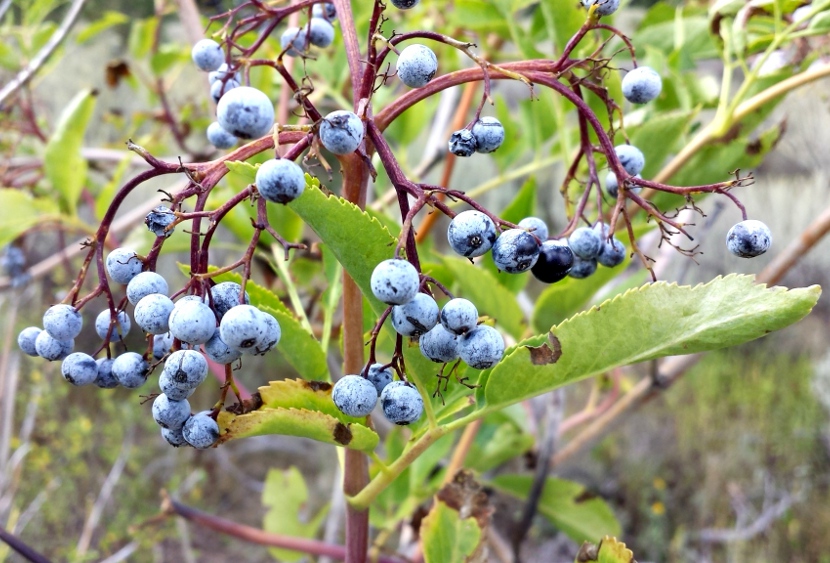
The Essential Elderberry

Hardy’s book focuses on…

View original post 2,088 more words

Pantry Profile: Chives {Allium schoenoprasum}

By Crooked Bear Creek Organics

Crooked Bear Creek Organic Herbs's avatarCrooked Bear Creek Organic Herbs

With its bright green stalks and vibrant, lavender-pink and spiky blossoms, chives are a lovely ornamental plant and herb garden staple. Found fresh in the yard in summer and dried in cupboards in the cooler months of fall and winter, chives hold surprising medicinal and nutritional benefits. A member of the Amaryllidaceae family {Amaryllis}, which includes familiar alliums garlic and onions, chives have a mild and pleasant onion-garlic flavor.

Chives have played a role in medicine and protection for more than 5,000 years. The ancient Romans used chives to relieve sore throats, lower blood pressure, and increase urination, while Traditional Chinese Medicine turned to it for coughs, colds, and congestion. In the Middle Ages, it was a popular remedy for melancholy.

A traditional Romani custom was to use chives in fortune telling and to hang them in the home to ward off disease and evil influences. Planting chives in the…

View original post 638 more words

Remembering Who We Are: Chinese Botanical Guides

Remembering Who We Are …

Ancestral Arts's avatarAncestral Apothecary

Bekah gets to know the plants of her grandmother’s village in Guangdong, China.

As part of our studies in the Cecemmana program, we as students are encouraged to study our ancestral medicines. We are encouraged to ask questions like: who were the healers in our families? What plant medicine did they use? What healing foods did they eat? What healing songs did they sing? In the first two years of Cecemmana, we as students researched the answers to these and other questions and then presented our findings. In my first year of Cecemmana, I looked forward to learning more about the herbal medicine practices of my Chinese heritage.

I found that before I could get to know the plants, though, I had to better understand my family. Growing up in a mixed race household in a predominantly white community, my sister and I grew up feeling disconnected from our Chinese…

View original post 1,270 more words

The Forager’s: Foraging for Summertime Herbs

The Forager’s: Foraging For Summertime Herbs …

Crooked Bear Creek Organic Herbs's avatarCrooked Bear Creek Organic Herbs

Go beyond the confines of the garden and into the wild to find some of nature’s most valuable medicine.

Summer is the perfect time to stock up on nature’s healing gifts. But all too often we walk right by these treasures, not recognizing them as valuable plants. Learning how to identify and then use a variety of edible and medicinal plants in your region can open up a world of botanicals, not only providing you with access to important medicine but also helping you familiarize yourself with the wilderness that abounds.

Five Rules for Sustainable Foraging

Before you head out into the fields and forests to harvest plants, you need to know a bit about foraging ethics, as well as the dangers that certain plants can pose. In an environmentally fragile world, you want to proceed without taking from nature in ways that are harmful.

  1. Properly identify the plant

View original post 2,338 more words

Getting to Know Lyre-Leaf Sage

Getting to know Lyre-leaf Sage …

Crooked Bear Creek Organic Herbs's avatarCrooked Bear Creek Organic Herbs

Having fallen into disuse, this North American species is making a comeback thanks to some notable herbalists and a nod from the Herb Society of America.

Graceful, light-blue wildflowers border the roads and cover swaths of meadows in periwinkle, from the Mid-Atlantic to Missouri and from Florida to Texas. Known as “just a roadside weed” or invasive species, lyre-leaf sage has a lengthy history. A much-valued wild edible and medicinal plant of indigenous people, and a time-honored remedy in the southern folk traditions, this North American sage has been chosen by the Herb Society of America as the Notable Native Herb of 2018.

lyre leaf sage

Lyrata in the Garden

A beautiful, wild, flowering plant, lyre-leaf sage {Salvia lyrata} is part of the Lamiaceae {mint} family along with rosemary and oregano, and it’s closely related to garden sage {Salvia officinalsi}.

The only sage native to the United States, it has reportedly grown as…

View original post 2,060 more words