What Are Adaptogens? – Crooked Bear Creek Organic Herbs

As always when using herbs … Check for contraindications for any prescription drugs.

Adaptogens are natural substances that work with a person’s body and help them adapt; most notably, to stress. Adaptogens are a natural ally in dealing with persistent stress and fatigue because they work with regulating important hormones.

Adaptogens offer several other health benefits, including…

  • A boost for the immune system
  • Support for managing a healthy weight
  • Increased physical endurance and mental focus
  • Reduction in discomfort caused by poor health
  • Encouraging a balanced mood

All these benefits can come from something as simple as adding adaptogens into your regular diet. While there are a number of ways to increase your adaptogen intake, consuming adaptogenic herbs is arguably one of the best.

14 Powerful Adaptogenic Herbs

There are a number of naturally adaptogenic herbs that you might consider trying on for size. They can be taken in capsulated supplement form, brewed in teas, or simply cut up and used to spice up a meal. For maximum health benefits, it’s best to include a healthy variety of these herbs in your diet. Here are some of the most popular adaptogenic herbs and their traditional uses.

1. Asian Ginseng

This herb, also called Panax Ginseng, supports physical endurance, mental clarity, and has antioxidant properties that support heart health and your immune system. Studies show it’s safe to consume.

2. Holy Basil

A member of the mint family, this herb has soothing properties and has been used for centuries for good health. Its antioxidant properties support heart health and normal lipid profiles. It’s also a powerful weapon against stress.

3. Milk Thistle

The active compound in milk thistle, silymarin, supports liver health and metabolism that helps manage the hormones associated with stress.

4. Ashwagandha

Also called Indian Ginseng, studies from India shows that those who take this herb enjoy dramatic improvements in how they handle – and feel – stress. It’s also taken to keep the mind sharp, and for energy.

5. Rhodiola Rosea

This herb is popular among the Sherpas who work on Mt. Everest because of the way it supports regular energy levels and fights altitude sickness. Studies also show it helps encourage normal cortisol levels as well as energy levels.

6. Ginseng Eleuthero

Commonly called Siberian Ginseng, the Eleutherococcus senticous is known for not only its adaptogenic properties but also as a natural energy booster.

7. Rosemary

You’ve probably used rosemary in your cooking, but this herb does a lot more than add flavor and fragrance to your meals. Research shows two of its compounds, caffeic acid and rosmarinic acid, support heart, digestive, and liver health. Traditional medicine from around the world has used it for centuries to relieve stress.

8. Aloe Vera

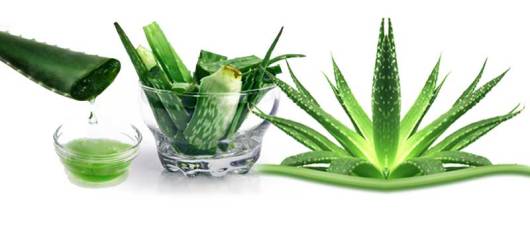
Researchers have taken renewed interest in aloe vera as a powerful herb and superfood. Two of its compounds, acemannan and aloctin A, support immune and adrenal health.

9. Gotu Kola

Long used in both traditional Indian and Chinese medicines, this herb stimulates blood flow, helps reduce swelling, and is a powerful antioxidant.

10. Astragalus

The Chinese have used astragalus traditionally to encourage good health and fight stress. Its active compound, called TAT2, protects against aging, supports detoxification, and is nutrition for the kidneys.

11. Moringa Oleifera

The seeds, leaves, roots, and oils of the Moringa Oleifera plant are used throughout Southeast Asia an ingredient in many common dishes. As part of traditional medicine, it supports the immune response, eases swelling, and promotes energy and adrenal health.

12. Schisandra

This herb has been used in traditional Chinese Medicine to promote good health and overall wellness. Research shows it has powerful antioxidant properties that help your body stay balanced.

13. Bacopa

This popular Ayurvedic herb has been used for centuries to support brain health like memory, focus, and thinking.

14. Licorice Root

This herb has traditionally been used to promote many aspects of wellness, including normal metabolic function.
adaptogen-edited

How Do Adaptogens Work?

Now that we’ve mentioned some common herbal sources for adaptogens, let’s take a look at how adaptogens actually work. First of all, it’s important to understand that stress is only meant to exist in short bursts. It is a hormonal response that may have been responsible for helping some of your own ancestors escape from hungry lions (or maybe even face them!). Think about stress as what is commonly called your “fight or flight” response.

Today, most of us don’t have to worry so much about lions. However, most modern-day stresses are ongoing. When your adrenal system remains in a constant active state, it throws your body out of balance. Constant stress can wreak havoc on your body, especially on your digestive system and energy levels.

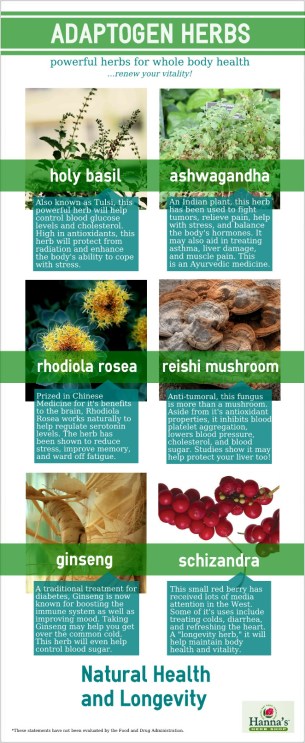
Adaptogenic compounds help mitigate the stress response. They work to bring the hormones of your adrenal system back into balance and overcome adrenal fatigue, a common condition of chronic stress. Studies show adaptogens like Rhodiola Rosea and Schisandra reduce the presence and effect of stress hormones. In this way, they help endurance during physical stress like exercise and return your body to normal when you’re faced with chronic stress.

Think of adaptogens like a thermostat. The keep your body’s stress response at a desirable level, much like the way a thermostat keeps the temperature from becoming too high or too low. They’re good for you all the time, not just when you have a high level of stress.

Adaptogens have broad-ranging effects, but this is mostly because they affect adrenal hormone secretion. In general, we can think of adaptogenic herbs this way: they set an “upper limit” on the signals the nervous system can send to the adrenals, making it harder for the body to crank adrenal response up to 100%. Some herbs, like licorice, keep adrenal hormones in the bloodstream longer: this lets the brain know that there’s plenty of response happening, and it doesn’t need to stimulate more. Others, like Rhodiola and eleuthero, help balance out excessive adrenal stimulation while at the same time containing chemistry that supports the activity of attention- and alertness-enhancing brain pathways. The net result: we feel more alert, but at the same time don’t produce excessive, unhealthy levels of adrenal hormones. Contrast this to the action of stimulant drugs (like amphetamines, or even caffeine): they increase brain alertness, but also crank up adrenal secretions. This is why stimulants make us feel awake, but also sometimes jittery, cold, and clammy: these last effects are the result of excess adrenal hormone secretion, and you’ll never feel them from adaptogens like Rhodiola or eleuthero.

schisandraberry_text

Other adaptogens are more calming in nature: they still help set an “upper limit” on adrenal hormone secretion, but also encourage deeper, more refreshing sleep and lack any of the activity on alertness pathways in the brain. By supporting more effective recovery during times of rest, adaptogens such as ashwagandha and Schisandra allow the body to bounce back and we can really notice this during the day: a balanced mood, energy level, and inflammatory response. It’s interesting to note that these herbs won’t ever make you “sleepy” directly: their effects, due in part to limiting the body’s ability to “overdo” the stress response and make sure our adrenals secrete hormones at balanced, healthy levels, are to get us into a more restful place during the evening and nighttime hours, so recovery and sleep can actually take place.

Source: What Are Adaptogens? – Crooked Bear Creek Organic Herbs

Cannabis medicine will soon be legally available in UK : RT Question More. – DWPExamination.

Cannabis medicine will soon be legally available in UK

CBD has been used in trials to fight epilepsy. © Mario Anzuoni / Reuters

One of the main ingredients in cannabis, cannabidiol (CBD), is to be classed as a medicine in the UK. The decision by the Medicines & Healthcare products Regulatory Agency (MHRA) stems from claims that the drug successfully treats serious diseases.

The new classification means products containing CBD can now be legally distributed across the UK. Gerald Heddel from MHRA told Sky News that the change came about “based on the fact that we noted that people were making some quite stark claims about serious diseases that could be treated with CBD.”

Alongside Tetrahydrocannabinol (THC), CBD is one of the main components of cannabis, accounting for 40 percent of the marijuana plant’s extract. Unlike THC, which is psychoactive, CBD is non-psychoactive, antipsychotic and does not cause anxiety.

READ MORE: Marijuana use jumps among pregnant women in US – report

The compound’s lack of a high makes it less appealing to recreational users but of particular interest to the medical community, with campaigners claiming it aids in easing pain related to diseases including cancer, depression, Crohn’s disease, and post-traumatic stress disorder (PTSD).

“It was clear that people are using this product with the understandable belief that it will actually help,” Heddel said.

Read More : RT Question More.

Source: Cannabis medicine will soon be legally available in UK : RT Question More. – DWPExamination.

Echinacea 101 – Crooked Bear Creek Organic Herbs

If you taste echinacea’s powerful root, you’ll be surprised by the tingling sensation that soon follows. While many herbalists enjoy echinacea’s root, the entire plant can be used for its immune boosting properties.* The alkyamides in echinacea help stimulate the immune system, but this is only one set of constituents that work in harmony with many others in the plant. Perhaps this is why it is one of the most studied plants in Western herbalism. The true identity of all the active principles still remains open, making echinacea’s true powers another plant mystery!

All the plants in the echinacea genus are indigenous to North America and originally dwelled in prairie lands. In the mid-1800s, the American Eclectic physicians began to use echinacea and its healing powers reached beyond the New World.  By the beginning of the 20th century, it was one of the most frequently used herbal preparations in the United States, and overharvesting of the wild perennial flower soon followed.

Fortunately, United Plant Savers works to restore native populations of plants, and echinacea can now be cultivated in many different regions of the world. The best way to start your echinacea seeds is to have them endure a period of cold, moist stratification. What’s that, you ask? Some seeds are very hardy and lay dormant until awakened by the cold weather. Stratification either stimulates or creates winter conditions to encourage germination or sprouting. In the wild, echinacea’s dormancy is naturally overcome by spending time in the ground and enduring long winters.

The easiest way to start echinacea at home is to sow echinacea seeds about ¼ inch deep in fall, cover with a thin layer of rich compost and let nature take its course over the winter. Another option is to place the seeds in a small jar with some sawdust, vermiculite or peat moss. Then moisten and place the jar in the refrigerator for about a month. Once spring arrives, the seeds can be planted a ¼ inch deep into a large pot or directly into the soil. These purple coneflowers enjoy partial to full sun, ample water (but can handle some drought) and good drainage. You can expect the perennial to bloom fully by the summer of its second year.

tradmed_bp_november_embed_echinacea101_04-web

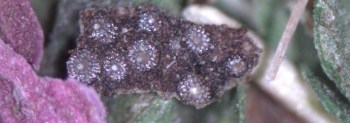
The leaves of Echinacea purpurea sometimes have “covering trichomes,” which are hairs, emerging right from the skin (or epidermis) of the leaf. Our microscopist helps to identify plants and saves photos like the above to deepen our knowledge of key plant identification features.

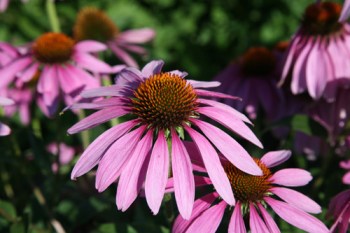
If you think you have found this plant in the wild, you will be able to identify it by some of its most pronounced features. All members of the Echinacea genus are perennials that bloom with both disk and ray flowers. The purple ray flowers attach to a round, high and spiky cone – hence the common name “purple coneflower.” Technically speaking, this thick and spiky cone is actually hundreds of more flowers, all tightly packed together.

So when you’re feeling like you need a plant ally to give you a boost, think of echinacea.

Now when you see a beautiful echinacea flower while you are out and about, its radiant purple flowers and sturdy structure will remind you of just how powerful this plant really is.

echinacea02Cold Stratification of Seeds for Growing Echinacea Purpurea
Attract goldfinches and butterflies to your garden with a healthy stand of Echinacea purpurea, or purple coneflower. The plant is a native perennial that thrives in U.S. Department of Agriculture plant hardiness zones 3 through 9. Purple coneflower grows from 2 to 4 feet tall, depending on variety, producing purple petals around a cone-shaped center in late summer that first draws butterflies, then finches as it becomes a bristly seed head. Once established, the plant is easy to care and readily self-seeds in place. When starting purple coneflower from seed indoors, you’ll get the best germination rates if seeds are cold stratified.

Cold Stratification

Cold stratification is a seed treatment developed to help gardeners mimic the winter conditions many seeds need to break dormancy and germinate. Many plants, both perennial and annual, that grow in a cold-winter climate evolved winter seed dormancy to keep them from sprouting when conditions are too cold or dry for sprouts to survive outdoors. Some seeds need only dry stratification — exposure only to temperatures between 33 and 50 degrees Fahrenheit — to germinate, while others need moisture in addition to the cold treatment. The length of stratification required also varies by plant species.

Purple Coneflower Stratification

Purple coneflower seed germinates best with moist stratification. Mixing the seeds with a small amount of sawdust, vermiculite or peat moss inside a plastic zipper bag or small jar for cold stratification keeps the seeds moist without hindering germination later. Seeds are sown one-quarter inch deep in containers of moist potting soil and covered with plastic to retain moisture. These containers go inside a refrigerator or other area where the temperature is consistently between 33 and 60 F for the entire stratification period. The temperature experts specifically recommend for E. purpurea coneflowers varies from 40 through 59 F, with the majority at the lower end of the range. Gardeners in areas with winter temperatures consistently in this range can place trays outdoors. Packaged seed often is pre-stratified and does not require any chilling to germinate.

Timing Stratification

The time required for stratification to be effective varies as well, from as little as two weeks up to a month for the seed to break dormancy. Planning for four weeks of cold prevents any question, as chilling for too long is not harmful to the seeds. Stratification time should be figured into your propagation time so that seeds are removed from chilling when it is time to sow. Seeds germinate in 10 to 30 days at 65 to 70 F and are often ready for transplanting within 30 days. The higher the temperature for both the seed and the seedling, the faster the germination and early growth. Purple coneflowers prefer slightly cool temperatures as seedlings and can be planted out just after the last predicted frost. Stems may be stronger and develop more flower buds when they experience cool temperatures of about 40 F after planting out.

Growing Purple Coneflower

Purple coneflowers grow in full sun to partial shade — dappled shade is ideal — in pH neutral, well-drained soil. Plants started from seed may not bloom for two years after planting. Transplants need at least 15 inches between them for the air circulation necessary to avoid disease, but no more than 24 inches to avoid spindly growth that requires staking. They are drought tolerant once established, but low to moderate water throughout the summer results in the prettiest plants. Like most natives, coneflowers have low fertilizer requirements, although a slow-release, high nitrogen fertilizer, like a 12-6-6, is beneficial in early spring as new growth begins. Deadheading keeps the plant blooming and compact and prevents self-seeding. Basal foliage is evergreen in zone 9 but can be cut back in early spring if it needs to be refreshed.

Source: Echinacea 101 – Crooked Bear Creek Organic Herbs

Health Benefits of Bitters – Crooked Bear Creek Organic Herbs

Including bitter foods in the diet isn’t simply a matter of reviving tradition or taste — bitter-flavored foods have a history of healing. From the wine-infused herbal concoctions used by ancient Egyptians to the 16th-century prescriptions of famous physician Paracelsus, elixirs brewed from carefully selected bitter herbs have been treasured as helpful remedies throughout the ages. Studies have confirmed that getting an adequate amount of bitter flavor is important for digestive balance and is linked with many health benefits. Digesting bitters regularly has been shown to:
• Curb sugar cravings
• Soothe gas and bloating
• Relieve occasional heartburn
• Encourage digestive enzymes, bile, and necessary stomach acids
• Calm upset stomach and nausea
• Increase absorption of fat-soluble vitamins A, D, E, and K
• Help maintain healthy blood sugar levels
• Balance appetite
• Ease constipation and regulate bowel movements
• Support liver function and healthy skin …

Read the article at the Source: Health Benefits of Bitters – Crooked Bear Creek Organic Herbs

Hippocrates – ” Let food be thy medicine and medicine be thy food”

Herbs as Cleansers:

The disinfectant qualities of certain plants would have been of great importance to humans, and may have been one of the triggers for a recognition of the other medicinal uses of plants. A large number of ancient cultures used herbs and plants in the cleansing rituals and preparation of the dead. Throughout history, the burning of natural substances has been used for cleansing, healing and in spiritual ceremonies and rituals.

Smudging: Shamanic smudging or just ‘smudging’ is an age-old tribal tradition which has been used for centuries for cleansing and to create harmony and peace. There are many different shamanic smudging ceremonies, and different tribes use a variety of herbs for smudging.  Smudging was used for centuries by the native people of both North and South America, Europe, the Middle-east, Africa, Asia and the Siberian shamans to open the doors of the soul to the spirit world. In all cultures, the burning of certain herbs and incense was seen as a way of gaining access to the soul and power of the plants for cleansing, purification, protection spiritual, ceremonial and magical use, the banishment of negative energies and creation of sacred space. In modern use, incensing is still used as a symbol of purification and sanctification.
One of the earliest recorded uses of smudging can be traced to ancient Egypt where herbs were burned in religious ceremonies, being mentioned on an inscribed tablet from Giza, Egypt, c. 1,500 BC. The Babylonians also regularly used smudge/incense extensively while offering prayers or divining oracles. It was imported to Israel in the 5th century BC to be used in religious offerings. It spread from there to Greece, Rome and India, where both Hindus and Buddhists still burn it in their rituals and at festivals. The smudging tradition dates back millennia and connects all traditional cultures, from the Native Americans to the Druids, from the Zulus to the Maoris, from Aboriginals to the Mayans, from the Chinese to the Balinese, which have age-old forms of cleansing and blessing rituals. Smudge (Incense) is widely used in Oriental religions (Buddhism, Hinduism, Islam, and Taoism) and in the ceremonies of the Anglican, Roman Catholic, and Orthodox churches. Smudging can therefore be seen as a universal spiritual component that runs through and connects all the worlds great cultures and religions throughout time.

Read the entire article at the Source: Herb-Lore (Herbalism).

That Magical Tree {January 2017}

birch-beithe

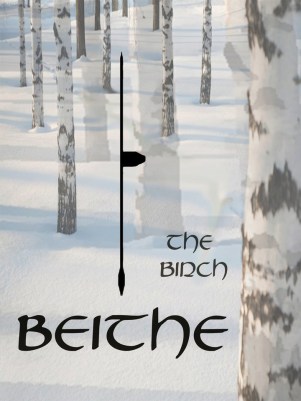
Birch  –   Beith Ogham letter B … Ruler of the 1st Lunar Month 24th December – 20th January Powers:  Purification, A Guardian of New Beginnings, Bringer of Hope, 

The Druid tree symbol for the Bards

– ‘The Goddess Tree’ – ‘The Lady of the Woods’,  the Birch tree, Betula Pendula is the bringer of promise, light, and new beginnings.

  An elegant native of British woods, of all Northern European countries and of North America, the birch is tall, up to sixty or so meters in height, with a slender pale trunk. It grows in clearings, preferring sunlight, but is not fussy about soil and is very hardy although not especially long-lived.
The birch is known as a ‘Pioneer Tree’ – meaning that it can restart the colonization of woodlands after long-term natural disasters.

Its soft green deciduous leaves have serrated edges and are held on thin branches which move and bow in the breeze. Its striking white, peeling bark gives it a faery-like beauty in all its seasons.

As the sap rises in early March, it’s possible to cut the bark, tap the trees and use the sweet liquid collected neat and cold as a water, or as the basis for a birch wine or beer. (Find out how to tap for birch sap in the bushcraft video below).

  In early spring the small male flowers develop into long catkins (pictured right) and the female flowers grow into tiny cones (pictured left).

The rest of the article at the Source: That Magical Tree {January 2017}

True Aloe

Aloe Vera

Latin Name

L. Aloe vera, Aloe barbadensis var miller, Aloe vera var. chinensis, Aloe vulgaris, Aloe vera var. lanzae, Aloe indica, Aloe barbadensis var. chinensis, Aloe vera var. wratislaviensis, Aloe elongata, Aloe vera var. littoralis, Aloe perfoliata var. vera, Aloe perfoliata var. barbadensis, Aloe flava, Aloe chinensis, Aloe barbadensis, Aloe lanzae.

Common Names

Aloe vera, True Aloe

Suggested Properties

Anti-inflammatory, antibacterial, anti-viral and energy tonic

Indicated for

Digestive tract irritations such as colitis, ulcers and irritable bowel syndrome, cleansing stomach, liver, kidneys, spleen, bladder and colon, arthritis, asthma, bladder and kidney infections, cancer, constipation, diverticular disorders, haemorrhoids, heartburn, heart disease, HIV, immune stimulation, indigestion, insomnia, kidney disease, leg cramps, leukemia, skin health, stomach distress, tumours, vaginitis, vaginal douche, viruses, white blood cell production and general health tonic.

If you are using oral corticosteroids, such as beclomethasone, methylprednisolone, or prednisone, it is important not to overuse or misuse Aloe vera juice. A potassium deficiency can develop, and you may experience toxic effects from the medication.

Although it is removed, in practice Aloe vera juice may sometimes still contain tiny quantities of the laxative compound found in aloe latex. Should you begin to have cramps or diarrhea do not ingest any more of the juice.

Allergies to aloe vera are very rare. Yet any food can be a potential allergen. Test a small amount on the inner arm to see if any reaction takes place. If no irritation on the skin is observed then it is generally tolerated. If ingestion causes diarrhea, then reduce the amount you ingest, increasing use slowly over several days until the desired amount is tolerated.

Source: True Aloe

Thalya’s Druid Daydreams • Herbal Medicine: What is an Electuary? An…

As always … Check that any herbal medicines do not have contraindictors with any prescription medications.

Does Himalayan Salt Really Work? — Holistic Experiment

Himalayan Salt contains approximately 84 minerals and produces negative ions that combat positive ions in order to reduce stress and fatigue, leaving the user feeling relaxed and refreshed. It’s often said that Himalayan salt is good for asthma, eczema, psoriasis, acne, allergies, sinusitis, bronchitis, as well as other respiratory illnesses. It can boost the immune […]

Read the rest of the story via Does Himalayan Salt Really Work? — Holistic Experiment

Happy Winter Solstice

Please check with your Doctor or Pharmacist that any herbal remedies have NO contraindications with your prescription medications.

I confess winter has become my favorite season.  Especially when it is as cold and snowy as this one has been.  I love the silence of a landscape blanketed in snow.  I love fires and hot tea and snow in my boots.  I have finally embraced the fact that winter is not my slow time and that hibernation isn’t really a possibility in this line of work.  I have decided to embrace the waxwings and the deer and keep moving like they do.  I play like the squirrels with my family and try to keep it as simple as possible, staying close to home.  As the year 2016 comes to an end it is time to reflect while gazing into a warm fire and to give thanks for all the good things and good people in my life.  I am truly blessed and feeling the abundance.

DIY Elderberry Propolis Throat Spray […]

Read the entire article at the Source: Happy Winter Solstice