Your Apothecary Cabinet: Common Base Oils

By Crooked Bear Creek Organics

Crooked Bear Creek Organic Herbs's avatarCrooked Bear Creek Organic Herbs

Vegetable and herbal oil are used in creams, lotions, massage, facial and body oils, gels, and salves.

Sweet Almond (Prunus amygdalis var. dulcis) and Apricot Kernel (Prunus armeniaca): emollients, can relieve itchiness and dryness.


Arnica (Arnica montana): indicated for bruises, varicose veins, burns, strains and sprains, arthritis, and myalgia.


Avocado (Persea Americana): wonderful oil for regenerative skin care, indicated for dry, itchy, or mature skin, antioxidant, nourishes the skin.


Baobab (Adansonia digitata) and Marula (Scelerocara birrea): emollient, soothes inflamed skin, dry skin, sunburn.


Borage (Borago officinalis) and Evening Primrose (Oenothera biennis): excellent regenerative skin care oils, nourishing, indicated for psoriasis, eczema, inflamed and dry skin conditions.


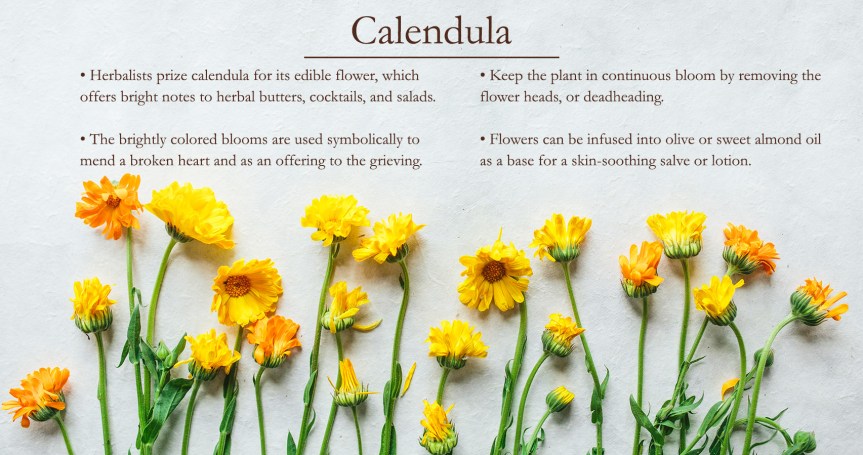
Calendula (Calendula officinalis): anti-inflammatory, wound healing, soothes dry irritated skin, insect bites, cell regenerative.


Coconut (Cocos nucifera): emollient, slightly occlusive to the skin, blend…

View original post 1,233 more words

Your Apothecary Cabinet: Herbal Oils

By Crooked Bear Creek Organics

Crooked Bear Creek Organic Herbs's avatarCrooked Bear Creek Organic Herbs

Herbal oils are simply oils infused with herbs, much as you would steep rosemary in olive oil for culinary purposes. Healing herbal oils can be taken internally for a variety of ailments, can be used externally for therapeutic or daily beauty routines, and can be incorporated into herbal salve recipes. Dried herbs are preferred since fresh herbs will sometimes ferment.

Basic Herbal Oil:

1 cup finely ground dried herbs {flowers, leaves, roots, barks, and/or seeds}

1 1/4 cups almond, jojoba, or olive oil

In a blender or food processor, combine the herbs and oil. Blend or process until puree for greater extractability. Pour the mixture into a clean glass jar with a lid, making sure the plant material is completely submerged in the oil. If it’s not, add more oil until the herbs are covered by about 1 inch of liquid. Cover the jar and store it in a dark…

View original post 775 more words

Your Apothecary Cabinet: Herbal First Aid Kit…

By Crooked Bear Creek Organics

Crooked Bear Creek Organic Herbs's avatarCrooked Bear Creek Organic Herbs

Being prepared with my favorite remedies gives me peace of mind on the road or trail, and keeps me from having to search out herbal products in an unfamiliar town — or from having to resort to padding my heels with mullein leaves to ease the agony of a broken blister while on a backpacking trip.

I’ve had plenty of opportunities to put my first-aid kit to use, from treating blisters and bug bites to motion sickness and colds. I choose simple, multipurpose remedies and store them in a small padded nylon lunch box that’s always ready to toss into the car. For backpacking trips, I pare my kit down to arnica gel, echinacea, peppermint and chamomile tea bags, crystallized ginger, insect repellant, a tin of herbal salve, a tiny bottle of lavender essential oil, and an assortment of bandages and moleskin.

With the following herbs and essential oils, you…

View original post 1,626 more words

Healing Ancestral Trauma with Plant Medicine

In these days of DNA tests one gets through websites to trace your family tree … Is it truly appropriation of traditions or culture if the DNA of your ancestors come from Nigeria, Romans that conquered Germany, Britons, Eastern Europe, North Africa, etc. Skin color maybe white, but the ancestors that traveled to colder climates were not. Those ancestors often provide guidance to practice their indigenous traditions. Through many of the traditions of my ancestors, I have learned to revere and elevate ancestors that had been ignored for generations. As anthropological research and DNA tests trace our origins back to the area of ancient Egypt … As ancestor reverence once again comes to the forefront and people learn to listen to the messages from their ancestors, it is my hope that terms such as cultural appropriation become obsolete because it’s not appropriation, but a rediscovery of our ancestral roots.

Ancestral Arts's avatarAncestral Apothecary

By third year Cecemmana student, Kara Wood.

Several years ago I had a lightning bolt message from my ancestors that I needed to live my truth and combine all the things that I care about (plants, ancestors, genetics, herbal medicine) and really live who I am. That is when I found Ancestral Apothecary School and the Cecemmana program.   I am in the third year and what I have learned and experienced surpassed any possible expectations. So much of what I had always been doing, that I didn’t yet recognize, was preparing me for this.

In this life do any of us really escape trauma? It can affect us at any time in our lives from in utero on.  We also experience ancestral trauma, sometimes referred to as transgenerational trauma. This trauma is the one that inhabits each of us in some way.  Each generation before us imprinted information and trauma…

View original post 1,739 more words

Did You Find Any Morel Mushrooms This Year?

Greetings!

During the weekend of June 8th — 10th, I’ll be participating in the Great Lakes Foragers’ Gathering in Grass Lake, Michigan.  This event is considered to be the largest annual gathering of wild food enthusiasts in the Great Lakes region.  I’ll be leading a few mushroom walks and programs on Saturday and Sunday.  Additional presenters include Samuel Thayer (nationally recognized foraging author), Rachel Mifsud (creator of Will Forage For Food), and several others.  If you’re interested in attending, click here!

Moving forward, let’s talk about spring’s most popular fungi.

Morel mushrooms are among the most alluring and widely recognized wild edible fungi intensively collected by mushroom hunters.

They’re tasty, they’re elusive, and they’re some of the first fungi to appear during the early spring weeks.  No two morel mushroom hunts are the same, and even an “unsuccessful” hunt through an old, familiar spot is likely to yield auxiliary benefits including fresh air, wildflower sightings, and long overdue exercise!

In my neck of the woods, the morel mushroom season is just about finished.  Over the past few weeks, however, I documented a few of my experiences on video.  If you’re interested in seeing what I discovered, check it out!

Speaking of fungi, almost all wild orchid species require relationships with fungi to germinate successfully and grow into beautiful plants.  What’s the reasoning behind this?  And for how long do these intimate relationships last?  Check out this recent Instagram post to learn more!

Thanks for reading and watching, and as always, thank you for your support!

-Adam Haritan

The History of Herbal Medicine and Essential Oils

By Crooked Bear Creek Organics

Crooked Bear Creek Organic Herbs's avatarGood Witches Homestead

The history of essential oils is intertwined with the history of herbal medicine, which in turn has been an integral part of magical practices. Herbal medicine has been used for more than treating minor ailments and disease; it has been instrumental in providing life-enhancing benefits. In most ancient cultures, people believed plants to be magical, and for thousands of years, herbs were used as much for ritual as they were for medicine and food. According to medical herbalist and healer Andrew Chevallier, the presence of herbs in burial tombs attests to their powers beyond medicine. In addition, fourth-century BCE Greek philosopher Aristotle noted his belief that plants had psyches.

Aromatic plants in the form of oil and incense were elements of religious and therapeutic practices in early cultures worldwide. In addition, anointment with perfumes and fragrant oils was an almost universal practice. Burning incense in rituals provided a connection between…

View original post 1,460 more words

Know Your Herbal Chemistry

By Crooked Bear Creek Organics

Crooked Bear Creek Organic Herbs's avatarCrooked Bear Creek Organic Herbs

A herbalist should be fully aware of details about the pharmacology of herbs, a basic understanding of it is more than enough. Herbs are used for healing the human body, they are considered to be holistic agents, and they are used on a physical and biochemistry level. Many pharmacologists try to find out the constituents of herbs, place them according to their chemical groups and have done numerous research and have found herbs to be very complex in their characteristics. Herbs contain a huge variety of chemicals like water, inorganic salt, sugars, carbohydrates, proteins that are highly complex, and alkaloids.

Plant Acids:

An example of weak organic acids is generally found among plants, lemon is the perfect example of citric acid. Organic acids can be split into those based on a carbon chain, and those, which contain a carbon ring in their configuration, but what both have in common is the…

View original post 2,106 more words

Know Your Underground Roots

By Crooked Bear Creek Organics

Crooked Bear Creek Organic Herbs's avatarCrooked Bear Creek Organic Herbs

Underground Stems

The underground stems, by being situated below the surface of the soil, protect themselves against unfavorable conditions of weather and the attack of animals and serve as storehouses for reserve food, and in vegetative propagation. Their stem nature can be distinguished by the presence of nodes and internodes, scale leaves at the nodes, axillary buds in axils of scale leaves and a terminal bud. Further, the anatomy of the underground stem resembles that of an aerial stem. The underground stems are of four types namely rhizome, tuber, bulb, and corm.

Rhizome

A rhizome is a thick horizontally growing stem which usually stores food material. It has nodes and internodes, scale leaves, axillary buds, adventitious roots and a terminal bud. Scale leaves enclosing the axillary buds are seen arising from the nodal points of the stem. Some of the axillary buds develop into branches which grow upwards into the…

View original post 338 more words

Memorial Day Remembrance: Horses of War

by R. T. Fitch

R.T. Fitch's avatarStraight from the Horse's Heart

“Please remember to join myself and other fellow Americans in taking a moment of silence at 3 PM today in honor of all the heroes who gave the ultimate sacrifice so that we can live free and unfettered in the greatest country in the world, the United States of American!” ~ R.T.


From George Washington’s beloved sorrel to a little mare who braved the front lines of the Korean War, here are five unsung equine heroes.

Horses have performed multiple roles throughout military history; they’ve been used for transportation, reconnaissance missions, cavalry charges, packing supplies, and communications. And—when taught to kick, strike, and bite—they became weapons nearly as deadly as those their riders were wielding. War horses also had a potent psychological impact on men in battle—their powerful presence could boost morale and courage, or instill uncontrollable fear in enemy troops.

Though the heyday of the cavalry is over, the…

View original post 1,874 more words

Your Apothecary Cabinet: The Healing Properties Of Herbs

By Crooked Bear Creek Organics

Crooked Bear Creek Organic Herbs's avatarCrooked Bear Creek Organic Herbs

There have been lots of pharmaceutical studies to evaluate the active elements present in herbs to discover the reason as well as the manner in which they work. A relatively outmoded method is to classify the herbs by exploring the types of health conditions that they can aid in curing. Identifying the actions of the herbs and the manner in which they may be employed together forms the basis of a comprehensive approach.

For example, in a number of instances, the action of herbs is owing to certain chemical or a blend of chemicals present in them – the sedative herb valerian is a perfect example of this. Alternatively, the action may also be owing to a multifaceted synergetic interaction between the different elements of the herbs. Nevertheless, the best way to comprehend the actions of the herbs is to consider them as characteristics all together and to interpret the chemical…

View original post 2,900 more words