Fat Goddess …
Fat Goddess
Fat Goddess …
Fat Goddess …
The Forager’s: Foraging For Summertime Herbs …

Go beyond the confines of the garden and into the wild to find some of nature’s most valuable medicine.
Summer is the perfect time to stock up on nature’s healing gifts. But all too often we walk right by these treasures, not recognizing them as valuable plants. Learning how to identify and then use a variety of edible and medicinal plants in your region can open up a world of botanicals, not only providing you with access to important medicine but also helping you familiarize yourself with the wilderness that abounds.
Before you head out into the fields and forests to harvest plants, you need to know a bit about foraging ethics, as well as the dangers that certain plants can pose. In an environmentally fragile world, you want to proceed without taking from nature in ways that are harmful.
View original post 2,338 more words
Getting to know Lyre-leaf Sage …
Having fallen into disuse, this North American species is making a comeback thanks to some notable herbalists and a nod from the Herb Society of America.
Graceful, light-blue wildflowers border the roads and cover swaths of meadows in periwinkle, from the Mid-Atlantic to Missouri and from Florida to Texas. Known as “just a roadside weed” or invasive species, lyre-leaf sage has a lengthy history. A much-valued wild edible and medicinal plant of indigenous people, and a time-honored remedy in the southern folk traditions, this North American sage has been chosen by the Herb Society of America as the Notable Native Herb of 2018.

A beautiful, wild, flowering plant, lyre-leaf sage {Salvia lyrata} is part of the Lamiaceae {mint} family along with rosemary and oregano, and it’s closely related to garden sage {Salvia officinalsi}.
The only sage native to the United States, it has reportedly grown as…
View original post 2,060 more words

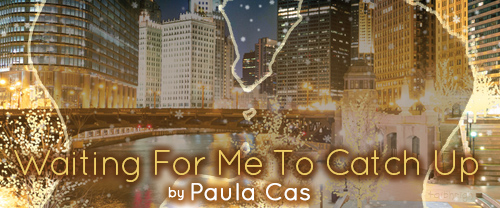
Title: Waiting For Me To Catch Up
Rating:PG-15
Summary:When Jeremiah Parks returned to the city of his birth, his life was in such turmoil that he failed to realize the most important thing in the middle of all the chaos. Now he has to learn to open his life to someone new while helping his Clan Leader keep history from repeating itself.
Author’s Note:A huge THANK YOU to BJ Jones for allowing me to play in her ‘verse over at Sylum Clan. THANK YOU to Taibhrigh for the terrific banner art for my Sylum stories.
Elder Mountain’s Folk Smudge …
Chinese Medicinal Plant Makes Anti-Cancer Compound …
New research led by Professor Cathie Martin of the John Innes Centre has revealed how a plant used in traditional Chinese medicine produces compounds which may help to treat cancer and liver diseases.
The Chinese skullcap, Scutellaria baicalensis – otherwise known in Chinese medicine as Huang-Qin – is traditionally used as a treatment for fever, liver and lung complaints.
 Scutellaria flower
Previous research on cells cultured in the lab has shown that certain compounds called flavones, found in the roots of this plant, not only have beneficial anti-viral and antioxidant effects, but they can also kill human cancers while leaving healthy cells untouched. In live animal models, these flavones have also halted tumor growth, offering hope that they may one day lead to effective cancer treatments or even cures.
As a group of compounds, the flavones are relatively well understood. But the beneficial flavones found in Huang-Qin roots, such as…
View original post 349 more words
Summer Herbs: Feverfew …
The feverfew herb has been used as an herbal remedy since the time of Dioscorides-78 A.D. The herbal remedies made from the feverfew was used to treat problems such as a headache, the development of menstrual irregularities in women, disorders such as stomachaches, and all types of fevers in particular. The common name of the herb itself is a simple corruption of the name in Latin- febrifuge or the fever reducer. Botanist is still agreed about what proper scientific name to give to this strongly aromatic and perennial herb. The feverfew belongs to the plant family Asteraceae, the disagreement among botanists about naming the plant has been existing for a long time now. The feverfew was in fact, placed into five different genera at different times. At this present time, the herb is known by the botanical name Tanacetum parthenium…
View original post 2,861 more words
The Enchanter’s Daughter …
By Paula Cas


Sunday, July 1st at 9:00 pm EDT join us for the latest edition of …
Oro Expeditions After Dark with hosts Oro and Paula Cas.
The switchboard is open at 845-277-9146 for you to join Oro and Paula Cas to discuss news and current events centering around gold mining, and topics from the normal to the paranormal. Also your favorite place to prospect, metal detecting, suction dredge, and any other mining activity we missed. We’ll check in on the LDMA and GPAA to see what events they have scheduled for the summer.
We’re sure to get into a little news about the Expedition and Oro and Paula. Things that have happened or just struck that certain chord to make you want to share. It’s been a long week and it ain’t over yet.
Find us on Oro Expeditions Facebook
Contact us at: Oro Expeditions and Oro Cas Blockchain
Feel Good Sunday …

“With many folks already fully engaged in the holiday of 4th of July we turn towards the the revolutionary war and the reason we celebrate this most important American holiday. But for today, let’s take a peek at some extraordinary people (ladies) who rarely are heard of in American history. And being that the bulk of Equine advocates are caring and compassionate women I thought that ya’all might find this information to be both interesting and empowering.
We will simply kick this series off but please be sure to hit (CONTINUED) to view the rest of this most interesting story.
Thanks for all you do and have a peaceful day today, my friends.” ~ R.T.
By as published on allthatisinteresting.com
The American Revolution was fought on the homefront, which means that women and children were often caught up in the fighting in one way or…
View original post 123 more words
I believe in happy endings...
Creating stories for pleasure
Shh I'm Writing
Nothing is True. Everything is Connected.
Medical Intuition, Astrology, Soul Readings, Intuitive Coaching, Tarot, Reiki: Inspiring and Empowering Visionaries, Artists and Healers
30th Anniversary Edition
Weekly Challenge from the 118, 126, & 113
all things fanfic...
Crystals, and all things Magical
welcome to the inner workings of my mind...
Learn • Explore • Grow
A Journey of Discovery
Where Canon has No Meaning and Universes Collide
Just another WordPress.com site
The Crime Drama Advent Calendar
Just another WordPress.com site
Here there be Dragons
Fanfiction and original stories from Toasterpop
Seeking Ideas Beyond Conventional Thought
Writting, Drafts, Ideas
All Things Wicked and Wonderful
Author, Editor, Photographer, Artist
Honoring their service and building their legacy. The official blog of the Vietnam Veterans Memorial Fund.
Art and Stories for all things 00Q, since 2014
Where the Writer Comes First.
FanFiction Author
The home of the Every Fandom Bang and Reverse Bang!
n. pl. pe·num·brae (-br) or pe·num·bras 1. A partial shadow, as in an eclipse, between regions of complete shadow and complete illumination.
Witchcraft for the Everyday and the Extraordinary
... and this is what I like
Fanfiction Recommendations ~ Slash, Femslash, & Het Fanfic Recs
EVIL AUTHOR DAY
Recipes from the Past
what my demented mind comes up with
Nothing is True. Everything is Connected
The Multi-Fandom Fix-it Big Bang
a place for me to share what I've written
Enchanted World of Magical Gardening ~ Crystals & Gemstones ~ Locally Grown Organic Herbs
m/m original fiction and fanfic for adults only
It's All About The Romance


You must be logged in to post a comment.