Category: Plants
American Chestnut — Questioning Its Former Status As A Dominant Tree

What did the land look like before you were born?
This is a good question to ponder, but it’s a difficult question to answer unless clarification is provided.
How much land are we talking about? And what is the time frame in question?
Even with such clarification, answers do not come easy. The original question often persists and we are prompted to further refine our inquiry.
What did the eastern forests look like 300 years ago? Which trees were present, and what was the composition of the trees in these earlier forests?
American chestnut, it turns out, can help us answer those questions.
American chestnut (Castanea dentata) is a tree whose numbers have dwindled over the past 100 years. A fungal disease known as chestnut blight has been the major culprit, but other factors have contributed to the decline of mature American chestnut trees in eastern forests.
When we study accounts of American chestnut, we routinely hear the same thing: “American chestnut was a dominant tree in eastern North America prior to the introduction of chestnut blight.”
We also hear this: “One in every four hardwood trees in eastern North America was an American chestnut.”
Believing both statements to be true, we might imagine an unbroken expanse of chestnut trees in eastern North America. The proverbial squirrel might have been able to travel from Maine to Florida on chestnut tree limbs without ever touching the ground.
But was that ever the case? Was American chestnut really the most dominant tree in eastern North America?
Or, have the claims been exaggerated? Could it be possible that American chestnut was not so dominant of a tree in these earlier forests?
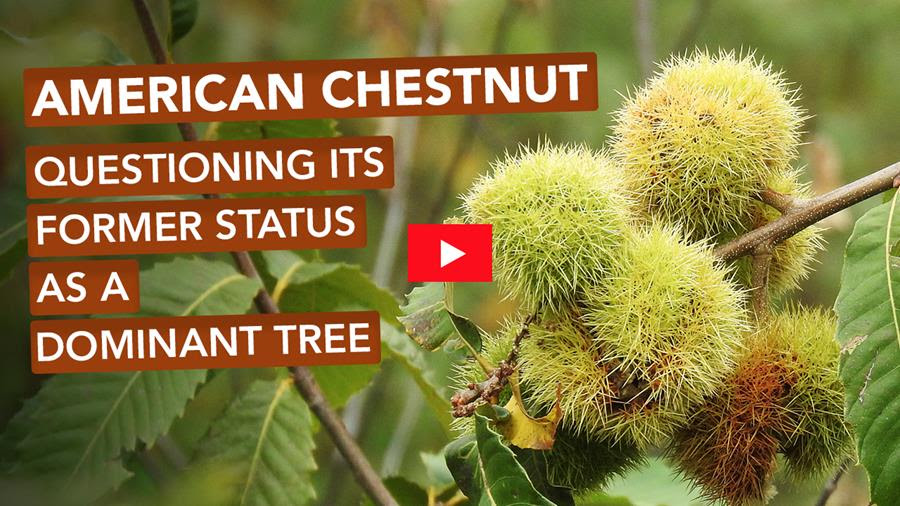
That’s the topic of this week’s brand new video. If you are interested in learning what the land might have looked like in the not too distant past, check it out!
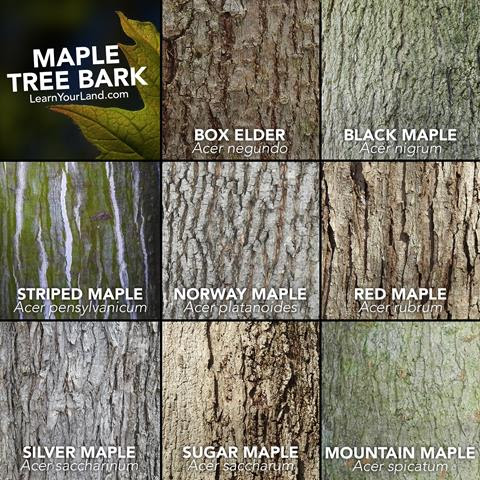
Most maples are leafless this time of year in eastern North America. Fortunately, bark features are still available and very useful for proper identification. Check out these side-by-side images of 8 different maple trees to assist you with your winter identification skills.Click to view post
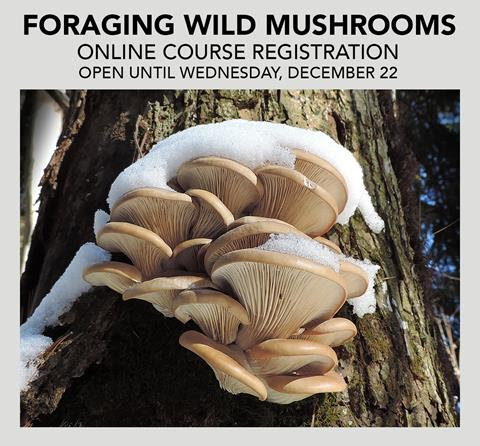
If you are eager to pursue educational opportunities during the winter months, check out Foraging Wild Mushrooms. This 4-season online course is designed to help you safely, successfully, and confidently forage wild mushrooms from the forest, from the field, and from your own backyard.Click to learn more
Thanks for reading and watching, and thanks for your continued support!
-Adam Haritan
Sacred Trees in the Americas: American Holly (Ilex Opaca) – Magic, Meanings, Ecology, and Divination

American Holly is one of the most wonderful trees for getting us through dark times. And as the season of darkness is upon us once more, it is a good time to consider the magic, meanings, and mystery of this incredible holly tree!
American Holly has many names including white holly, prickly holly, Christmas Holly, Yule Holly and Evergreen Holly. It is quite similar to European Holly (Illex Aquifolium) with similar leaves, berries, and an overall growth habit. The American Holly has larger, brighter leaves and berries, but the trees are otherwise quite similar. While I often argue against importing meanings and uses of European trees into American contexts (with Ash being a great case in point), in this case, I think that the myths and old-world understandings of Holly apply!
This post is part of my Sacred Trees of Eastern North America series–here you can learn about the…
View original post 1,899 more words
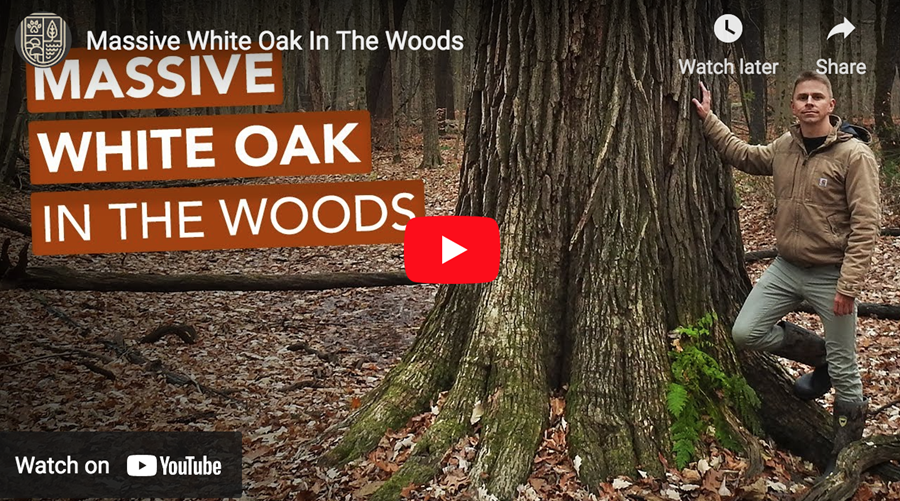
A Massive White Oak In The Woods
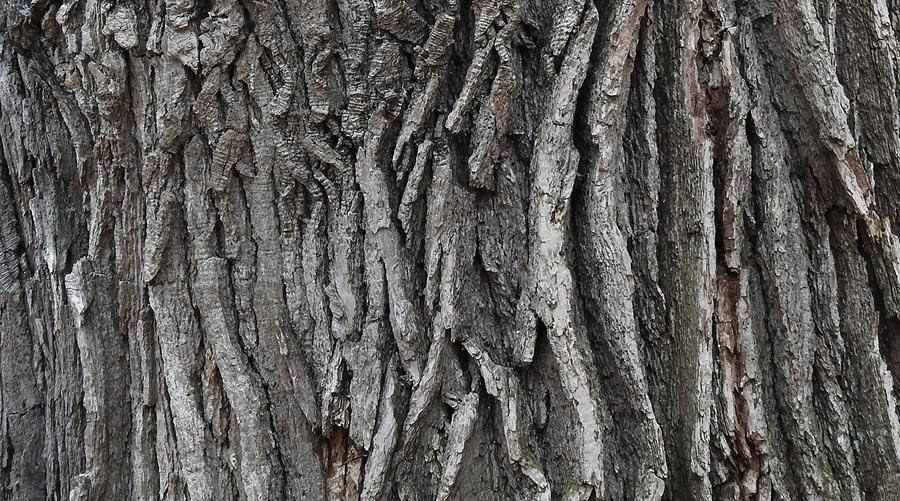

Seeing big trees in the woods is its own reward.
Nothing really needs to be said. Nothing more needs to happen. The fact that such an encounter occurs at all in the 21st century is enough.
But occasionally something else does happen, and silence is broken not by statements or declarations but by questions and inquiries.
A few years ago, I encountered a massive white oak (Quercus alba) in the woods. With deeply furrowed bark and a wide-spreading canopy, the tree was certainly the largest forest-dwelling white oak I had ever seen.
Since that first encounter, I have returned to see the massive white oak on numerous occasions. In every instance, curiosity has prompted my meddling mind to ask questions.
During the most recent encounter, I decided to wonder aloud (and on camera) about Quercus alba — a species that was once regarded as being the most common tree in many forests. Over the years, however, white oak has slipped in status. No longer does it hold the title of being the most common tree in many forests.
How did this happen? And which trees took its place?
If you are interested in seeing a massive old growth white oak, all while learning how an incredibly common tree became less common over time (despite a relative increase in forested land), check out the brand new video!
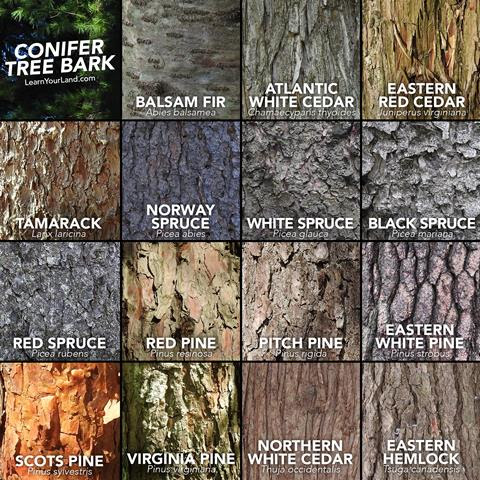
Conifers display huge variation in bark features. If you are interested in identifying conifer trees by bark alone, check out these side-by-side images of 15 different conifer trees that grow in eastern North America.Click to view post
Thanks for reading and watching, and thanks for your continued support!
-Adam Haritan
Cloves – A Holiday Spice and Herb of the Month

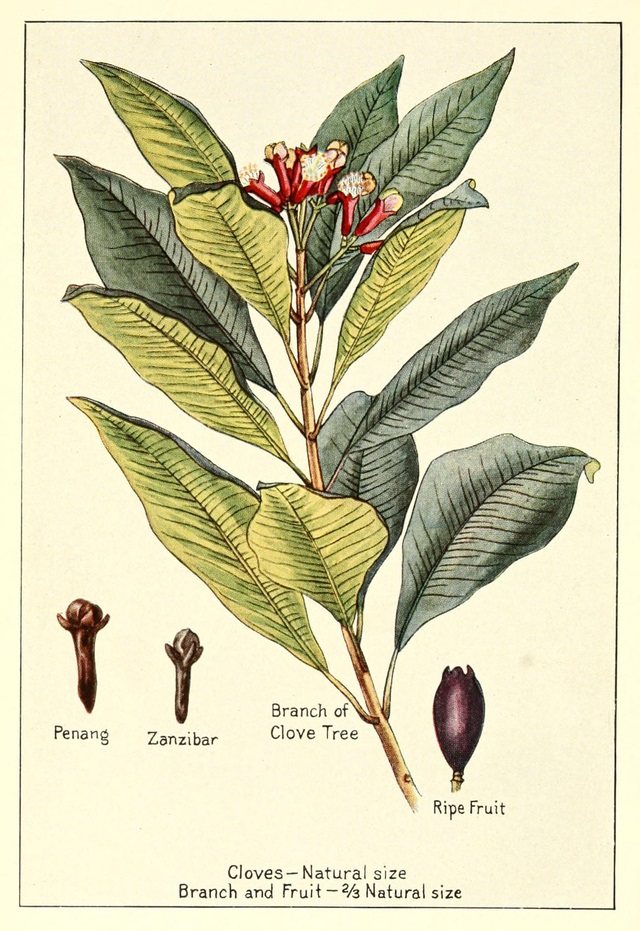 The spice that we call cloves comes from the clove tree, Syzygium aromaticum. This evergreen herbal tree is in the Myrtle (Myrtaceae) family and is native to the Molucca Islands in the Pacific Ocean. These islands were once called the Spice Islands and now are a part of Indonesia.
The tree needs a warm, humid climate, and deep, loamy soil to grow well. It is said that it also needs to see the sea in order to thrive. It does indeed grow well near the coasts of tropical islands. The clove tree can reach a height of 26 – 40 feet and begins to flower when it is about five years old. At 20 years, it is ready to begin harvesting the cloves, which are the unopened flower buds, growing in clusters of 10 – 15 buds. The tree continues to produce cloves for more than 80 years…
View original post 1,239 more words
A Unique View of an Esteemed Native Plant: Hydrastis canadensis (Goldenseal)
By Katherine Schlosser
“I may here observe, that the disease of cancer is not confined to civilized nations. It is known among our Indians. I am informed that the Cheerake cure it with a plant which is thought to be the Hydrastis Canadensis, one of our fine native dies [dyes].”
– Benjamin Smith Barton, 1766-1815
Goldenseal, Hydrastis canadensis, has been known for centuries for its medicinal uses ranging from a gastrointestinal aid, stimulant, tonic, emetic, and febrifuge, to helping with ear and eye complaints, heart problems, liver issues, pulmonary complaints, and more.
Europeans learned of goldenseal’s value as a medicinal plant not long after arriving in North America. The initial knowledge of its use is often credited…
View original post 1,038 more words
Herbs for Holiday Baking
By Peggy Riccio
 When I think of herbs for Christmas, I always think of the Simon and Garfunkel “Scarborough Fair” song: “Are you going to Scarborough Fair? Parsley, sage, rosemary, and thyme.” Sure, there is peppermint and plenty of spices, but these herbs seem to be the most popular during the holidays. I think that is because these plants are still green in the garden. In my USDA Hardiness Zone 7 Virginia garden, I can still pick these plants in December to use in the kitchen. My mint plants, always in containers, overwinter well, and I can harvest spearmint and peppermint.
When using these herbs, don’t just think of flavor and cooking. Think of the plant itself, the structure, size, weight, and texture of the branches and leaves. Think of how the stem or leaf can be used to decorate the dish and your table.
Parsley
Parsley is a biennial…
View original post 1,308 more words
Putting the Garden to Sleep: End of Season Activities and Rituals
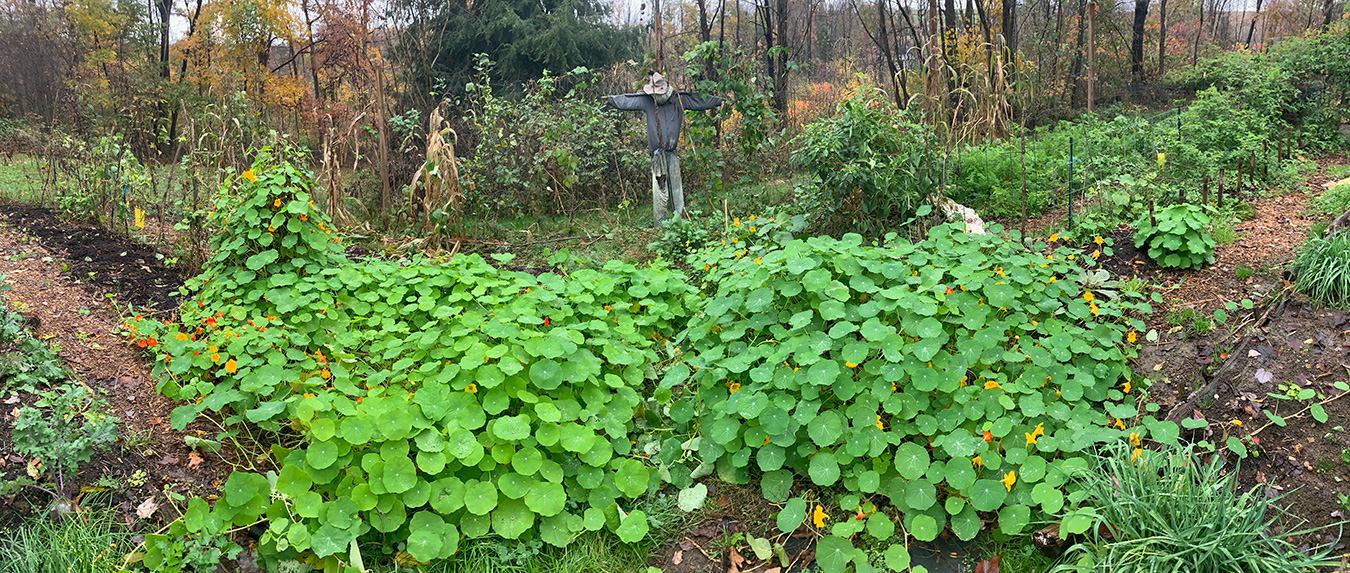
The day before the first hard frost. Our garden is still bountiful as the Butzemann watches over all….As the darkness continues to grow deeper on the landscape, it is high time to consider how to put the garden to rest for the winter and honor the garden that has offered you so much bounty and joy for the season. I actually find this one of my favorite gardening activities of the year, both on a metaphysical and physical level. There’s something special about “tucking” your garden in after a productive growing season and knowing that the land will go fallow and rest as the cold and ice come. Here are both the physical activities and sacred activities that you can do to help put your garden to rest.
Do note that my timings are based on the temperate climate in Western Pennsylvania, USDA Zone 6A. You can adapt appropriately based…
View original post 2,322 more words
Four Thieves Inspire Flu-Fighting Soup
By Beth Schreibman-Gehring, Chairman of Education for The Western Reserve Herb Society unit of The Herb Society
Originally published on January 30, 2019
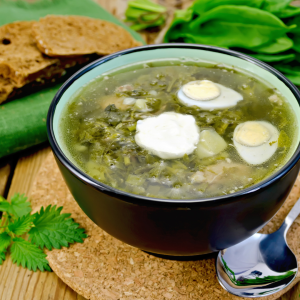 Last winter the urgent care center diagnosed me with the flu, and I’ve never been quite as sick as I was for that month. I spent several days in bed and used all sorts of herbal remedies to support healing. Daquil/Nyquil just made me feel worse and went straight into the garbage.
I started with homemade bone broth. Herb and spice-spiked chicken broths are well known to promote the movement of nasal congestion and are thought to have anti-inflammatory and anti-viral properties. I felt better with every bowl I ate, proving the old adage: Let your food be your medicine.
For a powerful immune-boosting soup I took cues from the Legend of the Four Thieves. In this story, aromatherapy, herbal, and alchemical worlds collide and take…
View original post 477 more words
Old Growth Red Pine — An Uncommon Sight
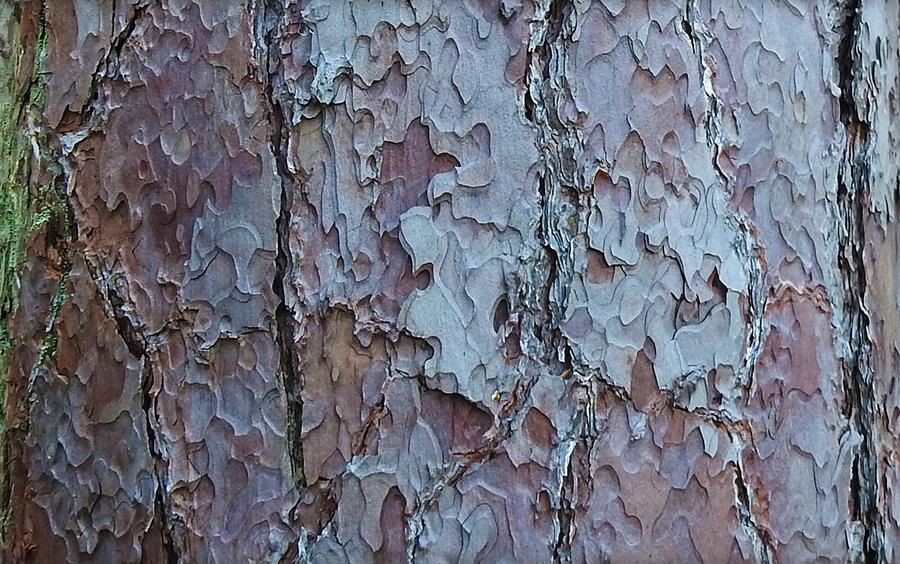

Among the common, the uncommon exists. Learning the uncommon among the common helps us see in new ways what has been in front of us all along.
Take red pine, for instance.
Where I live in western Pennsylvania, red pine (Pinus resinosa) is a common sight. Many county and state parks contain large tracts of land that host nothing but red pine plantations. These plantations, believe it or not, are considered by fundamentalists to be “ecological deserts” — a category that also includes parking lots and golf courses.
Red pine, it seems, can’t catch a break. Because of the bias against its ubiquity and against its purported ecological disservice, it’s no wonder that people rarely take any time to marvel underneath a red pine tree.
But there is something that we should know about red pine. Among the common, the uncommon exists.
Red pine is not common in every context. To provide two examples — “natural” stands of red pine are quite uncommon in my home state of Pennsylvania, and across the entire range of red pine, old growth red pine forests occupy less than 1% of their original range.
What’s more, old growth red pine forests are far from ecological deserts. Researchers consider these forests to be critical for maintaining biodiversity at stand and landscape levels.
To gain some insight on the matter, I decided to visit a “natural” stand of red pine. Not too surprisingly, I did not discover an ecological desert. Instead, I encountered a diverse ecosystem containing red pines that were approximately 250 years old and approaching old growth status.
If you are interested in learning the uncommon among the common, check out the brand new video!


Speaking of uncommon (or very common, depending on where you live), I recently encountered this melanistic eastern gray squirrel foraging for acorns. The presence of melanism across the range of gray squirrels is really low (less than 1%). In some areas, though, it can be higher than 50%. To learn more about black squirrels, check out the latest Instagram post!Click to view post
Thanks for reading and watching, and thanks for your continued support!
-Adam Haritan
 Paths I Walk
You must be logged in to post a comment.