The Bee and the Machine: Moving Beyond Efficiency and towards Nature-Centeredness

Dana's avatarThe Druid's Garden

Animals have spirit!

Over the course of the last four centuries, the Western World has created a set of “unshakable” principles concerning the natural world: that nature is just another machine, that animals don’t feel and do not have souls, that plants and animals aren’t sentient. Descartes, writing in the 1600s during the early rise of mechanization, was one of the first to make this claim. He posited that animals are mechanical automata, that is, they are beings without souls, feelings, or pain. These same ideas were not limited to non-human life; we see the same kind of thinking being applied to justify slavery, genocide, colonialization, and a list of other atrocities. When we combine this kind of thinking with the economic ideas of “growth at all costs” and “efficiency”, we end up in the dystopian fiction we find ourselves living in right now. I want to take some time…

View original post 2,436 more words
Baneful Herbs in Magical Practice | Coby Michael Ward

Crooked Bear Creek Organic Herbs's avatarGood Witches Homestead

Using Baneful Herbs in Magic

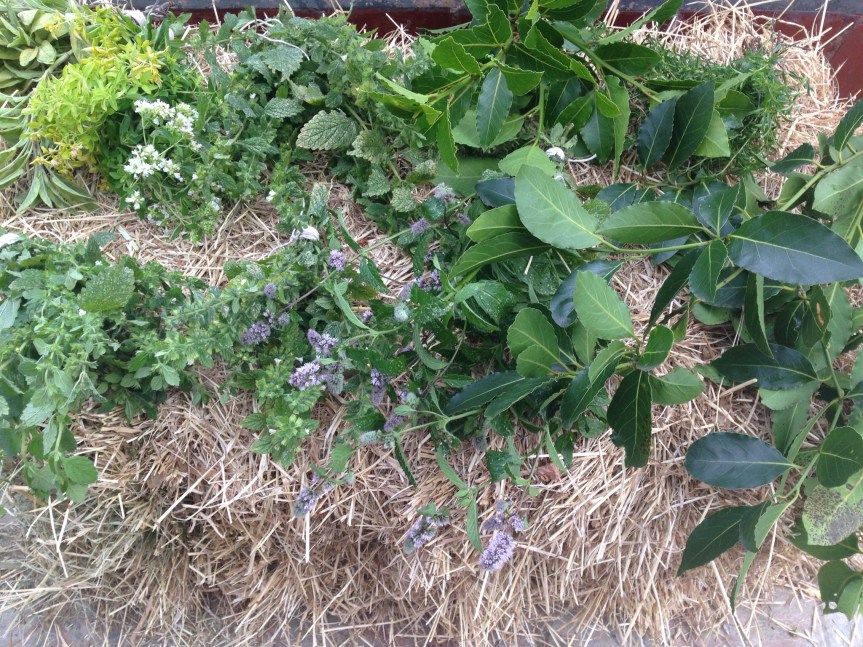
With their infamous reputations and prominent place in myth and folklore, the Baneful herbs begin to seem more like mischievous magical creatures appearing throughout history in folktales and first-hand accounts.  They are powerful in their chemistry and in their occult power, but they are still plants.  The deadly nightshade grows in the same soil as the mint and the lavender.  They get light and water from the same sky.  It is important to remember this when incorporating baneful plant spirits into your magical practice.  People often ask how these herbs can benefit one magically, and how to use them.  The answer is, that they all have their own unique powers and applications, and other than ingesting, they can be used magically like any other herb.

In magic, herbs, woods and/or resins are used in pretty much everything.  They can be incorporated into spells in so…

View original post 901 more words

Roselle Hibiscus– An Herb with Many Names — Crooked Bear Creek Organic Herbs

Originally posted on The Herb Society of America Blog: By Maryann Readal With its bright red calyces, green leaves, and okra-like flowers, Hibiscus sabdariffa, also known as red zinger, red sorrel, sour tea, Florida cranberry, and roselle, makes an unusual and striking accent plant in the garden. On a recent trip to Montreal, I was…

via Roselle Hibiscus– An Herb with Many Names — Crooked Bear Creek Organic Herbs

How to Make Herbal Dream Pillows

Crooked Bear Creek Organic Herbs's avatarGood Witches Homestead

In the modern world, it can be challenging to get a good night’s rest. Keeping a healthy daytime lifestyle as well as a calming nighttime ritual are excellent ways to prepare the body for restful sleep filled with exciting and inspiring dreams! There are even traditions in which herbs are used during sleep, not only to bring about peaceful snoozing, but also to create vivid, lucid dreaming landscapes sure to bring happiness, rather than grogginess, to your waking state.

The practice of placing herbs under one’s pillow dates back centuries and was originally thought to protect against evil, bring good dreams, calm bad dreams, foresee the future, or even conjure a lover into one’s life! No matter the reason, herbal pillows are an easy way to help promote peaceful sleep and encourage dreaming. These pillows are simple to prepare and make a wonderful “crafternoon” with your friends or family. The first step is to…

View original post 203 more words

Ancestral Herbalism and Samhain: Working Deeply with Rosemary

Dana's avatarThe Druid's Garden

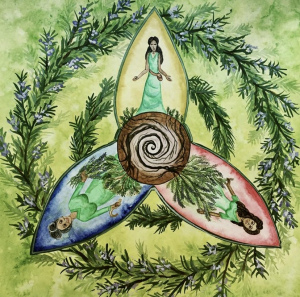
Rosemary from the Plant Spirit Oracle Rosemary Card from the Plant Spirit Oracle

As we quickly approach Samhain, it is a useful practice to spend some time with rosemary (Rosmarinus officinalis) and build here into your Samhain practices. In this post, we look into some of the magic and medicine of Rosemary, and I share a number of ancestor and Samhain-focused practices that you can use with Rosemary.

An Ancestral Ally of Humans: History, Medicine, Magic

Before we get into what you can make or do with rosemary, let’s spend some time exploring and understanding this ancient herb. Rosemary has been with humanity almost as long as we have written records. Native to the mediterranean region, rosemary was first found referenced on cuineform tablets from Ancient Egypt that are from 5000 BCE–thus, humanity has at least an 8000 year old relationship with this herb (but I suspect it is much longer than our written history!)…

View original post 1,368 more words

Samhain in the Devil’s Garden | Coby Michael Ward

Crooked Bear Creek Organic Herbs's avatarGood Witches Homestead

All Hallows Eve is quickly approaching.  The darkness is creeping closer every day.  You can feel the cold grip of the coming winter slithering its way back up from its yearly resting place deep in the Underworld.  The excitement and anticipation on both sides of the veil are tangible.  It is during this time of year that most witches are at their witchiest, reveling in the sensory delights of the coming holiday.  For me, Samhain/Halloween (because I celebrate both) is an entire season, not just one day.  It begins at the autumnal equinox when the scales begin to tip in darkness’ favor.  Then there is the October full moon known as the Hunter’s Moon or Blood Moon.  I look at Samhain October 31st as the culmination of this strange energy that has been building which bleeds into November.  The Sun hangs low in the sky, crows can be heard cawing…

View original post 638 more words

A Culinary Herbal…

A Simple Ritual for the Autumn Equinox

Greetings!

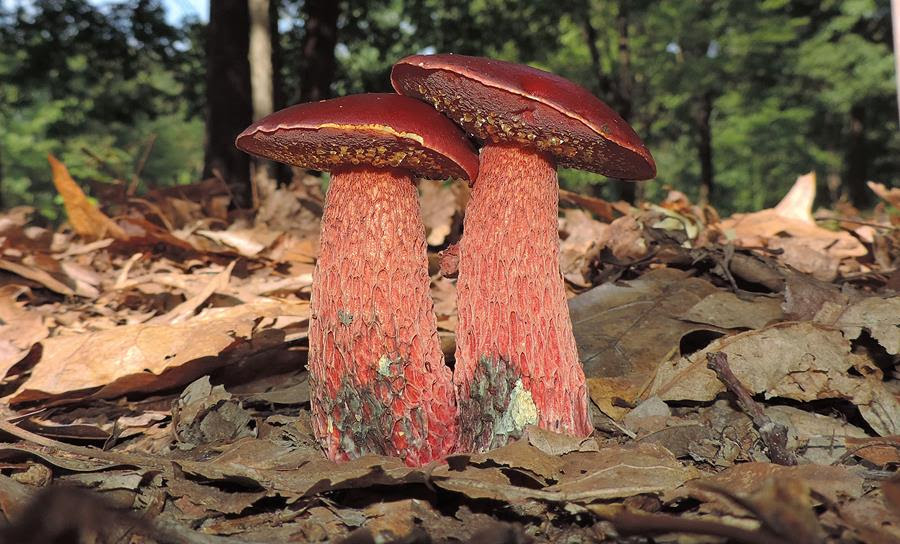
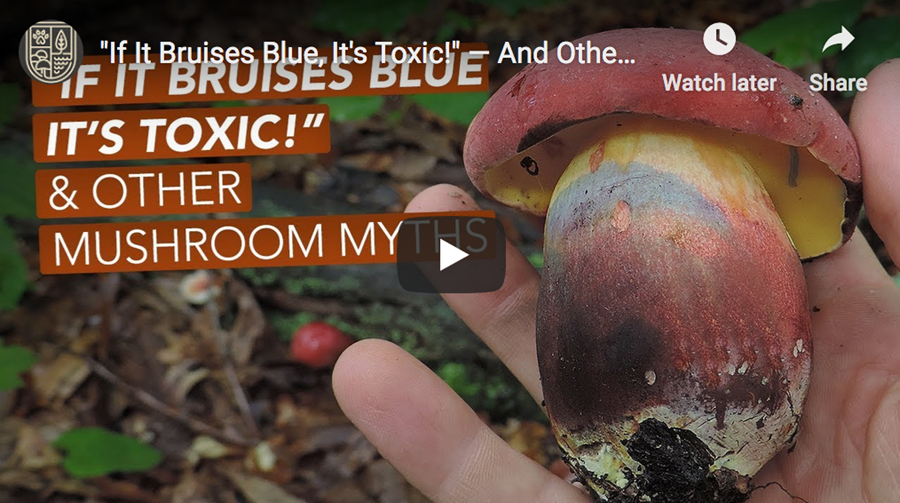
If you’ve taken an interest in foraging wild mushrooms, you’ve undoubtedly encountered rules of thumb that are meant to simplify the learning process.

“If it bruises blue, it’s toxic.”

“Mushrooms shouldn’t be consumed with alcohol.”

“Pulling up a mushroom by its ‘roots’ is a poor harvesting technique.”

In many cases, however, well-intentioned advice and general rules of thumb turn out to be nothing more than myths.

To clear up some confusion, I thought I’d address many popular myths surrounding the foraging and consumption of wild mushrooms.

The following video is one of over 70 exclusive videos featured in Foraging Wild Mushrooms.  While all content within the online course is only available to students who register within the next 4 days, I thought I’d share this video with everyone because of the timely information contained within it.

If you’re interested in foraging mushrooms for food, for medicine, for study, or just for fun, check out what Foraging Wild Mushrooms has to offer.  This 4-season course covers the most important lessons to get you started and to keep you going.

To learn more, you can follow this link:  Foraging Wild Mushrooms

(Don’t forget that Monday is the last day to register.)

In the meantime, here are 16 mushroom myths!

Thanks for reading and watching, and as always, thank you for your support!

-Adam Haritan

Valerian Root Benefits: How to Use Nature’s Wonder Root

Crooked Bear Creek Organic Herbs's avatarCrooked Bear Creek Organic Herbs

When Hippocrates had a headache, it’s possible he enjoyed a nice steaming cup of valerian root tea. The ancient Greek physician was one of the first to describe the therapeutic benefits of valerian root.

Since the early days in Greece and Rome, people sought the benefits of valerian for everything from head discomfort to heart health, nervousness, feminine issues, and the blues. Valerian brings some unique mythological history as well. People once used it to keep away troublesome elves — stay away Dobby! — and folklore experts believe it helped the Pied Piper lure rats away from town.

What Is Valerian?

Garden valerian (Valeriana officinalis) is also known as garden heliotrope, Tagar (in Ayurvedic medicine), cut-finger, and all-heal — funny names for a potent plant! The species originally grew in Asia and Europe, but it now grows throughout North America, as well. Its scientific name derives from the Latin…

View original post 1,544 more words