The Sleeping Giant of Mediterranean Herbal Medicine: Helichrysum italicum

Crooked Bear Creek Organic Herbs's avatarCrooked Bear Creek Organic Herbs

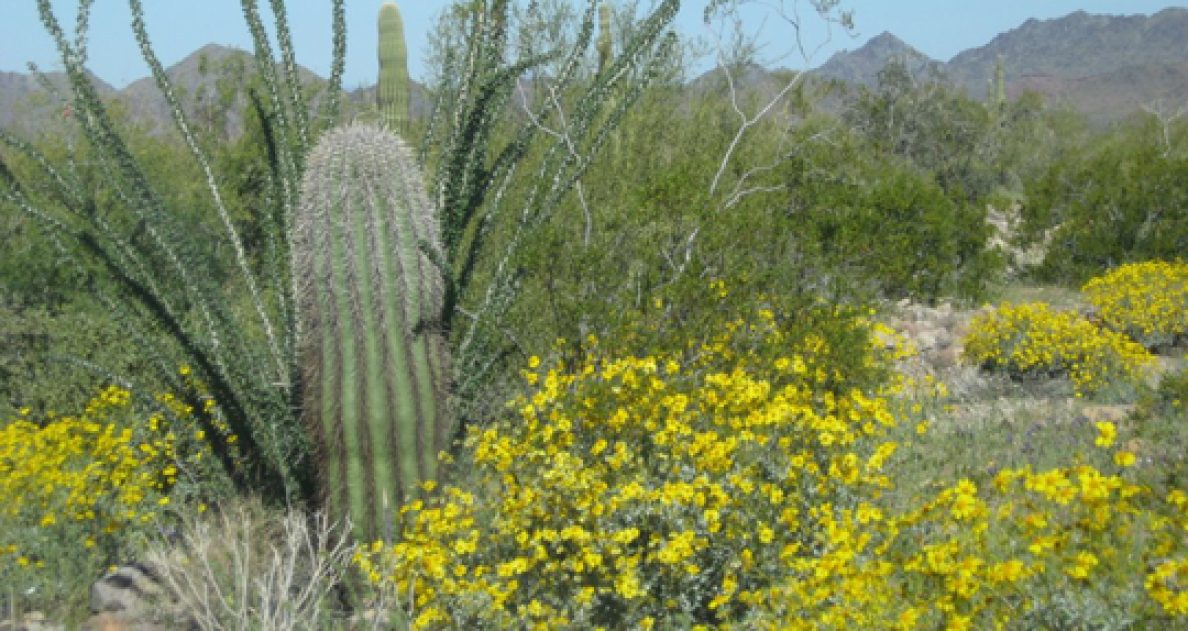
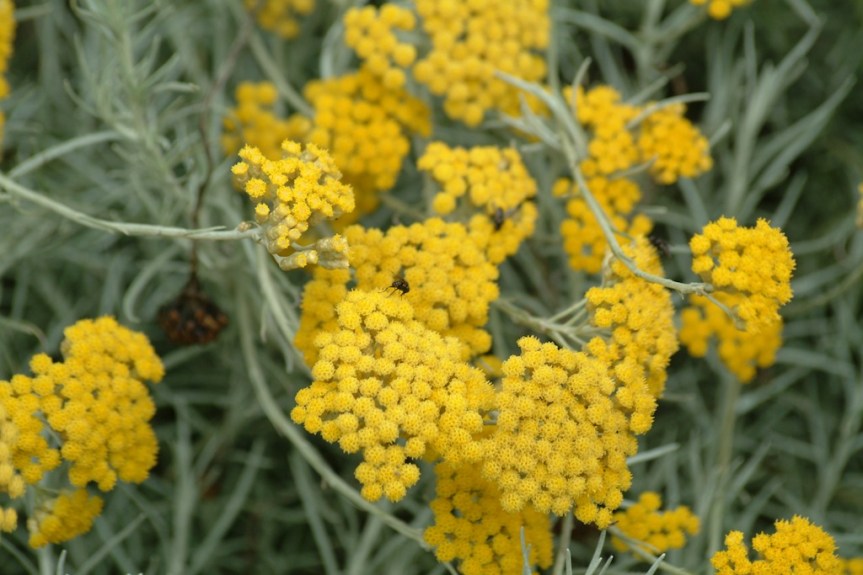
Helichrysum italicum (Roth.) Don. (Asteraceae) is an iconic plant of the Mediterranean area (Figure 1), but the use of its essential oil in glamorous perfumes and personal care products has turned it into a veritable icon of luxury. However, just like the geographical distribution of Helichrysum species extends beyond the Mediterranean region, the properties of H. italicum are not limited to fragrance as they can benefit human health as well. In this context, H. italicum can be viewed as the sleeping giant of Mediterranean herbal medicine, and its extracts have the potential to be developed as dietary supplement ingredients just like its essential oil has been used successfully in perfumery and aromatherapy. Waking this giant will not be simple, but recent studies have provided the basis for a Helichrysum renaissance. This article outlines the fascinating ethnopharmacology of H. italicum in the light of modern molecular investigations of its…

View original post 6,161 more words

Health Benefits of Moringa

Crooked Bear Creek Organic Herbs's avatarCrooked Bear Creek Organic Herbs

Moringa oleifera is a plant, which is often called the drumstick tree, the miracle tree, the ben oil tree, or the horseradish tree.

Moringa has been used for centuries due to its medicinal properties and health benefits and has antifungal, antiviral, antidepressant, and anti-inflammatory properties.

Facts on Moringa:

  • The tree is native to India but also grows in Asia, Africa, and South America.
  • Moringa contains a variety of proteins, vitamins, and minerals.
  • Moringa oleifera has few known side effects.
  • People taking medication should consult a doctor before taking moringa extract.

Perfect Matchinga - Banner With Highlights

What is in Moringa?

Moringa oleiferaMoringa has medicinal properties and contains many healthful compounds.
Moringa contains many healthful compounds such as:

  • vitamin A
  • vitamin B1 (thiamine)
  • B2 (riboflavin)
  • B3 (niacin), B-6
  • folate and ascorbic acid (vitamin C)
  • calcium
  • potassium
  • iron
  • magnesium
  • phosphorus
  • zinc

It is also extremely low in fats and contains no harmful cholesterol.

What are the benefits?

Moringa is believed to have many…

View original post 907 more words

Let Spring Begin…

Crooked Bear Creek Organic Herbs's avatarGood Witches Homestead

Spring is a time of new beginnings and fresh starts.  It’s a time to let go of old habits, get rid of old or unwanted things, and give yourself a new start in life. Whether you’re looking to do a deep cleaning of your house or health, we’ve got the natural products to help you do it.

So, what are you waiting for? Take advantage of this time of year to enjoy the simple things in life and take the first steps towards a new you!

Good until 3/04/2019

A Little Something Worth Trying

Forest Fresh Diffuser Blend

Step in to spring and warmer weather with this diffuser blend. It’ll have you wanting to head out to green mountainsides for a spring picnic!

Spring Vernal Equinox

Date When: March 20, 2019; March 20, 2020

Ah, Spring! A time when “a…

View original post 371 more words

Little Lavenders in the Landscape

Crooked Bear Creek Organic Herbs's avatarCrooked Bear Creek Organic Herbs

As spring approaches we get anxious to start planting our garden!  In March, we have time to plan which lavenders we want to add or replace in our garden.  In late March and into April and May, after the weather and the ground have warmed up, we can usually tell which lavenders need to be replaced. After we do spring garden pruning and clean up, we have a better idea of how much space we have to plant.  There are also more lavender plants available from local growers at that time of the year.
English lavenders, Lavandula angustifolia cultivars, are the hardiest lavender plants to grow, but eventually, they do need to be replaced with new plants.  Some lavender plants that are over 10 to 15 years old are very woody and parts of these plants may no longer produce new leaves or flowers. As long as a garden space…

View original post 1,599 more words

The Skin You’re In (#herbs, #IBS & #skincare)….

aspiringherbalist's avatarMy Herbal Adventures...

My skin has been a nemesis of mine since I was a teenager. Yet, the worst years were in my early twenties for breakouts and trial after trial of trying to fix what seemed to only get worse. As I tried to figure out how to fix it from the outside, without being willing to change my eating habits, it only got better when my alcohol consumption and relationship with nutrition & food changed in my mid-twenties. To this day I still struggle with my skin more than anything else in my lifestyle routine; due to a few reasons I will discuss below.

IBS! This has been a new discovery for me in the past few years. My sensitive stomach is really what has now been defined and given a name; Irritable Bowel Syndrome. Here are the list of symptoms in case you are unfamiliar:

  • Changes in normal bowel movements…

View original post 1,908 more words

Home Made Hair Treatment Oil

How to select, prepare, store and preserve Sage [Infographic]

ecogreenlover's avatarecogreenlove

Sage is a prevalent herb used worldwide in cooking and herbal medicine. Whether you opt for the fresh or dried form, sage adds a warm, pine-like flavor with hints of rosemary and citrus to any dish.

View original post 294 more words

Essential Oils and Flower Essences

Crooked Bear Creek Organic Herbs's avatarGood Witches Homestead

Essential oils and flower essences bestow a concentrated dose of plant energy.
In most cases, however, you may want to work with the whole plant. You may find that if you wish to work with a particular plant, you’re obligated to grow it yourself. This may be for a variety of reasons.
* Some plants are rare to an area. You may need to nurture some indoors or order from a specialist nursery.
* What you desire may not be marketable: the alchemists treasured fresh morning dew caught upon the leaves of lady’s mantle. They called it “water from heaven” and prized it as an ingredient in many enchanted potions. If you want some {and you very well might; it’s reputed to provide a beautiful complexion!}, you’ll have to grow it and gather it yourself.
* In some cases, it’s best to have your own fresh stock of plants, to…

View original post 1,612 more words

Primrose; The Flower of February

Crooked Bear Creek Organic Herbs's avatarGood Witches Homestead

COMMON NAME:  primrose
GENUS:  Primula
SPECIES, HYBRIDS, CULTIVARS:
P. denticulata-lavender, purple, or white flowers; grows to 12 inches. P. japonica ‘Millar Crimson’-flowers whorled around 24-inch stem; blooms May-June. P. polyanthus-best known; colors are red, pink, blue, gold, and white, all with small yellow eyes.
FAMILY:  Primulaceae
BLOOMS:  spring
TYPE:  perennial
DESCRIPTION:  Primroses form an attractive rosette of crinkly, light green leaves. The flowers are generally brightly colored and occur in tight bundles on individual stems above the leaves.
CULTIVATION:  Needing partial shade, primroses thrive in well-drained, rich soil. They are indigenous to cool, moist meadows and woodland environments  Duplicating these conditions as closely as possible will create the best growing conditions for primroses. The soil should not be allowed to dry completely. To retain vigorously blooming plants, divide clumps every four to five years. Seeds should be sown in midsummer for bloom the following spring.

Primrose is beloved…

View original post 705 more words

5 Things You Didn’t Know About Cardamom

Crooked Bear Creek Organic Herbs's avatarCrooked Bear Creek Organic Herbs

f you have ever tasted Biryani (Indian flavored savory rice) or kheer (Indian rice pudding) or the famous Finnish pulla, you would probably identify the aroma of cardamom. The sweet and mystical spice was used by the Greeks and Romans in their perfumes and the ancient Egyptians as mouth fresheners. Even today, Cardamom (green) is one of the most expensive spices. It’s not just native to the South-East Asian belt, it’s increasingly used in Europe as well.

1- Cardamom, ginger, and turmeric belong to the same botanical family Zingiberaceae: cardamom is part of the Zingiberaceae family and is sold in pods, seeds, and powder form. The pods can be split open to expose the aromatic seeds. Both turmeric and ginger are roots, or rhizomes, while cardamom is the seed of the plant. It pairs very well with turmeric and ginger. Turmeric imparts a deep yellow color to curries, ginger…

View original post 766 more words