Chervil – Herb of the Month

The Herb Society of America's avatarThe Herb Society of America Blog

by Maryann Readal

chervil plantChervil, Anthriscus cerefolium, is similar to parsley but has a milder, anise flavor. It is sometimes called French parsley or garden parsley. The Romans named it cherifoliu, the ‘cheri’ part meaning delight and the ‘folium’ part meaning leaves—the joy of leaves.

Chervil is important in French cuisine, where it is an ingredient in classic sauces such as béarnaise and ravigote. These sauces pair well with fish, veal, or chicken. Along with parsley, chives, and tarragon, chervil is in the French herb combination, herbes fines. Chervil is better used fresh as it loses its flavor when dried. It should be added at the end of cooking to get the most out of its flavor. It is a good addition to omelets and salads and can be sprinkled over fresh fruit. Chervil makes a flavorful and colorful butter. The leaves and flowers can…

View original post 1,075 more words
Delectable Native Edibles

The Herb Society of America's avatarThe Herb Society of America Blog

By Andrea DeLong-Amaya

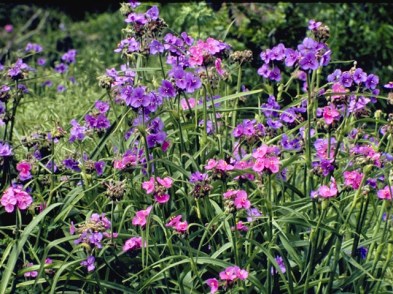
tradescantia flowersYou may be one of the growing numbers of home gardeners who have put shovel to soil in the effort to nourish themselves and their families with wholesome, organic, fresh, and ultimately local vegetables and fruits. It is empowering to know exactly where your food comes from. And, while gardening is perfect exercise…it can be a lot of work! What if you could grow food plants that all but took care of themselves? Or better yet simply harvest, with caution of course, from the wild.

Native produce? Yes! The plants I’m about to tell you about are all easy to cultivate within their home ranges and, once established, may not require any attention outside of harvest. There are many virtues of raising locally native plants, such as decreased use of water, fertilizers, and pesticides, and promoting regional identity, and providing for wildlife. But those aren’t my main…

View original post 1,008 more words

Cheesy Dandelion Spirals: Serpentine Spring Magic — Gather Victoria

Note: This recipe was originally shared on Gather Victoria on Patreon. It was originally a recipe for Imbolc but for reasons that will soon become apparent- I thought I’d share it here for St. Patricks Day! St. Patrick was said to have driven all of the snakes out of Ireland – which is odd. While…

Cheesy Dandelion Spirals: Serpentine Spring Magic — Gather Victoria

Sacred Trees in the Americas: Spicebush (Lindera Benzoin) Magic, Ecology, and Sacred Uses

Dana's avatarThe Druid's Garden

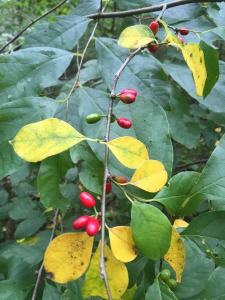
Spicebush leaf and berry in August in Western Pennsylvania

As I continue to explore some of the most important understory trees in the US East Coast and Midwest region, we turn our attention today to the amazing Spicebush (Lindera Benzoin).  Historically, Spicebush was an incredibly important plant, medicine, and spice both to Native Americans and early white settlers in the US and yet today has largely been forgotten in history. Spicebush is a native understory tree with a large range in North America, spanning from Maine to Florida and all the way across the south and Midwest to Texas and up to Ontario. While I’ve taught this plant routinely on my plant walks, and what amazes me is that nobody can even identify it, much less recognize how it might be used. Spicebush has an incredible flavor, medicinal value, and offers much in the way of magic and mystery. It…

View original post 1,877 more words

Exploring Vanilla in the Rainforest and in the Kitchen: Part II

The Herb Society of America's avatarThe Herb Society of America Blog

By Susan Belsinger

(Adapted from her article, “Exploring Rainforest Spices at Villa Vanilla,” featured in the 2019 issue of The Herbarist, the annual journal of The Herb Society of America.)

“Plain vanilla is very much like that little black cocktail dress—always welcome, simply chic, so quietly dramatic.”

                —Lisa Yockelson, from Baking by Flavor

Vanilla in the Kitchen

P1110888Although I am a chocolate lover, I have always adored the fragrance of vanilla. More than once as a child, I tasted vanilla extract straight from the bottle—knowing full well that I wouldn’t like it—I just could not resist, because it always smelled so good.   
Back in my early adult years—and the beginning of my lifetime association with natural foods, herbs, and spices—I used vanilla beyond the kitchen. I found the aroma alluring, so why not use it like perfume? I…

View original post 2,723 more words

Sacred Trees in the Americas: American Hazel (Corylus americana) Magic, Ecology, and Sacred Uses

Dana's avatarThe Druid's Garden

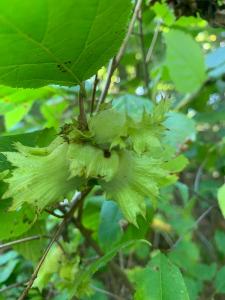
American Hazelnuts in a cluster getting ready to ripen

For three years, I have had my eye on our American hazel bushes here at the homestead. When we first moved to the property, much of the understory was damaged with the logging the previous owners did and it took time for the hazels to recover.  Thus, for the last few years, I’ve watched the hazels grow taller and larger each year and kept looking excitedly for any signs of nuts setting. This past fall, I was delighted to find handfuls of delicious wild American hazelnuts and connect with the incredible wisdom that they offer.

While Hazel is a critically important tree in the mythology and magical tradition of Druidry and in Europe more broadly, The Hazel is one of the sacred trees identified by the druids as a tree tied to wisdom and the flow of Awen, and it is…

View original post 2,415 more words

Exploring Vanilla in the Rainforest and in the Kitchen: Part I

The Herb Society of America's avatarThe Herb Society of America Blog

By Susan Belsinger

(Adapted from her article, “Exploring Rainforest Spices at Villa Vanilla,” featured in the 2019 issue of The Herbarist, the annual journal of The Herb Society of America.)

Vanilla in the Rainforest

P1110204Before going to Costa Rica, I researched gardens, restaurants, herbs, spices, botanicals and the rainforest—places where I wanted to go, see, and experience. Once I visited Villa Vanilla’s website, https://www.rainforestspices.com/, I knew that I had to go there. I made reservations for the farm tour in advance. It was one of my favorite things in Costa Rica—I loved seeing the tropical spice plants up close and personal—and I got to smell and taste so many things, which was a memorable sensory experience!

During the half day Spice Plantation Tour, visitors experience the sights, tastes, and aromas of vanilla, cinnamon, pepper, and other tropical spices, essential oil plants, and a wide variety of…

View original post 1,181 more words

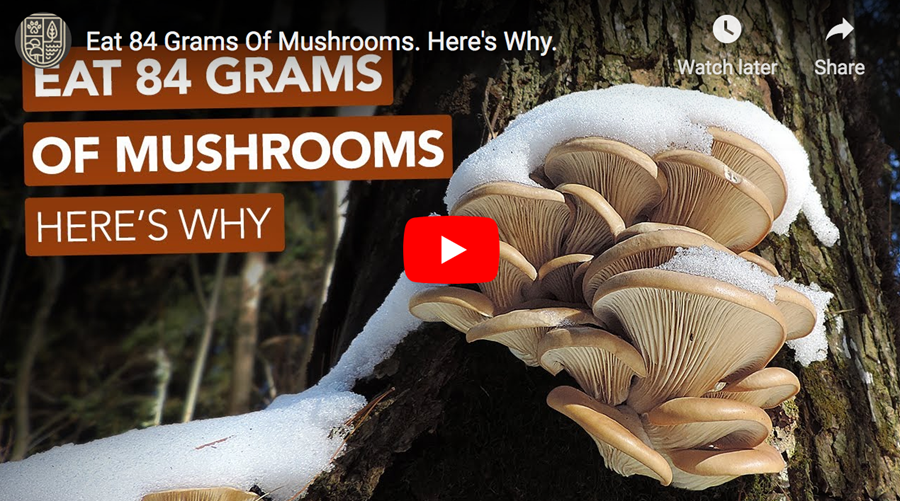
Eat 84 Grams Of Mushrooms. Here’s Why

Mushrooms have come a long way in recent years.

Formerly classified as primitive plants in the taxonomic sense and as white vegetables in the culinary sense, fungi have since risen above their woefully outdated labels.

In the ecological context, we’ve learned that mushrooms are anything but primitive.  In the nutritional context, we’ve learned that mushrooms are dietary superstars.

Subsequently, it seems that there are just as many reasons to appreciate mushrooms as there are to eat them.  Human health, it turns out, is one overlapping reason.

Corroborating this motive is new research published in the journal Food, Science, & Nutrition.  In a recent study, researchers concluded that eating a small serving of mushrooms can have measurable and positive effects on human health.

In a brand new video, I discuss four important findings revealed in this study.  If you’re interested in learning the ways in which mushrooms can improve your health, check it out!

Like fungi, the American beaver has made considerable progress in recent years.  Formerly classified as extirpated in many states, beavers can now be found in urban parks.  To read about a morning encounter I had with North America’s largest rodent, check out the latest Instagram post!Click to view post

I was a recent guest on The Mushroom Hour podcast.  In the interview, we discuss many topics related to nature connection, supporting land conservation trusts, foraging wild water, and more.  You can listen to the interview through one of the following links:

Thanks for reading and watching, and thanks for your continued support!

-Adam Haritan

Magickal Properties and Uses of Viola, Violet Magic

Crooked Bear Creek Organic Herbs's avatarGood Witches Homestead

Viola is a quiet, little magic. She springs up in fields, lawns, and at the edges of forests. Before her companions begin to bud, she’s blooming away, gathering in the cool, damp spring days. In spring’s quiet while everyone else has yet to awaken, Viola works her magic.

Violas come in a variety of colors and shapes. The ones herbalists are most sweet on are a species called Viola odorata, although we may well fall in love with some of her close cousins, too. Viola odorata sports blue blossoms. Viola tricolor, like the ones in my garden, bloom in deep purples, sometimes sporting a few yellow or white petals. Sometimes they’re called Johnny Jump-ups, Hearts-ease Violets, Sweet Violets, or Pansies by garden centers, sometimes just plain violets. Part of what makes V. odorata and her medicinal cousins particularly special is her scent.

Viola odorata or Violet is a…

View original post 39 more words

Herbs are expensive – Grow your own

pobept's avatarTown & Country Gardening

Herbs Fresh or Dried purchased from your local Supermarket or Farmers Market are exceeding expensive.

These are sample prices taken from Walmart

The best solution is to grow your own Herbs. Herbs take up little space and are very forgiving if neglected.
Most herbs will do well in containers, window boxes and planted directly in your garden soil.
If herbs are conventionally located to you and your kitchen you are more willing and more likely to use them when cooking and serving meals.

Herbs Make Common Foods Taste Special

Sage is a herb that does well if properly cared for. It requires a lot of pinching and cutting to keep it from becoming woody. As a rule, sage will need to be replanted about every 3 years since it will become woody with few leaves no matter what, so keeping it in a pot makes this change that much easier…

View original post 545 more words