A Plea to Save our Wild Horses & Burros from advocate Bonnie Kohleriter

debbiecoffey's avatarStraight from the Horse's Heart

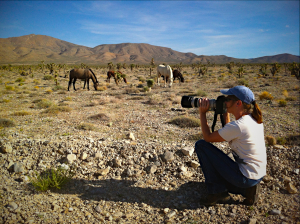
Terry Fitch of Wild Horse Freedom Federation photographing members of the Cold Creek Herd, Sept. 2012 ~ photo by R.T. Fitch

by Bonnie Kohleriter

PLEASE CONSIDER TO INCREASE THE NUMBER OF WILD HORSES AND BURROS ALLOWED ON

  29 M ACRES OF OUR PUBLIC LANDS IN ORDER TO PRESERVE THEIR CONTINUED VIABILITY

CONCURRENTLY PLEASE CONSIDER TO DECREASE THE NUMBER OF ALLOWABLE LIVESTOCK IN

THOSE SAME AREAS TO PRESERVE THE RANGELANDS

THESE STEPS TAKEN WILL PROVIDE A COST SAVINGS TO THE AMERICAN TAXPAYERS

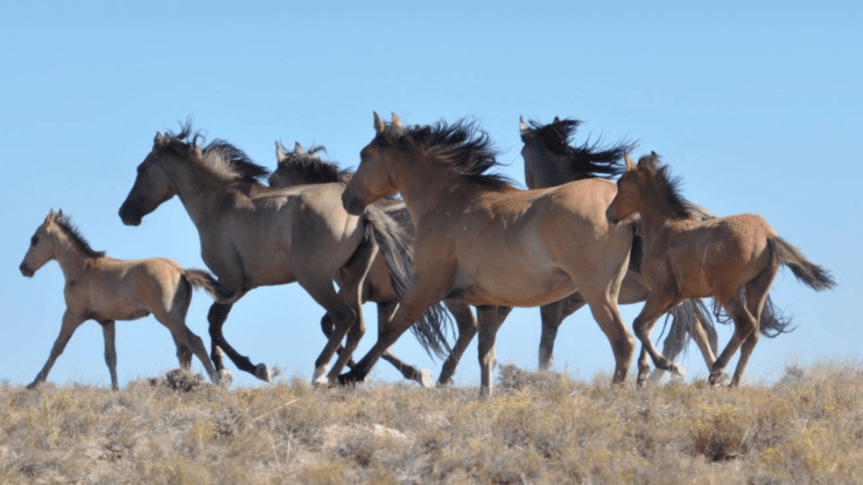
The BLM manages 245 M acres of our public lands and the USFS manages 191 M acres. Wild horses and burros (WHBs) are limited to 27 M acres on BLM land and 2 M acres on USFS land. Only 26,600 WHB are allowed on the BLM 27 M acres and only 2000 on the USFS 2 M acres. In addition, some 400,000 livestock are allowed on the same…

View original post 992 more words

The Shocking Truth About What Happens to ‘Surplus’ Zoo Animals

R.T. Fitch's avatarStraight from the Horse's Heart

by Corrine Henn  as published on One Green Planet

“These surplus animals are often sold and traded through an online database…”

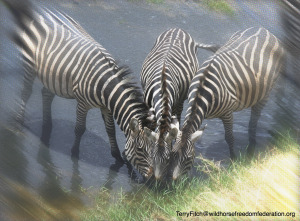
photo by Terry Fitch of Wild Horse Freedom Federation

When we capture animals from the wild and put them in zoos, these animals become commodities. They are stripped of their ability to display natural behaviors and lead a stilted existence filled with stress and boredom. Despite the harm that life in captivity does to zoo animals, both mentally and physically, many zoos run captive breeding programs. As such, zoos can sustain their captive animal populations and the draw of a new baby animal is a great way to get paying visitors in their doors. The only downside to captive breeding is the occurrence of “surplus” animals.

Unlike the many sanctuaries that take in abandoned and abused animals to live out the remainder of their lives, zoos don’t…

View original post 945 more words

Speak Up Against BLM’s Plans to Decimate Wyoming’s Red Desert Wild Horse Herds

R.T. Fitch's avatarStraight from the Horse's Heart

by Carol Walker as published on Wild Hoofbeats

“The BLM should raise the Appropriate Management Level for the Red Desert Complex wild horse populations…”

Red Desert Wild Horses at Risk of Removal and Slaughter
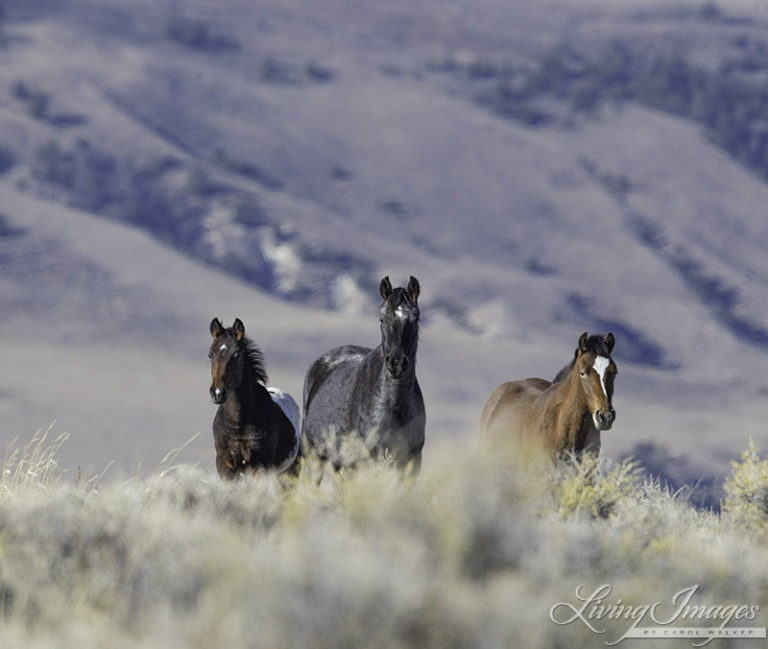
The Bureau of Land Management (BLM) is planning a massive roundup and removal of 2,096 horses, or 80% of the 2,620 horses in the Red Desert Complex that includes Antelope Hills, Crooks Mountain, Green Mountain, Lost Creek, and Stewart Creek Herd Management Areas.  BLM wants to end up with a  low Appropriate Management Level of only 524 wild horses on 753,000 acres of public land.

Please also consider that any horses currently in short and long term holding, as well as any removed from their homes on public lands this year will be in jeopardy of being sold without limitation and may end up at slaughter if the Trump Budget is passed.

There is no…

View original post 506 more words

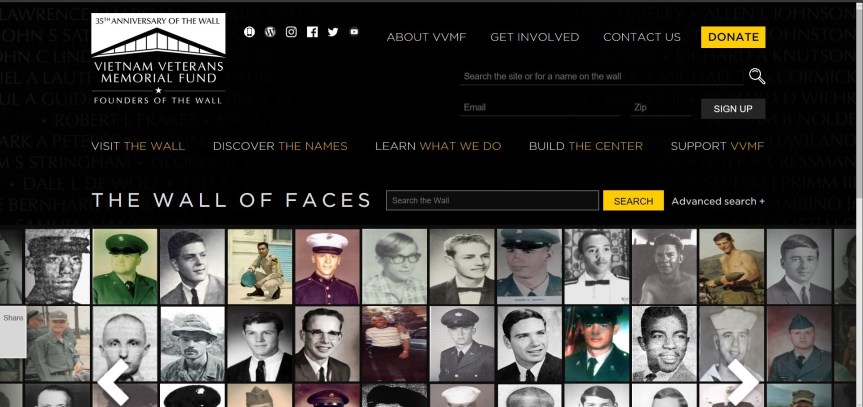
Wall of Faces ~ Vietnam Memorial

VVMF virtual wall

Source: Vietnam Veterans Memorial Wall of Faces

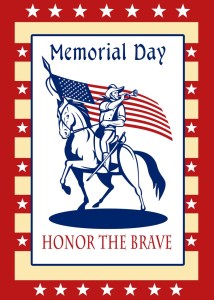
Remember the Horse Cavalry This Memorial Day

R.T. Fitch's avatarStraight from the Horse's Heart

Reprint from Saratoga Stalls

Thank and pay respect to a horse and donkey as you remember our amazing fallen soldiers.

Memorial Day is a day of remembrance that echoes throughout the United States.  Families, friends and loved ones often gather in celebration of those who have given the ultimate sacrifice for their country.  The last Monday in May, and the weekend beforehand, is a much needed break in our routine.  Some families take this moment to teach about our country’s history and past relatives who laid down their lives while others simply enjoy the long weekend off of work.  If you view Memorial Day as an opportunity to revisit the sacrifices that have made our country great, don’t forget about the amazing horse cavalry of the American Revolution, Civil War, World War I and World War II.

Though there are still small examples of horse regiments in modern day warfare…

View original post 533 more words

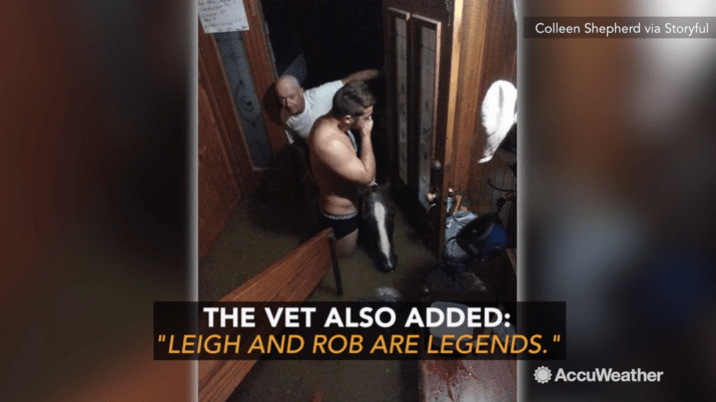
Feel Good Sunday: Men hold exhausted horse’s head above floodwaters for hours to save it from drowning

R.T. Fitch's avatarStraight from the Horse's Heart

As published on AccuWeather.com

“No words required…” ~ R.T.

Click Image to view video of event.

View original post

Horses We Can’t Forget on Memorial Day

After doing some research on military horses in WWI, and the HUGE number of animals killed in battle we would be remiss to not honor not only the horses, but the military K-9.
All gave some … Some gave all … Billy Ray Cyrus

R.T. Fitch's avatarStraight from the Horse's Heart

by Jocelyn Pierce as published on Equitrekking.com

“Throughout the United States’s military history, the horse played an indispensable role. “

Memorial Day is a day of reflection and remembrance to honor those who gave the ultimate sacrifice and lost their lives while serving in the military. Perhaps the most largely unrecognized, and sometimes altogether forgotten veterans are the horses that served alongside man.

Since the domestication of the horse, humans and horses have shared a partnership that has been integral to the thriving of civilizations. Horses were essential in agriculture, transportation, and warfare, not to mention companionship in some of history’s darkest hours and in the face of humankind’s brutality.

Throughout the United States’s military history, the horse played an indispensable role. In wartime, the horse was used to transport cavalry troops, supplies, and artillery weapons as well as for charges, scouting, raiding, and communication. While serving man and country…

View original post 1,793 more words

Boise BLM wild horse adoptions on hold due to equine distemper | KBOI

Members of the public interested in adopting a wild horse or burro should contact the BLM Boise District Office at (208) 384-3300 to provide their contact information.

BOISE, Idaho (KBOI) – The Bureau of Land Management has temporarily suspended wild horse and burro adoptions at the Boise BLM Wild Horse Corrals due to strangles, or equine distemper, in several horses.

Strangles is an upper respiratory tract infection in horses and although usually not fatal, is highly contagious.

While the symptomatic horses are quarantined and being treated by a veterinarian, the BLM has decided to close the corrals to adoptions and public visitors as a precaution until further notice.

“Our priority is the safety of the horses at our facility and the potential of the disease being transmitted to privately-owned horses,” said Raul Trevino, BLM Boise Corral Manager. “We just don’t want to take any chances while we wait for the disease to run its course. As soon as it is safe to do so, we will resume adoptions.”

Horses showing sickness were first observed on May 17.

Lab results later confirmed the presence of strangles in one horse, with six others being symptomatic.

All of these horses are presently stable or showing signs of improvement.

Strangles cases are not rare and have happened at other private and wild horse facilities throughout the country.

Members of the public interested in adopting a wild horse or burro should contact the BLM Boise District Office at (208) 384-3300 to provide their contact information.

They will be contacted to schedule an appointment after the corral reopens for adoptions.

For more information, contact the Boise District Office at (208) 384-3300.

Source: Boise BLM wild horse adoptions on hold due to equine distemper | KBOI

Public tour of Bruneau off-range corrals offered in June | KBOI

The horses receive an abundance of feed tailored to their needs each day, along with a constant supply of fresh water through automatic watering troughs.

BOISE, Idaho (KBOI) – The BLM in Idaho will offer a public tour of the Bruneau off-range corrals on Thursday, June 8.

Two public tours will be offered — the first will begin at 10 am and the second will begin at 1 pm.

Each tour will last about two hours and can accommodate up to 20 people.

Spaces will be filled on a first-come, first-served basis.

The public can sign up to attend and receive driving directions to the facility by calling BLM at (208) 329-4534.

Please RSVP for one of the two tours by June 5.

Details about the tour:

• Tours start promptly at the scheduled time, so be at the facility a few minutes early or the wagon may leave and we cannot come back to pick you up

• Bring comfortable shoes and clothes. Hats and sunscreen recommended

• Bring your own water

• Cameras and video cameras welcome

• Visitors will not be able to walk around the facility unaccompanied. They must travel with the group in the wagon at all times

The Bruneau off-range corrals are located at 28536 Jacks Creek Road, and are privately owned and operated.

About a 75-minute drive southeast of Boise, the facility provides care for over 1600 wild horses.

The facility encompasses 80 acres containing 39 large holding pens, each pen measuring 70,000 square feet that will safely hold approximately 100 horses.

The horses receive an abundance of feed tailored to their needs each day, along with a constant supply of fresh water through automatic watering troughs.

Free choice mineral block supplements are also provided to the animals in each pen.

A veterinarian routinely inspects the horses and provides necessary medical care as needed.

The BLM strives to place horses removed from the range into good, private homes.

Source: Public tour of Bruneau off-range corrals offered in June | KBOI

The vision of technocracy ~ Jon Rappoport

by Jon Rappoport

“Well, boys, we’ve got this strange thing called THE INDIVIDUAL. Could somebody tell me what he is? He’s not conforming to our algorithms. He’s all over the place. And while we’re at it, what the hell is this IMAGINATION? It keeps slipping out of our grasp, it doesn’t fit the plan…”

PART ONE

—Technocrats say they want to wipe out poverty, war, and inequality. But in order to achieve these lofty goals (or pretend to), they need to re-program humans—

Technocracy is the basic agenda and plan for ruling global society from above, so we need to understand it from several angles.

Consider a group of enthusiastic forward-looking engineers in the early 20th century. They work for a company that has a contract to manufacture a locomotive.

This is a highly complex piece of equipment.

On one level, workers are required to make the components to spec. Then they must put them all together. These tasks are formidable.

On another level, various departments of the company must coordinate their efforts. This is also viewed as a technological job. Organizing is considered a technology.

When the locomotive is finished and delivered, and when it runs on its tracks and pulls a train, a great and inspiring victory is won.

And then…the engineers begin to think about the implications. Suppose the locomotive was society itself? Suppose society was the finished product? Couldn’t society be put together in a coordinated fashion? And couldn’t the “technology of organizing things” be utilized for the job?

Why bother with endlessly arguing and lying politicians? Why should they be in charge? Isn’t that an obvious losing proposition? Of course it is.

Engineers could lay out and build a future society that would benefit all people. Disease and poverty could be wiped out. Eliminating them would be part of the blueprint.

This “insight” hit engineers and technicians like a ton of bricks. Of course! All societies had been failures for the same reason: the wrong people were in charge.

Armed with this new understanding, engineers of every stripe began to see what was needed. A revolution in thinking about societal organization. Science was the new king. And science would rule.

Of course, for an engineered world to work, certain decisions would have to be made about the role of the individual. Every individual. You couldn’t have an air-tight plan if every human were free to pursue his own objectives. Too many variables. Too much confusion. Too much conflict. Well, that problem could be solved. The individual’s actions would be tailored to fit the coordinated operations of the planned society.

The individual would be “one of the components of the locomotive.” His life would be connected to other lives to produce an exemplary shape.

Yes, this could imply a few problems, but those problems could be worked out. They would have to be worked out, because the overriding goal was the forming of a world organization. What would you do if one bolt (an individual human) in one wheel of a locomotive was the wrong size? You would go back and correct the error. You would re-make the bolt.

Among technocrats, the overall vision superseded the glaring need to “remake” individuals who would fit in. It was perfectly all right to re-program the individual.

Other people entered the game. High-echelon Globalists saw technocracy as a system they could use to control the population.

Essentially, an already-misguided vision of a future technocratic utopia was hijacked. Something bad was made much worse.

In a nutshell, this is the history of technocracy.

A locomotive is a society? No. That was the first fatally flawed idea. Everything that followed was increasingly bizarre.

Unfortunately, many people in our world believe in Globalism, if you could call a partial vague view a legitimate belief. They dreamily float on all the propaganda cover stories—greatest good for the greatest number of people; no more poverty; equality of sharing; reducing the carbon footprint; a green economy; “sustainable development”; international cooperation; engineering production and consumption of goods and services for the betterment of everyone; and all of this delivered from a central platform of altruistic guidance.

If you track down the specifics that sit under these cover stories, you discover a warped system of planning that expresses control over the global population.

The collective utopia turns out to be a sham.

Waking up is hard to do? Breaking up is hard to do? They must be done.

A workable technological fix is a very nice achievement when the project is a machine. But transferring that glow of victory to the whole of society is an illusion. Anything that calls itself education would tackle the illusion as the first order of business.

Engineering society requires engineering humans.

That is the fatal flaw.

It’s called mind control.

PART TWO

Continue reading “The vision of technocracy ~ Jon Rappoport”