Author: Paula Cas
I write fiction, non-fiction, verbiage for all our websites, and have been publishing my fan fiction on my various sites for many years. https://paulacas.com
I am a Spiritual Medium and use Tarot cards as one my primary tools in doing readings. For 30 plus years have been doing readings in settings from my living room to truck stops. I tell you what Spirit wants you know for your betterment, not what you think you need to know.
I’ve worked on computers since before there was such a creature as Windows.
A Mountain Maryland native, but have spent years spent living in Oklahoma, Colorado, Texas, Oregon, California, Nevada, and Arizona. My husband, Oro Cas, and I spent 10 years driving tractor-trailer across the 48 contiguous states.
Oro Cas and I produced and hosted Internet Radio shows on BlogTalk Radio, video productions on KDCL Media and Oro Expeditions YouTube Channels.
Land Healing: Distance Work and Levels of Connection

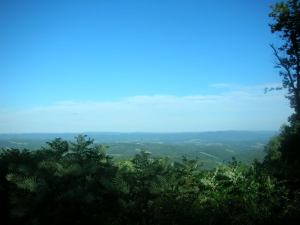 The Laurel Highlands – Overlooking the mountains
Often, working as a land healer is very local work: you work with the plants, animals, bodies of water, insect life, and many other aspects of life that are nearby to you. Depending on where you live, this is often ample enough for any of us to do. But, you may also feel led to do work at distance on behalf of a place–perhaps a place you visited or one that is calling to you. Even though you live far away or cannot reach that place, you want to help. This is where distance land healing can come in.
An important aspect of energetic land healing (that is, working in a ritual way to help bring positive energy, blessing, and healing to land, bodies of water, animals, plants, insects, and more) is distance work. Often, land we want to heal (such as those…
View original post 1,332 more words
The Energies of July 2020

The beginning of July has brought with it some decidedly turbulent weather and an unseasonable end to the peaceful, warm summer weather that we had been enjoying during June. Watching the wind tear through the garden recently reminded us once again of how fragile our environment really is and how important it is not to underestimate the power of nature.
Those very same turbulent weather patterns are also offering us a flavor of the nature of the energy flow over the next part of the year. With this in mind, we might all be wise to keep a daily check on our grounding and make sure that our energetic foundations are secure so that we are able to withstand any storms that might pass through over the next few months.
The general energy flow for July is likely to feel quite intense with some particularly active, turbulent energy creating the…
View original post 1,163 more words
Amazing Anise Hyssop

By Susan Belsinger
Agastache foeniculum

While commonly called anise hyssop, the odor is more similar to French tarragon, though sweeter, with a hint of basil. The foliage and flowers taste similar to the aroma—sweet, with the licorice of tarragon and basil—and just a bit floral.
All of the thirty or so Agastache species are good for honey production and make great ornamental perennials. The flowering plants go well with the silver-leaved species of mountain mint (Pycnanthemum), which flower about the same time in the July garden and also provide good bee forage. The young, broad, dark green leaves of A. foeniculum, tinged purple in cool weather, are attractive with spring bulbs such as yellow daffodils.
Agastache species do not have GRAS status, even though the leaves of many species have been used for centuries as a substitute for French tarragon, infused in syrups…
View original post 827 more words
Crafting Herbal Extracts…. – My Herbal Adventures…
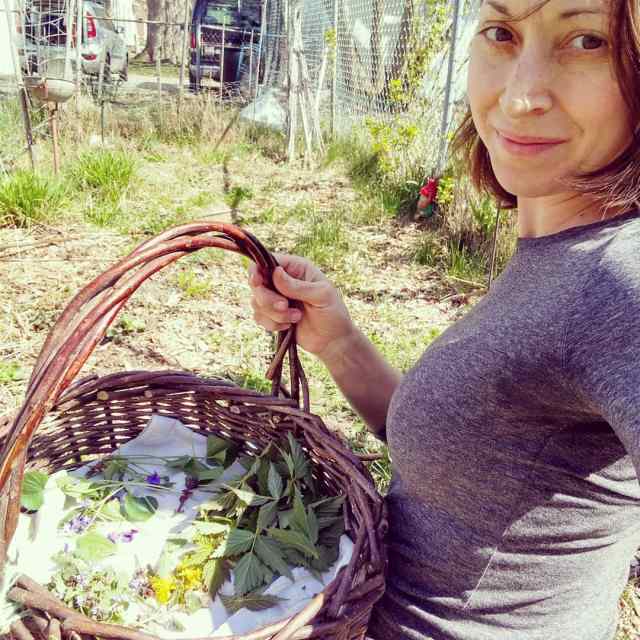

I shared Anne’s email with you and a bit of her website for she is my herbalist, my go-to for tinctures, extracts, balms, etc. I have complete trust in her expertise, the products she endeavors to create, her passion, and drive. I am honored and pleased to introduce you to Anne, my herbalist, and friend.
By the way, here is the link to Anne’s shop…
https://www.etsy.com/shop/AnnesBackyardHerbal
| by aspiringherbalist |
I have now been crafting herbal extracts, mainly; Tinctures, Glycerites, Vinegars & Skincare Oil infusions, for 4 years now. Even though I am no expert and consider myself a novice, I have learned a new lesson every year. As I learn and read and discover new ways of determining how to best create a plant extract that is both effective & well-rounded, I also have to consider its flavor, consistency and taste. I have experimented with different combinations of solvents over the…
View original post 937 more words
Peppermint – Herb of the Month
By Maryann Readal
Most of us, gardeners or not, are familiar with mint. But how many of us know that there is a distinctive difference between spearmint and peppermint? The difference between these two mints may be important depending on how you want to use them.
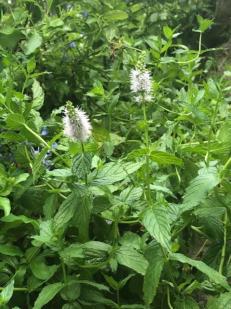
Peppermint, Mentha × piperita, is The Herb Society’s Herb of the Month for July. Peppermint is really a hybrid of two mints, water mint (Mentha aquatica) and spearmint (Mentha spicata). . Being a hybrid, peppermint does not produce seeds. If you want to propagate it, you must either take cuttings or divide the plant. Like other mints, peppermint is a vigorous grower, so must be contained if you don’t want it growing everywhere in your garden. It favors growing in rich, moist soil. Peppermint has a narrow, coarse leaf and flowers that are pink-lavender. Spearmint, on the other hand, is…
View original post 637 more words
Beyond Divination: Four Spiritual Uses for the Tarot
Beautiful artwork. Thanks for sharing.
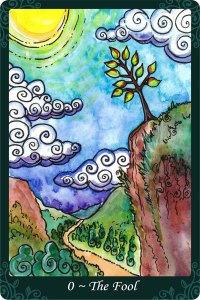 When people think of the Tarot, they often think of its primary use as a divination tool. Tarot is an incredibly versatile tool, and now you can get hundreds of decks on practically any theme, choose from dozens of books to help you learn, and access a wide variety of free online resources. Learning to read them as a divination method is as straightforward as picking up a book, drawing cards, and reading entries–and yet mastering them can take a lifetime.
I wanted to share a few additional ways that I’ve used the Tarot over the years to enhance my spiritual practice. The Tarot has many uses beyond divination, and learning some of these can deepen your work with the Tarot even further. These methods can be tied directly to divination uses, help you learn the Tarot in a new way, or be used on their own. All images are…
View original post 1,272 more words
3 magical ways to nurture yourself during a retrograde & Eclipse Season
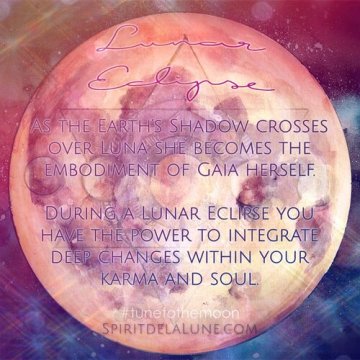
This is our final eclipse of this eclipse season and this one might actually be visible for many on the northern hemisphere!
This is a penumbral lunar eclipse which happens when the Sun, Earth and Moon are aligned, but not perfectly. This means that the Earth blocks some of the sun’s light from reaching the moon and covers all or part of the moon with it’s shadow.
The lunar eclipse will be visible for many of us this time if the sky is clear. For others it might be eclipsing while the moon is rising or setting.
Here is a link with the timing and a map of the eclipse.
When it comes to an eclipse… even if you can’t see the event you will definitely feel it, especially when our intuition and emotions are in tune with the moon!
Remember that eclipses shake the current energy up so that we can see what isn’t working, and release it or heal it so we are free to expand and move forward. This gives you the power to integrate the lessons that have been coming up over the last month or two.
This full moon eclipse is also in Capricorn. Capricorn is very goal oriented and helps us stick to our plan and intentions with it’s gentle nurturing hand. With careful planning and diligent daily effort, this week can help you make the changes you’ve been wanting to make for a long time now.
Read original article at: Spirit de la Lune ~ 3 Magical Way To Nurture Yourself A Retrograd & Eclipse Season
ASCENDING SOUL: CRYSTAL TALISMAN MAGIC FOR THE FULL MOON LUNAR ECLIPSE IN CAPRICORN
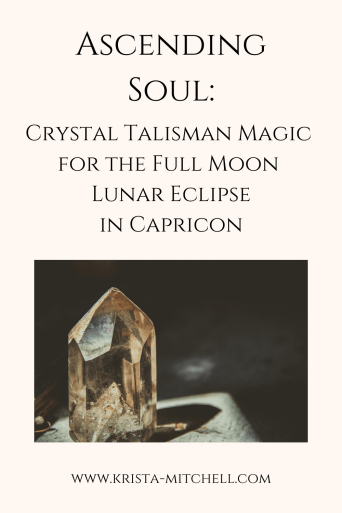
We have yet another full moon lunar eclipse, this one in Capricorn, happening at 12:44am Sunday July 5th.
The download I received continues to guide us through the healing cycle and archetypal patterns initiated by the recent new moon solar eclipse.
I opened to channel and this is what first came through:
“Cycles and patterns, cycles and patterns.
The world goes round and round.
Moon in an earth sign, sun in a water sign,
The earth eclipses the water.
From fire and water, to earth and water,
Building, creating steady ground.
This is the earth forming anew under our feet.”
The moon will be in Capricorn, an earth sign ruled by the planet Saturn, relating to building and structure and toil and triumph. Saturn is the structurer, Father Time, the sacred masculine.
The sun is in Cancer, a water sign ruled by the moon, relating to the home, family nurturing, the emotions, intuition, imagination, and the sacred feminine.
Capricorn builds the world. Cancer builds a world of its own, within.
The sacred feminine is the energy, the flow.
The sacred masculine forms the metaphysical structure or vessel.
It is a time of creating.
This will be a very magical eclipse, one that can initiate us into a new way of being – individually, and collectively.
Don’t miss out if this calls to you and speaks to your soul, because it means your time of becoming is now.
Read original article at: Krista Mitchell ~ Ascending Soul; Crystal Talisman Magic for the Full Moon Lunar Eclipse in Capricorn
Cooking with Monarda
By Susan Belsinger
(Blogmaster’s note: With Monarda currently in its full glory here in zone 7, we’re posting this recipe so you can take advantage of its unique flavors while it’s still in bloom. Serve these tasty treats at your next summer celebration!)

Monarda (commonly called bee balm or bergamot) is a native American herb named after a Spanish physician and botanist, N. Monardez, of Seville. Its unusual and ornamental flowers possess a distinctly architectural character with their rather bristly, shaggy-headed colorful appearance. All species attract bees and are good honey plants. Right now, my stands of the various bee balms are abuzz with activity from dawn until dusk. The twelve species of Monarda, all native to North America, offer a wide assortment of flavors and fragrances—from lemon to thyme to pungent oregano to tealike and rose—produced on annual or perennial plants. So sniff and…
View original post 998 more words


You must be logged in to post a comment.