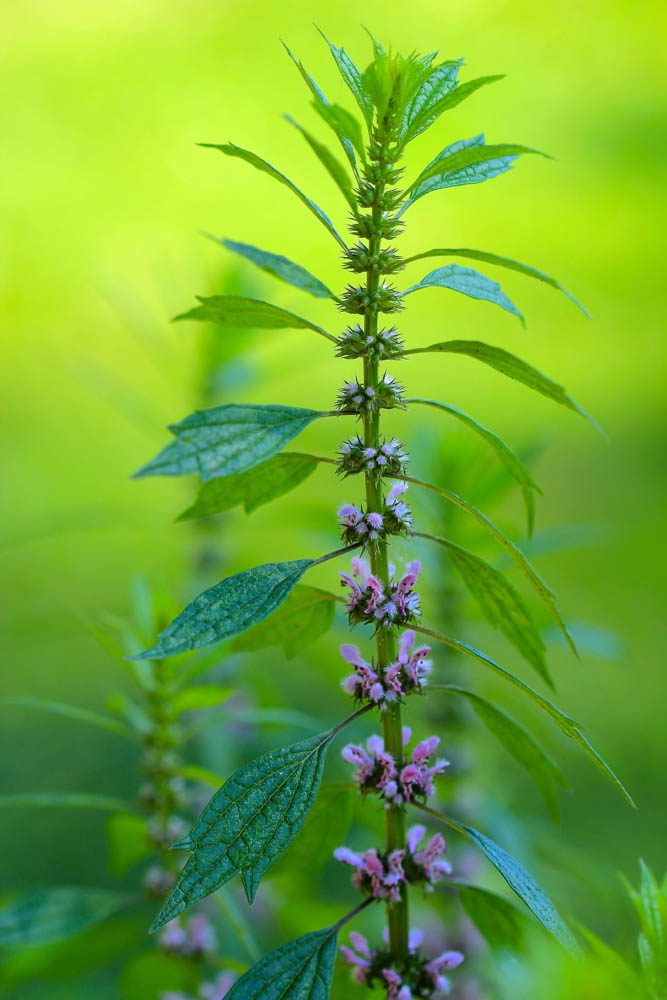
Medicinal Herb: Motherwort {Leonurus cardiaca}

Crooked Bear Creek Organic Herbs's avatarGood Witches Homestead

Also, Known As:

  • Lion’s Ear
  • Lion’s Tail
  • Lion’s Tart
  • Motherwort

Although motherwort is indigenous to Europe, over the years, the plant has acclimatized itself to the different conditions all over North America. Presently, motherwort is found in the terrain ranging from Nova Scotia to Montreal and southern parts of North America to Texas and North Carolina. The plant thrives best in vacant plots and other wastelands.

The motherwort is a perpetual plant often growing up to a height of five feet. The herb bears leaves that are hairy and have an unkempt and disheveled look and often resembles the tail of a lion. Owing to the leaves’ appearance to the lion’s tail, the herb is also known by other common nicknames like lion’s ear, lion’s tart and of course, lion’s tail. Each leaf of motherwort comprises three hemispheres that are shaped like javelins. The herb bears pink, white or purple…

View original post 1,212 more words

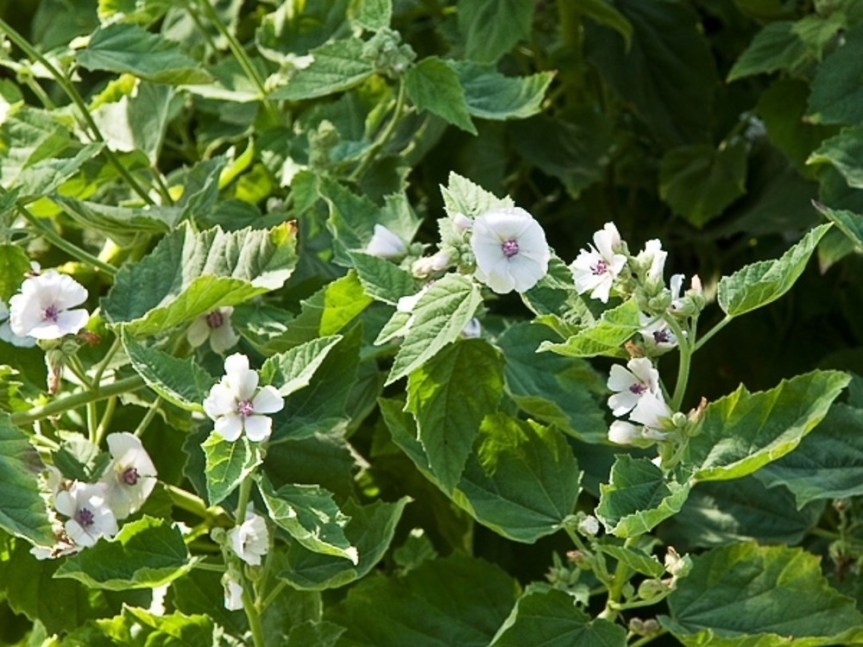
Medicinal Herb: Marshmallow

Crooked Bear Creek Organic Herbs's avatarGood Witches Homestead

Althaea Officinalis

Also, Known As:

  • Althaea
  • Marshmallow
  • Mortification Root
  • Sweetweed

Found growing in abundance in moist and wet places all over the world, marshmallow is a perennial aromatic herb that is sometimes found to grow up to four feet in height. While the herb can be found growing in plenty in the wild, it is also cultivated commercially for medicinal use. The root of the plant is white in color and tastes sweet similar to the parsnip (a long tapering cream-colored root cooked and consumed as a vegetable). However, unlike the parsnip, marshmallow roots contain plenty of mucilage (a gummy substance secreted by some plants containing protein and carbohydrates). The plant has numerous branch-less stems that are woolly or covered with long, soft, white hairs. The marshmallow stems bear serrate (edged with indentations or with projections that resemble the teeth of a saw) and pubescent (covered with down or fine hair) leaves…

View original post 1,152 more words

Medicinal Herb: Lungwort

Crooked Bear Creek Organic Herbs's avatarGood Witches Homestead

Pulmonaria Officinalis

Lungwort is a perennial herb that normally grows up to a height of one feet or 30 cm. The plant bears wide oval-shaped leaves at the base, while the upper leaves are relatively smaller marked with the irregular color pattern, especially white spots. The lungwort plants also bear bunches of pink-purple colored flowers.

Going by the Middle Ages Doctrine of Signatures, an ancient European philosophy, herbs bearing parts that resembled human body parts, animals, or other objects, had useful relevancy to those parts, objects or animals. It may as well indicate to the surroundings or specific places in which herbs grew. Following this theory, lungwort is effective in treating chest ailments and hence its leaves bear resemblance to the lung tissues.

The lungwort plant is native to Europe and western Asia and belongs to the family of Boraginaceae and the Pulmonaria genus of flowering plants. One species of…

View original post 1,118 more words

BLM to begin 2nd Year of the Conger Wild Horse Roundup and Research Study

debbiecoffey's avatarStraight from the Horse's Heart

Note:  The BLM has set the AML (Appropriate Management Level) for the Conger HMA in Utah (170,993 acres) at ONLY 40-80 wild horses – not even a viable herd number.  How many stallions are they going to geld?

                                                                                                                (Photo: BLM)

From BLM News Release:

BLM to begin Year 2 of the Conger Wild Horse Gather and Research Study

Public welcome to observe gather operations

FILLMORE, Utah The BLM Fillmore Field Office is planning to begin gather operations on Tuesday, Nov. 28 in support of the research wild horse gather in the Conger Herd Management Area (HMA) west of Delta, Utah.

“This gather is in year two of a research study that is being conducted on wild horse behavior and ecology, said BLM West Desert District Wild Horse Specialist Trent Staheli.  “It will examine the behavioral effects of gelding, population dynamics, fertility, reproductive rate, recruitment rate, age-specific survival and…

View original post 404 more words

Authentic Self

On Being an American Druid

Dana's avatarThe Druid's Garden

The quintessential image of a druid is a group of people, all in white robes, performing ritual inside an ancient circle of stones.  This image is probably the most known and pervasive of all visuzaliations of druidry, and for many, it shapes the our perceptions of what druidry should be. But taken in a North American context, this image presents two problems.  First, we have no such ancient stone circles and two, another group has already claimed the quitessential white robe, and its not a group with which we want to associate our tradition.  This kind of tension, along with many other unique features of our landscape, make being an American druid inherently different than a druid located somewhere else in the world.  In the case of any spiritual practice, context matters, and context shapes so much of the daily pracice and work.    And so today, I’m going to answer…

View original post 1,874 more words

The Subconscious Mind

Law of Gender

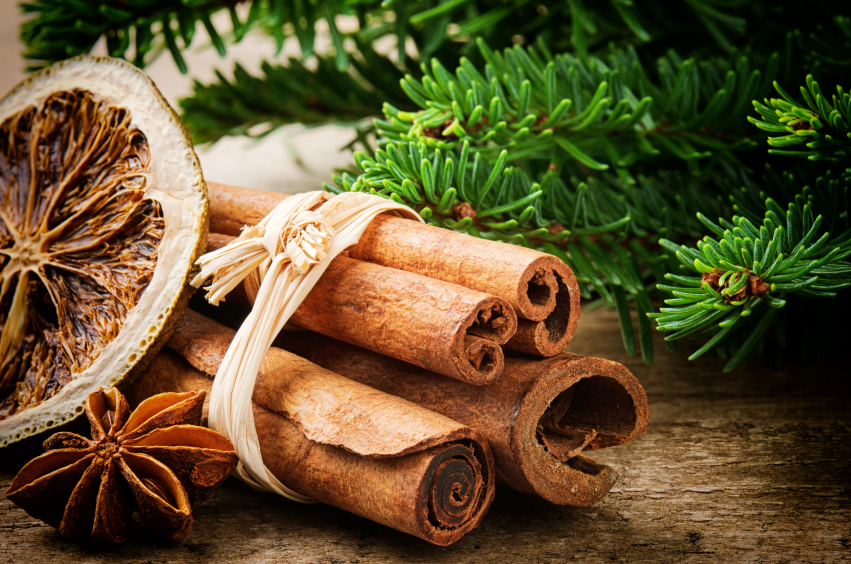
Our Holiday Favorite Spice: Cinnamon

Crooked Bear Creek Organic Herbs's avatarCrooked Bear Creek Organic Herbs

Most of us think of spices as incidental to our diets, but perhaps it’s time to update our appreciation of these flavorful, and powerfully health-promoting, seasonings.

Spices are defined as any “aromatic vegetable substance.” The keyword is a vegetable. Derived from “vegetables” in the form of tree bark {cinnamon}, seed {nutmeg}, or fruit {peppercorns}, spices have potent anticancer, anti-inflammatory and other health-promoting effects that are daily being confirmed by researchers. Indeed, the following spices have been identified b the National Cancer Institute as having cancer-preventive properties: sage, oregano, thyme, rosemary, fennel, turmeric, caraway, anise, coriander, cumin and tarragon. In one comparison of antioxidant power from the Agricultural Research Center, the compounds of oregano rank higher than vitamin E.

Spices also make major contributions to our health by allowing us to reduce the amounts of salt, sugar and fat in our foods.

We’ve chosen cinnamon as a super-spice because of its…

View original post 916 more words

Ozark Encyclopedia – N – Nails