To Squash Or Not To Squash: Musings On Invasive Species

Lanternfly
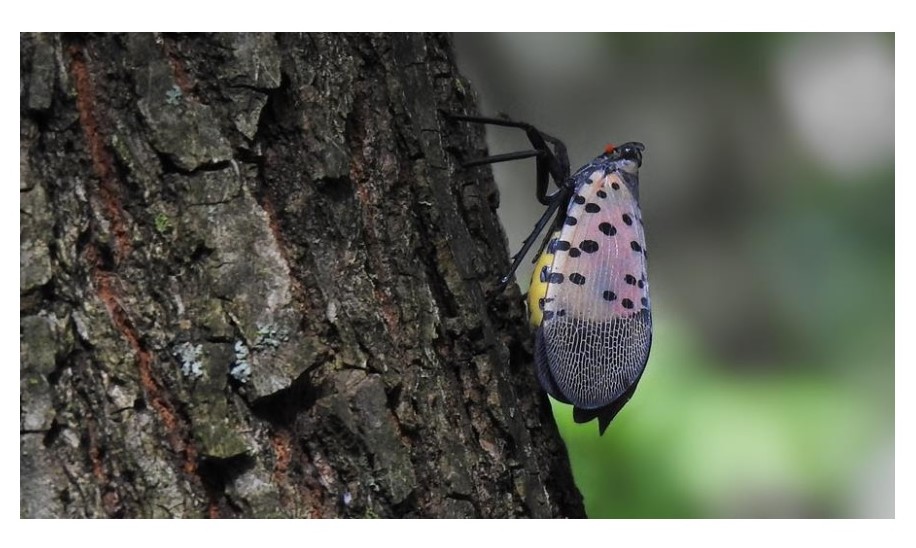
The devil was on one shoulder.  An angel on the other. Both were telling me how to proceed, but I couldn’t decipher which voice belonged to which entity. “Cut the bag open,” one voice instructed.” Leave it alone,” said the other. Apparently, my former sense of good and evil was blurred.  Who was the devil, and who was the angel? It all started when I was driving on a backcountry road in Pennsylvania.  I encountered a stand of tree-of-heaven (Ailanthus altissima) whose trunks were adorned with plastic contraptions. “Spotted lanternfly traps,” I thought to myself. Curious to see how effective the contraptions were, I pulled over.  The traps were constructed 5 feet from the bases of the trees.  Each trap was clearly occupied.  I decided to take a closer look. The first trap held dozens of spiders and beetles — some of them alive, many of them dead.  The number of spotted lanternflies within this trap equaled exactly zero. I then checked trap number two.  Like the first trap, this one also held dozens of spiders and beetles.  The number of spotted lanternflies within this trap also equaled exactly zero. Every trap was like this.  None contained a single spotted lanternfly.  All imprisoned spiders and beetles. Thinking what my role in all of this should be, I soon found myself accompanied by two supernatural advisors — one on each shoulder. Cut the bags open?  Or walk away?  Cutting them open — or at least permanently disabling the traps — would release the living insects and ensure that no more would perish.  Doing so, however, would benefit spotted lanternflies — insects that are deemed invasive and destructive in North America.  What was the right thing to do? Questions on the topic of invasive species weren’t new to me.  They had materialized before.  What was right?  What was wrong?  What was good?  What was bad?  Who belonged?  Who didn’t? After much pondering over the years, I’ve come to realize that questions will always be plentiful.  In a brand new video, I ask several questions on the fascinating topic of invasive species.  Few of these questions have simple answers, but all are deeply considered. If you are interested in hearing my thoughts, you can watch the video here. Thank you for your support.
— Adam Haritan

Law

People thought we were conspiracy nuts when we said these things.

The Deadliest Plant In North America

In 1992, a 23-year-old man and his 39-year-old brother were foraging for wild ginseng in Maine.  The younger brother harvested several plants from a swampy area and took three bites from the root of one plant.  The older brother took one bite from the same root.

Within three hours, the younger brother died.  The older brother lived, though not without experiencing seizures and delirium.

The offending plant, of course, was not wild ginseng.  It was water hemlock (Cicuta maculata). 

Water hemlock is considered the most toxic plant in North America.  Some sources even consider water hemlock to be the most toxic plant in the Northern Hemisphere.

As it turns out, water hemlock is not a single species.  Water hemlock represents multiple species that all contain a potent toxin.  This toxin disrupts the central nervous system and can lead to death if prompt treatment isn’t given.

I recently spent some time in the presence of two water hemlock species.  If you’re interested in learning how to identify these deadly plants, check out the new video!

Thanks for reading and watching, and thank you for your continued support!

-Adam Haritan

Foraging The Elusive Mayapple

Tropical fruit flavors are not commonly detected in my neck of the woods.  When they are, the experience is unforgettable.

Mayapple (Podophyllum peltatum) is an eastern North American plant whose ripe fruit tastes like a mix between pineapple and Starburst candy.  All other parts of the plant (e.g., rhizomes, leaves, stems, and unripe fruits) are considered toxic.

My first encounter with a ripe mayapple fruit was unforgettable.  I actually smelled the fruit before I saw it.  Within seconds of harvesting, I indulged in what little edible material was available.  The taste was ambrosial — almost too good to be true — and from that day forward I became a devout seeker of ripe mayapple fruits.

As it turns out, conditions this year have been very good for mayapple fruits.  Foragers in many locations have been reporting bountiful harvests.  Because conditions have been fruitful, I decided to film a video in which I discuss key tips for improving your yield. 

If you are interested in becoming a devout seeker of ripe mayapple fruits, check out the video!

Foraging Wild Mushrooms is an online course that is currently open for enrollment until September 2nd.  This go-at-your-own-pace video course is perfect for beginners who are looking to develop their skills.  If you are eager to harvest wild mushrooms but don’t know where to start or where to go, Foraging Wild Mushrooms will equip you with the necessary skills to ensure that your harvests are safe and rewarding.  You can learn more by clicking this link.

Thanks for reading and watching, and thank you for your continued support!

-Adam Haritan

Mind Driven

Get Out of Your Own Way

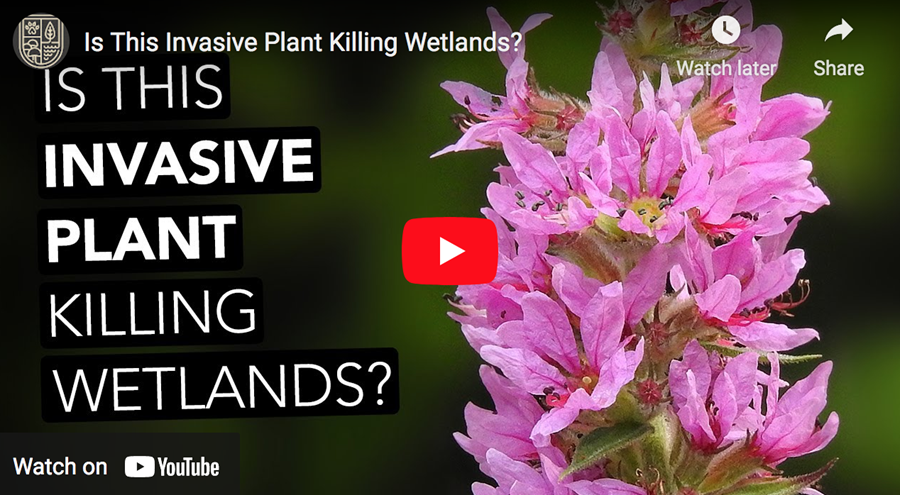
Is This Invasive Plant Killing Wetlands?

Menace.  Monster.  Barbarian.  Scourge.  Thug.  Outlaw.  Killer.

All these terms have been used in one publication or another to describe a single species whose common name is a bit less provocative.

Purple loosestrife (Lythrum salicaria).

This showy plant was introduced to North America from Europe in the early 1800s.  Since then, purple loosestrife has spread itself far and wide across the North American continent.

Today, purple loosestrife is considered a noxious weed throughout many parts of North America.  The International Union for Conservation of Nature even lists purple loosestrife as one of the 100 worst invasive alien species in the world.

But not everyone agrees that this “purple menace” is a serious threat. 

Some researchers think that the problems associated with purple loosestrife invasion are exaggerated.  Some researchers even think that purple loosestrife invasion is associated with positive effects in North America.

Who are we to believe?  How can people be so divided over a single plant?  What does the research really say?  Is purple loosestrife a serious ecological threat or not? 

We explore the topic of purple loosestrife invasion in a brand new video.  If you are interested in learning more about this purported wetland killer, check it out!

Thanks for reading and watching, and thanks for your continued support!

-Adam Haritan

Foraging Wineberries — Delicious Wild Edible Fruits

What would summer be without a trip to the local berry patch?

In my neck of the woods and fields, it wouldn’t be summer at all.

Some of nature’s tastiest fruits — black raspberries, red raspberries, blueberries, and blackberries — ripen during the warmest days of the year.  A perfectly timed visit to a prime location can yield a berry bonanza.

One such prime location includes sunny openings within rich woods.  It is here where a particular kind of raspberry grows.  Known as wineberry (Rubus phoenicolasius), this semi-recent newcomer to the North American continent produces delicious edible fruits that taste like tangy red raspberries.

During my latest visit to a local wineberry patch, I filmed a video in which I discuss the factors that contribute to the success of wineberry in North America, as well as tips for locating wild populations.

If you are interested in harvesting wineberries this year, check out the brand new video!

I was a recent guest on the WildFed Podcast hosted by Daniel Vitalis.  In this conversation, we chat about my favorite topic as of late:  trees.  You can listen to the interview through one of the following links:

Thanks for reading and watching, and thanks for your continued support!

-Adam Haritan

Wild Chamomile (Pineapple Weed) Keto Muffins w/ Cream Cheese Filling — Gather Victoria

OH, MY GODDESS – you’ve got to make these Wild Chamomile/ Pineapple Weed muffins! Their unique aromatic flavor ( a cross between zingy pineapple and soothing chamomile) just permeates these moist fragrant muffins which are made doubly scrumptious by the cream cheese filling. These are one of my favorite summer treats and my poor pre-diabetic…

Wild Chamomile (Pineapple Weed) Keto Muffins w/ Cream Cheese Filling — Gather Victoria

How to Understand Media