
On The Hunt For Wild Edible Spring Mushrooms (New Video!)

Greetings!

Before I share this week’s new video with you, I wanted to let you know that there are only 3 days left to enroll for Foraging Wild Mushrooms.  Whether you’re interested in foraging mushrooms for food, for medicine, for study, or just for fun, this online course covers the most important lessons to get you started and to keep you going!

Foraging has led to profound impacts on my life (e.g., better health, deeper nature connection, lasting friendships with other nature enthusiasts), and I’d love for you to experience the same.

To learn more about the online course, you can follow this link:  Foraging Wild Mushrooms Online Course

And now on to this week’s brand new video!

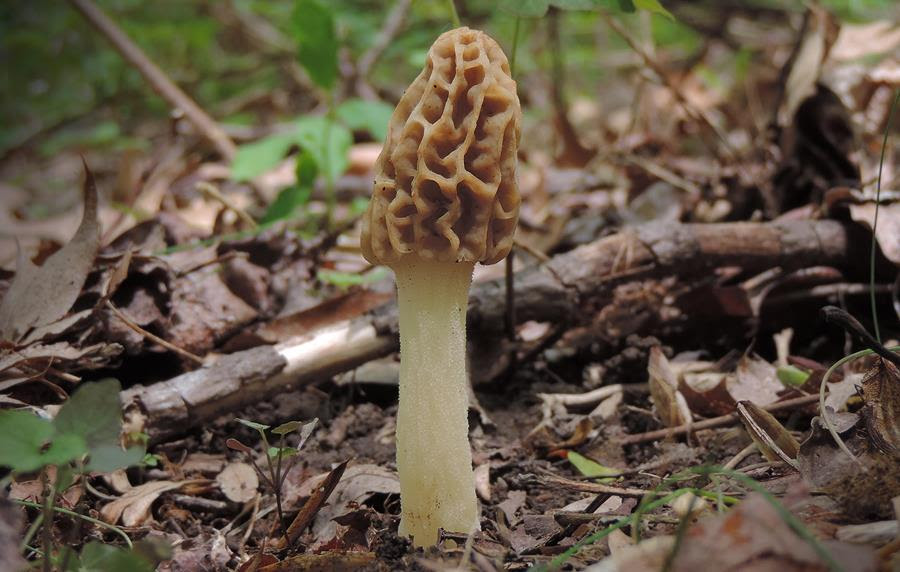
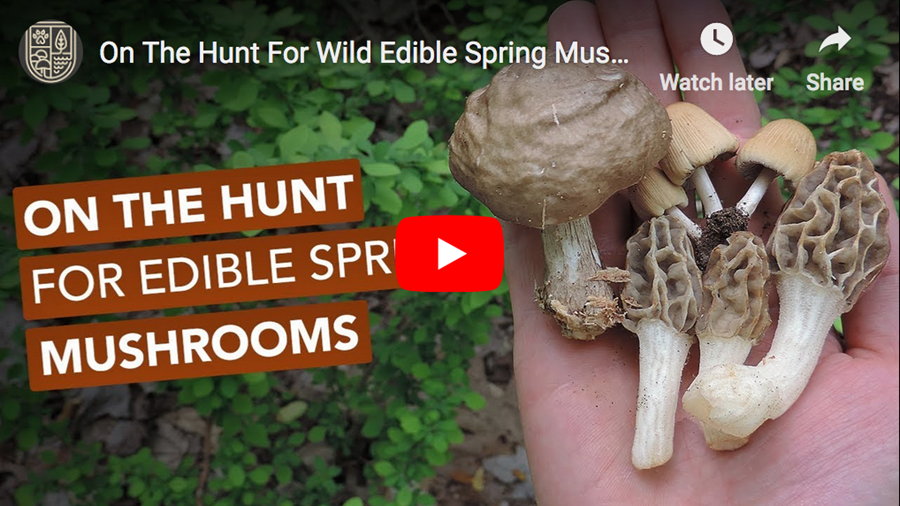
After months of low-to-no activity put forth by the fungal kingdom, it’s nice to finally observe a variety of familiar spring mushrooms appearing like clockwork. All it takes is a bit of rain and warmth to turn even the most fungally-barren tree stump into a treasure trove of mushrooms overnight.

I recently spent some time in a tulip tree grove in search of mid-spring fungi and thought I’d film the experience.  If you’re interested in seeing which mushrooms made it into the frying pan that fruitful day, check out the brand new video!

Thanks for reading and watching… and as always, thank you for your support!

-Adam Haritan
Foraging Wild Mushooms — Online Course Registration Opens Next Week!

Greetings!

I’m extremely excited to announce that registration for my upcoming online course will be open next week on Monday, May 6th.

Foraging Wild Mushrooms is a four-season course designed to help you confidently and successfully forage wild mushrooms.  Whether you’re interested in foraging for food, for medicine, for study, or just for fun, this online course covers the most important lessons to get you started and to keep you going!

This course is presented entirely online and it features over 65 brand new videos that cover all the essentials when it comes to foraging wild mushrooms, including mushroom ecology; mushroom biology; common edible mushrooms; medicinal mushrooms; poisonous mushrooms; cooking techniques; medicine-making; and more.

Upon registration, you can watch the videos at your own pace and you will have access to the course forever.

Please note that Foraging Wild Mushrooms will only be open for registration for one week only, from midnight on May 6th to Monday, May 13th.  After May 13th, registration will be closed.

If you’re interested in signing up for Foraging Wild Mushrooms, mark your calendar for Monday, May 6th and visit this link.

I’ve derived so much enjoyment foraging wild food and medicine from the fungal kingdom over the years, and I’d love to help you experience the same life-changing thrills too!

I hope to see you on Monday, May 6th!
-Adam Haritan

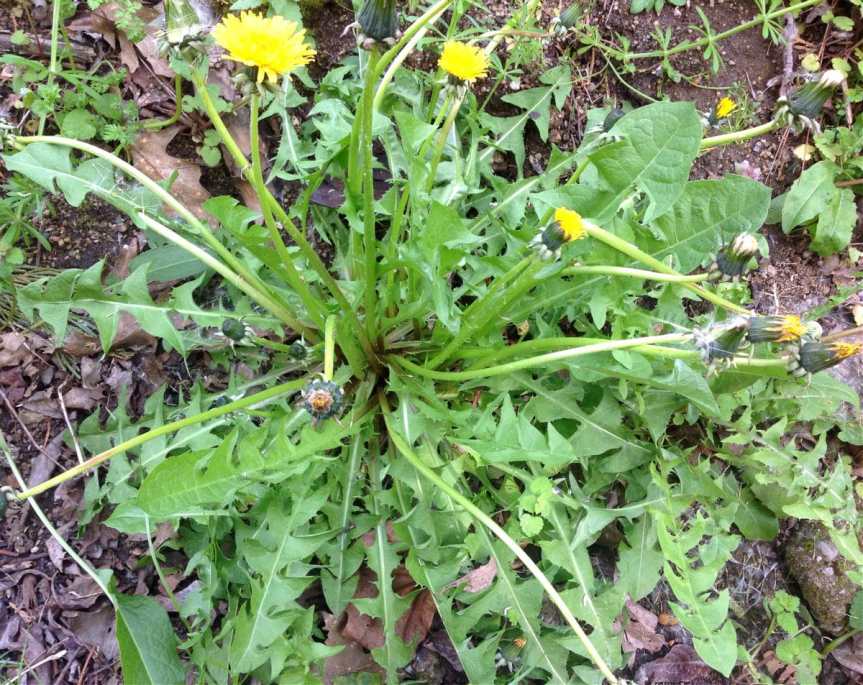
Dandelion, A Common Spring Garden Herb

Crooked Bear Creek Organic Herbs's avatarGood Witches Homestead

Taraxacum officinale

Also, Known As:

  • Blow Ball
  • Cankerwort
  • Dandelion
  • Lion’s Tooth
  • Pissabed
  • Priest’s-crown
  • Puff Ball
  • Pu Gong Ying
  • Pu-kung-ying
  • Swine Snout
  • Telltime
  • White Endive
  • Wild Endive

The dandelion is a common garden herb, with easily recognized flowers. During the spring season, the leaves and the root of the dandelion begin to produce mannitol, which is a substance utilized in the treatment of conditions such as hypertension and a weakened heart in continental Europe – where it is often prescribed by herbalist for patients with these conditions. An herbal dandelion tea made using the roots and the leaves of the herb are good to take from about the mid of March to about mid-May in the treatment of such conditions. Prepare the herbal dandelion tea in this way, first, boil a quart of water in a pot, slowly reduce the heat and then add 2 tbsp. of cleaned and chopped fresh…

View original post 2,665 more words

Dandelions with Bacon or Ham Recipe

Sheryl's avatarA Hundred Years Ago

Each Spring a primordial urge pulls me out of the house –paring knife and bowl in hand– to the weedy natural area at the far edge of my yard. Luscious green dandelion plants peek through the brown leaf-covered grass. The winter has been long and hard, and I desperately need to renew myself. The tender foraged greens are my spring tonic (as they were for my parents and grandparents).

People traditionally ate a very limited selection of foods during the late winter months, and often they were nutrient-deprived by April. Their bodies told them they needed the vitamins, minerals, and antioxidants provided by the emerging dandelion leaves.

Since I’m a dandelion connoisseur (Is it possible to be a connoisseur of weeds?) , I was thrilled to find a hundred-year-old recipe for Dandelion with Ham or Bacon.

I made the ham version. The ham bits nicely balanced the slight bitterness of…

View original post 76 more words

Here Are 9 Wild Edible Mushrooms You Can Forage This Spring!

Greetings!

Before I introduce the new video, I want to let you know that I’ll be an instructor at the upcoming Blue Hills Forager’s Gathering along with Samuel Thayer and Melissa Price (Forager’s Harvest) and Ellen Zachos (Backyard Forager).  This event will take place the weekend of May 17-19th in Bruce, Wisconsin.

The Blue Hills Forager’s Gathering will focus on gathering and preparing meals from food we forage together during the weekend classes and walks, and people of all skill levels are welcome to attend.

If you’re interested in learning more about gathering and preparing wild edibles — all while spending time with an incredible group of nature enthusiasts! — you can find out more information here:

Blue Hills Forager’s Gathering

And now on to this week’s brand new video.

I’ll bet I’m not the only one who’s excited that spring is finally here.  There’s something about budding trees, budding plants, and budding mushrooms that brings immense pleasure to those of us very accustomed to months of cold and darkness.

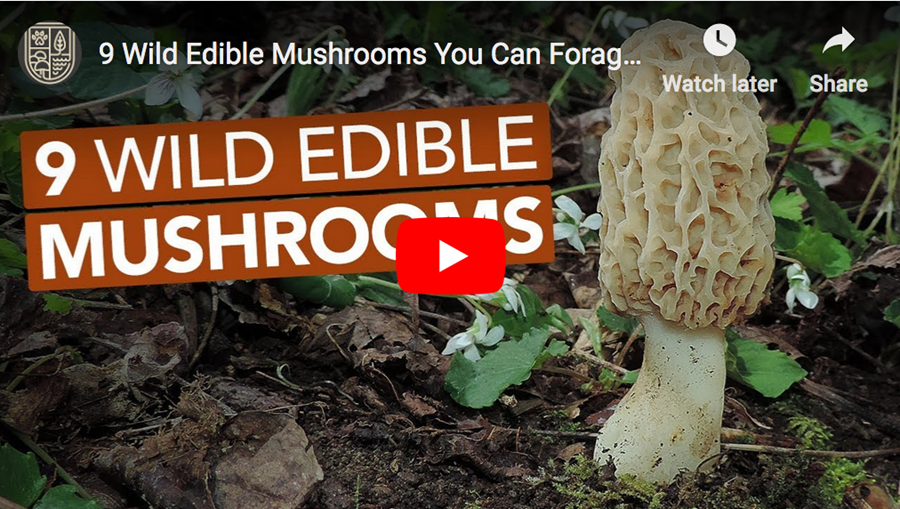
To celebrate the birth of another growing season, I thought I’d film a list of 9 wild mushrooms that you can forage during the spring months.  These mushrooms are edible, they’re tasty, and they might soon be popping up in your neck of the woods.

Some of these species can be quite elusive, and if you want to learn some tips on where to find them, check out the brand new video!

In addition to fungi, spring ephemeral wildflowers are blooming!  Pictured here is a rare species that’s among the first to flower near my home, and it’s a plant I look forward to seeing every spring.  Have you seen Snow Trillium?  Check out this recent Instagram post to learn more!

Thanks for reading and watching… and as always, thank you for your support!

-Adam Haritan

Baked Eggs with Wild Garlic

Medicinal and Culinary Uses for the Shy Violet

Crooked Bear Creek Organic Herbs's avatarCrooked Bear Creek Organic Herbs

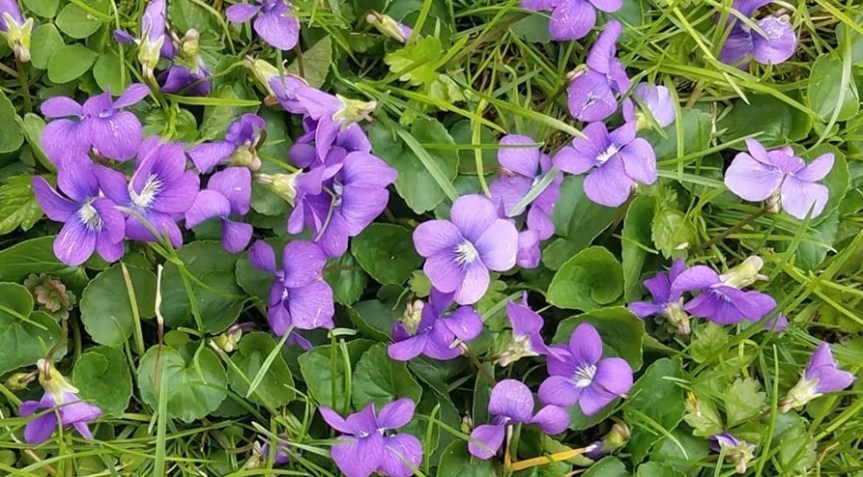
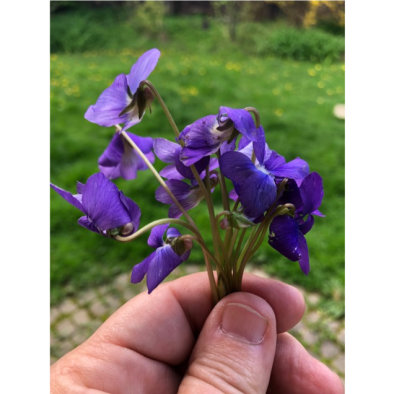
While violets’ delicate blossoms are a treat only for the observant, the plant has enjoyed a long history of medicinal and culinary use.

Leigh Hunt, an English Romantic essayist, and poet is the first known author of the phrase “shrinking violet.” In 1820, he published a passage describing a bit of woodland in The Indicator, a poetry magazine: “There was the buttercup, struggling from a white to a dirty yellow; and a faint-colored poppy; and here and there by the thorny underwood a shrinking violet.”

Hunt was almost certainly referring to the native English, or sweet, violet (Viola odorata). This shy plant can often go unremarked underfoot, and it carries its small, slightly recurved flowers level with or just below its leaves. The phrase “shrinking violet” took a few decades to catch on — but when it did, it spread rapidly, much as its parent plant does…

View original post 1,865 more words

Manzanita Tree Medicine

I love this tree. It’s an all purpose tree with beautiful wood for woodworking and fragrant in campfires and bar-b-ques.

Do You Recognize This Poisonous Plant?

Greetings!

Before I share this week’s video with you, I wanted to provide a quick update regarding the online mushroom foraging video course.  If you’re unaware, I’ve been very busy creating an extensive course designed to teach the necessary skills involved in confidently and successfully foraging wild mushrooms through every season.  The entire course will be available online, and it will feature over 60 brand new instructional videos with guided lessons on:

  • Mushroom ecology
  • Mushroom biology
  • Fungal taxonomy
  • Edible mushrooms
  • Poisonous mushrooms
  • Medicinal mushrooms and extraction techniques
  • Cooking wild mushrooms
  • Mushroom hunting resources

… and lots more.

This project has been a labor of intense love for the past two years and I’m really excited to share it with you!  Registration is set to be open early May, and the best way to stay up-to-date with the release of this course is to continue checking these emails.  Updates will also be posted to the Learn Your Land website shortly.

And now on to this week’s video!

During a recent walk through the woods, I was happy to unexpectedly see a particular medicinal plant whose winter buds and twigs I enjoy.  Upon closer inspection, I realized that not all the buds and twigs in front of me belonged to this medicinal species.

Instead, many shoots around my desired plant actually belonged to a poisonous species.

Luckily, I left the woods unscathed, though I thought I’d film the situation for anyone interested in safely foraging wild medicinal plants.

Do you recognize this poisonous plant?  Check out the brand new video to learn more!

I recently had the pleasure of being interviewed by Sam Sycamore from the Good Life Revival Podcast.  In this interview, we talk about the intersection of health and nature connection, the benefits of knowing how to read the land, and lots more!  You can listen and download the interview here.

Thanks for reading, watching, and/or listening… and as always, thank you for your support!

-Adam Haritan

See more of Adam’s videos at: Learn You Land

Can This Wild Edible Mushroom Cause Cancer? Here’s What I Discovered

Greetings!

Classifying wild mushrooms as edible or not edible isn’t as straightforward as one may think.  Confusing matters even more, the labels edible and poisonous aren’t always clearly defined either.

Take the mushroom pictured above, for example.

Its name is the Late Fall Oyster, and this wild mushroom is listed in many field guides as edible.  It’s no surprise, then, that countless hungry mushroom enthusiasts forage and eat the Late Fall Oyster every year.

However, if you do a little digging around online, you’ll eventually encounter the warning that the Late Fall Oyster is potentially carcinogenic.  Consequently, many people recommend against eating this fungus due to the possibility that it may contain cancer-causing compounds.

I’ve heard both sides of the story, and having eaten the Late Fall Oyster in the past, I was recently inspired to discover any “truth” to this issue.  After a little bit of work and research, I received some answers.

If you’d like to learn more about the controversial status regarding the Late Fall Oyster’s edibility, check out the brand new video!

If you love Eastern Skunk Cabbage, thank a fungus!  It may not seem obvious, though fungi contribute immensely to the health and success of wetland habitats.  To learn more about this intimate relationship between two very different organisms, check out the recent Instagram post!

Thanks for reading and watching, and as always, thank you for your support!

-Adam Haritan