Can You Help Me Find Old-Growth?

Greetings,

I’d like to share one update and ask you a question.

Update:

For the past 7 months, I’ve been busy creating a brand-new online course on old-growth forest ecology.  During this time, I’ve been visiting different old-growth forests and documenting their trees, ecological indicators, geological influences, relationships, and stories.  

It’s coming together nicely, but I’d like to ask you for your help.

Question:

If you’re familiar with old-growth forests in western North America, can you offer any recommendations on places to visit?  

Up until this point, I’ve been documenting eastern North American old-growth forests.  In September of this year, I’ll be spending a few weeks in northern California and Oregon.  I may also consider visiting the state of Washington.

If you’ve visited any old-growth forests in western North America, I’d appreciate your recommendations!  Do you have any favorites?  Are there any “must-see” forests?  Can you point me in the direction of notable trees?  Is there any other advice you can share?  I’ve done quite a bit of research on my own, but I would still love to hear your thoughts.

You can simply reply to this email to reach me.

Thank you for your help!  I really appreciate it.

—Adam Haritan

I Don’t Think This Poet Is Wrong

“Our relation to the natural world takes place in a place.”

The American poet Gary Snyder wrote those words.  I don’t think he’s wrong.

Every time we harvest a wild mushroom, we do so in a place.  Every time we add a new bird to our life list, we do so in a place.  Every time we gather spring water and admire a wooded valley, we do so in a place.

Alvars, bogs, fens, forests, marshes, prairies, savannas, and swamps are all places where life abounds.  When we refer to these places specifically as “ecosystems,” a few interesting things happen:  We see important connections, we see intricate relationships, and we see where humans fit into the story.

If you want to strengthen your connection to nature by learning these fascinating ecosystems, consider enrolling in Exploring Wild Ecosystems.  This is my newest online course designed to improve your ecological literacy.

Today is the last day of the sale.

You can learn more and register here.

Thanks for your continued support!
—Adam Haritan

Questions To Ask A Tree

“The wonder is that we can see these trees and not wonder more.”

It’s no surprise that Ralph Waldo Emerson wrote these words.  The famous American writer was intimately connected to trees:  He planted trees, gathered their fruits, and taught his children the value of learning their names.

Emerson spoke the language of trees, yet was still humble enough to acknowledge that every encounter with trees presented a fresh opportunity to engage in wonder.

Who are you?  How old are you?  Why are you here?  Can you say anything about the underlying rocks?  What can you tell us about the broader ecosystem?

In the spirit of Ralph Waldo Emerson, you and I can ask these kinds of questions every time we encounter a tree.  When we ask questions, we engage in wonder.

A basic step we can then take to answer those questions is first to learn the names of trees.  Fortunately, there are many ways to learn.  We can:

  • Study tree ID field guides
  • Learn how to use dichotomous keys
  • Learn all major physical features of trees (buds, bark, leaves, flowers, etc.)
  • Learn habitat characteristics of trees
  • Attend tree ID walks
  • Visit arboretums (where trees are often labeled)
  • Cultivate friendships with local tree enthusiasts
  • Teach others what we have learned

If you’re looking for a carefully curated opportunity to improve your tree identification skills, consider enrolling in Trees In All Seasons.  This online course teaches you how to identify 100 trees in every season.  It’s currently on sale through Monday, December 23.

You can register and learn more about the course here.

Regardless of how you decide to learn, I strongly encourage you to hone your tree identification skills over time.  With learning comes wonder, appreciation, love, and the unraveling of at least some of nature’s mysteries.

—Adam Haritan

Exploring Wild Ecosystems Is Now Open For Enrollment

Greetings,

I am excited to announce that my newest online course, Exploring Wild Ecosystems, is now open for enrollment!

You can register here.

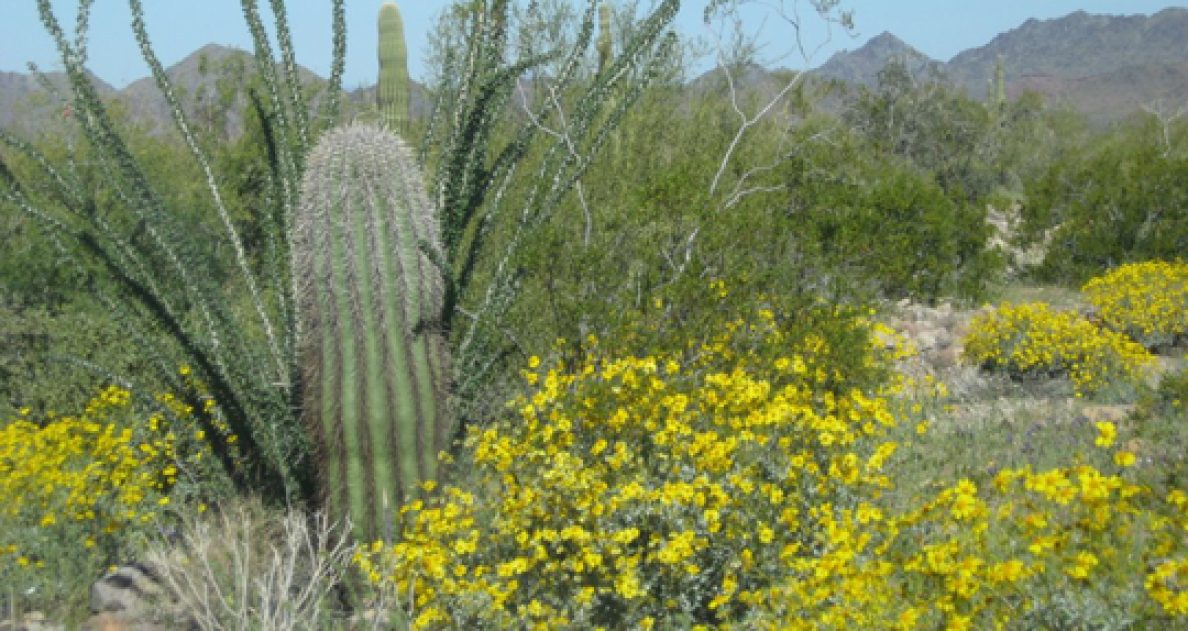
This course is designed to improve your ecological knowledge by introducing you to fascinating ecosystems — including alvars, barrens, bogs, dunes, fens, glades, savannas, vernal pools, and others!

Learning to recognize ecosystems is an essential step toward understanding how nature works.  When we pay attention to the bigger picture, we see beyond individual components.  We see connections, we see relationships, and we see where humans fit into the story. 

If you want to develop ecological literacy; if you want to be able to read landscapes more effectively; if you want to see how all the components within nature are connected, consider enrolling in Exploring Wild Ecosystems today.

Please note that Exploring Wild Ecosystems is open for one week only — from today until Monday, September 30.  After that, registration will be closed.  Upon registration, you can immediately access all course content and view the lessons at your own pace.

To learn more about the course, check out this video which gives you an overview of what you can expect.

Thanks for supporting nature education!  I hope to see you in there!

—Adam Haritan

HSA Webinar: Notable Native Ethnopharmacology

Exploring Wild Ecosystems — New online course coming this spring!

There’s a hidden benefit to joining nature clubs that few people discuss.  Once gained, this benefit can be wasted if you don’t take action on it.  If you have no idea what I’m talking about, let me explain.

Early on, I realized that an easy way to learn mushrooms is to join a mushroom club.  An easy way to learn plants is to join a botanical club.  This is true for nearly any skill that can be taught.  Join an organization and participate in its activities.

This sounds pretty obvious, but what is the hidden benefit that I mentioned earlier?

The hidden benefit is this:  Nature clubs often take you to places that you’ve never been to before.  A botanical club might botanize a rare northern white-cedar fen.  A mushroom club might explore a remote red spruce forest.  

The reason I call it a “hidden” benefit is this:  many nature clubs never mention it.  In fact, some nature clubs never draw attention to the place itself.  Instead, they devote their attention solely to an isolated group of organisms that inhabit the place.

Now of course, organisms are vital components of a place, and we must learn them.  But the place itself, and the relationships that build the place, are things we also must learn if we are to improve our ecological literacy.

What is this place?  Why does it look like this?  Who is responsible for its existence?  How is this place any different from other places with similar names? 

If we don’t ask these questions, we fail to see how any of its organisms are connected.  If we don’t see the connections, we don’t see the place.  If we don’t see the place, we act in strange ways — almost like hungry people who taste only ingredients, but not the meal itself.

All this to say, I decided to bring awareness to this issue by creating a new online course devoted to this topic.  Exploring Wild Ecosystems is an educational resource I spent all of 2023 creating.  I am excited to announce that it will be released in May.

If you want to improve your ecological literacy while studying fascinating ecosystems (alvars, barrens, bogs, glades, prairies, swamps, and more), consider joining the notification list.

I’ll have more information to share in the upcoming weeks.

Thanks for your support!
—Adam Haritan

Two Winter Opportunities To Learn Valuable Nature Skills

Greetings,

In anticipation of the winter season, I am excited to let you know that the Learn Your Land online courses are currently open for enrollment.

Additionally, both courses are on sale this week ($100 off each course).

If you are interested in learning how to forage mushrooms, consider enrolling in Foraging Wild Mushrooms.  This 4-season online course is designed to help you safely and successfully harvest wild mushrooms from the forest, from the field, and even from your backyard.

To improve your knowledge of trees, consider enrolling in Trees In All Seasons.  This online course teaches you how to identify over 100 trees in every season.  If you want to develop the confidence to be able to look at a tree and say, “That’s black spruce,” or “That’s sourwood,” or “That’s mockernut hickory,” consider enrolling today.

These courses are self-paced and presented entirely online.  Once enrolled, you can start, stop, and resume at any time.

Please note that both courses are on sale ($100 off each online course) for one week only — from today until Monday, December 18. 

You can register and learn more about the courses here.

If you have any questions, please reply to this email and a response will be given shortly.

Remember, this sale expires on December 18th.  Enroll today and let your winter season be filled with learning, adventure, and connection!

Thank you!

—Adam Haritan

HSA Webinar: What are Cocktail Bitters?

HSA Webinar: Opening the Gift of Herbs with Kids

The Herb Society of America's avatarThe Herb Society of America Blog

By Betsy Smith 

One very special way that The Herb Society of America shares the gift of herbs is by awarding Samull Classroom Herb Garden Grants. Each year ten grants are awarded for $300 each. Read about some of the exciting projects from some amazing schools across the country that have received these grants.

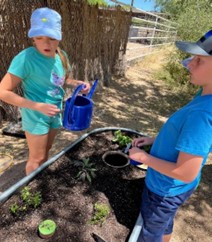
Two kids plant herbs in a raised bed.The garden program at the Tucson Waldorf School recently completed an herb garden in their container garden area. This collection of stock tanks and pots is located near the entrance of the school and is available for people to admire, learn from, work on, and glean. It is their hope that community members will stop by the garden and collect herbs to complement their meals. 
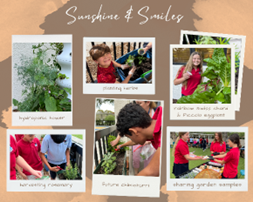


Composite photo of various people planting herbsSomerset Academy Boco reported that with the HSA Samull Grant, they established an herb garden while implementing these learning objectives: 1. Apply practical knowledge in the form of gardening…

View original post 495 more words

HSA Webinar: Tea Blending: Creating Herbal Tea Blends with Balanced Flavor

The Herb Society of America's avatarThe Herb Society of America Blog

by  Angela McDonald

Small bowls of colorful herbs on a wooden trayMost of the teas that we drink these days are blended at some point. Even teas that seem simple such, as ginger or English Breakfast. The reasons for blending teas are varied but the most important one is this: blended teas taste good. My favorite reason is that when blending teas, the possibilities are endless! 

There is nothing magical about the process of tea blending. Just like cooking, it mostly takes experimentation and creativity. Though big companies have whole departments dedicated to flavor experimentation and precise tea blending, there is no reason that we cannot all do this in our home kitchens. The hard part is knowing how to start. 

Here are a few tips for blending:

Know your ingredients – not all herbs taste the same even if it seems like they should. Taste each ingredient individually so you can understand it before you start blending…

View original post 202 more words