Tag: spirituality
Living in Lines vs. Living in Circles
By Dana O’Driscoll
Nature is a perfect system. A tree falls during a thunderstorm. Within several weeks, the wood is colonized by fungi, bugs, and others who begin the years-long process of breaking down the wood and returning all of the nutrients into the web of life. Soon, oyster mushrooms are erupting from the log, bugs burrow in deep, and mice make their home under the old roots. In 10 or 15 years, moss grows thick, and an acorn takes root and begins to grow in the soil that was a stump. The tree’s trunk becomes a nursery tree for many other plants to get a foothold, off of the forest floor. Suddenly where there was death, there is life. This circle continues and continues, connecting us all in a great web of life. There is no waste in this system–every single part of nature can be recycled and reused infinitely.

One of the challenges humans have in this age is that they have built systems that have disregarded the cycle of life, which includes both creating things that do not easily return to nature and removing ourselves entirely from this system. Rather than think in a circle or cycle, we think in a line. This embedded linear thinking currently pervades modern Western human society. The Story of Stuff short film series does a great job of visually describing these problems: many human systems are based on the foundation of greed, quick profit, and short-term linear thinking. What often happens when someone takes up nature spirituality is that their patterns of shifting slowly change from lines to circles. This happens with people connecting to many different nature-connected communities: including nature spirituality, gardening, rewilding, bushcraft, natural building, or permaculture practice. As soon as you start being part of nature, living with nature, and connecting to nature, you are aware of the cycle. The longer you take up these practices, the more profound this cyclical thinking becomes.
On Being a Druid and Walking a Druid Path – A Druid’s Garden Guide and Free Online Book on Druidry

Druidry today has both ancient and modern roots. Druids today seek spiritual connection with nature, using nature to guide, inspire, and ground us. Nature has always been a source of everything to humanity, and those of us who pick up the druid tradition work to reconnect with nature in a multitude of ways. The modern Druid tradition has many branches and paths, and I try to be comprehensive in my coverage of this vibrant and growing tradition. The modern druid tradition is inspired by the Ancient Druids, wise sages who kept history and traditions, and guided the spiritual life of their people. The ancient Druids had three branches of study: the bard (a keeper of history, stories, and songs), the ovate (a sage of nature or shaman), and the druid (the keeper of the traditions, leader of spiritual practices, and keeper of the law). Much of what we know about the Ancient Druids today comes through their surviving legends, stories, mythology, and the writings of Roman authors: the druids themselves had a prohibition against writing anything down that was sacred, and so, we have only fragments. The modern druid movement–from which all present druid traditions descend–started in the 1700-1800’s as one response to industrialization. Today, Druidry is a global and vital tradition. I’ve been walking the path of druidry for almost 20 years and currently serve as the head of the Ancient Order of Druids in America (www.aoda.org). As such, I’ve been sharing a great deal about druidry for a long time on this blog. The ecological crisis is a spiritual crisis as much as it is a crisis of culture. Druidry is us finding our way “home”; back into a deep connection with the living earth. Many people today are drawn to the druid tradition, there is “something” missing for them and it is that connection to nature. Continue reading.
Solace Stones: Retreating into Stone Spirit Medicine ~ Krista Mitchell
There is a solstice occurring tomorrow, Saturday Dec. 21st.
In the northern hemisphere at dawn this will herald the rebirth of the sun and the return of the light.
In the southern hemisphere at sunset there will be a gala of light meant to raise us to ascendency.
Both are rites of passage and devotion that were once held sacred by the wise ones of old.
They would gather or retreat within stone circle and dolmen. They would purify and pray. And then they would prepare to commune with their higher powers, receive the Earth’s song, and heal from the geomagnetic energy that poured through the stones themselves.
While in our modern times this no longer occurs, the stones still stand, and they remember.
I can feel within our own community here an increased desire for fellowship, communion, and to have a genuine experience of the sacred. This is understandable in a world that feels increasingly unsafe, uncertain, disconnected, and cruel.
But it’s also something in our blood: I firmly believe that all of us here walking the spiritual path now have walked it before, in lives past, and we remember the circles and rites of old.
We remember the stones, too.
It’s why we feel a pull to crystal and stone, water and trees, the sun and stars, and each other.
| Crystals for deep listening: Nuummite, Moonstone, Labradorite, Amethyst |
| When I feel lost I know now to retreat into Spirit. I take hold of a crystal that sings to me, close my eyes, and listen for its voice. I drop down deep within, and I listen for my soul’s voice, too.The collective crystalline consciousness that I channel teaches us that Spirit finds us in silence. That all we need to do to reconnect with the Sacred is to simply go quiet, let ourselves have some peace, and listen.Tomorrow there will be plenty of circles (you can join the replay of mine, here), and ritual ideas and tips, but for some of you it may be the simple act of finding your own inner sacred that will bring you the greatest healing, or peace, or revelation.Spirit and consciousness is in all things, which means it’s in you, too.If you can tomorrow, or any time leading up to the end of the year, see if you can carve out some time for quiet for yourself. To sit simply with a crystal, and listen. To let the Earth’s song rise up through and around you, and remember your magic. Wishing you all the best of the season. ~ Krista Mitchell |
Druidry for the 21st Century: Setting and Co-Creating Intentions with Nature

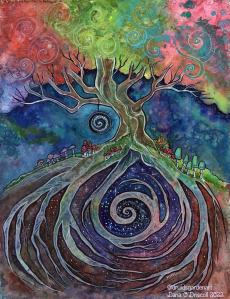 Nature has so much magic, it benefits us always to work with her!
Intentions are powerful things. They allow us to shape our force of will and set a path forward. They help us figure out what our own goals are. And I think because of that, we often see them as very personal. This is something that we do for our own purposes. In many western occult traditions, and even in druidry, intentions are often framed as highly internal things: things we set, things we want to manifest, things that help us shape our vision. You’ll see this very frequently in any ritual work–set your intentions for a ritual, a creation, a space, a new piece of land, and so forth. I think a lot of this is influenced by western occultism, which unfortunately puts the practitioner in a place of power and at the center of a working…
View original post 2,262 more words
The Gifts
Beyond the Anthropocene: Druidry into the Future
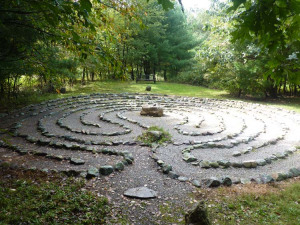 Druidry into the future
Druidry today has both ancient and modern roots, and there have been several distinct “phases” of druid practice historically. While it’s not critical that the practitioner of the modern druid traditions know what I share, it is helpful to have a sense of where the tradition comes from and the forces that shaped it–particularly so that we can think about where we are going. I want to talk today about both the past of druidry in order that we might talk about its future. How do we shape our tradition today so that we become the honored ancestors of tomorrow? What is the work that we might consider doing now, as druids, to create a tradition that endures?
Modern druidry is inspired by the Ancient Druids, a group of wise sages who kept history, traditions, and guided the spiritual life of their people. The Ancient Druids…
View original post 2,557 more words
A Druid’s Guide to Connecting With Nature, Part VI: Nature Reverence
Respect. Honor. Reverence. Admiration–these words are often used to describe people, in our lives, afar, or in history that we hold in high regard. But these same words can also be used to describe many druids’ feelings towards the living earth–plants, animals, oceans, rivers, forests, trees, natural wonders, insects, mycelium–the soil web of all life. The world is a wonderous, incredible place, and those of us who follow a path of nature-based and nature-rooted spirituality recognize this. Reverence is having deep resepect for something, treating it with value and worth. Those of us who are drawn to druidry and nature-based spirituality inherently have reverence to the living earth–it is part of what sets us on this path and encourages us in this direction. But as we deepen our spiritual connection with nature, I believe that our reverence also deepens over time.
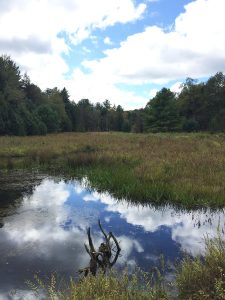 A beaver dam in the early fall at Parker…
View original post 1,946 more words
Authenticity, Ancestors and the Druid Revival Tradition: Reclaiming our Ancestors and Living Druidry Today
by The Druid’s Garden
A mobile army of metaphors, metonyms, anthropomorphisms, in short, a sum of human relations which were poetically and rhetorically heightened, transferred, and adorned, and after long use seem solid, canonical, and binding to a nation. Truths….are coins which have lost their image and now can be used only as metal, and no longer coins.”
“On Truth and Lying in a Moral Sense” Nietzsche, P. 250
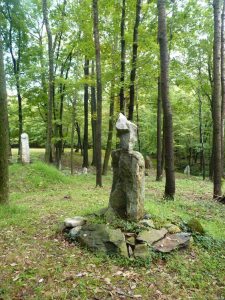 Standing stones in Bangor, PA (recently set)
There seems to be a preoccupation with “authenticity” and “truth” within the druid community (and outside of it). Time and time again, people have asked me a lot about the history of the tradition, the “truth” of the druid revival material, the lack of knowledge about the Ancient druids, and how we can be a “legitimate” religious or spiritual tradition. This has come not only from the outside, but also from members of the two druid orders to which I…
View original post 3,550 more words
Taking up the Path of the Bard III: Practice makes Perfect
“You have so much talent” or “I’m talented enough” are powerful statements, statements I hear on a regular basis from those who long for a creative practice. The idea of talent can cause an incredible amount of inaction, of people not feeling they are “good enough” to even try. I see this, in particular, with the visual arts. But the first time you put pen to paper, if you aren’t Picasso or Monet, you might as well forget about it. This larger cultural ideal, of course, seems at odds with the druid tradition where Eisteddfod and the channeling of Awen are central to our spiritual life. In the druid tradition, creativity isn’t about producing something of commercial value or high quality, its about the channeling of creativity for spiritual purposes. But for those coming out of mainstream Western culture with all of the cultural baggage, this can be difficult to…
View original post 2,416 more words
 Paths I Walk
You must be logged in to post a comment.