Questions To Ask A Tree

“The wonder is that we can see these trees and not wonder more.”

It’s no surprise that Ralph Waldo Emerson wrote these words.  The famous American writer was intimately connected to trees:  He planted trees, gathered their fruits, and taught his children the value of learning their names.

Emerson spoke the language of trees, yet was still humble enough to acknowledge that every encounter with trees presented a fresh opportunity to engage in wonder.

Who are you?  How old are you?  Why are you here?  Can you say anything about the underlying rocks?  What can you tell us about the broader ecosystem?

In the spirit of Ralph Waldo Emerson, you and I can ask these kinds of questions every time we encounter a tree.  When we ask questions, we engage in wonder.

A basic step we can then take to answer those questions is first to learn the names of trees.  Fortunately, there are many ways to learn.  We can:

  • Study tree ID field guides
  • Learn how to use dichotomous keys
  • Learn all major physical features of trees (buds, bark, leaves, flowers, etc.)
  • Learn habitat characteristics of trees
  • Attend tree ID walks
  • Visit arboretums (where trees are often labeled)
  • Cultivate friendships with local tree enthusiasts
  • Teach others what we have learned

If you’re looking for a carefully curated opportunity to improve your tree identification skills, consider enrolling in Trees In All Seasons.  This online course teaches you how to identify 100 trees in every season.  It’s currently on sale through Monday, December 23.

You can register and learn more about the course here.

Regardless of how you decide to learn, I strongly encourage you to hone your tree identification skills over time.  With learning comes wonder, appreciation, love, and the unraveling of at least some of nature’s mysteries.

—Adam Haritan

Genetic Caution — Dr. Gary Samuelson

In the past few years, we have become aware that some people in power (we are not exactly sure who) are developing genetic engineering technologies capable of synthesizing genetic code and testing it out on global societies.  During the pandemic crisis, mRNA vaccines were developed (with much fanfare) containing genetic coding that forces our human […]

Genetic Caution — Dr. Gary Samuelson

Our Minds Limit Science

Science is Dead

Electric Universe

Ancient ‘lost continent’ found lurking under Indian Ocean

A complex splintering took place with fragments of continental crust of variable sizes left adrift within the evolving Indian Ocean basin.

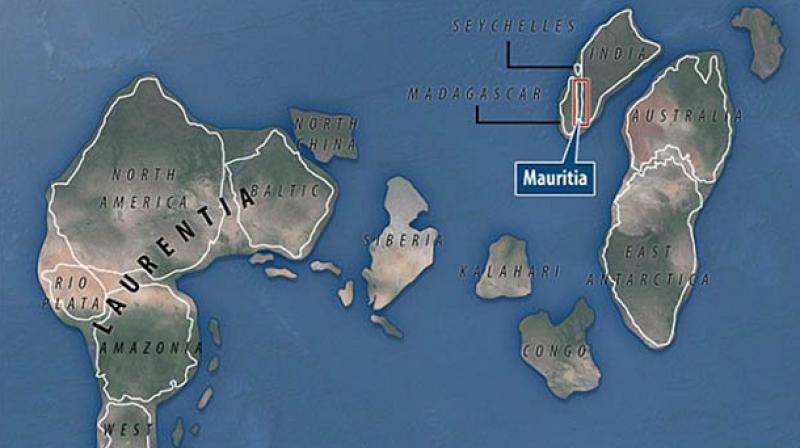
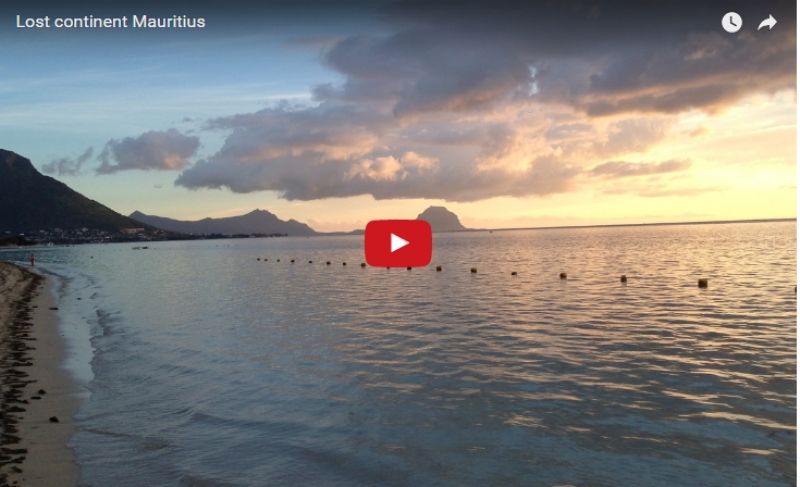
Scientists have confirmed the existence of a “lost continent” under the Indian Ocean island of Mauritius that was left-over by the break-up of the super-continent, Gondwana, which started about 200 million years ago.

The piece of crust, which was subsequently covered by young lava during volcanic eruptions on the island, seems to be a tiny piece of ancient continent, which broke off from the island of Madagascar, when Africa, India, Australia and Antarctica split up and formed the Indian Ocean.

“We are studying the break-up process of the continents, in order to understand the geological history of the planet,” said Professor Lewis Ashwal from University of the Witwatersrand in South Africa.

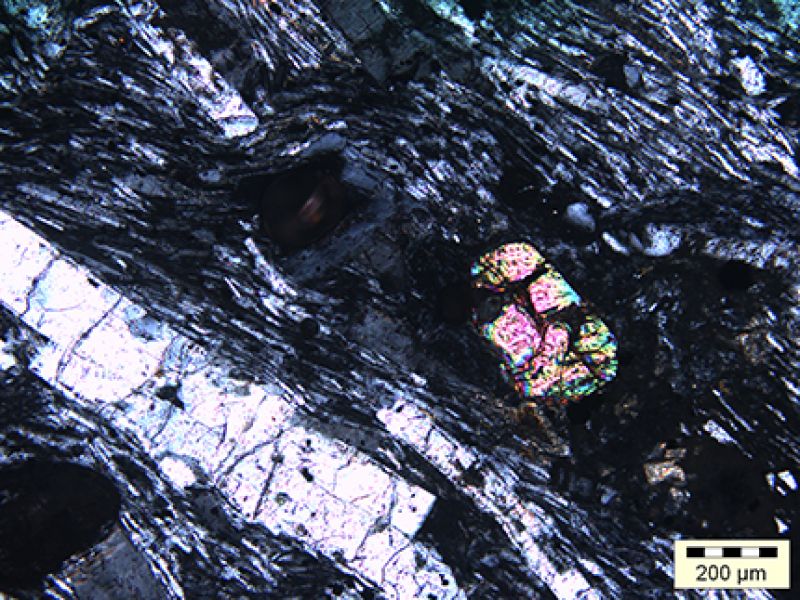
By studying the mineral, zircon, found in rocks spewed up by lava during volcanic eruptions, Ashwal and his colleagues have found that remnants of this mineral were far too old to belong on the island of Mauritius.

“Earth is made up of two parts – continents, which are old, and oceans, which are “young”. On the continents you find rocks that are over four billion years old, but you find nothing like that in the oceans, as this is where new rocks are formed,” said Ashwal.

“Mauritius is an island, and there is no rock older than nine million years old on the island. However, by studying the rocks on the island, we have found zircons that are as old as three billion years,” he said.

Zircons are minerals that occur mainly in granites from the continents. They contain trace amounts of uranium, thorium and lead, and due to the fact that they survive geological process very well, they contain a rich record of geological processes and can be dated extremely accurately.

“The fact that we have found zircons of this age proves that there are much older crystal materials under Mauritius that could only have originated from a continent,” said Ashwal.

This is not the first time that zircons that are billions of years old have been found on the island. A study done in 2013 has found traces of the mineral in beach sand.

However, this study received some criticism, including that the mineral could have been either blown in by the wind, or carried in on vehicle tyres or scientists’ shoes.

“The fact that we found the ancient zircons in rock (six-million-year-old trachyte), corroborates the previous study and refutes any suggestion of wind-blown, wave-transported or pumice-rafted zircons for explaining the earlier results,” said Ashwal.

Ashwal suggests that there are many pieces of various sizes of “undiscovered continent”, collectively called “Mauritia”, spread over the Indian Ocean, left over by the breakup of Gondwanaland.

“According to the new results, this break-up did not involve a simple splitting of the ancient super-continent of Gondwana, but rather, a complex splintering took place with fragments of continental crust of variable sizes left adrift within the evolving Indian Ocean basin,” Ashwal added.

The study was published in the journal Nature Communications.

Source: Ancient ‘lost continent’ found lurking under Indian Ocean

Knowledge & Experience …

Logical thinking cannot
yield us any knowledge of
the empirical world;
all knowledge of reality
starts from experience
and ends in it.
Propositions arrived at by
purely logical means are
completely empty of reality.
~ Albert Einstein


Related Article:

The Life of Albert Einstein ~ At Emily’s Quotes or her page of Albert Einstein’s Quotes

English: Albert Einstein Français : Portrait d...

English: Albert Einstein Français : Portrait d’Albert Einstein (Photo credit: Wikipedia)

via Knowledge & Experience — Apanache