It isn’t an easy question to answer, but I try my best to explain what it is about trees that makes me feel good.
I love the food trees offer. I enjoy the medicine trees provide. I like the shade trees cast. And I admire their beauty.
But there’s something else about trees I really appreciate: their ability to tell stories.
As it turns out, trees tell remarkable stories of peace, tragedy, death, and — believe it or not — democracy.
One notable tale that trees tell quite well is the story of America’s birth as a nation. While many people associate this story with icons like the Liberty Bell and the Declaration of Independence, the founding of the United States is also strongly connected — both physically and symbolically — to one particular tree.
Tall, majestic, and extremely useful, this tree has been famously labeled “the tree that built America.”
Speaking of trees, I was recently interviewed on Harvesting Nature’s Wild Fish and Game Podcast. In the interview, we discussed how trees can help you become a better hunter and observer of wildlife.
This course is designed to improve your ecological knowledge by introducing you to fascinating ecosystems — including alvars, barrens, bogs, dunes, fens, glades, savannas, vernal pools, and others!
Learning to recognize ecosystems is an essential step toward understanding how nature works. When we pay attention to the bigger picture, we see beyond individual components. We see connections, we see relationships, and we see where humans fit into the story.
If you want to develop ecological literacy; if you want to be able to read landscapes more effectively; if you want to see how all the components within nature are connected, consider enrolling in Exploring Wild Ecosystems today.
Please note that Exploring Wild Ecosystems is open for one week only — from today until Monday, September 30. After that, registration will be closed. Upon registration, you can immediately access all course content and view the lessons at your own pace.
To learn more about the course, check out this video which gives you an overview of what you can expect.
Thanks for supporting nature education! I hope to see you in there!
Over the years, I’ve met all kinds of strange creatures in the forest. Insects, mammals, mushrooms, and the occasional strange human are just a few examples.
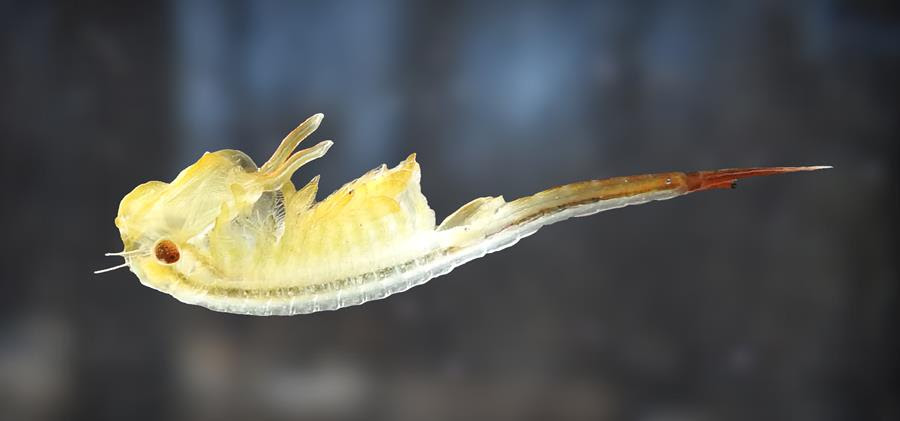
But up until recently, I had never encountered shrimp-like creatures.
Truthfully, it never crossed my mind that the forest could accommodate such organisms. Besides pill bugs, which are often referred to as land shrimp, could anything shrimp-like actually live among the pin oaks and red maples? I didn’t think it was possible.
Until I learned about fairy shrimp.
Fairy shrimp are aquatic crustaceans that live and die in the woods. More specifically, fairy shrimp complete their entire life cycle within vernal pools. Eggs hatch in late winter. Larvae transform into breeding adults within a few weeks. By the end of summer, all fairy shrimp perish.
I recently spent a lot of time in the presence of fairy shrimp and decided to capture their short lives on film. To learn more about these amazing creatures, check out the brand new video!
I have a bumper sticker on my car that reads: “I’d rather be lost in the Sods than found in the city.” A friend introduced me to the Dolly Sods Wilderness Area in West Virginia back when I was in college (and back when few people ever ventured that far outside of Washington, DC), and I have been hiking in the West Virginia mountains ever since. They are truly special in so many respects.
One of the main reasons I consider the WV mountains so special is because of the abundant, and often unique, native plants found on the mountain tops and down in the hollers. I am one of those plant nerds that can’t stop hunting for plants, even while on vacation. (What can I say? It becomes an obsession after a while.) Identifying plants in the wild is entertaining enough, but as an herb gardener…
A druid walks upon a landscape, barren, cold, with trees cut and plants uprooted. Tears in her eyes, she surveys the damage that others have caused: the homes of so many animals disrupted after logging, the wild ramps and ginseng roots damaged, and the remains of the logged trees laying like skeletons on the earth.…
Among the common, the uncommon exists. Learning the uncommon among the common helps us see in new ways what has been in front of us all along.
Take red pine, for instance.
Where I live in western Pennsylvania, red pine (Pinus resinosa) is a common sight. Many county and state parks contain large tracts of land that host nothing but red pine plantations. These plantations, believe it or not, are considered by fundamentalists to be “ecological deserts” — a category that also includes parking lots and golf courses.
Red pine, it seems, can’t catch a break. Because of the bias against its ubiquity and against its purported ecological disservice, it’s no wonder that people rarely take any time to marvel underneath a red pine tree.
But there is something that we should know about red pine. Among the common, the uncommon exists.
Red pine is not common in every context. To provide two examples — “natural” stands of red pine are quite uncommon in my home state of Pennsylvania, and across the entire range of red pine, old growth red pine forests occupy less than 1% of their original range.
What’s more, old growth red pine forests are far from ecological deserts. Researchers consider these forests to be critical for maintaining biodiversity at stand and landscape levels.
To gain some insight on the matter, I decided to visit a “natural” stand of red pine. Not too surprisingly, I did not discover an ecological desert. Instead, I encountered a diverse ecosystem containing red pines that were approximately 250 years old and approaching old growth status.
Speaking of uncommon (or very common, depending on where you live), I recently encountered this melanistic eastern gray squirrel foraging for acorns. The presence of melanism across the range of gray squirrels is really low (less than 1%). In some areas, though, it can be higher than 50%. To learn more about black squirrels, check out the latest Instagram post!Click to view post
Thanks for reading and watching, and thanks for your continued support!
Staghorn Sumac: A tree that teaches us about resilience
Resilience is a term I first learned as a permaculture practitioner–resilient ecosystems are those that are able to withstand hardship, recover quickly when faced with difficulty, and had a capacity to endure. In other words, a resilient ecosystem can withstand drought, flooding, or other difficulties by being adaptable, flexible, and having redundancies. Which of course, is so critical in today’s ever-changing world fraught with climate change and instability. Resilient plants are the often-maligned weeds: those weeds who take every opportunity to grow: who find a crack in the sidewalk and take root, who immediately start to grow after disruption, or who outcompete less resilient plants. They are able to be like weeds or opportunistic species, taking advantage of new opportunities, finding niches, and gracefully adapting to change. Think of the dandelion here, growing up through cracks in the sidewalk. This same…
You must be logged in to post a comment.