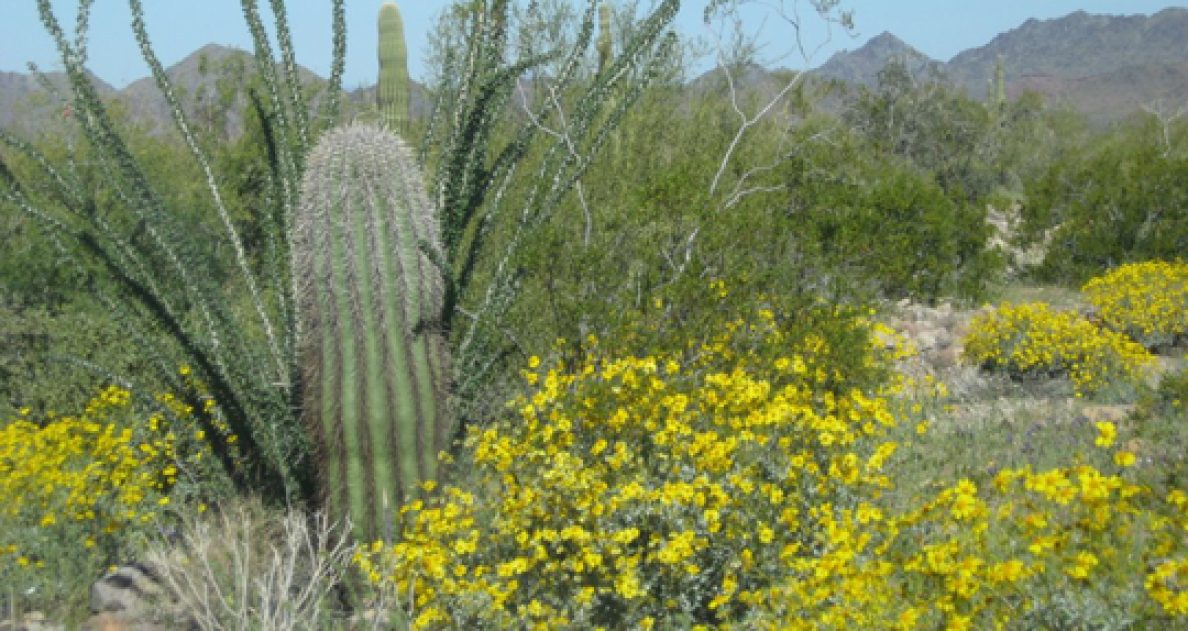
“Our relation to the natural world takes place in a place.”
The American poet Gary Snyder wrote those words. I don’t think he’s wrong.
Every time we harvest a wild mushroom, we do so in a place. Every time we add a new bird to our life list, we do so in a place. Every time we gather spring water and admire a wooded valley, we do so in a place.
Alvars, bogs, fens, forests, marshes, prairies, savannas, and swamps are all places where life abounds. When we refer to these places specifically as “ecosystems,” a few interesting things happen: We see important connections, we see intricate relationships, and we see where humans fit into the story.
If you want to strengthen your connection to nature by learning these fascinating ecosystems, consider enrolling in Exploring Wild Ecosystems. This is my newest online course designed to improve your ecological literacy.
First, I want to say thank you to everyone who registered for the upcoming Old-Growth Forest Ecology Outing on May 31 and June 1. Both programs are sold out. Stay tuned for more Learn Your Land events this year!
I also want to mention that Exploring Wild Ecosystems will be open for enrollment on Monday, May 12. Thisis my newest online course intentionally designed to improve your practical knowledge of ecology. If you’re looking to develop ecological literacy and become a better naturalist, consider enrolling on Monday, May 12.
And now on to the newest video…
If you’ve spent enough time in tick-prone areas, you’ve probably seen ticks sucking the blood of deer. Logically, it makes sense that deer would at least be carriers of the Lyme disease spirochete. After all, white-footed mice and other mammalian tick hosts can be reservoirs for the bacteria.
But white-tailed deer are different. Their blood isn’t like the blood of other animals.
Scientists have been studying the relationship between deer and Lyme disease for decades. The newest research is quite fascinating, and in a brand-new video, I address some of the misconceptions surrounding the role of deer in transmitting Lyme bacteria.
Do deer ever get Lyme disease? If they don’t, what is it about deer that makes them immune? If deer are immune, why do ecologists still advocate for a reduction in the deer herd as a way to reduce Lyme disease rates in humans?
I’m really excited to announce that I’ll be leading an Old-Growth Forest Ecology Outing in a few weeks, and I’d love for you to join me.
This outing offers a unique in-person opportunity to learn the rich ecology and distinctive features of older forests.
We’ll begin the day by walking through a mature upland hardwood forest and discussing forest ecology. In the afternoon, we will explore a magnificent old-growth conifer forest and discuss old-growth forest dynamics.
In addition to learning key characteristics of mature and old-growth forests, participants will learn tree identification techniques; mushroom ecology and identification; the influence of geology on forest development; ways to interpret forest history; the role of fire as an ecological agent; old-growth forest misconceptions; and much more.
This event will take place in Cook Forest State Park. Located in northwestern Pennsylvania, Cook Forest is home to one of the last remaining old-growth forests in the entire region, currently hosting 11 old-growth areas totaling over 2,300 acres. One of the areas within the park, the Forest Cathedral, contains arguably the finest concentration of old-growth trees in the northeastern United States. This remarkable area is home to dozens of old-growth eastern white pine and hemlock trees, many over 300 years old and towering above 140 feet in height.
This outing is the perfect opportunity to learn, explore, and connect with nature in a truly spectacular setting.
Interested? Here are the details:
When: Saturday May 31, 2025 or Sunday June 1, 2025 (Choose one date; both programs will cover the same material.) Where: Cook Forest State Park, Pennsylvania Time: 10:00 am — 4:00 pm
To maximize your learning experience, space is limited and registration with payment in advance is required to secure your spot.
Years ago, I didn’t know anything about morel mushrooms. I didn’t know what they looked like. I didn’t know how they tasted. I didn’t even know they existed.
Then one day I attended a mushroom program with a local club. Experts in the club introduced me to morels. “Here’s what morels look like,” they said. “You’ll find them all over this park.”
“Great,” I thought to myself. “I now know everything I need to know.”
Except I still hardly knew anything.
Sure, I quickly learned how to identify morels, and I heard a few things about looking in certain areas: “Look for elms, apples, and poplars. Morels really like sweet soil.”
But where would I find elms, apples, and poplars? What the heck is sweet soil?
It soon dawned on me that knowledge of mushrooms wasn’t enough. If I really wanted to improve my skills, I needed to learn tree identification. I needed to learn ecology. I needed to learn geology.
And so I learned as much as I could. Slowly but consistently, I developed a wider set of skills. Eventually, I became a better mushroom hunter.
Today, I interact with wild landscapes a bit differently than I did back then. I now look for connections. I look for relationships. I look at the bigger picture.
All this to say, if you want to find morels this year, I strongly encourage you to learn the connections that bind morels to their ecosystems. In a brand new video, I discuss how to approach morel mushroom hunting through a more holistic lens.
Speaking of learning, consider enrolling in Foraging Wild Mushrooms to improve your foraging skills.
I created this 4-season online course to help you become a successful mushroom hunter. Included in this course are instructional videos on mushroom ecology, mushroom biology, common edible mushrooms, medicinal mushrooms, poisonous mushrooms, cooking techniques, and medicine-making.
If you want to find morel mushrooms this year, here’s a tip: don’t wait until spring to begin your hunt.
This might sound like unconventional advice. After all, current temperatures are too cold for morels. Wood frogs haven’t even bred yet. Spring is still another 50 days away.
All these things are true. But this next statement is also true: you can drastically improve your future chances of finding morels by doing a few things right now.
In a brand-new video, I discuss several tactics we can implement immediately. I also share my predictions for the upcoming season. Will the mushrooms be plentiful this year? Will they be scarce?
At least that’s what some people say. If it’s true, then sadness would have to be a butterfly-less world.
Fortunately, you and I will probably never experience such a world. The planet currently hosts over 17,000 butterfly species. The United States alone has over 700 butterfly species. Most of these species are doing okay, but some are at risk of extinction. The Karner blue and San Bruno elfin, among others, are endangered in the United States.
And then there’s the monarch butterfly — an iconic species known for its epic migration. Monarch populations, according to several credible sources, are declining. To halt the decline, the U.S. Fish and Wildlife Service has recently proposed to list the monarch as threatened under the Endangered Species Act.
Interestingly, this proposal is receiving criticism. Some people think that monarchs don’t need our help. Some researchers even claim there isn’t strong evidence of widespread declines.
Who are we to believe? Are monarch butterflies really in trouble? If so, why are populations declining? Is more intervention a good thing? Should we really be raising monarchs at home? And how does organized crime tie into all this?
Want to improve your winter tree identification skills? Here’s a good tip: Look for marcescent leaves.
Marcescence describes leaves that have turned brown and are still attached to trees. These withered leaves often persist on the trees until spring.
As you might expect, marcescence isn’t a feature displayed by too many woody plants. When you see a marcescent tree or shrub, you can narrow down your ID choices to a relatively small number of species.
In the temperate woodlands of eastern North America, marcescence is often displayed by hornbeam (Carpinus), beech (Fagus), witch-hazel (Hamamelis), hophornbeam (Ostrya), and oak (Quercus).
No one is exactly sure why marcescence exists. Here are a few hypotheses:
It allows plants to photosynthesize longer into the autumn season.
It deters herbivores from browsing twigs and buds.
Marcescent trees provide shelter to animals that in turn provide nutrients to trees.
Marcescent leaves, when they finally fall off, provide pulses of nutrients to their host trees.
Marcescent leaves, when they finally fall off, smother new growth of competing woody plants in the spring.
All of these statements can be true to some degree, but it is uncertain whether any one of them is the true reason for marcescence.
Still, you and I can use marcescence to our advantage when attempting to identify woody plants. A good first step is to learn which woody plants are marcescent in our region. We can then seek out these plants, spend some time with them, and fall in love with the process.
To learn even more tips for identifying trees, consider enrolling in Trees In All Seasons. Today is the final day of the winter sale.
Also, if you’re interested in learning how to forage mushrooms this winter, consider enrolling in Foraging Wild Mushrooms. This 4-season online course is on sale until the end of today, December 23.
“The wonder is that we can see these trees and not wonder more.”
It’s no surprise that Ralph Waldo Emerson wrote these words. The famous American writer was intimately connected to trees: He planted trees, gathered their fruits, and taught his children the value of learning their names.
Emerson spoke the language of trees, yet was still humble enough to acknowledge that every encounter with trees presented a fresh opportunity to engage in wonder.
Who are you? How old are you? Why are you here? Can you say anything about the underlying rocks? What can you tell us about the broader ecosystem?
In the spirit of Ralph Waldo Emerson, you and I can ask these kinds of questions every time we encounter a tree. When we ask questions, we engage in wonder.
A basic step we can then take to answer those questions is first to learn the names of trees. Fortunately, there are many ways to learn. We can:
Study tree ID field guides
Learn how to use dichotomous keys
Learn all major physical features of trees (buds, bark, leaves, flowers, etc.)
Learn habitat characteristics of trees
Attend tree ID walks
Visit arboretums (where trees are often labeled)
Cultivate friendships with local tree enthusiasts
Teach others what we have learned
If you’re looking for a carefully curated opportunity to improve your tree identification skills, consider enrolling in Trees In All Seasons. This online course teaches you how to identify 100 trees in every season. It’s currently on sale through Monday, December 23.
Regardless of how you decide to learn, I strongly encourage you to hone your tree identification skills over time. With learning comes wonder, appreciation, love, and the unraveling of at least some of nature’s mysteries.
In anticipation of the winter season, I am excited to announce that two Learn Your Land online courses are on sale this week.
To improve your foraging skills, consider enrolling in Foraging Wild Mushrooms.This 4-season online course is designed to help you safely and successfully harvest wild mushrooms from the forest, from the field, and even from your backyard.
To improve your tree identification skills, consider enrolling in Trees In All Seasons. This online course teaches you how to identify 100 trees in every season. If you want to develop the confidence to look at a tree and say, “That’s black spruce, no doubt about it,” or “That’s most certainly sourwood,” or “That can’t be anything but mockernut hickory,” consider enrolling today.
These courses are self-paced and presented entirely online. Once enrolled, you can start, stop, and resume at any time.
You must be logged in to post a comment.