I-Team: Federal agency spends more than $100M to kill predatory animals | Straight from the Horse’s Heart

Wildlife Services is a welfare program for ranchers, and on top of all the other ones where the government comes in, they do aerial gunning, they use traps and snares…They use all kinds of horrible poisons to kill animals.”

Click Image to View Video

Click Image to View Video

LAS VEGAS – DISCLAIMER: Some of the images in this story may be disturbing.

Nevada Lawmakers are debating a plan that would remove hundreds of thousands of dollars from a program that targets predators such as coyotes, mountain lions, and bears.  The money is raised from hunters when they obtain their licenses, and it goes into programs that kill predators which prey on trophy animals such as deer or big horn sheep.

But the state program is a drop in the bucket compared to a little known federal agency that spends more than $100 million in public funding per year to kill animals.

The I-Team discovered that Nevada is a bloody battleground for coyotes and other predators. An obscure federal agency called Wildlife Services, which was created in the late 1800’s, spends huge sums each year to shoot, trap, and poison predators, such as coyotes, foxes, lions, bears, and birds. […]

Read the entire article at the Source: I-Team: Federal agency spends more than $100M to kill predatory animals | Straight from the Horse’s Heart

Under the Skin: How ejiao threatens the common ass | Straight from the Horse’s Heart

The dark side of holistic medicine …

By Merritt Clifton editor of Animals 24-7

“…donkeys fall into a unique and difficult niche:  that of a species formerly kept almost exclusively in poorer parts of the world as a work animal…”

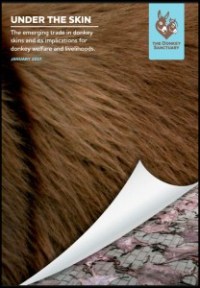
Click Image to Download Report

Click Image to Download Report

BEIJING––Can demand for a commodity that constitutes only one ten-thousandth of the global market for traditional Chinese medicine really pose what Donkey Rescue World blogger David C. Duncan calls “an existential threat” to barnyard animals as abundant worldwide as donkeys?

This is not about highly endangered tigers,  rhinos,  elephants,  or even pangolins,  all eight species of which were once listed by the Convention on International Trade in Endangered Species as “species of least concern,”  but since July 2014 are all considered “vulnerable” or “endangered” by the International Union for the Conservation of Nature. […]

Read the rest of the article at the Source: Under the Skin: How ejiao threatens the common ass | Straight from the Horse’s Heart

Feel Good Sunday: Rescued Donkey Acts Like A Puppy

“Okay, time out, folks. It’s Sunday and all of us deserve a few moments of quiet reflection, a hug, a smile and perhaps even a big smooch. We can ramp back up for the fight tomorrow morning but for now hug each other and above all, scratch the forehead or backside of your four legged […]

via Feel Good Sunday: Rescued Donkey Acts Like A Puppy — Straight from the Horse’s Heart

Bureau of Land Management glosses over coverup of 213 wild horse deaths on the Scott City, Kansas, feedlot

12lth1_26_of_161_-300x102

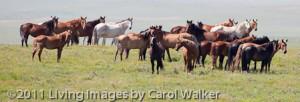
Photos of wild mares at Teterville (photo: Carol Walker)

By Debbie Coffey, V.P. and Dir. of Wild Horse Affairs, Wild Horse Freedom Federation

Copyright 2017   All Rights Reserved.

After no news for 2 years by BLM on their promised investigation and report to the public on the deaths of wild horses at Scott City, KS, after our 2/2/17 report titled “196 wild horses died at BLM’s Scott City feedlot (a BLM Auschwitz for wild horses),” the BLM was suddenly able to muster up a little something for the public on the Wild Horse & Burro Program website in only about a week.

It popped up under “news” and it seems the BLM was careful to not mention deaths or draw too much attention to the issue at hand in the headline, by titling their “news” “Status of Off Range Corral in Scott City, KS.”

In fact, buried at the end of the 3rd paragraph, the BLM (with more current information) finally stated that 213 mares died (out of the 1,493 wild mares) between June 2014 and October, 2016.

So, about 14% of the wild horses that the BLM shipped to that feedlot, died on that feedlot.

It seems that in the very little offered as a “news” report to the public, the BLM tried to cover up their actions (and more importantly, their lack of action), resulting in the deaths of so many wild horses.

In BLM’s “news” version (HERE) of what happened to wild horses on the Scott City feedlot, they cited “crowding at the feed bunks most likely resulting in some horses not receiving the protein and energy required to support their needs. The BLM made adjustments and the animals began to acclimate and show improvements in their overall health, which resulted in a dramatic decrease in the monthly mortality rate. “

SO WHY DID SO MANY WILD HORSES DIE BEFORE THE “ADJUSTMENTS” WERE MADE?  In an August 2014 article on EquiMed, USDA veterinarian Dr. Al Kane stated “in addition to increasing the amount of feed being offered during feedings, we’ve worked with the onsite veterinarian and the operator to increase the energy density of the horses’ feed by increasing the ratio of alfalfa to grass in the hay mix.  This helps support the horses’ nutritional needs during the transition from open-pasture to the corral environment”..

WHY WASN’T THE CORRECT FEED PLANNED BEFORE THE WILD HORSES ARRIVED AT THIS FEEDLOT?  The BLM has been “managing” wild horses for about 45 years and still can’t get it right.

The BLM still didn’t inform the public that 87 of the 196 wild horses were euthanized, or that 41 wild horses died of colic or that 14 wild horses died of fractures of the spinal cord (neck and back) and 6 horses died of leg or pelvis fractures.  The BLM’s version of the “news” didn’t mention the wind storms that were noted by the local veterinarian in his reports to them, or the many cases of sand colic suffered by the wild horses, or the fact that a squeeze chute wasn’t brought to the feedlot until almost 2 months after the horses arrived. 

Note that the BLM’s “news” did not provide you with the name of the contractor for the Teterville Off Range Pasture (ORP) in Kansas.  (And, also note that the BLM doesn’t disclose the names of ALL of the ORP contractors for the public anywhere on the Wild Horse & Burro Program website.)

While omitting so many important facts for the public in their “news,” the BLM managed to hone in on a couple of mistakes in our article.  We corrected these immediately.  However, we didn’t kill 213 wild horses and the BLM can’t “undo” what they did.

The real issue is that 213 wild horses (that we know of), died on this feedlot, no matter what the time frame, and the BLM didn’t issue a promised report to the public until now.

If the BLM would give more information to the public, there would be no mistakes.  We request that the BLM, in the spirit of transparency, post the spreadsheet containing the freezemark numbers of the horses that died, the dates of deaths and causes of death, and all of the veterinary, necropsy and blood pathology reports of the Scott City wild mares on the Wild Horse & Burro Program website.

We can only hope the BLM will apply some focus to noticing and correcting their mistakes in their own statistics and data, and in their management of the Wild Horse & Burro Program.

Source: BLM glosses over coverup of 213 wild horse deaths on the Scott City, KS, feedlot | Straight from the Horse’s Heart

Scientists Agree: It’s Time To End The War On Wildlife | Straight from the Horse’s Heart

By Collette Adkins, Contributor as published on The Huffington Post

“Wild horses and burros survived centuries in perfect balance and harmony without the intervention of humans.  The removal of natural predators upsets the natural balance and the crisis rolls downhill initiating even more violent intervention by humans.  If we, as humans, would step back and cease attempting to manage something that does not require to be controlled the world would be a much better place to live for humans and animals alike.  Keep the faith.” ~ R.T.


“Today’s predator control is widespread in the American West…”

coyote-crueltyKilling large predators to reduce livestock conflicts or benefit game populations has long been thought to be ineffective — and devastating for ecosystems — and a growing body of scientific literature criticizing the widespread practice is confirming those fears.

Most recently, this month, the Journal of Mammalogy — a highly respected international scientific journal and flagship publication for the American Society of Mammalogists — published a special collection of articles criticizing lethal control of predators such as wolves and grizzlies.

Today’s predator control is widespread in the American West and has its origins in barbaric 20th century, government-sponsored predator eradication programs. Those utilized poisons and bounties to drive grizzly bears and wolves to the brink of extinction.

Thanks to the protection of the Endangered Species Act — which has saved more than 99 percent of the plants and animals under its protection and put hundreds on the road to recovery — the grizzly bear and wolf have begun to recover. But as these large carnivores expand their population size and range, people have once again called for lethal control to address livestock depredations and inflate game populations.

In states where gray wolves have lost their federal protections, such as Idaho, state managers dead set on killing the predators established aggressive hunting seasons and lethal depredation controls. After the U.S. Fish and Wildlife Service proposed removing Yellowstone grizzly bears from the list of federally protected species, states like Montana moved quickly to establish hunting seasons.

Then there’s the coyote, a predator lacking protection at state or federal levels and a primary target of predator control programs across the U.S. Tens of thousands of these resilient predators are killed each year by a highly secretive arm of the U.S. Department of Agriculture known as Wildlife Services.

The numbers of predators killed by Wildlife Services is staggering. The latest kill report shows Wildlife Services in fiscal year 2015 killed more than 3.2 million animals, including 68,905 coyotes (plus an unknown number of pups in 492 destroyed dens), 385 gray wolves, 284 mountain lions, 731 bobcats and 3,437 foxes.

This level of human-caused mammalian predator mortality is damaging native ecosystems and biodiversity. The lead article in the Journal of Mammalogy’s special feature on lethal control — “Carnivore conservation: shifting the paradigm from control to coexistence” — summarizes studies on the essential role of apex predators like wolves and grizzlies and mesopredators like coyotes and foxes in maintaining ecosystem function. A well-known example is how wolf reintroduction to Yellowstone created a trophic cascade that enriched riparian songbird communities.

Given the ecological importance of wolves and other predators, scientists are calling for implementation of nonlethal methods to prevent livestock depredations.

The authors of “Adaptive use of nonlethal strategies for minimizing wolf-sheep conflict in Idaho” in the special feature document a seven-year pilot project in prime Idaho wolf habitat, highlighting the adaptive use of a suite of nonlethal deterrents to protect sheep. Those nonlethal methods reduced sheep depredation by more than three times the reductions seen on sheep allotments in Idaho that used lethal control.

Another study featured, “Cattle mortality on a predator friendly station in central Australia,” found that ending lethal control may in itself — even without implementing nonlethal methods — reduce livestock losses by simply enabling the predator’s social structure to stabilize.

Not only are aggressive lethal controls ineffective, they have actually been found to increase livestock losses, as was found among gray wolves in the northern Rocky Mountains. Scientists demonstrated similar results from aggressive lethal control of cougars, which replaces adult males with immigrating adolescent males that are more likely to depredate. Other studies show that lethal control of wolves may be merely shifting depredation from cattle to sheep because coyotes replace the wolves and target smaller livestock.

As for predator control to benefit game populations, a meta-analysis of 113 predator removal experiments found that the intended beneficiary prey population actually declined in 54 of them.

In addition to the ecological and wildlife policy concerns with lethal control of predators, public acceptance of lethal predator control methods appears to be declining. While the public supports the need for livestock producers to protect their animals, foot or leghold traps, snares and poisons are viewed by the majority of the public to be so inhumane their use should not be allowed.

With all the issues surrounding lethal predator control, one would hope livestock producers would have help in implementing nonlethal alternatives. Yet very few states have any permanent programs to protect livestock from depredations using nonlethal methods comparable to the federal Wildlife Services lethal control program.

With scientific evidence against carnivore controls mounting, it is time to finally stop the cruel, senseless killing and start utilizing smart, nonlethal methods that actually work, benefiting both livestock and these majestic wild animals.

http://www.huffingtonpost.com/entry/scientists-agree-its-time-to-end-the-war-on-wildlife_us_58a77e73e4b026a89a7a2b08

Source: Scientists Agree: It’s Time To End The War On Wildlife | Straight from the Horse’s Heart

Agents Seize Horse Meat, Genitals at Airport Outside Capital

S0urce: Multiple “The women had a combined 42 pounds of horse meat concealed inside juice boxes…” STERLING, Va. – Customs agents have seen all sorts of things come through t…

Source: Agents Seize Horse Meat, Genitals at Airport Outside Capital

Don’t Slaughter Montana’s Bison

“As most of our seasoned readers are aware, the main thrust of SFTHH is to bring to the forefront the plight of our American equines be they domestic or wild. But while being tuned into the …

Source: Don’t Slaughter Montana’s Bison

The BLM Continues Lack of Transparency in Adobe Town Wild Mare Radio Collar Study | Wild Hoofbeats

Only 3 mares in the trailer?

On Sunday morning I waited at the parking lot next to the corrals at the Rock Springs BLM facility. It was 1 degree above zero, and I was bundled up accordingly. I am the only member of the public there, unaffiliated with the BLM or University of Wyoming. One trailer and two trucks drive in front of me, and I am waiting for the other trailer. There are only 3 mares in this trailer, I am assuming three of the four mares that had radio collars put on on Friday. But there were 5 other mares that I had been told by Kate Schoenecker of USGS had not been collared because they were too young. In the Environmental Assessment, it states clearly that they were only going to collar mares 5 years old and older. Young mares who are still growing can be strangled by the collars. But where were the 5 other mares? They flagged me to follow, and I pulled out of the facility. When we took a break I asked where the other mares were. I was told they were still at the Rock Springs facility and they were being “re-evaluated.” What does that mean? They are either too young for the study, under 5, or they are not. Are they being kept for some other purpose? Both the EA and the BLM’s own press release state that none of the horses from Adobe Town are to be removed – they are all supposed to go back to the Herd Management Area. So what is the BLM not telling us?

These mares need to be released back to the area where they were trapped IMMEDIATELY.

Robin comes out of the trailer

We drove to Bitter Creek Road, which is about 30 minutes from Rock Springs, and we started down the road. After we got off of the paved portion of the road, conditions got worse, from occasional mud to water and ice flooded areas. It was a challenging drive. After we passed Eversole Ranch, about 10 miles later the trailer stopped and the first mare was released, a little bay I named Robin. She ran as fast as she could once she hit the ground, only turning back to look at us when she had gone what she thought was a safe distance. There were no other wild horses in sight, and I learned that all three of the mares had been trapped about 30 miles south of this area.


Robin looks back at us

We got back in our cars and continued driving for about 8 miles before stopping again to let another mare out of the trailer, this time a little sorrel I named Felicity. She turned around immediately after jumping out, looking for her friend, the grey mare in the back of the trailer. I noticed a cut over her eye that looked swollen. Any time you transport wild horses there can be injuries. It did not look deep and it did not prevent her from running off when one of the contractors shooed her away. There were no other horses around her either.

Felicity comes out of the trailer

Felicity looks back at her friend in the trailer

Felicity finally runs away

We continued driving as the road got worse for another 10 miles, almost to the state border with Colorado before letting the last mare go, a grey mare who was pure white who I named Ghost. She ran down the road past the cars and disappeared. We turned around carefully and went back out the way we came.

Ghost jumps out

Ghost looks out, getting her bearings

Gone!

On the way back, right in the area Felicity had been released I caught sight of a wild family at a run. They ran across the road in front of us, and the grey stallion in front was magnificent with his flowing mane. I hope that Felicity can meet up with them and join their family.

The wild family

Crossing the road

We were going to meet up with the other contractors, who had been bait trapping in the northeast portion of Adobe Town who had loaded the grey mare with a collar at Rock Springs, then loaded up her family with her. They had held onto the family and were going to release them all together. After driving on the highway, we got onto muddy roads, and drove until we met up with a horse trailer full of horses. This was the grey mare and her family. they were moving quite a bit in the trailer, clearly eager to get out. We followed the trailer until they stopped and we positioned ourselves to watch them emerge, which they did at first tentatively and then faster. As they leaped out I saw a filly at the side of the grey collared mare who I named Dove, and was told she was her yearling filly. No doubt this is why they kept the family back so they could be released together.

The grey family in the trailer

Tentatively they get out

Running from the trailer

The collared mare Ghost and her young filly

Going....gone!


They ran off over the hill, and I breathed a sigh of relief that all four were back home.

One thing that really puzzled me was that I saw piles of panels used for traps, all stacked on a semi. Neither team of contractors had a new trap set up. When I asked they told me some decision was being made at 7pm this evening, they did not tell me what. According to the BLM’s own web page on the bait trapping, they had trapped for only 5 days, starting Sunday February 5. They gathered by their own report 27 horses over the four days, and shipped 9 mares to the Rock Springs corrals. The information on the study in the EA said they would be trapping in 3-5 locations. Why then were they only trapping in two locations, and had not set up any traps after Thursday? In the EA, the BLM had written that if bait trapping “fails” they would go to a helicopter roundup. I hardly think that 5 days only is enough time to “fail.” it takes time to accustom wild horses to a trap and to let them get used to it and come in. That is what they are currently doing in Sand Wash Basin, where they have given far longer than 5 days to trap the horses.  This seems to me to be a setup to fail. If they are not continuing to bait trap then they are getting ready to bring the helicopters in. Wild horses are injured and killed when driven with helicopters. There is no justification for subjecting the wild horses of Adobe Town to a helicopter roundup when they are not even over the Appropriate Management Level for their area.

The BLM should continue to use bait trapping if they have to finish getting 16 more mares for this ill-conceived research study, or better yet, they need to go back to the drawing board and redesign the study so that the researchers use non-invasive, safe direct observation, not dangerous radio collars.

Link to Daily Gather Reports:

https://www.blm.gov/programs/wild-horse-and-burro/herd-management/gathers-and-removals/2017-Adobe-Town-Wild-Horse-Gather

People Are Killing Millions Of Donkeys Just For Their Skins

Warning: Graphic Content – What they’re used for is such a waste

Marjorie Farabee, Director of Wild Burro affairs at WHFF, and her good friend Miss Abby ~ photo by Terry Fitch

For centuries, in rural cultures across the globe, one animal has been an important part of the family, helping to keep farms and villages running.

Not only do millions of people depend on donkeys for practical purposes — many donkeys are seen more and more as smart and loyal pets.

But this friendship between people and donkeys is increasingly threatened by a growing trade in something you’ve probably never even heard of: “ejiao,” (also known as “colla corii asini” or “donkey hide glue”) a kind of gelatin made from donkey skin — and demand for ejiao is killing literally millions of donkeys per year.

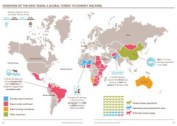
A new report from The Donkey Sanctuary in the U.K. shows just how massive this emerging global trade really is. At least 1.8 million donkey skins are being traded each year — but it could be between 4 million and 10 million. The trade is difficult to track and until now hasn’t been studied at such a large scale.

“Our report reveals the shocking scale of this global trade and how it’s causing a chain of welfare issues for the donkeys at every step, from sourcing to transport and finally to slaughter,” Mike Baker, chief executive of The Donkey Sanctuary, told The Dodo in a statement.

“Ejiao is a medicine with ancient roots and has been promoted as a product worthy of emperors,” the report says, explaining that traditional herbalists in China claim that ejiao can increase libido, slow aging and prevent disease. But ejiao has not been recognized as having medicinal properties by western medicine.
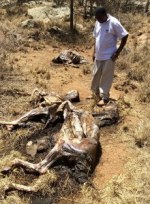
dead-donkeysThis belief means that donkeys are becoming more valuable for their skins, and therefore harder for rural families to afford. Even the loyal donkeys families already have are at risk. It is becoming more common for donkeys to be stolen right out of a family’s yard and slaughtered for their skins.

While exports of donkey skins come from South America and Asia, the largest source is in Africa, where donkeys (many of them stolen) are rounded up in “donkey markets,” where they are often packed together and left without shelter from the hot sun and without food or water, while they await slaughter.

Often, after the skins are removed, the bodies of the donkeys are burned.

“The market is far worse than I expected,” said Alex Mayers, program manager at The Donkey Sanctuary, from a donkey market in Tanzania last week. “There are about 700 donkeys basically coming here to wait to die. There’s no food or water. The donkeys are very stressed. There are lots of signs of dehydration and hunger.”

But there is hope.

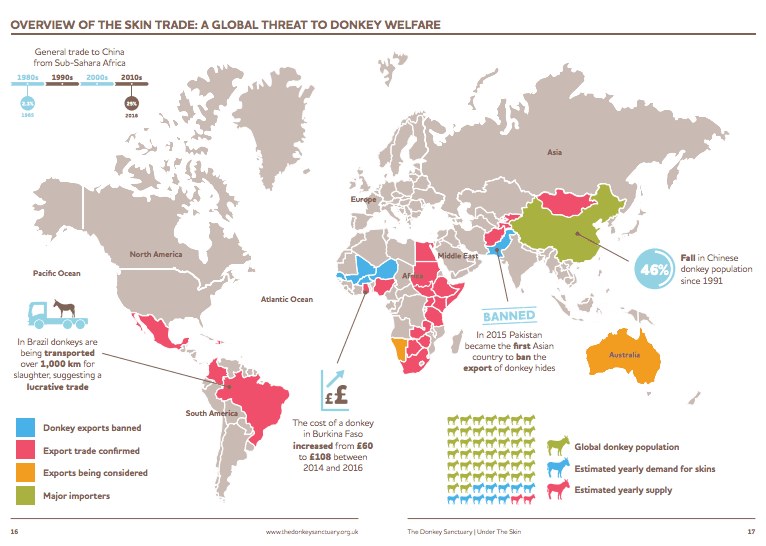
Some countries have already taken action and banned exports of donkey skins, making their donkeys much safer. This includes the African countries of Niger and Burkina Faso, and Pakistan, in Asia.

The Donkey Sanctuary is calling for a stop to the trade of donkey skins worldwide, so that the damage already done to donkey populations and the people who depend on them can be assessed.
overview-mapIn particular, we urge other countries affected by this trade to follow the lead taken by Burkina Faso and Niger and ban the slaughter and export of donkeys for their skins,” Suzi Cretney, public relations manager for The Donkey Sanctuary, told The Dodo.

Cretney said that raising public awareness about where ejiao really comes from could help consumers make better choices.

“We are asking countries to follow the lead by Burkina Faso and Niger to end the slaughter and export of donkeys for their skins because it could help thousands, if not millions of donkeys — their welfare, and their real value supporting people’s livelihoods is at risk,” Baker said.

“This has to stop,” Mayers said, standing by a pen packed with donkeys awaiting their fate. “This absolutely just has to stop.”

To get action alerts about how you can help save these donkeys, join the campaign.

Click (HERE) for video and graphic photos!

https://www.thedodo.com/donkey-skin-trade-2230693220.html

Source: People Are Killing Millions Of Donkeys Just For Their Skins | Straight from the Horse’s Heart
Feel Good Sunday: Clydesdales Help Purina Deliver Surprise to Horse Shelter in Need

Source: Purina Mills TV

“Annually, many Americans wait to see the ultimate and final “Big Game” of the year which just concluded in our own backyard, here, in Houston.  But also there are many who may not be football fans but annually look forward to the next installation of the heart tugging, mini-sagas put forth by Budweiser featuring the gentle giants of the equine world, the Clydesdales.  This year, the fans of horses were disappointed when Budweiser benched the ponies and went a totally different direction and suffered poor reviews on their attempt to document immigration history.  The result was a lose/lose on both-sides with Bud slipping in the ratings and the Clydesdales fans left without a horse fix, so we are here to help correct that oversight, today.

We issue a “tissue alert” in advance and would also like to add that we are not endorsing any one horse rescue but instead tipping our hats to all of the fine organizations out there filled with good folks who donate their time, their money and their lives to the effort of finding good forever homes and futures for equines in need.  There is no need to identify them as you already know who you are and we love each and everyone of you bright points of compassion, caring and love.  May you have a wonderful ‘Feel Good Sunday’ and never give up the good fight.  Keep the faith!” ~ R.T.

Source: Feel Good Sunday: Clydesdales Help Purina Deliver Surprise to Horse Shelter in Need | Straight from the Horse’s Heart