
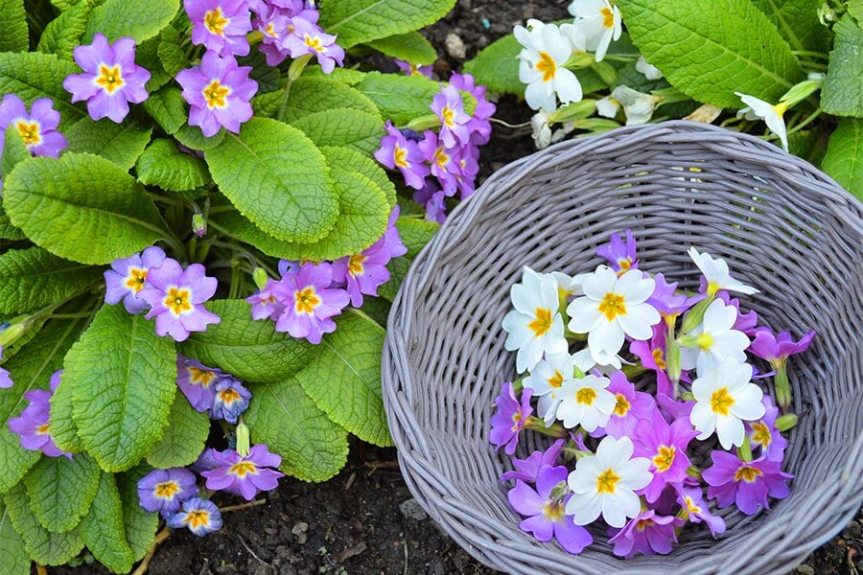
Primrose is Considered the Flower of February.

Crooked Bear Creek Organic Herbs's avatarGood Witches Homestead

COMMON NAME:  primrose
GENUS:  Primula
SPECIES, HYBRIDS, CULTIVARS:
P. denticulata-lavender, purple, or white flowers; grows to 12 inches. P. japonica ‘Millar Crimson’-flowers whorled around the 24-inch stem; blooms May-June. P. polyanthus-best known; colors are red, pink, blue, gold, and white, all with small yellow eyes.
FAMILY:  Primulaceae
BLOOMS:  spring
TYPE:  perennial
DESCRIPTION:  Primroses form an attractive rosette of crinkly, light green leaves. The flowers are generally brightly colored and occur in tight bundles on individual stems above the leaves.
CULTIVATION:  Needing partial shade, primroses thrive in well-drained, rich soil. They are indigenous to cool, moist meadows and woodland environments  Duplicating these conditions as closely as possible will create the best growing conditions for primroses. The soil should not be allowed to dry completely. To retain vigorously blooming plants, divide clumps every four to five years. Seeds should be sown in midsummer for bloom the following spring.

Primrose is…

View original post 2,309 more words
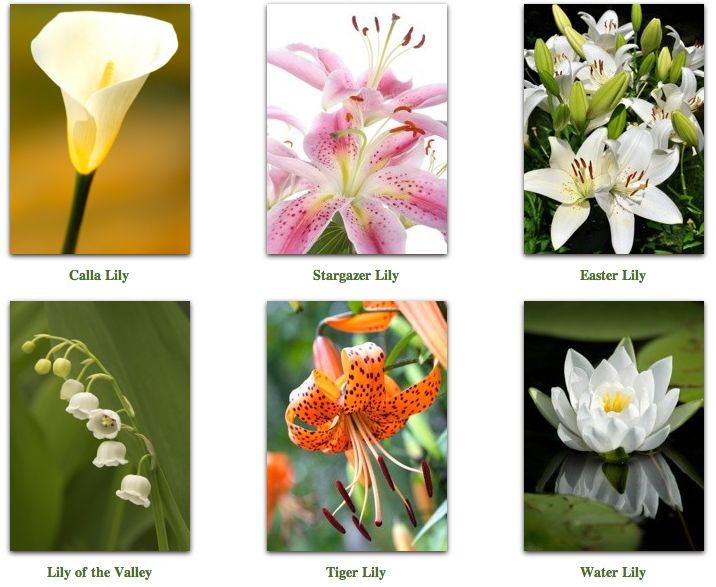
Lily Lore

Crooked Bear Creek Organic Herbs's avatarGood Witches Homestead

COMMON NAME:  lily
GENUS:  Lilium
SPECIES, HYBRIDS, CULTIVARS:
Many of the 200 species of lilies are native to the United States. Plant breeders have done extensive hybridization work on the lilies to make them hardy and free flowering. Lilies are now available in every color except blue.
FAMILY:  Liliaceae
BLOOMS:  late spring
TYPE:  perennial
DESCRIPTION:  Lilies are one of the most beautiful of all garden plants. The flowers are large and deliciously colored, and they usually occur many to a stem. The height of lilies ranges between 2 to 6 feet. Flower forms include trumpet shape, pendant, flat-faced, or bowl-shaped.
CULTIVATION:  The most important requirement for growing lilies is well-drained soil. Water standing on the bulbs will cause them to rot. The bulbs should be kept cool. This can be done by overplanting with annuals or perennials. Depending on the size of the bulbs, they should be planted…

View original post 678 more words