Druidry for the 21st Century

Dana's avatarThe Druid's Garden

This is a challenging age, doubly so for anyone who is connected spiritually with the living earth and who cares deeply about non-human life. The Fourth National Climate Assessment, released towards the end of 2018, presents a dire picture for the future. This isn’t the only recent report from governing bodies globally–report after report continues to paint a clear picture of what humanity is doing, and what we need to do to change.  And yet, it seems to be business as usual.
The cycles of nature The cycles of nature

When I talk to druids about their thoughts about this present age, there seems to be a few ways to think about it.

First, the glass half empty approach is feeling extremely demoralized, looking at climate change reports and long-term forecasts and seeing the continued inaction on behalf of world leaders. The glass half empty approach may also have feelings that nothing we…

View original post 2,622 more words
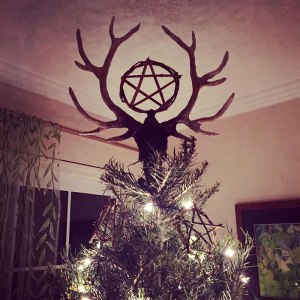
Wildcrafted Yule Tree Ornaments – Painted Wood, Wreaths, Awens, and Pentacles

Dana's avatarThe Druid's Garden

As the Winter Solstice is coming up quickly and the tree just went up this past week, I’ve been busy in my art studio and out on the land looking for great things to add to the Yule tree.  As a druid who is deeply concerned about the amount of plastic and “throw away‘ quick purchase items, like cheap plastic ornaments, I didn’t want to buy any ornaments for the tree, but rather, to make them from wildcrafted materials. So today, I wanted to share two simple ways to make nice ornaments for a Yule tree from natural materials and simple tools.

Handmade Stag and Pentacle Tree Topper with Handmade Ornaments Handmade Stag and Pentacle Tree Topper with Handmade Ornaments
Painted or Burned Wooden Round Ornaments

One simple method for creating ornaments is a painted or woodburned wood rounds. These are simple slices of wood that you can decorate in a variety of ways–painting them, burning…

View original post 1,836 more words

Marzanna – Goddess of Winter

Sacred Tree Profile: Oak’s Medicine, Magic, Mythology, and Meanings

Dana's avatarThe Druid's Garden

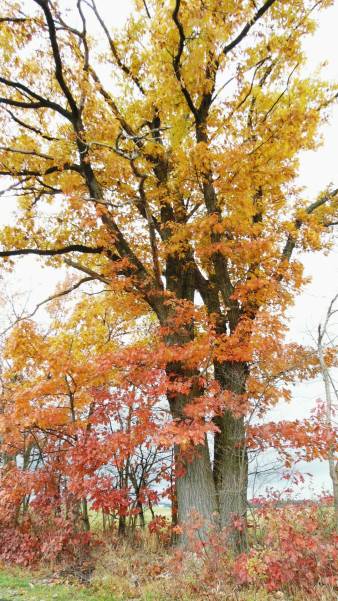
A glorious oak tree in fall colors! A glorious oak tree in fall colors!
There is nothing quite as majestic as an oak, which is likely why ancient druids met in groves of them to perform their ceremonies.   As I write this, I look at my glorious black oaks, white oaks, and burr oaks in the surrounding landscape and their incredible mantle of gold, tan, crimson and oranges.  Where I live, the oaks keep the green on their leaves through most of the fall season, and begin their transition into color just before Samhain. The oaks and beeches, here, are the very last to lose their leaves–if they lose them at all.  Many of the oaks, especially the younger ones, keep their leaves all winter, dry and crackling, and only drop them before they bud out again in the spring.   Their behavior in the fall and winter months is certainly a testament to their energy and…

View original post 2,533 more words

Native American Herbs of the Northeast

Crooked Bear Creek Organic Herbs's avatarCrooked Bear Creek Organic Herbs

A look to the past reveals some of the most important plants used by Eastern woodland tribes – and an inestimable connection to nature.

My adventure into the historical uses of many Native American plants began when Maine native Kerry Hardy, author of Notes on a Lost Flute: A Field Guide to the Wabanaki, presented a program for Western Maine’s Greater Lovell Land Trust, billed as “Native American Plant Medicine” last summer. So many plants and so many uses! I was intrigued to find out more about these plants and explore the wealth of medicinal knowledge from Eastern Woodlands tribes like the Mohawk, Wyandot {Huron}, and Iroquois. From Hardy’s work, as well as from the research of author Charlotte Erichsen-Brown, I enjoyed a glimpse into how these tribes looked to nature for healing – and how early pioneers benefited from their knowledge.

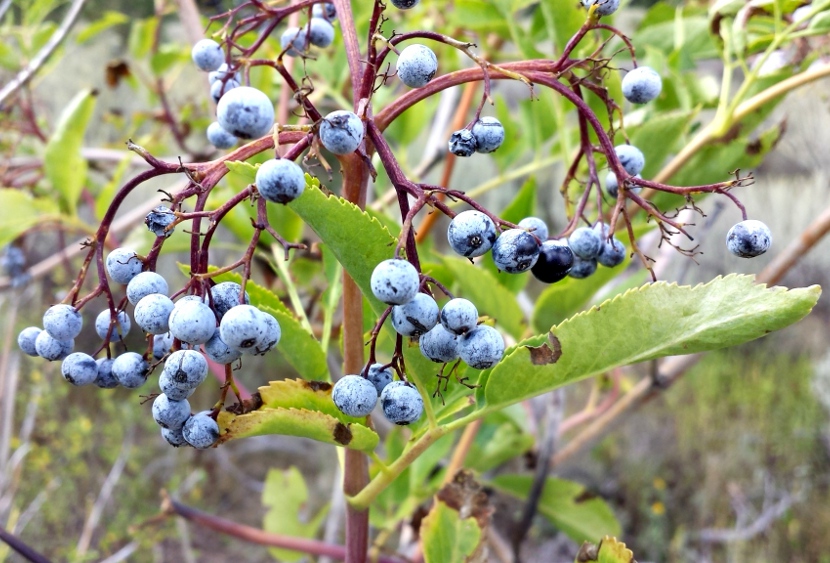
elderberries-af-canyon-3-2013-09-05

The Essential Elderberry

Hardy’s book focuses on…

View original post 2,088 more words

Regional traditional folk symbolism of Lublin, Poland

A Druid’s Guide to Connecting with Nature, Part I: A Framework

A Druid’s guide to connecting with Nature – Part I:  A Framework

Dana's avatarThe Druid's Garden

A lot of people find druidry because they want to “connect” with nature.  They want to attune to nature, feel part of it, gain knowledge and wisdom about it. But what does “connecting” to nature look like in practice?  Going out in the woods and feeling good?  Knowing the name of trees?  Walking with sacred intent in a natural place?  Spending time in nature?  All above the above? And so, over the next few posts, I want to spend more time with the concept of “connecting to nature” and share some strategies for what people can do to connect with nature in a multitude of ways.

As I’ve written about earlier, part of what I see as the core of druidry as a spiritual tradition is the work of “connection.” In that post, I talked about connecting to nature, connecting to the spirit, and connecting to the creative practices as…

View original post 1,761 more words

Fat Goddess

Fat Goddess …

Indigenous Mind: Remembering Who We Are

by Ancestral Apothecary

Ancestral Arts's avatarAncestral Apothecary

Much of the vision of Ancestral Apothecary is inspired and informed by my experience in the Indigenous Mind Program.  As the founder of Ancestral Apothecary, I, Atava Garcia Swiecicki, received a graduate degree from  from Naropa University in the Indigenous Mind Program in 2003.  The Indigenous Mind Program focuses on reconnecting to one’s indigenous ancestors, no matter what their cultural or ethnic background.  The program was founded by Dr. Apela Colorado, who also is the founder of the Worldwide Indigenous Science Network.

Heidi Corning, of White Tigress Ancestry, was also a student in the Indigenous Mind Program and created a short film to document the process of the Indigenous Mind students and they reconnected to their ancestral ways of knowing.

View original post

Healing Ancestral Trauma with Plant Medicine

In these days of DNA tests one gets through websites to trace your family tree … Is it truly appropriation of traditions or culture if the DNA of your ancestors come from Nigeria, Romans that conquered Germany, Britons, Eastern Europe, North Africa, etc. Skin color maybe white, but the ancestors that traveled to colder climates were not. Those ancestors often provide guidance to practice their indigenous traditions. Through many of the traditions of my ancestors, I have learned to revere and elevate ancestors that had been ignored for generations. As anthropological research and DNA tests trace our origins back to the area of ancient Egypt … As ancestor reverence once again comes to the forefront and people learn to listen to the messages from their ancestors, it is my hope that terms such as cultural appropriation become obsolete because it’s not appropriation, but a rediscovery of our ancestral roots.

Ancestral Arts's avatarAncestral Apothecary

By third year Cecemmana student, Kara Wood.

Several years ago I had a lightning bolt message from my ancestors that I needed to live my truth and combine all the things that I care about (plants, ancestors, genetics, herbal medicine) and really live who I am. That is when I found Ancestral Apothecary School and the Cecemmana program.   I am in the third year and what I have learned and experienced surpassed any possible expectations. So much of what I had always been doing, that I didn’t yet recognize, was preparing me for this.

In this life do any of us really escape trauma? It can affect us at any time in our lives from in utero on.  We also experience ancestral trauma, sometimes referred to as transgenerational trauma. This trauma is the one that inhabits each of us in some way.  Each generation before us imprinted information and trauma…

View original post 1,739 more words