Leprechaun – secretsoftheserpent


By

Originally Posted August 14, 2016
index

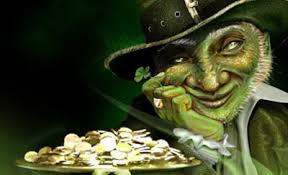
The Leprechaun was a little tough to pinpoint. First I thought that, like so many other myths, it had to do with the mind. As you will see, the Leprechaun has more with preserving history of this character than anything else. I started with the myths and legends in Ireland. First thing I come across is the leprechaun has something to do with the Faery people of the Tuatha De Danann. If you have read my previous work, you know this is right in my wheelhouse. I won’t go into depth here about the Tuatha De Danann, but if you don’t know much about these matriarchal people from ancient Ireland, your are definitely missing out on great history.

Come to find out leprechaun comes from the Sun God Lugh. I found out that it is pronounced luck. This doesn’t surprise me because London, Loudan, Lyons and other cities are named after Lugh. Leprechaun actually comes from Luchchromain meaning little Lugh or little Luck. Now you know where the luck of the Irish comes from. The original leprechaun were not green like they are today. In the past they always had a red outfit. Why would leprechauns be in red? Why were they changed to green? Why rainbows? Why gold? Just like so many things, we have to look to Egypt for the answer. If you have followed my earlier work, you know that Gaythelos was a Pharaoh of Egypt. He married a daughter of Akhenaton named Scota. Together they came to Ireland and Scotland and this is how we got the names Scotland and Ireland.  The term gaelic comes from Gaythelos.

Looking to Egypt, I found a dwarf bearded god named Bes. Bes was associated with sexuality, humor, music and dancing. Although he was the protector of Pharaohs, he was very popular with the Egyptian people because he protected women and children. I’m not saying that Bes is Lugh. I know better. Gaythelos conquered the Tuatha De Danann. The conquered pagans needed to keep the spirit of the people of Ireland intact and they made the Tuatha De Danann into Faery people. This way the history would be remembered. St. Patrick and the Christians made the Faery people evil. Then Disney made them what they are today. Lugh was incorporated with Bes by  scribes who were ardent to Gaythelos and his group.  I have shown before that the scribes love to outwit each other.  These scribes were preserving the the Egyptian connection of Ireland and Scotland.   Gaythelos was very close to Akhenaton and Bes was found all over the city that Akhenaton built. I have seen where some researchers have said that Bes comes from Ethiopia or Nubia. Again this shows just how well are history has been hidden from us or lost. As I have shown before, the scribes have purposely made Upper Egypt to be Ethiopia. (See Patriarch Pharaohs) Bes originated in Upper Egypt. Because he was a sun-god, Akhenaton used him. Aton is the sun god Akhenaton worshipped. If it had to do with the sun, Akhenaton was on board.

Bes had a female version named Beset. So where are the female leprechauns? Early legends of leprechauns had women. It wasn’t till St. Patrick and the Christians that the female leprechauns were first turned into “little women that lure away men for secret adventures”, then just disappearing. Yes, Christians turned the leprechaun into the solitary male that some how reproduces. Is this surprising? The leprechaun wore red to show that they were brought from Egypt with Gaythelos. Gaythelos was from the red crown of Lower Egypt. They switched the leprechauns to green to hide this fact. Because there are true illuminati out there, they hid clues in plain sight. The stuff on the internet about the Illuminati is ridiculous(See Lemurian Magic). They had to hide clues that the papacy wasn’t smart enough to figure out. If they actually came out and told the truth, they would be burned at the stake. This is where the rainbow and gold come in.

I started with the shoes, but the only thing I could find is shoes symbolize walking your path.  Leprechauns being shoe builders, I believe symbolizes creating your own path. I switched to the rainbow and found that the ancients saw rainbows as a serpent coming out of the ground then going back in. Serpents have to do with wisdom, but I was none the wiser. Christians see the rainbow as a promise from god not to flood the earth again. Bullocks! Then I found Lugh’s sling. Lugh’s sling was the rainbow!!! This was put into the leprechaun legend to show where it came from. These scribes are clever. The color was changed to green to show the leprechaun origins are from Upper Egypt? Osiris is from Upper Egypt and the green man all over the world is Osiris. Yes the little green men and gargoyles on churches is Osiris. One researcher I found even linked Bes to a form of Osiris. Just to add to the wittiness of the myth the Irish name for the sun is Grian(pronounced green).  So the rainbow is showing you the leprechauns connection to Lugh and green is showing the Egyptian connection.  When you think of Egypt, besides pyramids, what is the first things that comes to mind? Gods and gold is it not? The gold is yet another clue where to look, Egypt. Figure out the rainbow and you get the gold and the knowledge.

Source: Leprechaun – secretsoftheserpent
The Ankh ~ secretsoftheserpent

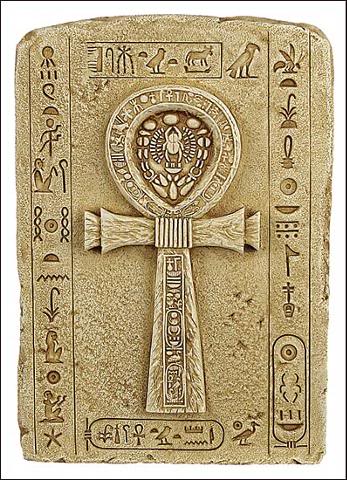
ankhrelief

The Ankh is one of the most well-known and widely used symbols of ancient Egypt. It is in their myths, hieroglyphs, texts and art. What is the Ankh symbolizing? Mainstream ideas are “life”, “breath of life”, or “death and resurrection”. As you will see, they are all way off base. The Ankh has to do with you, your higher self to be exact.

The Ankh is pure Egyptian. It is found in different civilizations, but only because they originated from Egypt. The Christians stole the symbol and used it for their cross. If you understand the true meaning of the christ, you will see why they stole the symbol. Who the hell would worship the symbol that killed their god or prophet? You don’t see Hindus worshipping an arrow. The arrow being what killed Krishna. Mohammed was killed by a wild boar and is the reason why muslims will not eat ham. So why do christians venerate the cross? Christianity is Egyptian and the cross is just a stylized Ankh. […]

Read the entire article at its Source: The Ankh

~ Imbolc – Candlemas – Lupercalia ~

imbolc

Candlemas (Imbolc, Imbolg and Oimelc) is a Major Sabbat that is a celebration to mark the return of the sun and the end of winter. We celebrate the waxing sun and the beginning of Spring. Candlemas is a celebration of hope, the light returns and Spring is just around the corner.

Altar: Candles, Grain Dolly, Sun Cross

Animals: Wolf, Snake, Swan, Vulture, Robin, Burrowing Animals, Sheep, Lamb, and Deer

Birds: Cockerals, Cranes, Crows, Ducks, Eagles, Goose, Owls, Ravens, Swans and Wrens

Colors:  White, red, pink, yellow, blue

Deities: Aradia, Arachne, Arianrhod, Athena, Brighid, Blaize, Branwen, Cupid/Eros, Diancecht, Dumuzi, Februa, Februus, Gaea, Inanna, Lucina, Vesta, and Oya

Foods: Pumpkin seeds, Sunflower seeds, Poppyseed Cakes, muffins, scones, and breads, all dairy products, Peppers, Onions, Garlic, and Raisins.

Herbs: Angelica, basil, bay Laurel, blackberry, celandine, coltsfoot, heather, iris, myrrh, tansy, violets, and all white or yellow flowers.

Incense: Basil, myrrh, frankincense, wisteria, jasmine, camphor, cinnamon, and lotus.

Oils: Jasmine, Apricot, Carnation, Sweet Pea, Neroli and Olive

Stones: Amethyst, bloodstone, garnet, onyx, ruby, turquoise

Trees: Rowan

Zodiacs: Aquarius and Pisces


Imbolc Traditions and Symbols

Brigid Corn Dolly – a very old custom involved making a “Brigid” corn dolly that can be placed in a “Bride’s bed” to bring fertility and good fortune to the home.  If you made a “Corn Mother” at Lammas, you may simply re-use it.  Dress the Corn Mother as a bride in colors of white, red and or gold, and your Harvest Crone transforms herself into the Brigit Spring Bride. Place the Bride in a “Brigit’s bed” along with a priapic wand to symbolize fertility.  A priapic wand is a be-ribbonned fruit wood wand with a pine cone on the end which symbolizes the God.

Brigid’s Bed – to show your hospitality and to encourage the Goddess to spend the  night at your home, create a “Brigid’s Bed” near the hearth fire.  By inviting Brigid to stay overnight in your home you’re symbolically asking that her powers of fertility, blessing and healing be with your family all year long.  A Brigid’s bed can be a pretty wooden or cardboard box, a wicker basket or anything large enough to hold your Brigit corn dolly.  Be sure to decorate it with ribbons, flowers, herbs etc. and place a comfy blanket on the bottom of the bed. Don’t forget to place the priapic wand in the bed so that the Goddess will not be lonely.

Hearthfire  – the hearthfire is sacred to Brigid and is her altar in every home.  At Candlemas in the depth of winter the fire was more important than ever.  It was not allowed to go out and in the evening the fire was smoored ( covered with ash to preserve the hot coals) by the lady of the house

Brigid’s Crosses – are a form of woven straw or rushes symbolizing the Sun and used as talismans to bring fertility, prosperity and protection to the home.  They would be created at Candlemas and hung on the door, near the hearth, under the eaves or in the barn to bring luck and protection.

Burning the Yule Greens– the evergreens for Yuletide decoration are gathered and burned by Candlemas.  It is a symbolic way to let go of the old year and make way for the new.

Springs and Wells – toss coins in wells springs, fountains or any running water as an offering the the Goddess Brigid

Source: ~ Imbolc – Candlemas – Lupercalia ~ – Ye Olde Dark Arts

Hippocrates – ” Let food be thy medicine and medicine be thy food”

Herbs as Cleansers:

The disinfectant qualities of certain plants would have been of great importance to humans, and may have been one of the triggers for a recognition of the other medicinal uses of plants. A large number of ancient cultures used herbs and plants in the cleansing rituals and preparation of the dead. Throughout history, the burning of natural substances has been used for cleansing, healing and in spiritual ceremonies and rituals.

Smudging: Shamanic smudging or just ‘smudging’ is an age-old tribal tradition which has been used for centuries for cleansing and to create harmony and peace. There are many different shamanic smudging ceremonies, and different tribes use a variety of herbs for smudging.  Smudging was used for centuries by the native people of both North and South America, Europe, the Middle-east, Africa, Asia and the Siberian shamans to open the doors of the soul to the spirit world. In all cultures, the burning of certain herbs and incense was seen as a way of gaining access to the soul and power of the plants for cleansing, purification, protection spiritual, ceremonial and magical use, the banishment of negative energies and creation of sacred space. In modern use, incensing is still used as a symbol of purification and sanctification.
One of the earliest recorded uses of smudging can be traced to ancient Egypt where herbs were burned in religious ceremonies, being mentioned on an inscribed tablet from Giza, Egypt, c. 1,500 BC. The Babylonians also regularly used smudge/incense extensively while offering prayers or divining oracles. It was imported to Israel in the 5th century BC to be used in religious offerings. It spread from there to Greece, Rome and India, where both Hindus and Buddhists still burn it in their rituals and at festivals. The smudging tradition dates back millennia and connects all traditional cultures, from the Native Americans to the Druids, from the Zulus to the Maoris, from Aboriginals to the Mayans, from the Chinese to the Balinese, which have age-old forms of cleansing and blessing rituals. Smudge (Incense) is widely used in Oriental religions (Buddhism, Hinduism, Islam, and Taoism) and in the ceremonies of the Anglican, Roman Catholic, and Orthodox churches. Smudging can therefore be seen as a universal spiritual component that runs through and connects all the worlds great cultures and religions throughout time.

Read the entire article at the Source: Herb-Lore (Herbalism).

~ Babalu-Aye – Orisha of Disease and Health ~ — Ye Olde Dark Arts

1526980_510938489005185_92756641_n-300x266

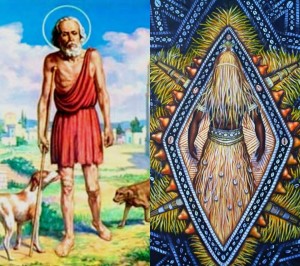
Asojano is the Orisha of the epidemics that hover over the lands. Asojano also know as Babaluaye or Acronica brings diseases, infections of the skin and other sicknesses whether terminal or non terminal onto humankind. Asojano is said to be a man that walks around on his crutches with abscess and other skin disorders on his body. He wasn’t like that before legends say but that is how he is now. Asojano was entrusted by Olofi after his punishment to inflict these epidemics onto the earth. He is said to be one of Olofi’s wrath and through his actions we suffer.

He is also the Orisha of discrimination. Due to his sickness and the epidemics he has conflicted on him, many people outcast him and did not want anything to do with him. They would throw water at him when he would try to approach them, which is an offense to Asojano in now days. He is also seen as a beggar. That’s what he disguises himself as to test and see how the heart of man is. When you fail that test, Asojano usually brings epidemics and sickness to your life. Whether it is directly to you or the closest person or thing to you. He is the epidemics that happen to the world in an instant. The people that are inflicted with these epidemics are said no to be victims, but are now his messengers to show the world that he does exist and to have respect for Olofi and him.

Read the rest of the article via ~ Babalu-Aye – Orisha of Disease and Health ~ — Ye Olde Dark Arts

Millennials on Spirit Quests Are Ruining Everything About Ayahuasca

When you loose connection to the rituals or your Ancestors, some people look outward to the flavor of the month instead of looking inward …

ArchDruid Emeritus Ian Corrigan Visits Candelo’s Corner


ian-corriganMonday, February 18 at 8pm est, Candelo’s Corner on KDCL Media, welcomes ArchDruid Ermeritus Ian Corrigan.

Ian Corrigan has been teaching, learning, singing and playing in the American Neopagan movement since 1976. He has decades of experience in a variety of occult, pagan and magical topics.

Having received his 3rd degree initiation in Celtic Traditional Wicca in the early 80s, Ian has led eclectic study groups, a traditional Wiccan coven and a Druid Grove. Ian has been well-known for decades at Pagan festivals as a bard, ritualist and teacher.

For the past 30 years Ian’s primary path has been Celtic polytheism and especially Neopagan Druidism. Ian has been a primary author and teacher in Ar nDraiocht Fein (ADF). He is a founder of Stone Creed Grove, ADF’s oldest working congregation, and served as ADF’s first Chief Liturgist and first elected Vice Archdruid.

KDCL Media on FB