Living in Lines vs. Living in Circles

By Dana O’Driscoll

Nature is a perfect system.  A tree falls during a thunderstorm.  Within several weeks, the wood is colonized by fungi, bugs, and others who begin the years-long process of breaking down the wood and returning all of the nutrients into the web of life.  Soon, oyster mushrooms are erupting from the log, bugs burrow in deep, and mice make their home under the old roots.  In 10 or 15 years, moss grows thick, and an acorn takes root and begins to grow in the soil that was a stump.  The tree’s trunk becomes a nursery tree for many other plants to get a foothold, off of the forest floor.  Suddenly where there was death, there is life. This circle continues and continues, connecting us all in a great web of life.  There is no waste in this system–every single part of nature can be recycled and reused infinitely.

Serviceberry
Serviceberry is part of this beautiful ecosystem!

One of the challenges humans have in this age is that they have built systems that have disregarded the cycle of life, which includes both creating things that do not easily return to nature and removing ourselves entirely from this system.  Rather than think in a circle or cycle, we think in a line. This embedded linear thinking currently pervades modern Western human society.  The Story of Stuff short film series does a great job of visually describing these problems: many human systems are based on the foundation of greed, quick profit, and short-term linear thinking.  What often happens when someone takes up nature spirituality is that their patterns of shifting slowly change from lines to circles.  This happens with people connecting to many different nature-connected communities: including  nature spirituality, gardening, rewilding, bushcraft, natural building, or permaculture practice.   As soon as you start being part of nature, living with nature, and connecting to nature, you are aware of the cycle.  The longer you take up these practices, the more profound this cyclical thinking becomes.

Continue Reading …

On Being a Druid and Walking a Druid Path – A Druid’s Garden Guide and Free Online Book on Druidry

Can a price be put on the life in a forest?

Druidry today has both ancient and modern roots.  Druids today seek spiritual connection with nature, using nature to guide, inspire, and ground us.  Nature has always been a source of everything to humanity, and those of us who pick up the druid tradition work to reconnect with nature in a multitude of ways.  The modern Druid tradition has many branches and paths, and I try to be comprehensive in my coverage of this vibrant and growing tradition.   The modern druid tradition is inspired by the Ancient Druids, wise sages who kept history and traditions, and guided the spiritual life of their people. The ancient Druids had three branches of study: the bard (a keeper of history, stories, and songs), the ovate (a sage of nature or shaman), and the druid (the keeper of the traditions, leader of spiritual practices, and keeper of the law).   Much of what we know about the Ancient Druids today comes through their surviving legends, stories, mythology, and the writings of Roman authors: the druids themselves had a prohibition against writing anything down that was sacred, and so, we have only fragments. The modern druid movement–from which all present druid traditions descend–started in the 1700-1800’s as one response to industrialization.  Today, Druidry is a global and vital tradition.  I’ve been walking the path of druidry for almost 20 years and currently serve as the head of the Ancient Order of Druids in America (www.aoda.org).  As such, I’ve been sharing a great deal about druidry for a long time on this blog. The ecological crisis is a spiritual crisis as much as it is a crisis of culture. Druidry is us finding our way “home”; back into a deep connection with the living earth.  Many people today are drawn to the druid tradition, there is “something” missing for them and it is that connection to nature. Continue reading.

History

Native American History

Awen, Bardic Arts, and the Ancestors

Dana's avatarThe Druid's Garden

The time between Samhain and Yule is always a time of deep reflection for me.  As a homesteader, this represents the end of the season– the first frost happened in the week I was drafting this post, making everything curl up and die. By the time late November comes around, any major outdoor projects are complete for the year. We anticipate, even embrace, the winter months when snow carpets the ground and all is frozen and still.  While in the light half of the year, I spend most of my spare time gardening, doing various permaculture projects, or just being outside in the summer. In the dark half of the year, this is when I turn to more inward-focused bardic arts, more intense practice of my magic and journeying,  and learning from books of all kinds.  So as we move into the dark half of the year, I’ll be spending…

View original post 1,502 more words

Wild Cakes for Camossung: A Prayer For Restoring The Garden — Gather Victoria

My family background is pretty diverse (stretching across Europe, from Spain, France, Greece to Eastern Europe and Russia) so I harvest and write about the many foods my ancestors have eaten for literally thousands of years. But I also resonate deeply with the food cultures of the Coast Salish Peoples whose territories I occupy. I…

via Wild Cakes for Camossung: A Prayer For Restoring The Garden — Gather Victoria

June Flower, The Rose.

Crooked Bear Creek Organic Herbs's avatarCrooked Bear Creek Organic Herbs

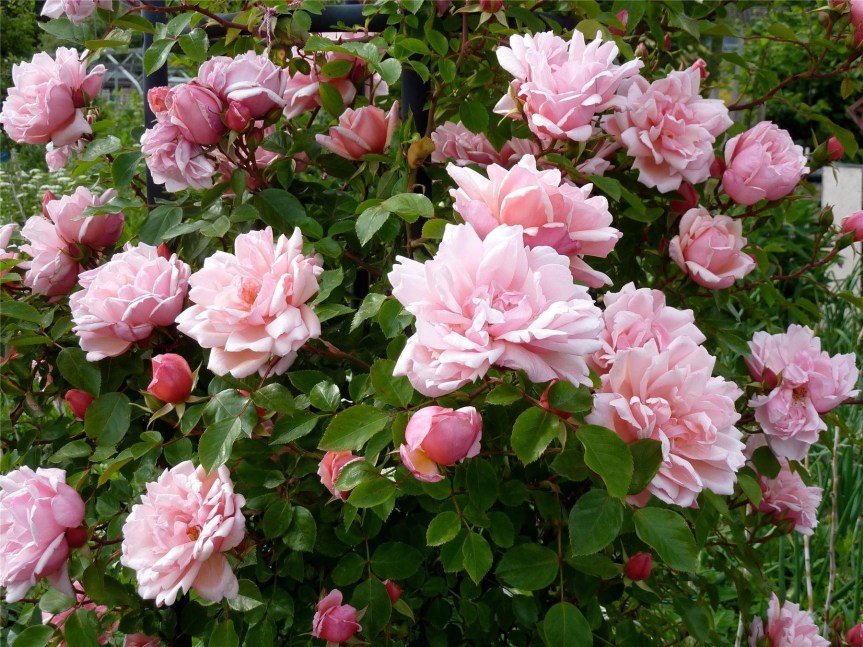
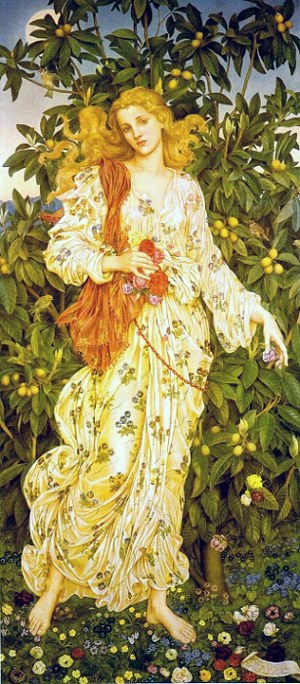
Chloris, the Greek Goddess of flowers, crowned the rose queen of all flowers, a title that the rose deserves today as much as it did in the Golden Age of Greece. Not only is the rose of unparalleled beauty, but it has also proved itself to be useful in a hundred different ways. It has been prized for its medicinal value, cherished for its sweet scent, and appreciated for its delicate flavor.

chloris greek goddess

The legend of the origin of the rose is from the days of the Roman Empire. The story is told of Rhodanthe, a woman of such exquisite beauty that she had many, many suitors. She showed little interest in any of them and sought refuge in the “Temple of Diana.” Her suitors were persistent, however, and followed her there, breaking down the gates to get close to her. Diana became incensed at this and turned Rhodanthe into a…

View original post 890 more words

Killing the First Born Sons

Vikings

Art and Spirit: The Bardic Arts as Self Development and Spiritual Practice

Dana's avatarThe Druid's Garden

“The way to see what looks good and understand the reasons it looks good, and to be at one with this goodness as the work proceeds, is to cultivate an inner quietness, a peace of mind so that goodness can shine through.”

–Robert Pirsig, Zen and the Art of Motorcycle Maintenance: An Inquiry into Values.

In the last two months, through various angles, we have explored ways of taking up the path of the bard, one of the three paths of the druid tradition. Topics have included the cultivation and flow of awen, cultural challenges surrounding taking up the path of the bard, and tips for how to cultivate the bardic arts. In my last post, we also explored some of what industralization had us lose in terms of the bardic arts–both to those who create them and those who use them and how we might…

View original post 2,191 more words