Spellbinding Sweet Woodruff Cake: Prosperity Magic — gather

In my tiny wildish garden, nestling at the foot of a tall tree, is sweet woodruff. Her glossy leaves and small white blossoms may be hidden by a profusion of taller plants, but it is her scent that perfumes the air. Fresh, her fragrance (like rain, earth, fresh air and green grass all condensed into…

via Spellbinding Sweet Woodruff Cake: Prosperity Magic — gather

A Shady Subject…

By Crooked Bear Creek Organics

Crooked Bear Creek Organic Herbs's avatarCrooked Bear Creek Organic Herbs

Question: I have a lot of trees in my yard, which leaves very few sunny spots. Are there any herbs I can grow?

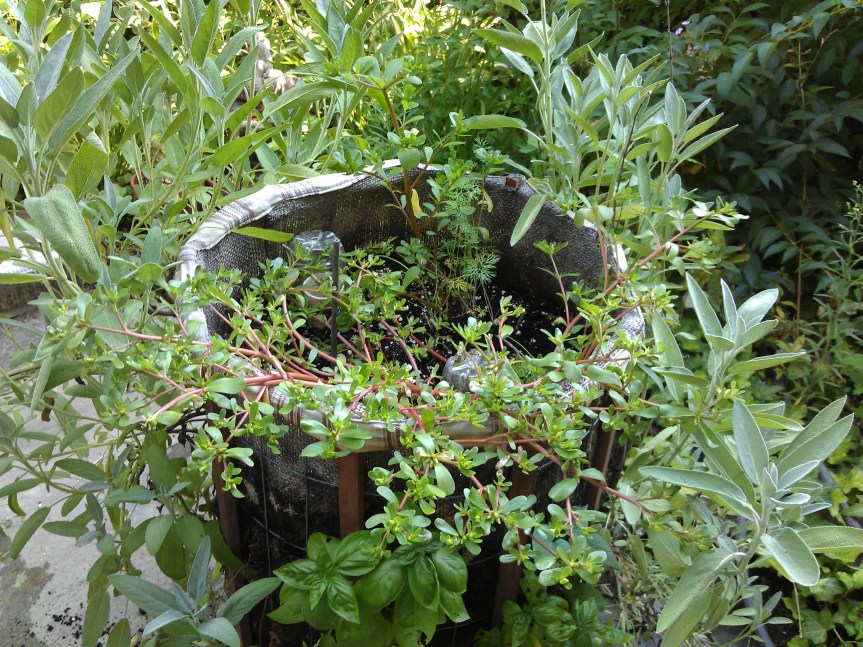
herb farm bucket

Answer: Most herbs love the sun, but some do thrive in woodlands and other shady spaces. Look for herbs that have shallow roots, which help them compete with tree roots that tend to hog water. Here are several of my favorite herbs that thrive on four or fewer hours of sun a day or dappled sunlight.

  • Angelica {Angelica archangelica}
  • Anise Hyssop {Agastache foeniculum}
  • Black cohosh {Actaea racemose}
  • Cardamom {Elettaria cardamomum}
  • Catnip {Nepeta Cataria}
  • Chervil {Anthriscus cerefolium}
  • Chives {Allium schoenoprasum}
  • Cilantro {Coriandum sativum}
  • Evening Primrose {Oenothera biennis}
  • Ginger, wild {Asarum canadense} or Mioga {Zingiber mioga}
  • Goldenseal {Hydrastis canadensis}
  • Lemon balm {Melissa officinalis}

View original post 52 more words

Honey Bees; Heros of Our Planet

By Crooked Bear Creek Organics

Crooked Bear Creek Organic Herbs's avatarCrooked Bear Creek Organic Herbs

Have you ever had the opportunity to observe the busy work of a tiny honey bee as it meanders from flower to flower on a clear, sunny day? There’s something truly captivating about honey bees that draw us deeper into their world. We see honey bees frequently in books, movies, and television, where they are often associated with making hives filled with delicious, golden honey. You might recall reading about a hungry bear character in search of the honey bee’s golden treasures in various children’s stories. Honey bees are known for their production of honey and beeswax, as well as the large role they play in the pollination of plants and flowers. Honey bees can also be considered super-organisms due to their complex social systems and dynamic, tight-knit interactions with one another and their environments.

Bee Species

There are actually seven recognized species of honey bee within the genus Apis…

View original post 2,192 more words

Indefinitely Wild; Foraging Wild Strawberries

By Good Witches Homestead

Crooked Bear Creek Organic Herbs's avatarGood Witches Homestead

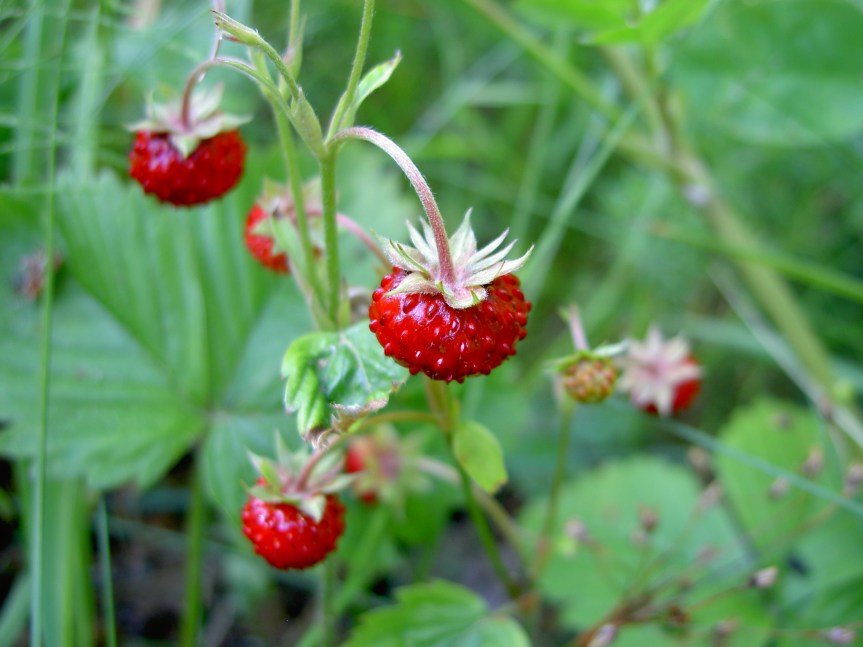
Once abundant, wild strawberries provided helpful medicine to Native Americans and early settlers.

Picture it; An abandoned field of wild strawberries, ripe and shimmering under a bright June sun. The field is isolated, bounded on three sides by leafy, benevolent hardwoods. A light breeze moves gently through the leaves and sparse grasses.

A Berry in History

I’m not alone, of course, in my love of this summertime fruit. The wild strawberry {Fragaria virginiana, or F. vesca} held a special place in the lives of several Native American tribes – in their mythology, diets, and medicine – which they shared with early settlers.

In Medicinal and Other Uses of North American Plants, Charlotte Erichsen-Brown reveals some uses of the wild strawberry plant through the eyes of early Europeans, whose research was likely based on what they learned from these native tribes as well as their own observations. From…
View original post 1,635 more words

IPM For The Herb Garden

By Crooked Bear Creek Organics

Crooked Bear Creek Organic Herbs's avatarCrooked Bear Creek Organic Herbs

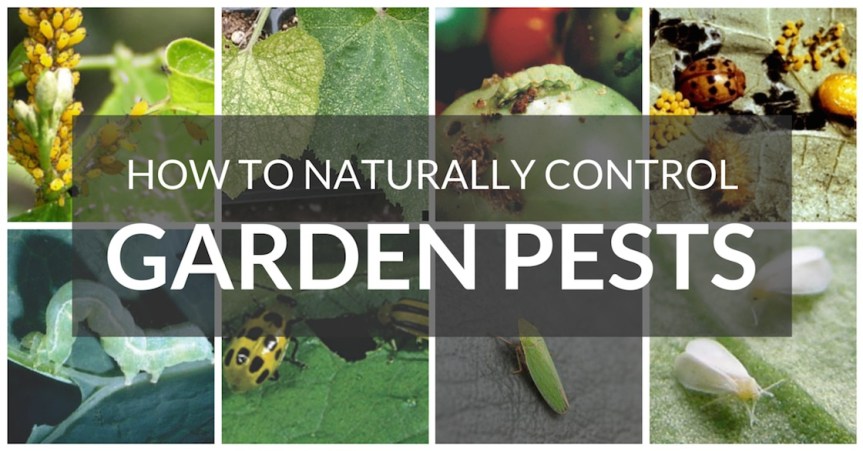
Designed as an alternative to the rampant use of insecticides in agriculture, Integrated Pest Management has proven to be an effective means of promoting healthy growth in the backyard garden as well. Learn more about how you can implement this technique in your herb plot.

Even under the best of care, your herb garden may be affected by pests or disease at some point. It can be difficult to choose the right moment and method to deal with these problems that arise, but implementing an Integrated Pest Management {IPM} strategy can help get your garden on the right track. With its multipronged approach of prevention, observation, identification, and control {if necessary}, IPM can have a significant impact in any garden, large or small, and will reward you with healthy, thriving plants with minimal impact to the environment.

The concept of IPM was first explored by American scientists and agriculturalists after…

View original post 2,021 more words

Companion Planting with Herbs

By Crooked Bear Creek Organics

Crooked Bear Creek Organic Herbs's avatarCrooked Bear Creek Organic Herbs

Boost your garden this season with the right pairings of plants.

Companion planting is a fantastic addition to any garden. By specific plants next to certain fruits, flowers, and vegetables, you can boost their health and increase their production. Of course, knowing what pairings work best is key, especially when it comes to herbs.

How It Works

Companion planting improves growth in a number of ways. To start, some plants serve to repel unwanted pests while providing shelter and safety for beneficial insects. Others encourage pollination, which is especially needed for those fruits and vegetables that don’t have noticeable flowers. Species with bright shades of blue, white, or yellow and/or with high concentrations of nectar can attract bees to these lesser-flowered plants. Larkspur, sunflowers, sweet peas, cosmos, zinnias, and mints all do well in vegetable gardens {though the mint does spread quickly}. Companion planting is a wonderful tool for organic…

View original post 2,129 more words

That Funny Little Spring Weed: Lamb’s Quarter

Crooked Bear Creek Organic Herbs's avatarCrooked Bear Creek Organic Herbs

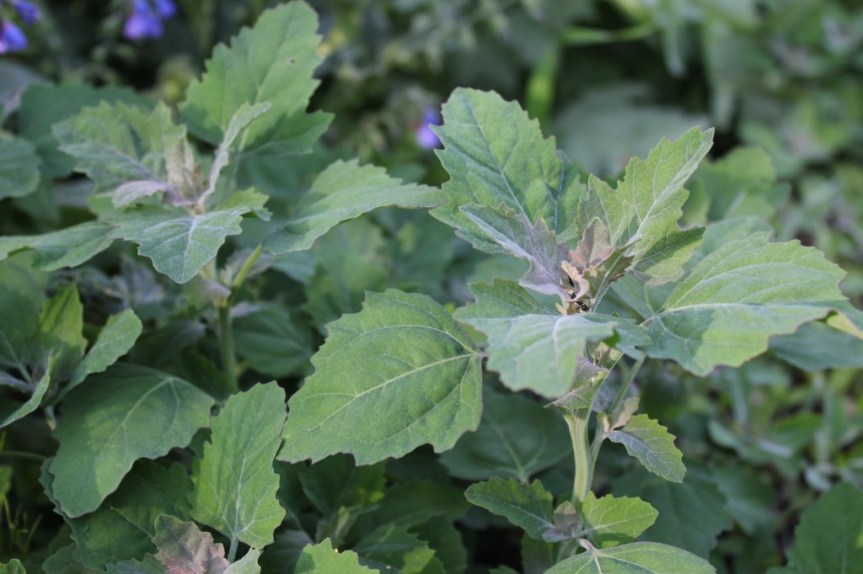
Lambs quarter is one of the most common weeds in gardens, backyards, and fallow fields, following human habitation closely. If you add horse or cow manure to your garden you will have a steady supply of these tasty wild greens for most of spring and summer. Easy to recognize with its alternate, triangle-to-diamond shaped leaves which are coated on the underside with a whitish grey powdery meal resembling flour. This coating may sometimes possess a coppery-fuchsia sheen and is sold as a cultivar called “magenta spreen” in some garden catalogs. The coating is a natural part of the leaf and is fine to eat. Put a leaf under water and the meal will cause the water to bead up in a beautiful iridescent fashion. Lamb’s quarter grows to 3-5 feet and is a branching annual with a grooved stem which is often tinged with red, especially at the node, or…

View original post 805 more words

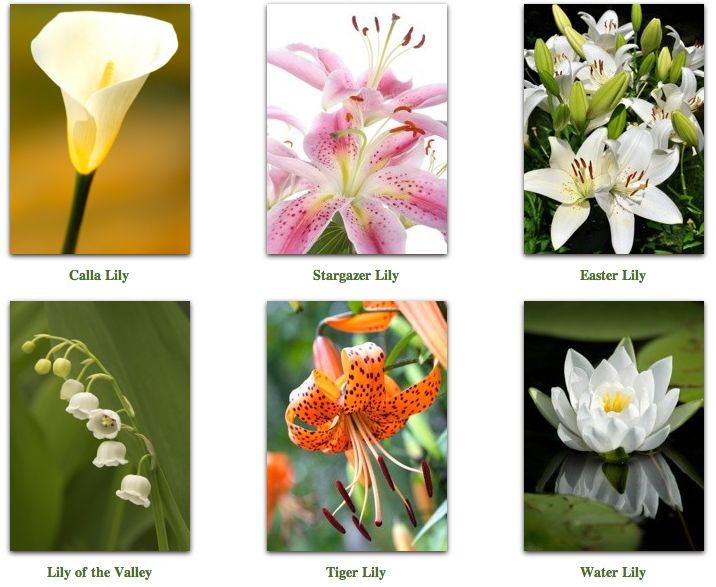
Lily Lore

Crooked Bear Creek Organic Herbs's avatarGood Witches Homestead

COMMON NAME:  lily
GENUS:  Lilium
SPECIES, HYBRIDS, CULTIVARS:
Many of the 200 species of lilies are native to the United States. Plant breeders have done extensive hybridization work on the lilies to make them hardy and free flowering. Lilies are now available in every color except blue.
FAMILY:  Liliaceae
BLOOMS:  late spring
TYPE:  perennial
DESCRIPTION:  Lilies are one of the most beautiful of all garden plants. The flowers are large and deliciously colored, and they usually occur many to a stem. The height of lilies ranges between 2 to 6 feet. Flower forms include trumpet shape, pendant, flat-faced, or bowl-shaped.
CULTIVATION:  The most important requirement for growing lilies is well-drained soil. Water standing on the bulbs will cause them to rot. The bulbs should be kept cool. This can be done by overplanting with annuals or perennials. Depending on the size of the bulbs, they should be planted…

View original post 678 more words

A Living Herbal Apothecary

Crooked Bear Creek Organic Herbs's avatarCrooked Bear Creek Organic Herbs

Whether you’re an experienced farmer or completely new to the world of gardening, medicinal herbs offer a unique growing experience. In this article, you’ll learn the steps you need to take to create a living herbal apothecary outside your door. If you have the land to cultivate and would like to grow your own herbs, start right here.

Herbs From the Ground Up:

Gardening begins with the soil; it’s the “ground of our being,” to borrow a phrase. If you take care of the soil, the soil, in turn, will nourish and feed the plants you grow for healing and health.

Soil Types:

An important first step in growing outdoors is to find what kind of soil you have. Take a handful of soil from a couple different places in your yard or on your land, make sure each one is somewhat moist, squeeze it gently in your fist, and…

View original post 4,131 more words

Apartment Dweller’s Series: Urban Apartment Gardening: Gardening Tips For Apartment Dwellers

Crooked Bear Creek Organic Herbs's avatarCrooked Bear Creek Organic Herbs

I remember the days of apartment dwelling with mixed feelings. The spring and summer were especially hard on this lover of green things and dirt. My interior was festooned with houseplants but growing veggies and larger specimens were something of a challenge, having minimal room on the patio or balcony. Fortunately, urban gardening ideas abound and there is a host of ways to grow tiny gardens for the space restricted gardener.

Challenges for Urban Gardening in Apartments

Finesse and commitment are required for urban apartment gardening. Space is not the only issue. Lighting and ventilation pose a concern, as well as the species and varieties which will thrive in confined and restricted spaces. Over the years, I gleaned some tips on how to grow a garden in an apartment. Follow along as we investigate gardening tips for apartment dwellers for a successful tiny landscape that is both beautiful and productive…

View original post 1,325 more words