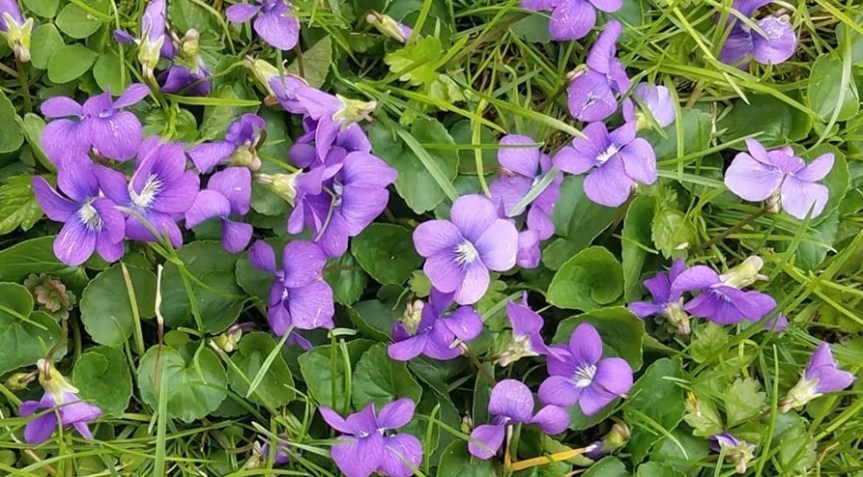
Violets are Delicious

The Herb Society of America's avatarThe Herb Society of America Blog

By Beth Schreibman-Gehring, Chairman of Education for The Western Reserve Herb Society unit of The Herb Society of America
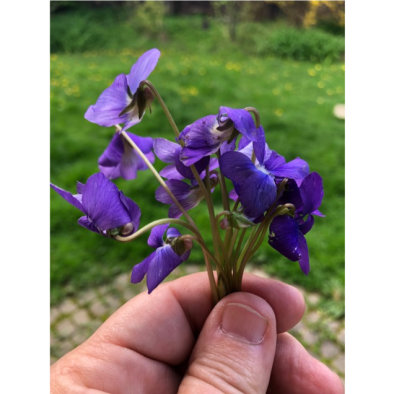
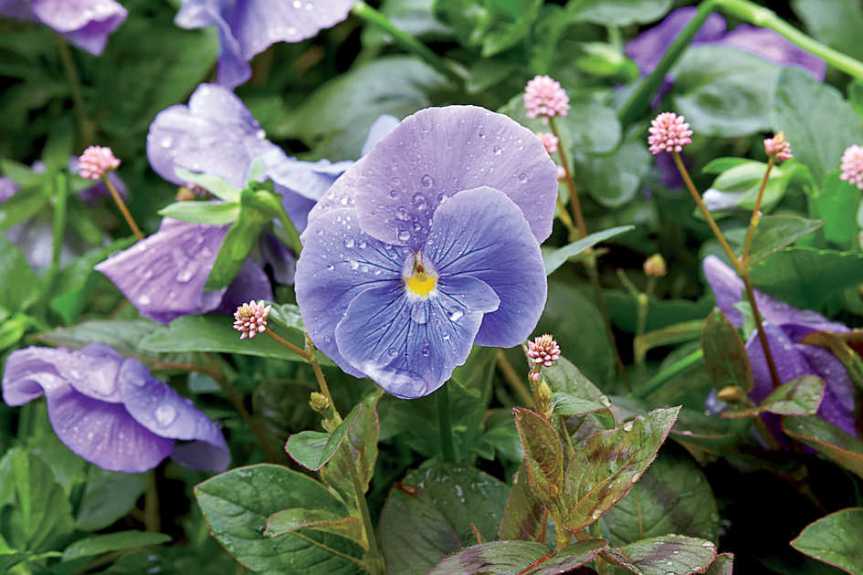
violet bouquetOne of the loveliest flowers of spring is the Viola odorata or as it is commonly referred to, the “Sweet violet.” Violets have been used in herbal healing remedies for centuries, in fact St. Hildegard of Bingen, the famous 12th century German mystic and healer, was said to have made a healing salve of violet juice, olive oil, and goat tallow for its use as a possible anti-bacterial.

I use violets whenever I can for their healing virtues, and they are also an absolutely delicious ingredient in salads, drinks, and desserts. Back in the day, violet flowers, and leaves mixed into salads were one of my favorite spring remedies for pre-menstrual melancholy. When chopped liberally into extra virgin olive oil with some fresh comfrey leaves, they make a poultice that can…

View original post 945 more words

Children’s Garden opens at Kew Gardens helping kids to learn about what plants need to grow

Let Us Stroll the Primrose Path of Dalliance

The Herb Society of America's avatarThe Herb Society of America Blog

By Kathleen M Hale, Western Reserve Herb Society

20190505_163700The botanical family name of the common or English primrose, Primula, comes from the diminutive of the Latin word for “first.” And the common name “primrose,” derived from prima rosa (“first rose”), is also a reference to the primrose being one of the first flowers of spring. This is not the evening primrose (Oenethera), or any of the other, more ornate, forms of Primula. This is the quintessentially English cottage garden flower.
Of course, it is then described as “vulgaris.” Sounds harsh. But this is not a matter of judgment of the primrose’s character. It’s just that, where the primrose is happy, it is very happy. It grows and spreads in abundance in cool, moist places.

This does not describe the micro-climate in most of our homes when primroses beckon so invitingly from the grocery store aisles shortly after the winter holiday…

View original post 281 more words

Herbs for Your Windowsill

Crooked Bear Creek Organic Herbs's avatarCrooked Bear Creek Organic Herbs

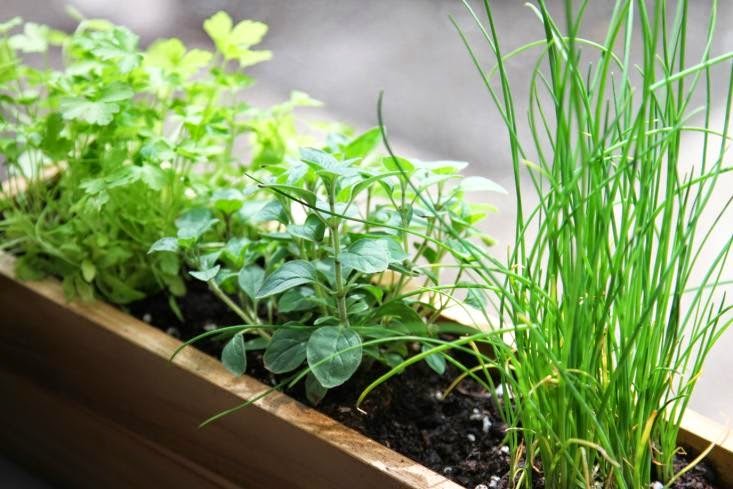
Like the idea of growing your own medicinal plants? Look no further than your windowsill or patio garden for these four standbys of ours: lemon balm, sage thyme, and peppermint. These herbs are familiar to us from grandma’s recipes and as lyrics in songs, but they may be less familiar as medicine. Lemon balm, also known as “hearts delight” and the “gladdening” herb, has long been treasured for its ability to soothe the nerves and uplift the spirit. An old Arabian proverb says that “balm makes the heart merry and joyful.” From ancient times, though, sage was used for digestive troubles, heartburn, depression, and even dementia. Thyme is excellent for treating sore throats and bronchitis. Make thyme tea with honey to soothe those colds and coughs. And women listen up, for bloating and digestive issues associated with our monthly cycle thyme is an excellent soother and diuretic. Another great herb for digestion…

View original post 305 more words

Herbal Bouquets for Mother’s Day – Traditional Medicinals

Crooked Bear Creek Organic Herbs's avatarGood Witches Homestead

In the English and European Victorian era, gifting herbs and flowers were used to relay secret messages. When you received a flower bouquet, you would sit down with your dictionary and try to decipher what it meant; honeysuckle for devotion, aster for patience, and roses for love.  Fast forward to modern times, important life milestones like births, graduations, buying a new home, and career changes are almost always accompanied by flower gifts. While today it’s not our first choice of communication, a flower bouquet can make a lovely homemade and eco-friendly gift for just about anyone in your life, and can certainly contain an intention.

Plants and floral bouquets have a long-standing tradition as Mother’s Day gifts, and with good reason. There’s a simple and well-understood joy that comes from a vibrant and beautiful bouquet on the kitchen table. We have all felt it, botanical bliss; it’s like a type…

View original post 439 more words

May 2019 Newsletter, The Oregon Lavender Association invites you to enjoy lavender all year round!

Crooked Bear Creek Organic Herbs's avatarGood Witches Homestead

Announcements and Events
 
May 2019
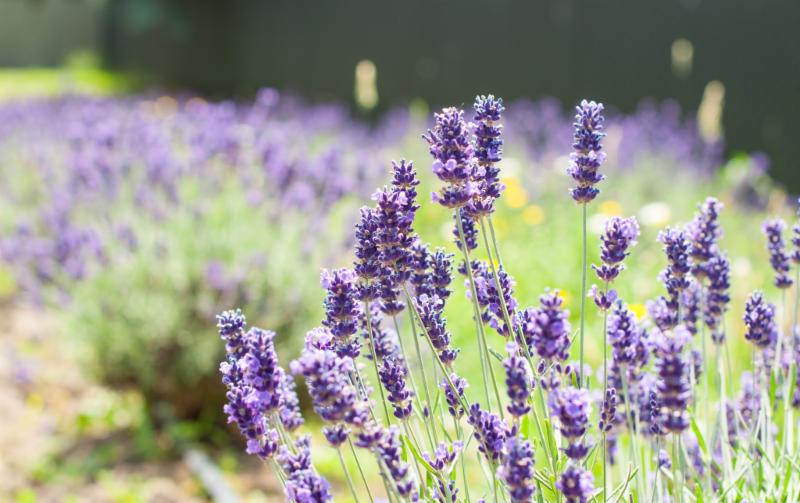
This is an exciting month for lavender lovers and farmers!  Our plants are greening up and sending up shoots!  We will even see flowers from our featured lavenders this month, Lavandula stoechas, and maybe flowers from the early blooming L. angustifolia varieties, such as French Fields, toward the end of May!
There aren’t any events going on during this month, but June will be packed. Here’s a sneak peek of some June festivals and events so you can get them on your calendar:
Clackamas River Lavender Festival at Eagle Creek Lavender
June 22-23, from 10-4
 Join us for our Festival at Eagle Creek Lavender on the Clackamas River. Live music, savory food, U-Pick fresh lavender, gift shop with lavender products, artistic vendors and awesome classic cars on display. A bargain at $5 per car for parking. No pets, please. 27525 SE Starr Rd, Eagle…

View original post 1,534 more words

The Business of Herbalism

Crooked Bear Creek Organic Herbs's avatarGood Witches Homestead

Botanical medicine, the art, and science of collecting, preparing, and utilizing plants for healing, is one of the oldest healing methods in human history. The World Health Organization estimates that 80 percent of the world’s population presently uses herbal medicine for some aspect of primary healthcare.

There is a wide range, however, in what is marketed as herbal medicine. The effectiveness of botanical medicine necessarily depends on the quality and vitality of the original plant material and on the care and attention brought to harvesting, processing, and storage. These issues are crucial to the quality of any product we consume; they are especially important when we use remedies as medicine for healing.

As the natural products industry has grown—it was measured to be $5 billion in the United States alone in 2009—compromises have been made along the chain of production that undermine the integrity and efficacy of the medicines produced…

View original post 1,758 more words

Native foods including rare strains of corn, beans and squash making a comeback

Druidry for the 21st Century: Plant-Based Spiritual Supplies and Global Demand

Dana's avatarThe Druid's Garden

Can you even imagine druidry without plants or trees?  Plants and trees are some of our strongest allies for the work that we do, and are often connected to almost everything that we do spiritually. Plant spirits are teachers, guides, and allies.  From before we had recorded history in any culture, the plant spirits were there, growing with us, guiding us, healing us, and supporting us on our journey. Today’s modern druid practice continues that tradition: we burn plants for smoke cleansing, clearing, and helping to energize spaces. We use trees as part of divination and sacred rites. We use plants as healers, for magical healing and physical healing, and to connect with on deep levels.  Plants have long been friends of humans–and have long walked beside us, hand in hand, as we do our sacred work.  And today, we’ll explore ways we can offer that same kind of honor…

View original post 3,203 more words

Medicinal and Culinary Uses for the Shy Violet

Crooked Bear Creek Organic Herbs's avatarCrooked Bear Creek Organic Herbs

While violets’ delicate blossoms are a treat only for the observant, the plant has enjoyed a long history of medicinal and culinary use.

Leigh Hunt, an English Romantic essayist, and poet is the first known author of the phrase “shrinking violet.” In 1820, he published a passage describing a bit of woodland in The Indicator, a poetry magazine: “There was the buttercup, struggling from a white to a dirty yellow; and a faint-colored poppy; and here and there by the thorny underwood a shrinking violet.”

Hunt was almost certainly referring to the native English, or sweet, violet (Viola odorata). This shy plant can often go unremarked underfoot, and it carries its small, slightly recurved flowers level with or just below its leaves. The phrase “shrinking violet” took a few decades to catch on — but when it did, it spread rapidly, much as its parent plant does…

View original post 1,865 more words