The Samhain of our Lives

Dana's avatarThe Druid's Garden

Just last week, we had our first hard frost. After homesteading for a number of years, you grow to be vigilant for the signs of the first frost. The air smells different somehow in the two or so weeks leading up to it. The bird and wildlife patterns change.  The nights have a crisp bite to them that they didn’t even a few days before. And then, just like magic one day, the frost is there, glistening in the morning light. The garden radically changes overnight–even for those things you covered–the entire landscape lies in disarray.

Sunrise at First Frost Sunrise at First Frost

I could feel it on the air, and for the last few mornings, have been going to to see if it had arrived. That morning, I turned the corner and first saw it first on the strawberry patch–white and glistening. The frost is beautiful, magical, and yet, destructive. While the…

View original post 1,466 more words

A Druid’s Guide to Herbalism, Part II: Preserving and Preparing Sacred Plant Medicine

Dana's avatarThe Druid's Garden

The moonlight shines through the window in my kitchen as I carefully use a mortar and pestle to grind dried herbs for making tea.  Candlelight softly illuminates the space, and I have my recipe book with me, ensuring that I record everything that I’m doing for future use. Magic is in the air; working in a sacred space at a sacred time on the Fall Equinox ensures that these medicines will be potent, effective, and magical. On the counter, I’ve already finished my fresh New England Aster flower tincture; this keeps my lungs in good health and helps me manage my chronic asthma without pharmaceuticals. A pot of olive oil is infusing with herbs is on the stove; I am getting ready to add beeswax and pour it off into small jars.  This healing salve will be for friends and family as Yule gifts.  The kitchen is bursting with good…

View original post 2,609 more words

A Druid’s Guide to Herbalism, Part I:Harvesting by the Sun, Moon, and Stars, and Sacred Intent

Dana's avatarThe Druid's Garden

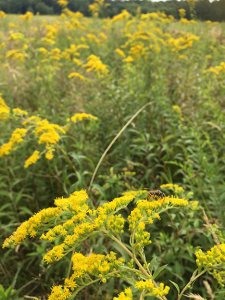
Field of Goldenrod in Fall Field of Goldenrod in Fall

A field of goldenrod, nettle, and aster greet me on this warm post- Fall Equinox day.  As the moon comes up with a sliver in the afternoon sky, I joyfully take my basket and harvest knife into the field for my fall plant preparations. The breeze has change on the air–winter is coming soon, and the sacred medicines I prepare will bring my family nourishment and strength for the coming dark half of the year. As we are well into the harvest season at this lovely Fall Equinox, I thought I’d take the time to talk about harvesting and preparation by the sun and moon and honoring the harvest. Next week, I’ll talk about the most basic plant preparations and we’ll end this series with talking about energetic preparations through the creation of flower and leaf essences.  That is, we’ll talk about the medicine of…

View original post 1,533 more words

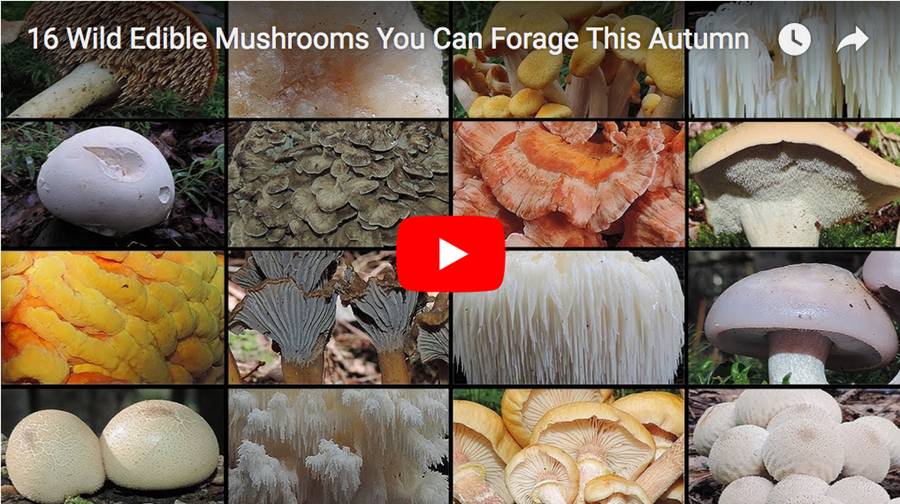
Here Are 16 Wild Mushrooms You Can Forage This Autumn

Greetings!

I’d like to say “thank you!” to everyone who registered for (and inquired about!) the upcoming Fall Flora & Fungi Outing on Saturday, October 14th at Cook Forest State Park.  The event filled to max capacity and registration is now closed.

If you’re interested in learning how to harvest and process acorns from start to finish, I’ll be demonstrating the steps involved for the Botanical Society of Western Pennsylvania on Monday, October 8th.  The topic is “Acorn History, Harvesting, & Preparation:  An Intimate Look At Pennsylvania’s Oak Trees,” and the meeting is free to the public.  If you’re interested in attending this event in Pittsburgh, click here for more information!

Next, let’s talk about edible mushrooms… specifically, the ones that can be harvested during the autumn season.

There are lots of them.  Perhaps more than you’d ever encounter during any other season.  Cool temperatures and ample rainfall provide the perfect conditions for fungal growth, and if you’re prepared for the bounty, you’ll never leave the woods empty handed.

In this brand new video, I cover 16 (yes… 16!) wild edible mushrooms you can forage right now.

Enjoy!

Okay… I forgot to include one mushroom.  This species makes the list at #17, and if you’re interested in learning more about an aromatic mushroom that loves hanging out in coniferous forests, check out this recent Instagram post!

Thanks for reading and watching, and as always, thank you for your support!

-Adam Haritan

Food as Medicine: Cherry (Prunus avium and P. cerasus, Rosaceae)

Crooked Bear Creek Organic Herbs's avatarCrooked Bear Creek Organic Herbs

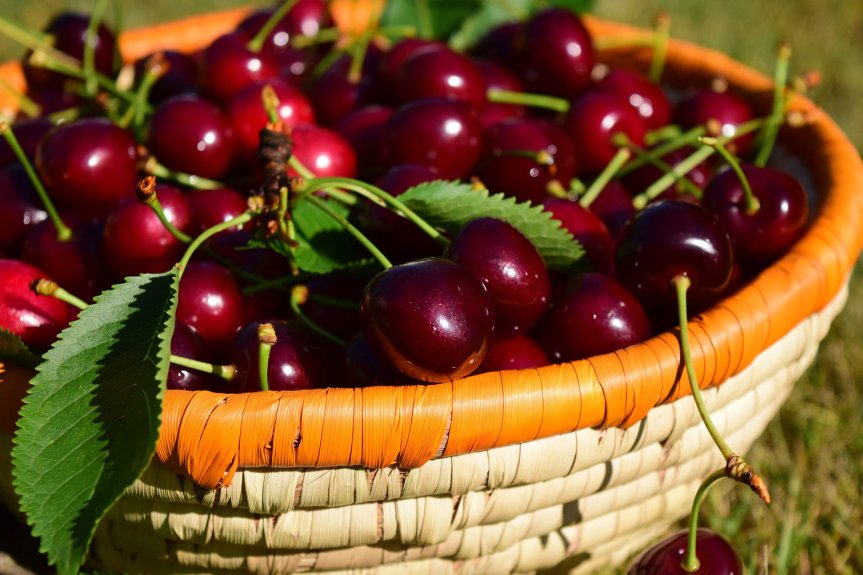
Take advantage of the fleeting cherry season to explore the fruit’s sweet side, sour side, and beneficial side. Due to their anti-inflammatory properties, cherry fruit and cherry bark have been used to treat and support a wide variety of chronic inflammatory conditions. In addition, the fruit’s rich phenolic compound content has been studied for their potential benefits for sleep disorders, exercise recovery, and cognitive function.

Known for both their ornamental beauty and sweet and tart fruits, cherry (Prunus spp.) trees are among the 3,400 species that belong to the economically important rose (Rosaceae) family. This botanical family also includes other fruit-bearing trees such as apples (Malus spp.) and pears (Pyrus spp.), as well as herbaceous perennials like strawberries (Fragaria spp.) and brambles like blackberries (Rubus spp.) and raspberries (Rubus spp.).1

Cherry fruits are produced by various trees…

View original post 3,878 more words

Fall Flora & Fungi Outing with Adam Haritan ~ New event scheduled!

Greetings!

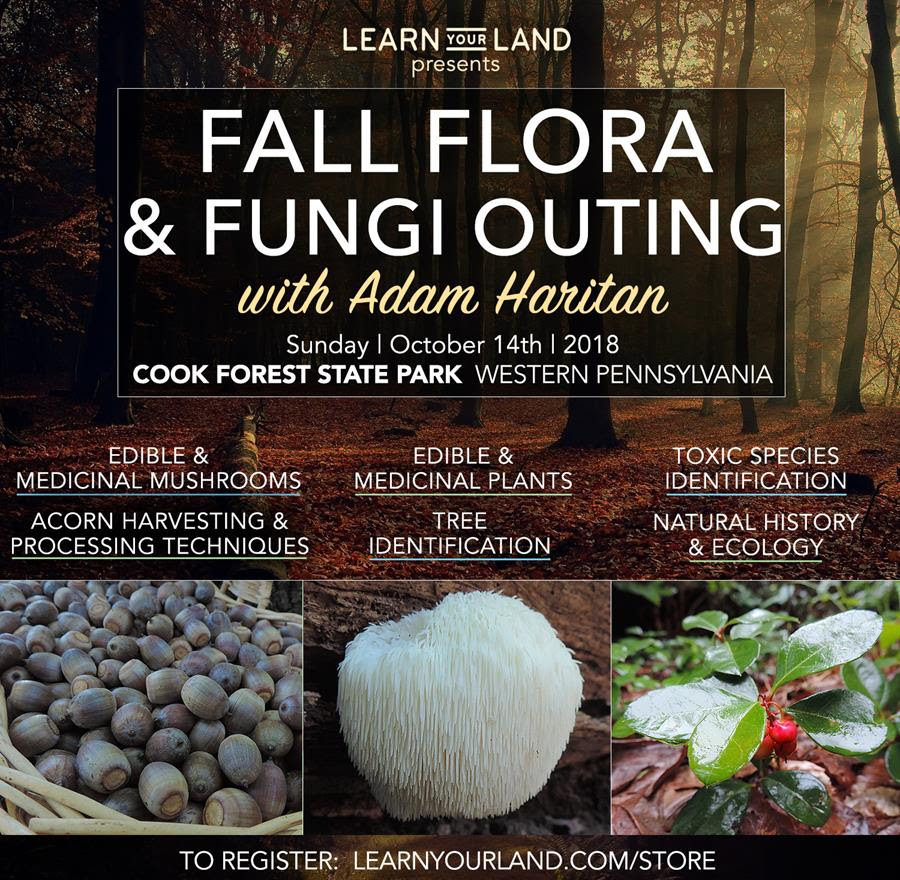
I am excited to announce that I will be leading the Fall Flora & Fungi Outing on Sunday, October 14th at Cook Forest State Park in Western Pennsylvania.  And of course, I’d love for you to join us!

Autumn is the perfect season to explore Pennsylvania’s colorful land in search of interesting and useful plants, mushrooms, and trees.  We will spend the first part of this event in a mature oak forest learning the techniques involved in harvesting and processing acorns.  This year has already proven to be a banner year for many species of oaks whose acorns have been falling incessantly in Western Pennsylvania.  Participants will learn the steps involved in turning acorns into edible, delicious flour.  We will also search the area for oak-loving mushrooms of all types.

During the second part of the event, we will visit the old growth area of Cook Forest and explore the valley in search of mushrooms.  This particular section of the park is home to some of the oldest and tallest hemlock and pine trees in the Northeast.  Participants will learn the basics of mushroom hunting, including mushroom ecology and biology, edible species, medicinal species, and poisonous species.

Throughout the day, we’ll also discuss various plants — including the edible, medicinal, and poisonous species — that inhabit the old growth forest.

Interested?  Here are more details:

What: Fall Flora & Fungi Outing with Adam Haritan
When: Sunday, October 14th, 2018
Where: Cook Forest State Park, Western Pennsylvania
Time: 9:30 AM — 4:30 PM

The program is geared toward adults and will entail moderate hiking.

Please note that in order to maximize your learning experience, space is limited and registration with payment in advance is required to secure your spot.

To purchase your ticket, and to learn more about the outing, please visit the following link.

Fall Flora & Fungi Outing with Adam Haritan

I’d love to see you there!
—Adam Haritan
 

Crabapple & Rosemary Hand Pies: Ancestral Offerings for Mabon — Gather Victoria

A couple of years ago, completely hidden in dark thicket of trees, I discovered a beautiful gnarled Crabapple – gleaming with clusters of hundreds & hundreds of rosy, autumn fruits. I was thrilled! I love crisp truly tart apples (which are getting harder to find) so the Crabapple fits the bill perfectly. Crabapples are the…

via Crabapple & Rosemary Hand Pies: Ancestral Offerings for Mabon — Gather Victoria

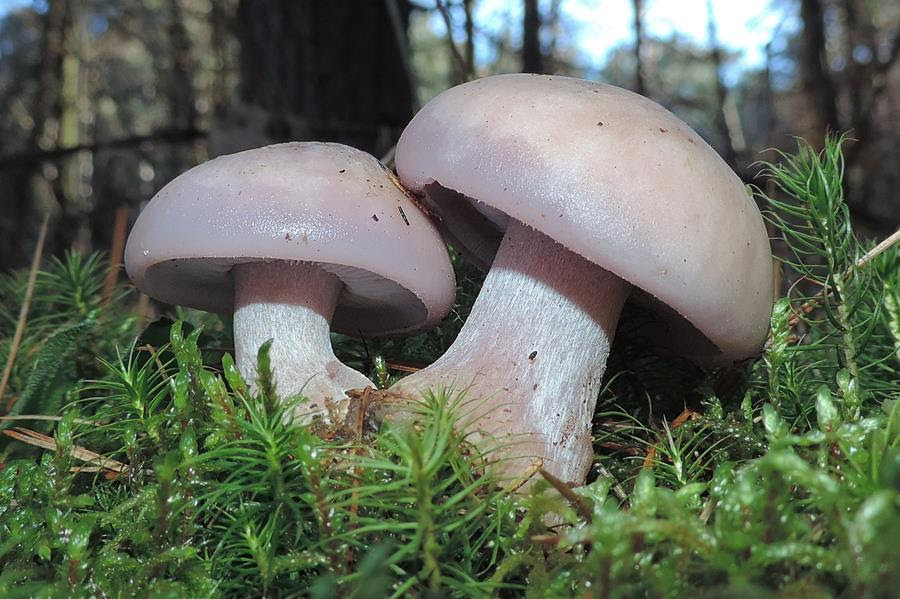
Have You Ever Eaten Milk Cap Mushrooms?

Greetings!

I’d like to tell you about wild mushrooms that ooze latex.

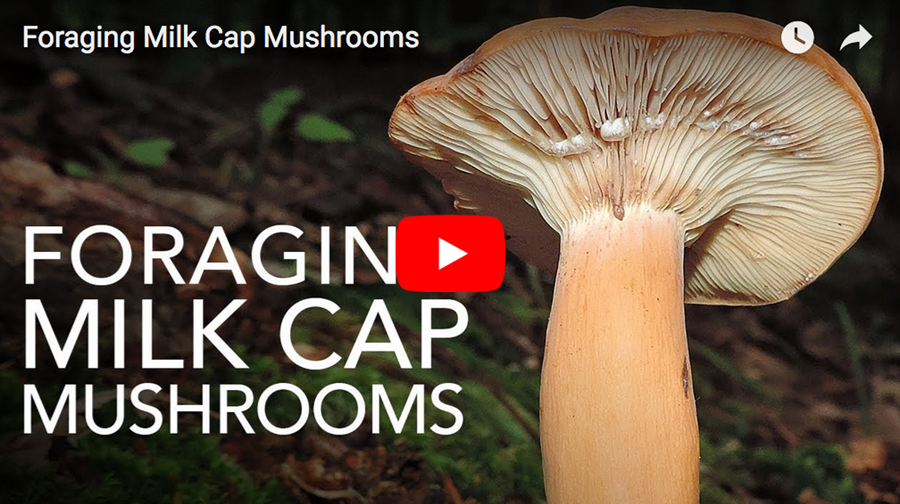
Known as “milk cap mushrooms,” these fungi may not seem worthy of anyone’s appetite, though they are certainly a group worth learning!

Milk cap mushrooms form important associations with various trees, and the value of these mushrooms to wildlife (specifically to animals and insects) is high.  Additionally, many milk cap mushrooms have been shown to be sources of naturally occurring rubber.

Perhaps the most exciting feature of milk cap mushrooms (at least from the mycophagist’s perspective) is that some of them are edible… and quite delicious!  Featured in this new video is a milk cap mushroom that perhaps you’ve been overlooking all these years.  If you’re interested in adding a new species to your list, check it out!

Mushrooms grow on all kinds of substrates, including trees, leaves, insects, soil… and hickory husks!  This time of year, a yellowish-orange mushroom can be seen fruiting from hickory and walnut debris.  Have you seen it?  Check out this recent Instagram post to learn more!

Thanks for reading and watching, and as always, thank you for your support!

-Adam Haritan

Food as Medicine: Stinging Nettle (Urtica dioica, Urticaceae)

Crooked Bear Creek Organic Herbs's avatarCrooked Bear Creek Organic Herbs

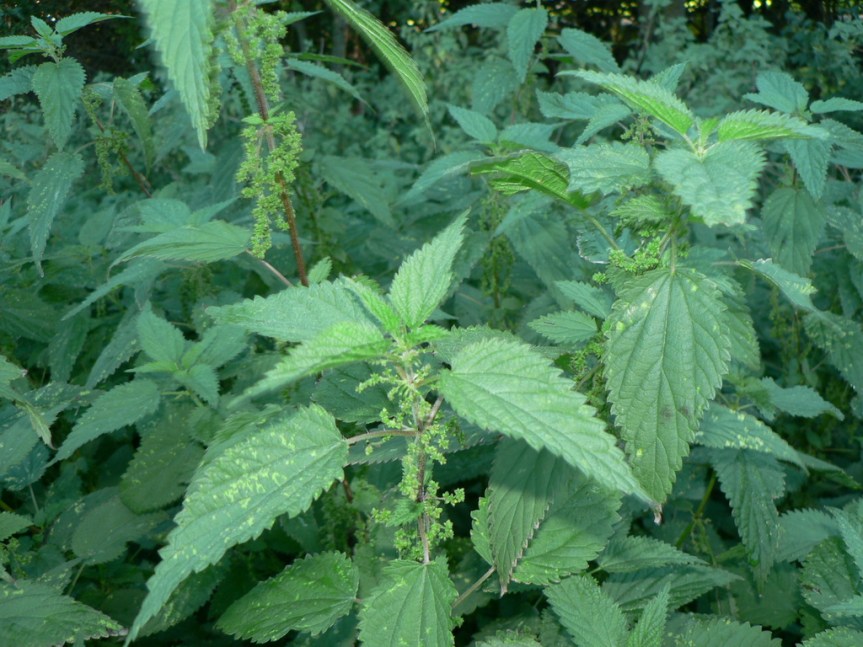
Urtica dioica (Urticaceae) is commonly known as nettle, common nettle, or stinging nettle. The species is an herbaceous perennial with a spreading growth habit. Growing 4-6 feet tall, stinging nettle produces numerous erect and wiry stems that hold up its opposite, roughly textured, serrated leaves.1-4 It produces small, inconspicuous greenish-brownish flowers that emerge as axillary inflorescences.The stems and undersides of leaves are covered with hairs called trichomes. When touched, these stinging trichomes inject a chemical cocktail that typically causes localized skin irritation as well as a painful, tingling sting from which the species has derived its most common name, stinging nettle.1,5

The Urticaceae family contains about 500 known species, distributed mainly in tropical areas.1 The genus Urtica, whose name comes from the Latin uro (to burn) and urere (to sting), consists of both annual and perennial herbaceous plants known for the burning properties of the…

View original post 3,981 more words

Locating Wild Deer Truffles ~ And Other Fascinating Fungi!

Greetings!

First, I’d like to say “thank you!” to everyone who attended a Learn Your Land event over the past few months.  It’s always a wonderful experience meeting nature enthusiasts around the country!  I still have plenty of events scheduled throughout the upcoming months.  If you’re local to any of these areas, I’d love to meet you!

September 8, Muskegon, MI: Michigan Mushroom Hunters Club — Fungus Fest
September 9, Owosso, MI: Wild Edibles Walk & Mushroom Outing
September 21-23, Prairie du Chien, WI: Midwest Wild Harvest Festival
October 8, Pittsburgh, PA: Botanical Society of Western PA evening presentation
November 5, Clemson, SC: South Carolina Upstate Mycological Society evening presentation
November 7, Atlanta, GA: Mushroom Club of Georgia evening presentation

For more information on these events, check out the Learn Your Land event calendar.

Moving forward, let’s talk about deer truffles.

These fungi exist a few inches below the surface of the earth in a mutualistic association with various trees.  What’s more, deer truffles are valued food sources for a variety of forest-dwelling animals.

Because they grow underground, deer truffles are among the most elusive fungi in the world.  However, there is a simple trick to finding them, and if you’re interested in finding your very own deer truffles this season, check out the brand new video!

Stinkhorns aren’t your typical mushrooms.  One look at them (and a quick whiff of them!) should hint at their uniqueness.  Pictured here are a few interesting stinkhorns I recently found in a local forest.  Check out this recent Instagram post to learn more!

Thanks for reading and watching, and as always, thank you for your support!

-Adam Haritan