Wild Foragers, Violets, Spring Enchantments

Crooked Bear Creek Organic Herbs's avatarGood Witches Homestead

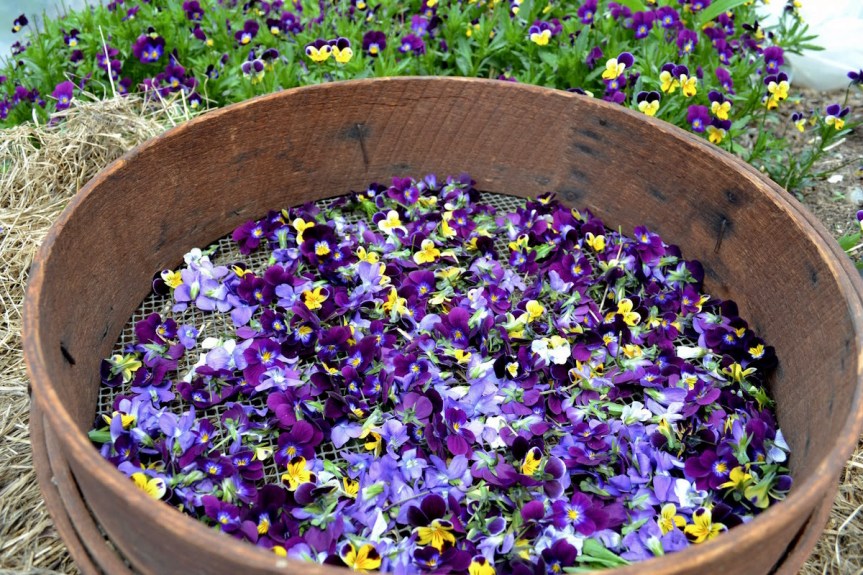
Violet has been on our minds this spring as we see her pretty little flowers blooming here in southeastern Utah. Violets are one of the earliest wild plants to appear in the season, and we are reminded of her beauty as well as her long history of culinary and herbal use that may have us deciding to seize spring for all that it is!

Violet, being rich in vitamin C, indeed has our attention for a supportive immune boost! 

We love to harvest the fresh leaves and flowers to incorporate into springtime salads, juices, and refreshing smoothies. Violet, of course, also makes a really lovely tea, vinegar, or syrup, not only for the vitamin C content but also for soothing respiratory symptoms. 
Violet has a cooling and moistening energy, and its demulcent and expectorant properties are soothing to a sore throat, dry cough, and other respiratory irritation.
The recipe for…

View original post 449 more words

Looking to forage mushrooms this year? Here’s a good resource to get started!

Greetings,

If your experiences were anything like mine, then you received very little education on the subject of mycology in school.

Even during university-level biology classes, I distinctly remember the blatant omission of anything mushroom-related.

As luck would have it, I took this as an indication that perhaps there were ulterior motives involved — a kind of educational negligence by design.  Feeling a bit snubbed, and to fill the void, I did what any mushroom-illiterate person might do.

I joined a mushroom club.  I bought a few field guides.  And I met some people who seemed to know what they were doing.

Over the years, I continued the educational process and have spent countless hours learning from professional mycologists, ecologists, mushroom enthusiasts, obscure books, scientific articles, outdated keys, and of course… the mushrooms themselves.  Through this process, I’ve developed a deep passion for the fungal kingdom that continuously fuels my work.

Perhaps because I feel that no school curriculum in the 21st century should withhold training on place-based skills, I’ve made it part of my work to increase the availability and accessibility of this information.

A recent manifestation of this work is an introductory video that I created on the topic of mushroom collection and identification.  In the following video, I cover information that will assist you in the process of safely, confidently, and successfully foraging wild mushrooms.

You can watch the brand new video here.


Have you ever seen anything that looks like this?  If you have apple and eastern red-cedar trees nearby, perhaps you also live within the vicinity of this incredibly bizarre fungus.  Check out this recent Instagram post to learn more!

I had the pleasure of being a guest on the Wizard’s Corner Podcast.  In this interview, we discuss wild food nutrition, slime molds, the value of place-based skills, the ins and outs of the Learn Your Land YouTube channel, and much more.  You can listen to the interview through any of the following channels:

Thanks for reading, and thanks for your continued support!

-Adam Haritan

Woad as natural antibiotics | Joybilee® Farm | DIY | Herbs | Gardening |

Crooked Bear Creek Organic Herbs's avatarCrooked Bear Creek Organic Herbs

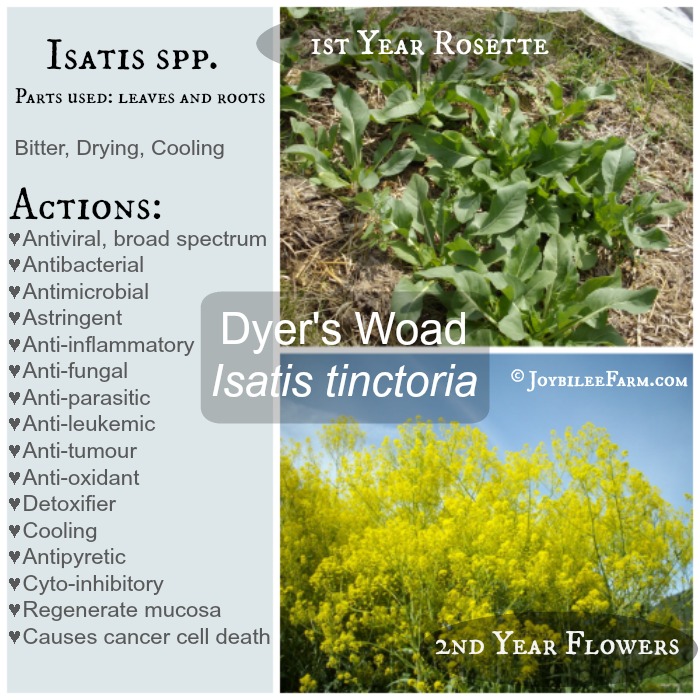
Isatis tinctoria for a broad-spectrum antibiotic

I have a guest post on the Herbal Academy of New England blog about using one of my favorite herbs, Dyer’s Woad, as a natural antiviral. It works so well as an antiviral because it is also a natural antibiotic and so it prevents secondary infections.  Woad and other Isatis spp have been used in Traditional Chinese Medicine for thousands of years for their unique ability to prevent viruses like influenza and measles from replicating in human cells.  Check out my post to find out more about this unique and generous plant.

A brief history of woad

Isatis tinctoria or dyer’s woad is an easy to grow biennial that originated in the Caucus area, near Turkey. It was valued for its rich blue pigment and archeological evidence traces its use as a natural dye back to the Neolithic period in France, the Bronze age…

View original post 1,114 more words

Bidens Can Help Fight Infections and Viruses: Get to Know It

Crooked Bear Creek Organic Herbs's avatarCrooked Bear Creek Organic Herbs

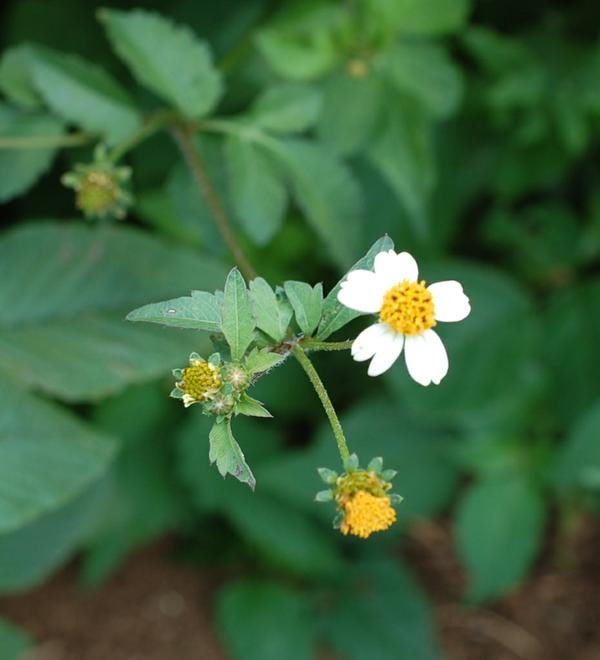
Bidens, a common weed of pastures and vacant lots, has antiviral and antibacterial superpowers.  Get to know it better.  You never know when you might need to call on it as your herbal ally.

Bidens, an overlooked weed that will help you in the fight against MRSA infections

If you spend any time walking through pastures or vacant lots in July and August, you may have met Bidens. And if you haven’t met it, your dog probably has. Bidens sticks like a needle into your clothing. If your dog walks through a patch of Bidens, you’ll be picking the needle-like seeds out of his coat for hours. Also called, “beggarticks”, “Spanish needles,” “demon spike grass,” and “needle grass,” 1000 Biden seeds weigh less than a gram. If you walk through a patch of Bidens in the fall, and you’ll probably have 1000 seeds in your socks. Hint, wear jeans not…

View original post 1,916 more words

The Flavours of Viriditas: My 30 Day Diary of Glorious Green Eating — Gather Victoria

O most honored Greening Force, You who roots in the Sun; You who lights up, in shining serenity, within a wheel that earthly excellence fails to comprehend. You are enfolded in the weaving of divine mysteries. You redden like the dawn and you burn: flame of the Sun. – Hildegard von Bingen, Causae et Curae…

via The Flavours of Viriditas: My 30 Day Diary of Glorious Green Eating — Gather Victoria

Ramps

The Herb Society of America's avatarThe Herb Society of America Blog

By Paris Wolfe

When Jeremy Umansky was at culinary school in 2006, a professor took him foraging in the Hudson Valley. They were looking for fiddlehead ferns, morel mushrooms, and ramps. Umansky –a James Beard award semi-finalist, and owner of Larder Deli in Cleveland – was converted. He has been harvesting that harbinger of spring, ramps, ever since. 

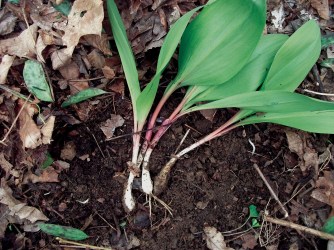
For those who haven’t yet heard, Foraged.Ramps 14the ramp – also called a wild leek — is a species of wild onion (Allium tricoccum) that is native to North America. The bulbs resemble a scallion, but the leaves are wide and flat. They cover Appalachian forest floors before trees fully leaf out. The flavor is a mix of garlic and onion. And, if you eat too many raw, you will sweat that aroma.
Ramps are high in vitamins A and C, and in lore, they are considered a blood cleanser and part of…
View original post 361 more words

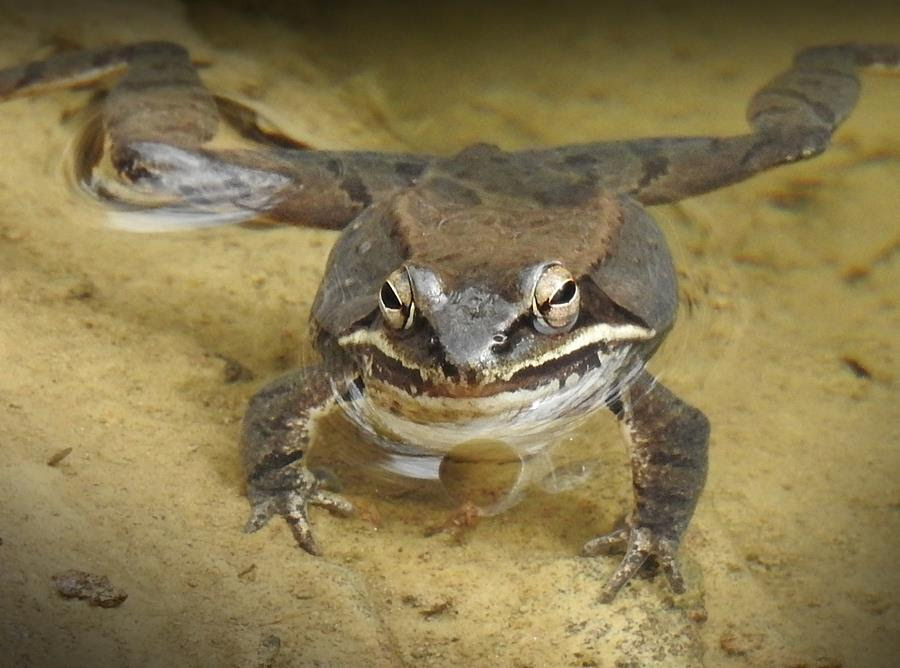
In Praise Of Wood Frogs

Greetings,

In my neck of the woods, signs of spring abound — from the blooming of Snow Trillium and Sharp-Lobed Hepatica, to the reappearance of the Eastern Phoebe and warmer days.

Among the indications that winter has predictably expired and tipped its hat to another growing season is the emergence of the wood frog.

The wood frog is one of nature’s most resilient and adaptable creatures, occupying a range that — at the species level — spans thousands of miles of varied habitats.  Perhaps most interesting of all is that this hardy frog has the amazing ability to freeze solid when temperatures plummet… and survive the experience!

The wood frog has been patronizing the local pools lately, allowing itself to be observed and filmed by anyone with any interest in these sorts of things.

As it turns out, I do have a deep interest in these sorts of things, and I recently visited a nearby floodplain to document and film the seasonal manners of this libidinous amphibian.

If you are interested in learning more about the wood frog — and also about vernal pools, cryoprotectants, and holistic approaches to conservation — check out the brand new video!


Have you ever seen something that looks like this?  Though it resembles a pinecone, this structure is not produced by any conifer tree.  Instead, this pyramidal growth is produced in response to an insect that feeds on a particular flowering shrub.  Check out this recent Instagram post to learn more!


Thanks for reading and watching… and as always, thank you for your support!

-Adam Haritan

Wild Spring Greens: A Superfood Recipe Round-up! — Gather Victoria

Today there is a huge demand for antiviral and immune-supportive herbs amid growing concern over COVID-19. Many are sold right out as herbalists scramble to get packages out. But don’t worry – I’ve got good news – the wild spring greens are here! Jam-packed with “nutraceuticals” known to have antiviral, antibiotic, anti-inflammatory, immune supportive and…

via Wild Spring Greens: A Superfood Recipe Round-up! — Gather Victoria

Food as Medicine: Black Elderberry (Sambucus nigra, Adoxaceae)

Crooked Bear Creek Organic Herbs's avatarCrooked Bear Creek Organic Herbs

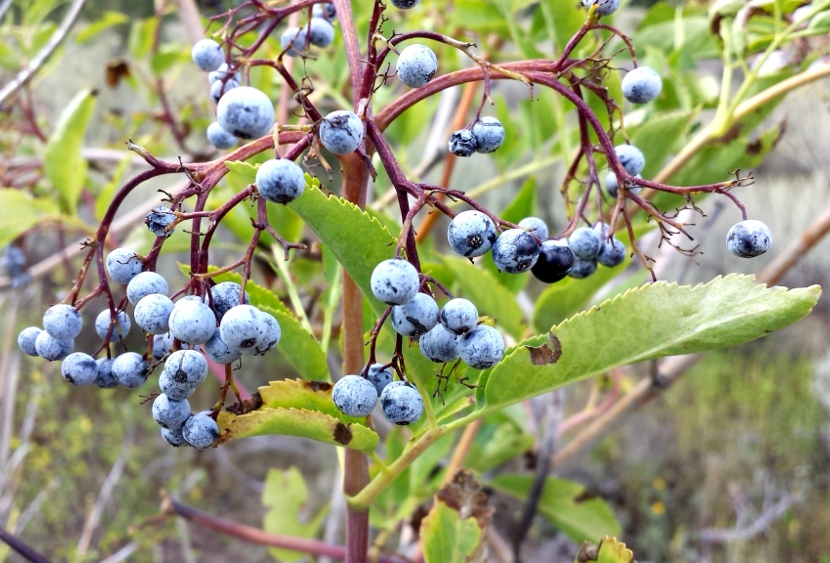
Plants commonly known as elder belong to the genus Sambucus and consist of 20-30 species of deciduous trees and shrubs in the Adoxaceae, or moschatel, family.1-3 Sambucus species are native to forested temperate and subtropical climates and grow to an average height of 32 feet (10 m).1,3 Elder shrubs have light brown or gray stippled bark and narrow, dark green pinnately compound leaves with five to nine toothed leaflets.2,4 In early summer, elder plants produce flat to roundish clusters of tiny, cream-white, saucer-shaped flowers. Depending on the species, the clusters of small fruits, botanically characterized as drupes, are blue-black, black, or red (and rarely, yellow or white).2,3 The only elder species with a history of culinary use are those that produce blue-black or black fruits. Elder species are highly adaptable and readily naturalize in an area, making them potentially invasive outside their native range.3 This…

View original post 3,417 more words

Health Benefits of Chaga Mushroom

Crooked Bear Creek Organic Herbs's avatarCrooked Bear Creek Organic Herbs

Chaga mushrooms contain a wide variety of vitamins, minerals, and nutrients.
The Chaga mushroom grows on birch trees throughout the northern hemisphere. It resembles a dark clump of dirt more than a mushroom but is distinguished from other growths by its orange tissue.

Doctors, alternative medicine advocates, and researchers are increasingly interested in the potential health benefits of the Chaga mushroom (Inonotus obliquus). Some studies on Chaga mushrooms have yielded promising results.

chaga

Nine potential benefits

In this article, we look at the potential health benefits of Chaga mushrooms and the research behind the claims.

1. Nutrient-dense superfood

Chaga mushrooms are rich in a wide variety of vitamins, minerals, and nutrients, including:

  • B-complex vitamins
  • vitamin D
  • potassium
  • rubidium
  • cesium
  • amino acids
  • fiber
  • copper
  • selenium
  • zinc
  • iron
  • manganese
  • magnesium
  • calcium

2. Preventing and fighting cancer

Some studies suggest that Chaga mushrooms may slow the growth of certain cancer cells.

Increasingly, researchers are taking…

View original post 2,189 more words