Druidry for the 21st Century

Dana's avatarThe Druid's Garden

This is a challenging age, doubly so for anyone who is connected spiritually with the living earth and who cares deeply about non-human life. The Fourth National Climate Assessment, released towards the end of 2018, presents a dire picture for the future. This isn’t the only recent report from governing bodies globally–report after report continues to paint a clear picture of what humanity is doing, and what we need to do to change.  And yet, it seems to be business as usual.
The cycles of nature The cycles of nature

When I talk to druids about their thoughts about this present age, there seems to be a few ways to think about it.

First, the glass half empty approach is feeling extremely demoralized, looking at climate change reports and long-term forecasts and seeing the continued inaction on behalf of world leaders. The glass half empty approach may also have feelings that nothing we…

View original post 2,622 more words
The Lessons of Nature at the Winter Solstice

Dana's avatarThe Druid's Garden

In the fall, I always feel like I’m fighting against the coming dark at the time of the winter solstice, and each year, I have to learn the lesson anew.  This year proved particularly challenging for a few reasons. After the time changes at Daylight Savings time, and the sun starts setting at 3:30pm.  It is down by 4:30 and completely dark by 5:15pm. As a homesteader, in preparation for spring planting and the winter to come, there always seems to be so much to do.  Bringing in the harveset, preparing the greenhouse, preparing and clearing garden beds, stacking wood, cleaning gutters, shoring up the hen house, and doing all of the necessary multitude of other preparations for the coming winter.  As the fall deepens, each day, the light continues to wane, and there is less light each day to work with. On many days when I go to work…

View original post 1,604 more words

Wildcrafted Yule Tree Ornaments – Painted Wood, Wreaths, Awens, and Pentacles

Dana's avatarThe Druid's Garden

As the Winter Solstice is coming up quickly and the tree just went up this past week, I’ve been busy in my art studio and out on the land looking for great things to add to the Yule tree.  As a druid who is deeply concerned about the amount of plastic and “throw away‘ quick purchase items, like cheap plastic ornaments, I didn’t want to buy any ornaments for the tree, but rather, to make them from wildcrafted materials. So today, I wanted to share two simple ways to make nice ornaments for a Yule tree from natural materials and simple tools.

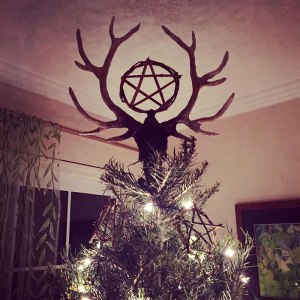
Handmade Stag and Pentacle Tree Topper with Handmade Ornaments Handmade Stag and Pentacle Tree Topper with Handmade Ornaments
Painted or Burned Wooden Round Ornaments

One simple method for creating ornaments is a painted or woodburned wood rounds. These are simple slices of wood that you can decorate in a variety of ways–painting them, burning…

View original post 1,836 more words

Sacred Tree Profile: Oak’s Medicine, Magic, Mythology, and Meanings

Dana's avatarThe Druid's Garden

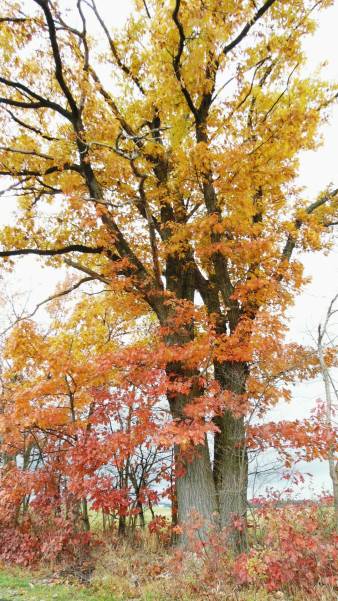
A glorious oak tree in fall colors! A glorious oak tree in fall colors!
There is nothing quite as majestic as an oak, which is likely why ancient druids met in groves of them to perform their ceremonies.   As I write this, I look at my glorious black oaks, white oaks, and burr oaks in the surrounding landscape and their incredible mantle of gold, tan, crimson and oranges.  Where I live, the oaks keep the green on their leaves through most of the fall season, and begin their transition into color just before Samhain. The oaks and beeches, here, are the very last to lose their leaves–if they lose them at all.  Many of the oaks, especially the younger ones, keep their leaves all winter, dry and crackling, and only drop them before they bud out again in the spring.   Their behavior in the fall and winter months is certainly a testament to their energy and…

View original post 2,533 more words

What can Druidry offer in dark times?

Dana's avatarThe Druid's Garden

Things seem broken right now. These last two weeks have been a very hard week for many people. The national conversation here in the USA grows more difficult by the day, and it seems nearly every nation is facing many kinds of serious issues. These challenges are happening concurrently at many levels—internationally, but also in communities we care about, in our families, in our homes. Things are tough. They seem tougher for many of us today than they were yesterday. Many of us fear that they will likely be even tougher tomorrow. This is the reality of industrial decline, the reality of the climate crisis before us.

The questions that I’ve had for myself, and my fellow druids is a simple one: what can druidry offer us in these dark times?

I’ve been thinking about the role of druidry in all of this, this question a lot, not only over…

View original post 2,513 more words

Plant Spirit Communication Part IV: Medicine for the Body and the Soul

Dana's avatarThe Druid's Garden

In the last few weeks, we’ve considered various ways in which we might communicate with plant spirits, work with them, and engage in spirit journeys with them. In this post, I am beginning to make the transition to talk about plant medicine and herbalism for a few weeks–both medicine of the body and medicine of the soul. I think that herbal medicine is something incredibly powerful to add to any earth-based spiritual based practice, both to keep you in good health and to create inter-dependency between you and the living earth. In order to do that, I wanted to talk today about plant spirits and the connection between medicine for the body and medicine for the soul. To do this, we’ll delve into animism and an animistic worldview as well as consider deepening plant relationships.

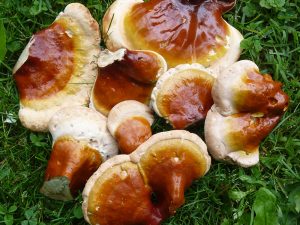
Amazing reishi! Amazing reishi!

Medicine of the Body

Plants have physical bodies and various…

View original post 2,377 more words

Plant Spirit Communication, Part I: Your Native Langauge

Dana's avatarThe Druid's Garden

When I was  new to my first job, a colleague had given two of us both who had been recently hired an elephant ear plant seedling for our offices. Our offices were next to each other, both with the same window. Each plant was planted in an identical pot and in identical soil. My elephant ear plant grew quite large and beautiful, while my colleague’s plant kept sending up small shoots and dying back. Finally, she said to me, “Why is your plant doing so much better than mine?” And I responded as a druid, totally without thinking, “I just talk to the plant and it tells me what it needs.” She rolled her eyes at me, let out an exasperated sigh, and walked away. She was never a very pleasant person, but she was particularly nasty to me for some time after that. Perhaps she thought I was mocking…

View original post 1,837 more words

Building Deep Plant Relationships at Lughnassadh

Dana's avatarThe Druid's Garden

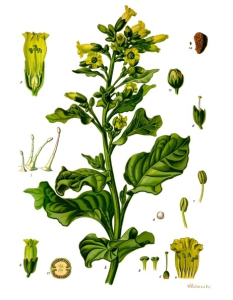
Nicotiana Rustica Botanical Drawing Nicotiana Rustica Botanical Drawing

Last weekend, some druid friends came over for a retreat with a focus on land healing. As part of the ritual we collaboratively developed, we wanted to make an offering to the spirits of the land. I went to my sacred tobacco patch and carefully gathered leaves drying at the bottoms of the plant and flowers for use in this offering, humming a song that the tobacco had taught me and making sure that none of the leaves hit the ground in the process. The ritual went beautifully well and the offering was well received by the spirits.  After the weekend, it struck me how long my relationship with these particular tobacco plants was–more than a decade at this point from seed to leaf to flower to seed.  And how I had something to share about cultivating this relationship over time.

So I thought I’d take…

View original post 2,297 more words

A Druid’s Guide to Connecting with Nature, Part II: Nature Wisdom

Dana's avatarThe Druid's Garden

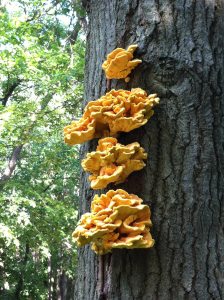
One of my favorite mushrooms- the Chicken of the Woods One of my favorite mushrooms- the Chicken of the Woods

As any mushroom hunter knows, mushrooms are tricksy little buggers.  What one looks like in one setting may not necessarily be what one looks like in another, depending on soil conditions, moisture, sun, size of the mushroom, insect damage, and/or regional variation. Mushroom species can vary a lot, even from one small region to another, and that variation can spell trouble for someone who hasn’t yet gained the wisdom to understand such variation.  Mushroom books offer perhaps 1-2 photos of mushrooms, and a good book will also offer a mushroom hunter the “keys” (features that distinguish one mushroom from another, like attached gills, color, etc).  However, only lived and true experience can help you not make a dangerous mistake when it comes to the mycelium kingdom.  The difference here, I think, epitomizes two key things: the different aspects of nature…

View original post 1,978 more words

A Druid’s Guide to Connecting with Nature, Part I: A Framework

A Druid’s guide to connecting with Nature – Part I:  A Framework

Dana's avatarThe Druid's Garden

A lot of people find druidry because they want to “connect” with nature.  They want to attune to nature, feel part of it, gain knowledge and wisdom about it. But what does “connecting” to nature look like in practice?  Going out in the woods and feeling good?  Knowing the name of trees?  Walking with sacred intent in a natural place?  Spending time in nature?  All above the above? And so, over the next few posts, I want to spend more time with the concept of “connecting to nature” and share some strategies for what people can do to connect with nature in a multitude of ways.

As I’ve written about earlier, part of what I see as the core of druidry as a spiritual tradition is the work of “connection.” In that post, I talked about connecting to nature, connecting to the spirit, and connecting to the creative practices as…

View original post 1,761 more words