Wild Horses Misinformation and Bad Science: Corrupt Government Agency and Non-Profits ~ Photojournalist ~ Journalist

By John Cox

john-cliffs-blog-post

“The fact that we live at the bottom of a deep gravity well, on the surface of a gas covered planet going around a nuclear fireball 90 million miles away and think this to be normal is obviously some indication of how skewed our perspective tends to be.” ― Douglas Adams, The Salmon of Doubt: Hitchhiking the Galaxy One Last Time

Why do we take issue at the lack of good science data with what is called today, Pesticide PZP? Because subjectivity and science remain two separate situations. The dynamics of each very different. Many of us find Pesticide PZP nothing more than subjective rhetoric – the results on our Public Lands of this endeavor remains quite negative, with no good potential results foreseen in the future. Wild Horses are going extinct! False science, misinformation, ignoring of Ecological demands, and corruption the reasons why . . .

The wild horses on America’s Public Lands is falling victim to what many of us simply refer to as bad, and incompetent white-paper gibberish. As history shows us time and again, government agencies seem to attract this type of research, calls it science, and as history shows us, time after time, until we see the outstanding negative results, in this case a species going extinct, do we finally realize the mistake.

But only over time is the burden of responsibility taken to task, the fingers point to those who cannot defend themselves, and these elements of destruction, these non-profits and BLM who promote this Pesticide PZP scam, simply move-on to other schemes and scams to obtain taxpayer money differently, is all . . .

Well, as taxpayers and American’s it is time for all of us to Stand Up and say no to any further Pesticide PZP use —

Spotted Owls in the Cascades

For explanation reasons, I am using the Spotted Owl within the Nooksack River watershed, as well as the Skagit River Valley, both in the Cascade Mountains. It shows us, overtime, the dynamic also involved within the wild horses, even though separate ecological zones, separate species for sure, yet similar in population encounter and census.

The biology, when all the variables considered, show situations that remain overlooked, or even ignored, by Pesticide PZP research. Many define, categorically, Pesticide PZP as questionable subjective reasoning of combined-information only, merely passed-off as science –

“If we knew what it was we were doing, it would not be called research, would it?” ― Albert Einstein

Many of us accept this fact of facts, as there simply exists too many variables left unexplored from the Pesticide PZP data gathering, to be any type of acceptable science what so ever. Way too many significant data situations ignored or even not thought about what so ever, which would show beyond a doubt Pesticide PZP, a questionable situation at best, and non-useful. The reasoning why significant variables left unexplored? Well, let’s take a look at some of the more obvious, and viability of our wildlife in general.

A census of the Spotted Owl may show twenty-five owls exist, but perhaps only seven are of a reproductive age, and only five sexually active. The outcome of this, within a good biology context, would likely be five-owls, not twenty-five. To assimilate across the board a 20% to 38% increase, as they do with wild horses, is simply bad management, untruthful, and no good-science or biology would back up such claims what so ever – as variables do exist on this planet, always.

When we refuse to consider significant variables, that do exist and apparent should not be ignored, then we have to question the supposed science involved. On the same scale of research, if we ignore the habitats, or Ecological Zones that exist, deduction through subjectivity only, and as if Pesticide PZP unharmful within any circumstance – but never explored, through due diligence and good data gathering, we never find out if harmful or not in Ecological Zones of any type. . . Used on something like Wild Horses, we become very concerned at this monumental error in judgement, that certainly lacks scientific responsibility, and one can also attest, irresponsible within an ethical or humane context as well . . . – John Cox, The Cascades

Source: Wild Horses Misinformation and Bad Science: Corrupt Government Agency and Non-Profits
BLM Transfer Provision in Omnibus Outrages Advocates | Straight from the Horse’s Heart

by Scott Streater, as published on E&E News

“The provision in the latest omnibus bill was requested last year as part of President Obama’s fiscal 2017 budget proposal (Greenwire, Feb. 10, 2016).”

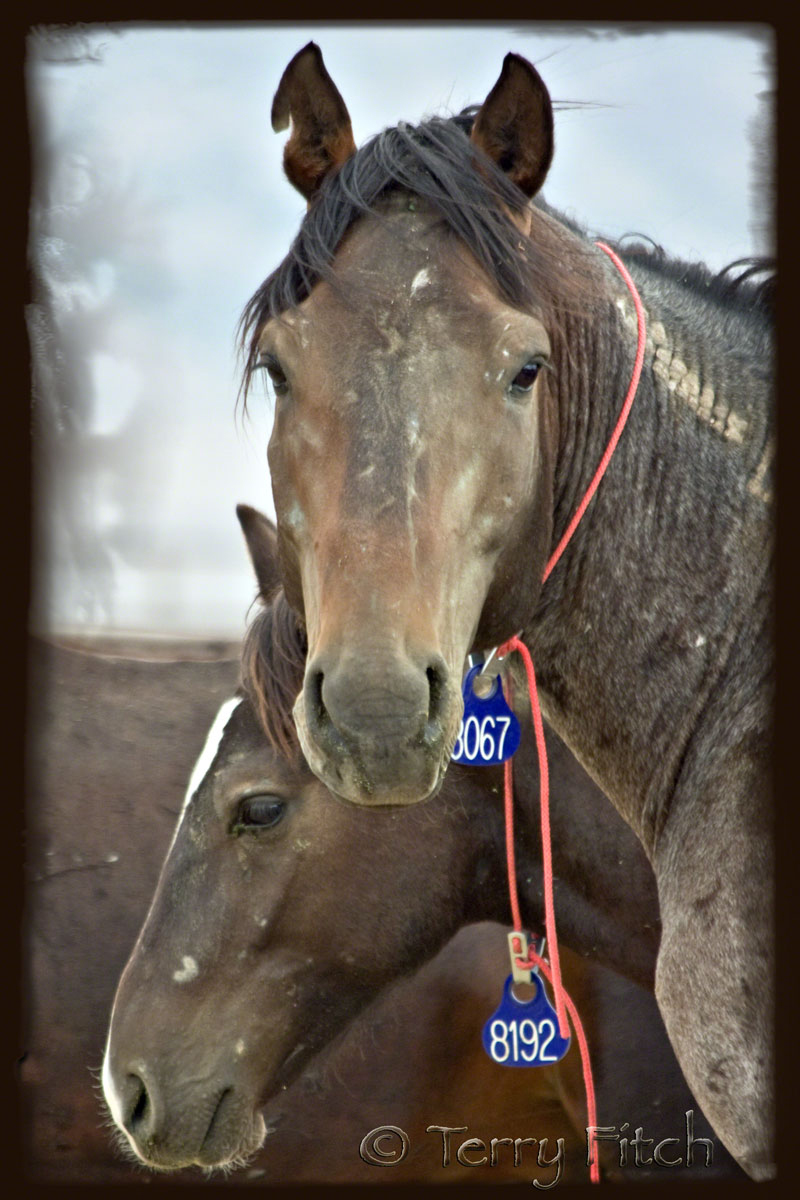
photo by Terry Fitch of Wild Horse Freedom Federation

The omnibus spending package the Senate approved today contains a provision that would make it easier for the Bureau of Land Management to adopt out or transfer wild horses and burros, reducing the growing number of animals under the agency’s care.

But the provision has angered animal rights advocates, who say it contains too many loopholes to protect thousands of wild horses and burros from being slaughtered.

At issue is a section in the omnibus package to fund the federal government through September — originally requested by the Obama administration last year — that would allow the Interior secretary to “transfer excess wild horses or burros” BLM has removed from federal rangelands “to other Federal, State, and local government agencies for use as work animals.”

The provision would authorize the secretary to “make any such transfer immediately upon request” of a government agency, such as the U.S. Border Patrol. The provision includes language stating that the animals cannot be killed or sold or transferred to any entity that would slaughter them “for processing into commercial products.”

But it allows transferred horses and burros to be euthanized “upon the recommendation of a licensed veterinarian, in cases of severe injury, illness, or advanced age.”

It’s that language that has wild horse advocates outraged.

Ginger Kathrens, executive director of the Colorado-based Cloud Foundation, said BLM “has a history of misinforming the public” about issues related to wild horses.

“Couple this with the vague ‘illness’ and ‘advanced age’ language” in the omnibus provision, “and the potential exists for the killing of thousands of horses,” said Kathrens, a member of the BLM National Wild Horse and Burro Advisory Board…(CONTINUED)

https://www.eenews.net/eenewspm/2017/05/04/stories/1060054082

Source: BLM Transfer Provision in Omnibus Outrages Advocates | Straight from the Horse’s Heart

BLM offers whistle stop tour of wild horses imprisoned at Indian Lakes Rd. facility in Fallon, NV | Straight from the Horse’s Heart

Once wild horses at Indian Lakes Rd. facility in Fallon, NV (photo:  Debbie Coffey)

Get ready to jump on the wagon for a BLM PR blitz…

Edited Press Release       Source:  BLM

RENO, Nev. —The Bureau of Land Management (BLM) will host two free public tours of the Indian Lakes Off-Range Wild Horse and Burro Corral in Fallon, Nevada, on Friday, May 12. Tour attendees will be taken as a group by wagon around the facility to learn about it, the animals, and BLM’s Wild Horse and Burro Program.

About a 90-minute drive east of Reno, the corral is located at 5676 Indian Lakes Road, Fallon, and is privately owned and operated. The public tours will begin at 10 a.m. and 1 p.m. and each will last about one hour and accommodate up to 20 people. Attendees should wear comfortable shoes and clothes; hats and sunscreen are recommended, and photography is welcome. On-site portable toilets will be available.

Horses at the Indian Lakes facility are made available to the public for adoption or purchase throughout the year at off-site adoption events and through BLM’s Internet Adoption program. For more information on adoption opportunities, visit https://on.doi.gov/2iByqXD.

To register for the tour or to get driving directions to the facility, please contact the BLM at (775) 475-2222.

Source: BLM offers whistle stop tour of wild horses imprisoned at Indian Lakes Rd. facility in Fallon, NV | Straight from the Horse’s Heart

BLM’s Wild Horse & Burro Program in a Death Spiral | Straight from the Horse’s Heart

Open Letter by Author Terry Farley

“BLM’s wild horse and burro math is statistically bizarre…”

As a journalist, I first interviewed BLM Wild Horse and Burro Program staffers in 1976, shortly after I moved to Nevada. Since then, I’ve followed the program’s death spiral.

Those who say wild horses and burros ruin the range claim there are too many of them, and yet there’s little agreement about how many wild equines remain on America’s public lands.

BLM’s wild horse and burro math is statistically bizarre. Even the National Academy of Sciences, charged by BLM to analyze the program (2013) concluded: “The Wild Horse and Burro Program has not used scientifically rigorous methods to estimate the population sizes of horses and burros …”

NAS warned “continuation of business-as-usual practices will be expensive and unproductive for BLM and the public it serves.” Worse, NAS pointed out that BLM’s lack of science has actually backfired on its stated goal of protecting the range.

BLM’s reaction? Keep paying independent contractors to chase, trap and corral the West’s remaining wild horses and offer $10 million to anyone who found a new means of mustang birth control.

BLM asked for a new method because PZP “didn’t work,” ignoring recent science and BLM personnel who admitted that — counter to instructions – contraceptives are not always kept frozen or even cold in the field.

Band dynamics: During round-ups, family bands are shattered, routinely divided into stallions, mares and contractor-determined weanlings. Horses are prey animals. They know safety is with the band and the resulting cacophony and blood of these separations is haunting. Fewer than 2 percent are ever reunited.

Injury: Compare injection site abscess to BLM documentation of a single round-up in which 113 mustangs died. Death from shattered pelvises, broken necks, skulls and spine were sometime attributed to natural causes or pre-existing conditions. Those diagnoses would strain my credulity even if I hadn’t been there.

If you still oppose contraception, please consider this: Proponents of selling wild horses without limitation have made in-roads at BLM and those who’d destroy mustang captives as they stand in government pens have visited the White House.

The extermination of a Western icon is near, and your choice can hasten or slow its approach.

PZP is reversible. Death is final.

Source: BLM’s Wild Horse & Burro Program in a Death Spiral | Straight from the Horse’s Heart

Euthanasia drug found in dog food « Jon Rappoport’s Blog

By Jon Rappoport

From WebMD (4/28/17): “Party Animal is recalling dog food that tested positive for a pet euthanasia drug…The voluntary recall affects the company’s Cocolicious dog food brand…The affected products include 13-ounce cans of Cocolicious Beef & Turkey dog food (Lot #0136E15204 04, best by July 2019) and 13-ounce cans of Cocolicious Chicken & Beef dog food (Lot #0134E15 237 13, best by August 2019)… Party Animal is working with distributors and retailers to find out if any other beef-flavored foods are still being sold, and if so, to recall them immediately, the company said.”

KDVR (FOX) reports: “Party Animal is recalling two lots of its Cocolicious dog food because it might contain pentobarbital.”

CNN: “Party Animals, a California-based pet food maker, is recalling two lots from its line of Cocolicious dog foods after some cans in Texas tested positive for pentobarbital — a chemical that’s used to euthanize animals. In a statement on its website, Party Animal said a customer in Texas had given Cocolicious samples to a lab and the dog food tested positive for pentobarbital. Party Animal is asking for those test results, and ‘out of an abundance of caution’ is recalling the two lots of dog food sold nationwide. The company is also sending cans of its dog foods to an independent lab for testing.”

How would this drug, used to euthanize animals, find its way into pet food? The suggestion is: the pet food contains meat from previously euthanized animals (not cows).

Concerning a previous recall by another company, Evanger’s, the Detroit Free Press stated: “In researching the supply chain, Evanger’s learned that ‘pentobarbital is very highly controlled, and that, if an animal is euthanized, it is done so by a veterinarian. Once this process has been done, there is absolutely no regulation that requires the certified vet to place any kind of marker on the animal indicating that it has been euthanized and guaranteeing that product from euthanized animals cannot enter the food chain’.”

If this is true, we would be talking about euthanized dogs and cats somehow entering the pet-food manufacturing process—and pet dogs would end up eating dog and cat meat.

Veterinarians are selling euthanized animals to middle men, who in turn supply meat to pet-food manufacturers?

There is another possibility. The American Society for the Prevention of Cruelty to Animals (ASPCA) states, on its website: “Approximately 6.5 million companion animals enter U.S. animal shelters nationwide every year… Each year, approximately 1.5 million shelter animals are euthanized (670,000 dogs and 860,000 cats).” Are shelters selling the euthanized animals? Do a few (or more than a few) animals end up in pet food?

Knoji.com states: “Cremation allows for the shelter to burn the bodies of pets. However, not all animal shelters can afford this so many send the bagged bodies of animals to a special part of the city landfill (garbage dump). The third option is not as common as it use[d] to be, and generally not done in the charity run shelters, but more common in city run ‘pounds’ – this is when the bodies are sold to research labs, dissection supply companies, or rendering facilities where they may actually be rendered down and put into pet food.”

“It might surprise some dog owners to know that dog meat has been used in dog food. This practice was relatively common until the late 1990’s. Even today there are no laws preventing man’s best friend from ending up in dog food.”

“Please note the below information on dead dogs being used in dog food is true to the United States but may also occur in Canada and possibly other countries.”

“At some time or another pet food companies realized there was a cheap source of meat available… Dog Meat, and it could be purchased cheaply from animal shelters and the dog pound. These were places where dogs were euthanized weekly and there was always a need to dispose of the bodies. Nobody said anything and there were no laws preventing such from happening.”

“However what started to tip the scales was that the veterinarians who performed the euthanasias at the animal shelters started noticing it was taking more and more drugs to put these animals to sleep. They realized that somehow pets in animal shelters were building up an immunity to the medications used to end their lives. Typically veterinarians are called to shelters every week to euthanize between 10 and 200 animals (or more in larger centers) so this was where they saw the problems develop quite easily.”

“As such several investigations were launched to see how pets were building up immunities to the drugs. The FDA (Food and Drug Administration) launched an investigation. They found that sodium pentobarbital (the drug often used to euthanize pets) passed through the rendering process and ended up in pet food. They admitted finding the drug in some pet foods and stated ‘several retail feeds were confirmed for the presence of phentobarbital which could only have come from euthanized animals.’ Most of these investigations were exposed by television news groups such as Seattle’s King 5, and KMOV in St. Louis, Missouri.”

“What they exposed was something that many people already knew – dead dogs were being used to make dog food. Many animal shelters are government run. These poorly funded shelters found a way of generating extra income and disposing of the animal bodies all at once—Sell them cheaply to a [pet food] rendering plant. You will note your local SPCA probably does not do this.”

This account suggests that the FDA already knows dog meat in dog food is an ongoing problem, and the FDA also knows that euthanized dogs, whose bodies contain the euthanasia drug, are used for dog food. This is not a new discovery or a puzzling problem.

If the FDA is scratching its collective head and trying to solve a mystery, that would be a pose.

It would be like saying, on a human level, “Well, we know several companies have been polluting the water and soil of a town for years, and the chemicals are exceedingly toxic and dangerous, but we’re not sure where the cancer clusters are coming from. Much more investigation is needed.”

It appears we’re looking at a situation where all the parties—government animal shelters, veterinarians, pet food rendering plants, pet food companies, and the FDA—know exactly what’s going on…and say nothing, or pretend surprise when a new case of dogs eating drug-poisoned dog meat shows up.

The FDA is famous for ignoring their own responsibility, when a medical drug they’ve approved, as safe and effective, starts killing people.

Apparently, this same know-nothing attitude applies to pets and the euthanasia drug they’re ingesting.

I wonder how many humans, living on the extreme margins, eating pet food, have succumbed…

Source: Euthanasia drug found in dog food « Jon Rappoport’s Blog

SSRI antidepressants increase risk of intracranial hemorrhage « Jon Rappoport’s Blog

From healthline.com: “Intracranial hemorrhage (ICH) refers to acute bleeding inside your skull or brain. It’s a life-threatening emergency. You should go to the emergency room right away or call 911 if you think you or someone you know is experiencing ICH.”

By Jon Rappoport

The public has learned about the increased risk of suicide and violent behavior (including murder) stemming from the use of SSRI antidepressants. Now there is more:

Psychiatric News reports (4/7/17): “A study published in February in JAMA Neurology has found that patients taking antidepressants that are strong inhibitors of serotonin reuptake (SSRIs) may be at an increased risk for intracranial hemorrhage, particularly during the first month of use…”

“The results showed that compared with patients taking [the older] tricyclic antidepressants, patients being treated with SSRIs had a 17 percent increased risk of experiencing an intracranial hemorrhage. The risk was highest during the first 30 days the patients were taking the medications.”

SSRIs include: Celexa; Prozac; Paxil; Zoloft; Lexapro; Luvox.

Here are quotes from other Psychiatric News articles about SSRI use and bleeding:

“Physicians prescribing selective serotonin-reuptake inhibitors (SSRIs) should make patients aware of the possibility of gastrointestinal bleeding, especially if they have pre-existing risk factors or are taking other drugs that increase risk, said a University of Pennsylvania psychiatrist.”

From a January 2014 study in the American Journal of Psychiatry—“Short-term SSRI use—even as little as 7 days—elevated the risk of upper gastrointestinal bleeding, especially in male patients. Just as with NSAIDs and aspirin, physicians should carefully monitor for this side effect.”

Note: Suddenly withdrawing from these drugs can be very dangerous. Psychiatrist Peter Breggin publishes this warning: “Most psychiatric drugs can cause withdrawal reactions, sometimes including life-threatening emotional and physical withdrawal problems. In short, it is not only dangerous to start taking psychiatric drugs, it can also be dangerous to stop them. Withdrawal from psychiatric drugs should be done carefully under experienced clinical supervision. Methods for safely withdrawing from psychiatric drugs are discussed in Dr. Breggin’s new book, Psychiatric Drug Withdrawal: A Guide for Prescribers, Therapists, Patients and Their Families.”

rug Withdrawal: A Guide for Prescribers, Therapists, Patients and Their Families.”

Source: SSRI antidepressants increase risk of intracranial hemorrhage « Jon Rappoport’s Blog

From the Land Down Under: “China Wants Our Donkeys Dead or Alive!” | Straight from the Horse’s Heart

OpEd by Andrea Jenkins – Donkeys of Australia

Over the past few months I have read many articles about donkeys. There was one article I read a couple of weeks ago though that really hit a nerve.

The article included a stunning picture of a donkey, gazing out from his paddock. The barb wire that cut across in front of him indicated that he stood just behind a fence. It led me to imagine a stranger stopping road side with camera in hand, readying the exposure for the autumn sunlight and the yellow daisies. He waits, aware that the donkey has his ears pricked and stands attentive to this new energy invading his home. Curious, this gentle, wise creature meanders over to say hello. The stranger shoots and then is gone, taking a moment in time with him to use as he wishes.

I don’t know this donkey personally. Perhaps he is your donkey? Or someone you know? I imagine other photos he stands in, cuddled by the grandkids, lazing in the sun, a beloved family member that sits in frames on the mantelpiece for the world to see.

I’d love to own this donkey, yet I’m happy I don’t. I don’t think I could bare it. The stranger has not taken this particular photo to show how cherished and adored this donkey is. Mortified, I read the caption: good enough to export.

Yes, sadly, this donkey has become the latest face for donkey export to China. He is pitted next to the words of Barnaby Joyce as a creature with a price tag, an economic commodity, an edible product worthy of export. The nerve it struck was raw. It rocked me to my core. How can we be asked to look at this magnificent creature and see it as a dead product being shovelled into the mouths of those that search for a miracle elixir for eternal youth and vitality?

I guess I shouldn’t have been surprised. Like I said, I’ve read many articles about donkeys over the past few months. In fact, I’ve read, watched, spoken on the phone and data analysed the horrors the ‘insatiable’ appetite for Ejiao brings crashing to our shores.

It’s been extremely challenging for me to witness the creature I love more than anything get decimated in such a brutal way, but I feel I must walk with them through this struggle as they have walked with us through constant struggles throughout time. I must stand with them now and help their voices be heard. It is with their characteristic traits of love, compassion and humility that I proceed to further my education and, hopefully, the education of others, with regard to the issues facing Australian donkeys.

I am sure many of you have read the horrors that are linked with the donkey skin trade. I’m sure you have read that what is, essentially, donkey poaching, has become a regular occurrence in some parts of Africa. I’m sure you have read about the exorbitant prices donkeys are now selling for and the fact that those living in rural villages can no longer afford to replace their donkeys, leaving them without a means to collect their water or send their children to school. I’m sure you’ve heard of the donkey slaughter houses, the string of animal welfare concerns and the shocking statistics that draw many to believe our beloved donkeys are vanishing from this world. I am not sure, however, that you have been able to find much information on the current Australian situation and what it means for Australian donkeys.

So here I am, writing this article for you. It is my aim in writing that I am able to summarise what I have learned, to date, on Ejiao and how this skin trade is expected to affect our Australian donkeys . I am by no means claiming to be an expert on the matter. I am simply one girl who uses Google and the telephone and has been willing to dive into the hay stack, so to speak, and try and find some answers. This brings me to the second aim in writing this article. It is also a desperate cry for help. It is my wish that we may come up with a structure for research and action together as we venture forward with, and for, our beloved donkeys. What I write now details the journey Ejiao has taken me on so far.

When I first heard whispers that China wanted our donkeys, I wrapped myself in the safety net I, and many others, naively believed we had. It seemed that we did not have the numbers of donkeys required to make the idea of donkey export viable. That teamed with the vast and unforgiving landmass the donkeys inhabited seemed to make the cost too much for a return that was far too small. It still seemed that culling was the preferred method of eradication.

Yet, as time passed, donkey populations in China—and globally—started to dwindle, demand for Ejiao skyrocketed, pressure on global markets to supply the increase in demand grew exponentially and the viability of exporting donkeys to China suddenly changed as the price tag kept rising. Pressured with ongoing enquiries the Northern Territory Department of Primary Industry and Resources (NTDPIR) compiled a report into the potential of donkey farming in the Northern Territory (September 2016).

Again, even though the report ultimately found that donkey farming was viable, either as a stand- alone venture or complimentary to the cattle industry, I thought we had a safety net. The safety net seemed to be that there was no Tier 2 processing facility and no operational export protocols to China. Reading that the capital outlay required for such a facility would be somewhere between the $50-$100 million mark and knowing there were no operational protocols for export to China made it sound, again, that the donkeys were to stay on Australian shores.

Yet, as I researched further and talked to more people on the phone I began to understand the saying ‘where there’s a will there’s a way’ really does apply to the situation here. Everywhere I turned looking for the next piece of the puzzle I got offered a piece that didn’t fit. I found that when I stopped allowing myself to get distracted by the technical jargon of protocols I, instead, found a big picture with most of the puzzle already in place. Like I say, I am only one girl and I am fully aware that I have more research to go, yet this is how I have come to see the big picture so far.

China wants our donkeys. The Australian agribusiness sector wants to expand export opportunities and make as much money as possible. Station owners want the feral donkeys gone. Farmers want ways to diversify their stock to get them through tough times. Multi-species abattoirs are being built with heavy Chinese investment. Chinese investment in Australian agribusiness is seen as desirable. Trial kills of donkeys are currently happening. More wild donkeys are already being rounded up. The Coalition Government has recently signed a Joint Statement with China to hugely expand market access for Australia’s red meat and live animal export industries to China. Barnaby Joyce is publicly announcing that Australia will be providing edible donkey skins to China and pushing it as a big, new market. Tariffs on hides and skins exported to China are being eliminated between 1st January 2017 and 1st of January 2022. The price of wild donkeys being rounded up and sold has already drastically increased.

So what does this all mean? Yes, China will be getting our donkeys. There may be a few little things to sort out in terms of protocols but it is happening. No one is standing in the way and stopping things from progressing forward. Most of the information I have read indicates that wild donkeys will be rounded up and breed as livestock for the Ejiao trade. Edible donkey skins will be exported to China. Some of the donkey meat will be sold within Australia as pet meat. Some of the meat will be sold internationally for human consumption. It also seems that, as the export market to China opens up under these new trade agreements, donkeys could potentially be live exported to China as well.

Even as I write that last sentence, my heart breaks a new. Not only will I be living in a country that potentially has no wild donkeys left. Not only will I be living in a country with fields of donkeys tagged and fattened ready for the slaughterhouse truck. I will also be living in a country that makes the conscious choice to send sensitive, emotional, smart, alive creatures on a ship, destined for a place of unfathomable animal cruelty. Do you think you can live in the country I describe? Unfortunately, this is what we are facing.

Of course there are obvious animal welfare concerns as are always evident with creatures subjected to the tortures of live export, yet there are more subtle and insidious concerns at play too. One thing I am concerned about is that wild donkeys are to be rounded up and sold as breeding stock. Will the breeding jennies have any much needed maintenance and care? Will their hooves be trimmed? Will their health be attended to? An ongoing animal welfare issue with the Ejiao trade is the lack of donkey healthcare as it is only the skin that is deemed valuable making money spent on overall health a waste of finances.

Another concern is the distances donkeys will be transported to abattoirs. The multispecies abattoir being built in Charleville will apparently be transporting donkeys from the Northern Territory and perhaps even South Australia. Will these donkeys be given the required rests, food and water? How tightly will they be packed in? If rounded up from the wild and trucked, how are foals and pregnant jennies going to be cared for? How will they be treated as they are rounded up, trucked and, ultimately, slaughtered? As ‘pests’ donkeys are not given the same protective rights as other animals in Australia. I will admit that I don’t know how far their protective rights are striped due to their classification as pests yet it is important to ensure that their welfare is adhered to at all stages of transport and processing.

Yet another concern I have is how will this big, new market be regulated? Can anyone start farming donkeys? How is the government going to monitor who is involved in this trade and how this trade is carried out on a day-to-day basis? As the avenues for export open up, there needs to be regulation on this trade, right from the small, hobby farms to the largest stations in the country, along with any wild stock that are mustered and sent straight to slaughter. Many of the people who are going to be involved are experienced in the needs of cattle and are not educated when it comes to donkeys. It is my desire that, for those joining this industry, they are required to gain further donkey specific education.

Now I write about my biggest concern: that our wild donkeys will become extinct and we will either be left with donkeys stuck in a horrific cycle of breeding and slaughter or with no donkeys left at all. This concern comes from a couple of factors. One factor is that no one knows how many donkeys we have to start with. There has been no accurate headcount of donkeys in Australia ever. Yet those, like Barnaby Joyce, who are pushing donkey skins as the next big industry, claim on a very public platform that Australia has millions of wild donkeys. This is simply not the case. The NTDPIR has a far more realistic estimate of the number of wild donkeys, stating that they believe there are roughly 50 thousand donkeys in the Northern Territory—although this figure is thought to be about ten years old and is not considered reliable. If we don’t know how many donkeys we have in the first place, how can we know if this trade, and the way it is to be carried out, will be sustainable?

Another factor is that, with the current Ejiao demand, upwards of 4 million donkeys are already believed to be slaughtered each year and the global donkey population literally cannot keep up. This is being reported with the dwindling of numbers in different parts of the world. It is believed donkey populations in China have halved, Mexican donkeys are considered endangered and some are predicting that, if things don’t change, the African donkey could be extinct in as little as five years If indeed our donkey population is somewhere between 50,000 and 100,000 our donkeys could be wiped out be Ejiao demand in a matter of weeks. Even if farming does occur in the near future, stock numbers will need to be built up and stabilised. This will take time as donkeys have a long gestation period and do not breed well in stressful situations. If export opens up as we expect it could under these new trade agreements and wild donkeys are sent straight to multi-species abattoirs for processing it might not be long before they are all gone.

In conclusion, I would like to ask that we unite in action going forward. I know it might seem too big an issue to tackle or too graphic an issue to engage with. This does not have to be the case. No action towards this cause will be wasted. Everything counts. I know signing petitions may seem pointless but they are not. One petition to help Australian donkeys, that has over 5,000 signatures, has been mentioned in a news articles that details Barnaby Joyce and his new donkey skin trade desires. It is important that we continue to make our voices heard.

Another suggestion for action is to research a small part of the situation here and report it back to the various donkey societies, or to the facebook page I have created. An area for research might be to keep an eye on how many donkeys are being rounded up, record prices of donkeys at auctions and who is buying, figuring out if the abattoirs near you are exporting donkeys, monitor the news for further information etc. If you are happy to engage with media you could look for news reporters and TV hosts that are willing to run a section on Ejiao (in a respectful manner). You could apply pressure on different organisations to get an accurate population count so that we have more reliable information on the sustainability of the skin trade. You could help change the classification of donkeys as ‘pests’ so they are granted more protective rights.

There are so many ways you can help. Even if it means simply sharing your own donkeys with the wider public more and more in an effort to alter common misconceptions associated with donkeys, perpetrated by the Australian media. It is important that more people come to realise how smart, sensitive and loving these creatures are. The more that people connect with the donkeys, the more of a movement we will be able to create to support them through this crisis.

I thank you so much for taking the time to read the article I have put together and I hope it is has been informative. Below, I have added links to information I have collected and the points that have been touched on through this article. I have also attached the ‘Under the Skin’ campaign by the Donkey Sanctuary UK. If you would like to stay updated on the Ejiao trade, please sign up. Lastly, I would like to say feel free to follow my new Facebook page ‘Donkeys of Australia’. I have set it up with the aim of creating an information hub. Thank you once again for reading and I look forward to working with you to ensure a bright and sustainable future for our donkeys.

Links:

Under the Skin https://www.thedonkeysanctuary.org.uk/under-the-skin

Donkeys of Australia https://www.facebook.com/Donkeys-of-Australia-1088323071303237/

Petitions:

https://www.change.org/p/australian-donkeys-face-being-bludgeoned-to-death-with- sledgehammers-if-live-exported-to-china

https://www.change.org/p/adam-giles-please-don-t-allow-china-to-export-our-australian-wild- donkeys

Barnaby Joyce http://www.news.com.au/finance/business/other-industries/barnaby-joyce-eyes- potential-new-market-exporting-donkey-skins-to-china/news- story/0d2b690a54e020368b939192d97f5526

New Trade Agreements http://www.sbs.com.au/news/article/2017/03/24/donkey-meat-beef- agriculture-australia-china-trade-wider-ever

New Trade Agreements http://www.skynews.com.au/news/top-stories/2017/03/24/china-talks- trade–prosperity-with-turnbull.html

Donkey Farming Report https://dpir.nt.gov.au/primary-industry/agricultural-developments/donkey- farming

Multi-Species Abattoir Charleville http://www.abc.net.au/news/2016-11-08/charleville-processing- plant-set-to-open-2017/8004938

AACo Abatoir becomes multi-species abattoir http://www.abc.net.au/news/2016-11-11/aaco- darwin-abattoir-buffalo-slaughter/8012144

Application to export to China under new trade agreements http://www.abc.net.au/news/2017-04- 07/aust-agricultural-company-applies-access-china-beef-market/8417796

Old article indicating the tone of the media when commenting on donkeys-

http://www.brisbanetimes.com.au/queensland/queensland-to-become-the-ass-end-of-australia- 20090621-csw6.html

AusTrade-Information on Tariffs http://dfat.gov.au/trade/agreements/chafta/fact- sheets/Pages/chafta-opening-new-opportunities-for-australian-products-in-china.aspx

Source: From the Land Down Under: “China Wants Our Donkeys Dead or Alive!” | Straight from the Horse’s Heart

Wolves can be shot on sight in most of Wyoming after state takes over management | Straight from the Horse’s Heart

by as published at the Casper Star Tribune

Wyoming assumed management once again of wolves within its borders on Tuesday, and those apex predators wandering outside the northwest corner of the state can be shot on sight.

The Circuit Court of Appeals in Washington, D.C., entered its final order in favor of Wyoming in a lawsuit that landed wolves back on the endangered species list in 2014. The court announced in early March that it had upheld the state’s plan but had not issued its final order.

Tuesday’s decision is what Wyoming wolf managers hope is the last legal battle in a roller-coaster legal process.

 “All indications are that this decision shows once again that Wyoming’s plan is a sound management plan,” said Brian Nesvik, chief of the Wyoming Game and Fish Department’s wildlife division. “They will remain in the hands of state management. For Wyoming this is, again, this is a time for us to celebrate. This is a good thing for Wyoming to be able to take on another wildlife resource.”

No changes were made to Wyoming’s wolf management plan from when the state oversaw the carnivores between 2012 and 2014, Nesvik said.

That means Wyoming will manage the 100 wolves and 10 breeding pairs outside of Yellowstone National Park and the Wind River Reservation.

Wolves in 85 percent of the state are considered a predator and can be shot on sight, similar to coyotes. They are classified as a trophy animal in the northwest corner of the state and subject to fall hunting seasons. Those seasons have not yet been set, Nesvik said, adding that wolves in those areas cannot be hunted right now. The Wyoming Game and Fish Commission will set those seasons after a public comment period…(CONTINUED)

http://trib.com/lifestyles/recreation/wolves-can-be-shot-on-sight-in-most-of-wyoming/article_b22f00b2-cc8e-50d0-99eb-fd2b24f8608d.html

Source: Wolves can be shot on sight in most of Wyoming after state takes over management | Straight from the Horse’s Heart

Cactus Fire Threatening AZ Salt River Wild Horses | Straight from the Horse’s Heart

Source: Cactus Fire Threatening AZ Salt River Wild Horses | Straight from the Horse’s Heart

Wyoming opinion differs on leaked BLM talking points and expanding energy development | Energy Journal | trib.com

In Wyoming, where the BLM manages 17.5 million acres of public land, any changes in how the agency permits and leases land for drilling oil and gas, or digging coal, sparks debate between those seeking to do business and those who want to reserve more land for public use and conservation.

The five-point draft from the BLM lists a number of priorities for the agency, like promoting energy independence for the U.S. and developing habitat improvement projects. The majority of the bullet points concern fossil fuel development. They include streamlining the drilling application process, opening new lands for drilling and addressing a “backlog” of industry requests. E&E News obtained a copy of the document and reported on its contents April 10.

A spokeswoman for BLM said the list reflects the multi-use responsibility of the BLM but emphasized that it is not a final draft.

“While these documents are still in draft form, these talking points are being assembled by the team at the BLM to clearly lay out our continued commitment to ensure opportunities for commercial, recreation and conservation activities on BLM-managed lands,” said spokeswoman Megan Crandall in a statement. “Our multiple-use and sustained yield mission for managing public lands on behalf of all Americans supports an all-of-the-above energy plan, shared conservation through tribal, state and local partnerships, public access for recreation and other activities and keeping America’s working public landscapes healthy and productive.”

The apparent energy-first platform reflected in the agency’s talking points has been expected by both industry and environmental advocates since new leadership arrived in Washington.

The new Secretary of the Interior, Ryan Zinke, formerly a congressman from Montana, has repeatedly expressed his belief that increasing energy development on public lands can be done without harming conservation commitments.

“Let me make one thing clear: The Interior Department is in the energy business,” he said in March, after approving a $22 million coal lease in Utah. “It is my hope that working together he will help identify areas where we can expand responsible mineral development while still conserving habitat and wildlife”

***

Not everyone shares the secretary’s confidence that uses of public land will be balanced.

“The bullet points for the conservation stewardship section are incredibly minimal,” said Chris Merrill, director of the Wyoming Outdoor Council.

One priority laid out is to increase volunteerism. Another professes to develop priority habitat plans, which pleased Merrill. There is no specific mention of issues like sage grouse, which has dominated habitat conservation goals on public land in places like Wyoming.

“In a larger sense, the protection of habitat should be a key priority for the foreseeable future,” Merrill said. “When it comes to wildlife, habitat is everything … not just improvement projects, but protecting the habitat we already have, and it doesn’t seem to be in this document.”

Merrill takes issue with the energy aims, and the attitude that there is an overwhelming backlog of requests to drill.

“The first thing that struck me is that [the talking points] seem to ignore the reality of energy markets,” he said. “The reason, for example, that the price of natural gas plummeted is we have a glut on the market. It’s not as if there is this huge desire on the part of energy companies to be drilling more. They have so many leases that they could be drilling. They are not because of market decisions, not because of anything the BLM is doing.”

Yet the idea of streamlining processes for drilling or for permitting could be viewed as simple “good housekeeping,” said Charles Mason, an economist at the University of Wyoming’s Center for Energy Economics and Public Policy.

“I don’t know how you are going to make a compelling case for retaining or reinforcing (bureaucratic) frictions of that sort,” he said of the BLM’s plan to increase efficiency.

From an economic standpoint, however, the list reflects a shortsighted outlook on how to deal with federal mineral resources, he said.

The Trump administration is taking the view that increased leasing and drilling is a way to boost economic activity, he said. Another way to look at it is how increased drilling or mining can impact the supply and demand cycle, he said, echoing the concern that Merrill voiced on overproduction.

The government is a proxy agent handling public assets, and their end goal should be getting as much of a return on federal minerals as possible, Mason said.

“The question for me becomes, are we doing the right thing in facilitating the acquisition of maximum dollars?” he asked. “Do we make that happen by dumping a lot of that stuff on the market at the same time?”

***

Yet, there are some in Wyoming waiting for an open door from federal regulators, and the talking points speak directly to their hopes. Many in industry believe federal agencies had marching orders from the Obama administration to inhibit energy expansion by increasing red tape.

The good housekeeping, described by Mason, the UW economist, would potentially decrease the time it takes to process expressions of intent, the first step operators make when scoping federal land for potential drilling.

It’s imperative to streamline that process in Wyoming, said Steve Degenfelder of Casper-based Kirkwood Resources.

“It currently takes 1.5 years, BLM will say 56 weeks minimum, from receipt of the EOI to those lands being offered at an auction,” he said in an email. “The time period should be less than 3 months. Conducting such a thorough analysis on leases just being offered for sale has resulted, as the industry predicted, [in] a scheme to reduce the number of acres being offered for sale.”

By the time the paperwork is filed, some operators have moved on and given up on the tracts altogether, eliminating that potential state and federal revenue, Degenfelder added.

Applications for permits to drill are similarly backlogged, while federal fees have skyrocketed, he said.

The BLM’s first lease sale in 2017, one of four that take place per year, sold more than half the amount of acreage sold in all of 2015. Oil and gas operators were ecstatic at what they hope is a new direction for federal leasing in Wyoming.

If the trend is toward development, it’s a directional change that industry has been waiting for.

Thought the U.S. experienced a historic drilling boom under Obama, including on federal land, the on-the-ground experience in the last eight years has been one of frustration for people like Degenfelder.

Now, BLM’s steps are being closely watched by competing interests, with both sides concerned about whose political influence will be the strongest.

“My biggest fear is that the more environmentally acceptable points of the agenda will be followed first, and those dealing with oil, gas and coal will take a back seat,” said Degenfelder.

Land advocates like Merrill fear the reverse.

“There is a need to strike a balance and that means allowing for development in some places where it make sense and not allowing for it in other places where the other values are so important that they should be protected,” he said.

If the leaked draft is a fair sign of where the public land management agency’s is going in the next four years, then a friendlier environment for oil, gas and coal developers may be at hand. The impact on environmental agendas, however, is less clear.

Follow energy reporter Heather Richards on Twitter @hroxaner

Source: Wyoming opinion differs on leaked BLM talking points and expanding energy development | Energy Journal | trib.com