Answers in art « Outside the Reality Machine

By Jon Rappoport


“Logic is a mirror of how the physical world operates.  It is a vital tool.  Imagination is the capacity to make new and different worlds, an unlimited number of them, which can operate on no particular basis at all.”  (The Magician Awakes, Jon Rappoport)

Here is an interesting statement from Dane Rudhyar (1895-1985), about his painting.  Rudhyar was a world-famous astrologer, and also a philosopher, painter, and composer.

“It does not seem important to me that people seeing my paintings should know what I felt, why and how I produced them. The essential thing is the viewers’ response — what the paintings do to them, what arises in them as a result of their seeing the paintings, of their relationship with the painting. It is, I believe, a matter of relationship: ‘something’ in the painting meets ‘something’ in the spectator; what is important is the character and quality of this meeting.”

“…These youths are also often greatly impressed by my paintings, yet at the same time they are puzzled by them. I am repeatedly asked what the paintings mean, how the evident symbols in them are to be understood…”
“When facing my paintings, a person’s reaction is often that I must have used such geometrical or biologically suggestive symbols deliberately, knowing exactly why I used them. People frequently are shocked when I tell them that I did not have precise intentions and did not think of traditional meanings. Then they often want to speak of ‘the Unconscious’ — my personal unconscious or the ‘collective Unconscious’…”

“They are even more puzzled if I tell them that they should forget the traditional system of knowledge and simply try to experience the drawing and allow it to speak to them and communicate a ‘mystery’ which perhaps transcends or has meaning besides the traditional knowledge.”

“Nearly twenty years ago while in Paris, I attended meetings and lectures at a well-publicized Congrés du symbolisme in the elegant and ultramodern UNESCO Building. At the close of the sessions I vividly realized that the lecturers always spoke of symbols in the past, referring almost exclusively to ancient cultural epochs and traditions. A very intelligent woman I had met who was enthusiastic about all that had taken place asked about my reaction to the Congress. I expressed my deep interest in the proceedings, but added that I felt the talks had been almost entirely, about the past. She looked at me with a puzzled expression and said, ‘But the past is all we know. We do not know the future!’ To which I replied, ‘Of course we do not know the future, but we are creating it!’ The lady gave me a strange look; she could not grasp the meaning of what I had said, and our conversation ended very soon.”

If you say the voyage of imagination is spiritual, people immediately want to know which spiritual system you are talking about, or which principles.  They want art and creation to be an expression of that which is already understood.

But art is not a descriptive sign hanging on the entrance to the cosmos.

Every piece of art is its own cosmos.

It needs no myth structure or origin-story or cultural precedent.

Art is the great exception to every rule of the universe.

If this isn’t magic, nothing is.

Source: Answers in art « Outside the Reality Machine

Ozark Encyclopedia – C – Cocklebur – Mountain Man Traditional Healing

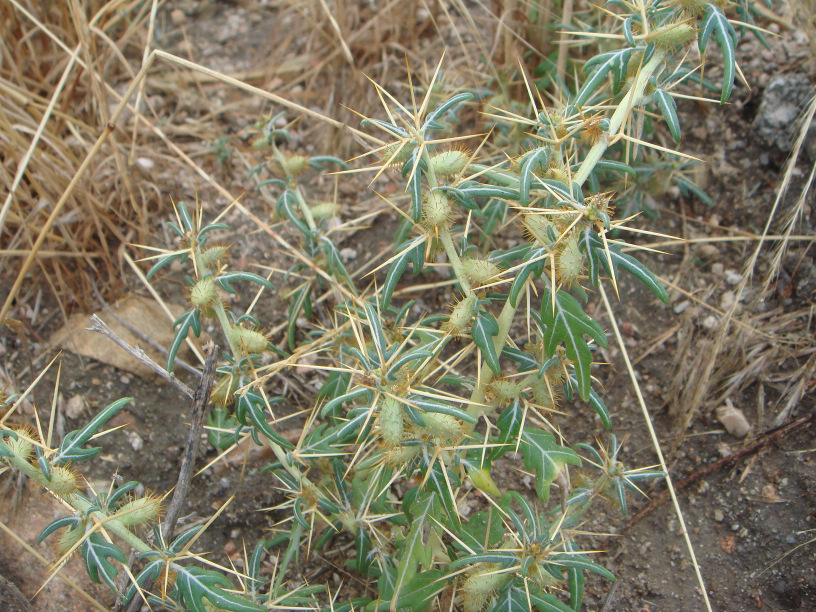
Cocklebur – Xanthium spinosum, X. strumarium

Parts used: burrs

Traditional uses: Infusion of root given to induce vomiting. Roots chewed for rattlesnake bite. Plant used for the kidneys. Decoction of seeds used for bladder ailments.

Tea used for rheumatism – “A tea made by boiling cockleburs in water is another remedy for rheumatism.” ~Randolph OMF 108

Used in love divinations – “Another girl picks a cocklebur, names it for her lover, and throws it against her skirt; if it sticks, she knows that her lover is true to her, if it doesn’t stick she thinks he is false.” ~Randolph OMF 172

Tea made for cold – “We always drank cocklebur tea for a cold. Dried burs, boil them in water, put a little sugar in it, strain them and drink it.” ~Carter and Krause HRIO

Used for coughs – “Boil ripe cuckleburrs. Make a tea out of the juice. Add enough sugar to make a syrup.” ~Parler FBA II 1970

For gall bladder – “Drink a quart of cockle-burr…tea each day for gall-bladder trouble.” ~Parler FBA II 2289

For kidney stones – “Take dry kickleburrs and place them in a stone jar. Then fill the jar with water (hot but not boiling) and set on stove next to fire. Let them simmer for 2 to 3 hours and then drain juice into jug. Take 1 tablespoon full 3 times per day for kidney stones.” ~Parler FBA III 2592

For kidney health – “Cucklebur…tea is good for kidneys.” ~Parler FBA III 2593

With alcohol and glycerin for tuberculosis – “To cure tuberculosis take dry cockleburrs, alcohol, and glycerin. Cook down and drink the water of it. You will spit up the T.B.” ~Parler FBA III 3474


Carter, Kay & Bonnie Krause Home Remedies of the Illinois Ozarks (HRIO)

Moerman, Daniel E. Native American Ethnobotany (NAE)

Parler, Mary Celestia Folk Beliefs from Arkansas (FBA)

Randolph, Vance Ozark Magic and Folklore (OMF)

Source: Ozark Encyclopedia – C – Cocklebur – Mountain Man Traditional Healing

Bobinsana ~ Good Witches Homestead

Source: Bobinsana~ From Help Healing Grief, Heartbreak and Pain to Shamanic Lucid Dreaming

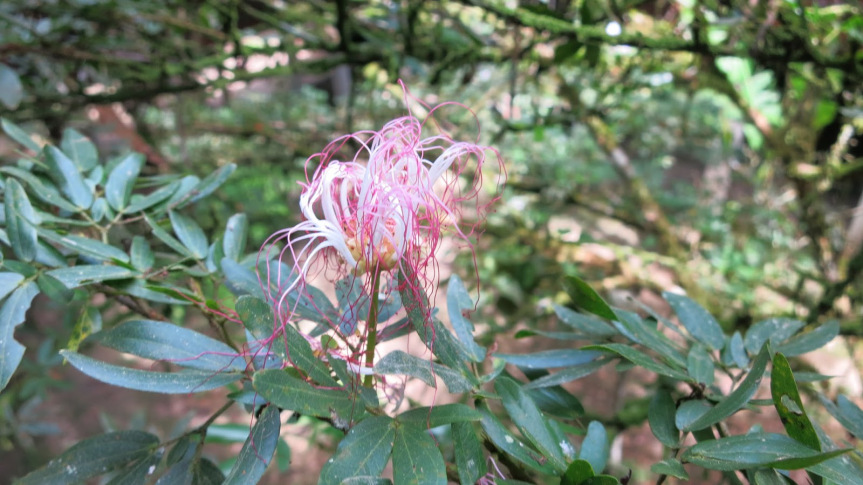
A relative of the mimosa tree, Bobinsana (Calliandra Angustifolia) is a water loving plant that belongs to the Pea family (Leguminosae). It grows around 4-6 meters high and is usually found alongside, rivers, streams, and bodies of water in the Amazon basin. It is found in regions of Ecuador, Colombia, Peru, Brazil and Bolivia. It produces an abundance of gorgeous pink to reddish powder puff-like flowers.

Traditionally bobinsana is taken by tincture in an alcohol made from cane sugar called aguardiente or a strong tea (decoction). All parts of the plant are used for healing. The roots, bark, leaves and flowers.

Bobinsana is a well-known “plant teacher” sometimes used in conjunction with a psychedelic amazonian brew called “Ayahuasca”. While bobinsana alone is not hallucinogenic, it is considered a plant teacher or master plant and is sometimes added to ayahuasca recipes to help the shaman connect to and learn from the plants. The plant is typically taken on a special diet or during these shamanic ceremonies for opening and healing the heart, to enhance empathy, to deepen one’s connection to nature and provide grounding. According to many Ayahuasca curenderos “doctorcita bobinsana” as they say, is a very gentle healing plant spirit increasing clarity, focus, compassion and for addressing heartbreak, grief, and loss.

“According to many Ayahuasca curenderos “doctorcita bobinsana” as they say, is a very gentle healing plant spirit increasing clarity, focus, compassion and for addressing heartbreak, grief, and loss.

Many times in our lives we have experienced forms of heartbreak, sadness, sudden loss, emotional struggles. It’s human nature to experience these feelings. And it’s good to know that you can have support during those troubling times. This plant is just one of many that can hold our hand along the way, while we process our feelings and life experiences. The plant is also becoming very well known for producing profound lucid dreaming experiences, colorful shamanic visionary type dreams in which new insights about one’s life are found and healing can occur.

“profound lucid dreaming experiences, colorful shamanic visionary type dreams in which new insights about one’s life are found and healing can occur.”

Among other uses, the Shipibo Conibo people of the Ucayali area in Peru and other Amazonian indigenous tribes use the sacred plant to treat arthritis, bone pain, rheumatism, uterine cancer, edema, nasal congestion, fevers, colds, inflammation, and to purify the blood. They also bathe in the freshly grated bark to improve dexterity, increase resistance to illnesses and protect against colds and chills.

Now that we see how useful this plant can be. It’s a good thing to share the information and see if it’s the right herb for you, your family or your friends. Whether you or someone you know is experiencing grief, loss, pain or intense sadness, this sacred plant can be a gentle ally during the healing process. AND If you’re interested in having enhanced lucid dreams then this special plant is right up your ally! People can also use this for deepening their shamanic, meditation, dreaming or yogic practices. Which makes this herb one of a kind!

“People can also use this for deepening their shamanic, meditation, dreaming or yogic practices.”

As always I love to share the joy of being a herbalist and since this plant is very useful and quite rare it’s hard to find a good place to get it. So I’ve made a very potent 1:2 liquid extract tincture of ethically wild-harvested bark and leaves made with organic alcohol, organic honey, and Colorado mountain spring water. You can find it here>>> Bobinsana Tincture

Disclaimer~ Bobinsana is traditionally used as a contraceptive in Peru. While there is no research to confirm this possible action, those seeking to get pregnant should avoid this plant. Should not be used during pregnancy or lactation. If you take pharmaceutical drugs or have a medical condition please consult your doctor before using. Make sure to always do your research and talk with your medical advisor before adding any herbs to your diet. This post’s information is not approved by the FDA to treat, diagnose, prevent or cure any diseases. The information presented in this post is provided for informational purposes only.

Spicebush – Good Witches Homestead

Source: Spicebush – Good Witches Homestead

Spicy, lemony shrub with its rich history needs a reintroduction into the kitchens and medicine cabinets of North America.

It can be found from Maine to Florida, as far west as Kansas, and in parts of Texas. It is happiest just inside the edge of the forest but can successfully be grown out in the open with strong attention to its watering. The bush has a long American history that is enjoying a bit of a renaissance.

When European settlers first arrived in the Americas, they would have had to struggle with many elements of homesickness — particularly the loss of familiarity with the plants around them. Seeds were surely transported, and some even thrived in the New World, but many of the plants that colonists depended on for food, medicine, dye, and textiles had to be left behind. This meant that settlers needed to quickly understand which plants could serve as substitutes for lost staples.

If you’re in a strange place and need to know the landscape, the logical thing to do is to ask the natives. One of the important plants the Cherokee people taught early settlers about was spicebush. Spices have moved humans from place to place, started civilizations, and founded empires. Here on the temperate shores of the U.S., the bright spices cinnamon and ginger don’t grow, but we’ve always had milder and cooler substitutes. Spicebush berries can be used as a replacement for allspice, and the powdered bark makes a serviceable cinnamon.

Spicebush is known as fever bush, Benjamin bush, snap-wood, wild allspice, Appalachian spice, spicewood, and “forsythia of the forest” to name a few. Beyond its culinary use, Native Americans taught the settlers about the ways they used spicebush as a medicine. This native population used the leaves, bark, berries, and sap in various ways. Internally, they prized the plant for its diaphoretic properties, or its ability to induce sweating. Native people used spicebush to ease colds, cough, fever, and measles. Externally, they used oil from the pressed berries to ease the pain of arthritis. They used all parts of the plant interchangeably as compresses (external applications of cloth soaked in tea) for rashes, itching, or bruises, and they also used it to remove internal parasites.

Soon, the colonies began to expand, and many itching to explore the West. As they walked, they deepened their relationship with spicebush. Paul Strauss, in his book The Big Herbs, tells us that chewing on the twigs will quench thirst and moisten the mouth. In this way, spicebush walked with the settlers, many of whom were traveling with their families as they moved toward a farm they’d bought, sight unseen. Spicebush was associated with rich soil and easy access to the water table. If the surveyor said that the shrub was on the land in question, it was a safe bet for a successful farm.

Over time, the Americas’ access to the hot and intense spices of the East became easier. Medical advancements yielded awareness of plants with healing properties, and then modern drugs left the need for many plants behind. Spicebush was left alone in the woods to quietly feed the insects and animals that depend on it for survival. Only now are we coming back to an awareness of its presence?

Cultivating Spicebush

Spicebush is now a featured member of Slow Food USA’s Ark of Taste. Many are stepping back into the dappled shade of the forest’s edge to become reacquainted with this shrub. Spicebush is fond of moist soils along streams or in rich woods. It grows between 6 and 12 feet high. At its base, one often finds some of the most endangered of our medicinal plants, such as black cohosh, ginseng, false unicorn, goldenseal, and wild yam. In March and April, just before the leaves emerge, it sports pale yellow blooms that are a great early source of nectar for bees. The male and female blooms arise on separate shrubs. When the leaves appear, they are opposite, simple, smooth, and oval to oblong with a spicy, aromatic smell when crushed. In fall, the leaves turn a beautiful yellow that contrasts sharply with the red spicebush fruit. This fruit is an oval-shaped drupe containing one large seed. It’s bright, glossy red, and spicy when ripe in August through September.

In winter, after all the fruit has been eaten, you can identify the spicebush based on the gray to an olive-green color of the stems, which have a spicy smell when broken. The leaf scars are crescent-shaped, and both young stems and old bark are dotted with pale lenticels (raised pores where oxygen and carbon dioxide are exchanged). Spicebush spreads as a colony, by its roots. If you have a friend with an expanding group of spicebush, late fall is a great time to dig up some of the colony and move it to your house.

Growing spicebush is relatively easy, provided you have a good spot. Plants can be grown in full sun if you water them often and provide a rich soil with plenty of leaf compost. After they get established, they require little in the way of pruning or animal-proofing (deer don’t like them). You can just sit and enjoy the constant visual interest and all the other wildlife your spicebush will attract. The real problem will be deciding exactly which recipe you’d like to use with the leaves, twigs, and fruit your shrub will provide.

Uses for Spicebush

As a supplement, almost all parts of spicebush can be used in food and medicinal preparations. Spicebush bark’s antifungal capacities were demonstrated in a 2008 study that showed its activities against both Candida albicans and the fungus that causes athlete’s foot. To use the bark in this way, either make a tincture or simmer (decoct) the root in water for 15 to 20 minutes.

The entire shrub is high in volatile oils, making all parts of the plant likely effective at settling the stomach when made into a tea. The leaves are especially good as a tea and should be picked while glossy and green. The twigs can be picked to add to a tasty medicinal brew at any time of the year. If you’re hoping to have a cleansing sweat or break a fever, brew your tea for 30 minutes (4 ounces twigs to 1-quart water) and serve hot.

If you wish to use the berries, the possibilities for food as medicine are endless. Berries are ripe around the same time as apples, so think of the potential combinations! Dry berries in a dehydrator, and store them on a shelf or immediately freeze them. Some people cut the seed out of the middle before freezing, but I think that’s unnecessary and potentially removes some of the flavors. You’ll need to run unblanched, frozen berries through the food processor before adding them to a dish. Dried spicebush berries can be ground with a spice-dedicated coffee grinder. Try adding the resulting powder or pulp to coffee, cookies, chai tea, cobblers, curries, and more.

Spicebush is a strong part of our country’s past — but why keep it there? With so much to offer our landscape and even more to bring to our pantry and apothecary shelves, it deserves another look by all who enjoy a little history in the garden.

Spicebush Seed and Plant Sources

Strictly Medicinal Seeds (listed as “spice bush”)
Gurney’s Seed & Nursery Co.
Fedco Seeds

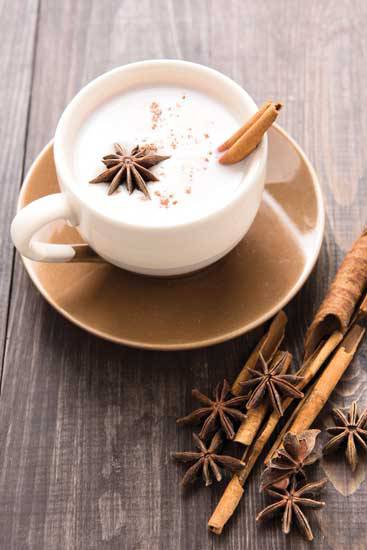
Fever Chai with Spicebush

spicebush teaRelieve typical fever symptoms, or make without milk to soothe fever caused by respiratory illnesses.

Total Hands-On Time: 1 hr

Cook Time: 1 hr

Yield: 5-7 cups

Fever Chai can bring some relief to fever symptoms, but you may make it without the milk for someone who’s experiencing a fever related to a respiratory illness, as milk can exacerbate symptoms of congestion.

Ingredients:

• 8 whole cloves
• 8 spicebush berries
• 7 twigs spicebush (broken to equal about 2 ounces)
• 2 sticks cinnamon (smashed)
• 1 cardamom pod
• 1 tablespoon fresh sliced ginger
• 1/2 star anise
• 2 cups water
• 4 to 6 cups milk (or almond milk)
• 2 tablespoons black tea
• Sugar or honey to taste

Instructions:

1. Crush all the spices lightly with a mortar and pestle and place them into a saucepan.

2. Cover the spices with water and bring to a boil.

3. Reduce heat and simmer for 30 minutes or until the water has reduced by half.

4. Add the milk to the saucepan and bring back almost to a boil.

5. Remove from heat. Add the black tea, cover, and steep for 5 minutes before straining.

6. While still warm, add sugar or honey to taste, and then use a milk frother to whip your chai.

7. Serve immediately.

Wild Allspice Java Rub with Spicebush

spicebush rubThis sweet and spicy rub is the perfect addition to steak, brisket, or pork.

Total Hands-On Time: 5 min

Preparation Time: 5 min

Yield: 1 cup

This rub is best on a grilled steak or brisket but also works well with pork.

Ingredients:

• 5 tablespoons ground coffee
• 2 tablespoons coarse salt
• 2 tablespoons brown sugar
• 2 tablespoons paprika
• 2 teaspoons freshly ground pink peppercorns
• 2 teaspoons garlic powder
• 2 teaspoons ground spicebush berries
• 1 teaspoon ground cumin
• 1 teaspoon unsweetened cocoa powder

Instructions:

1. Combine all ingredients and place in an airtight container.

2. This mix is shelf-stable but should be used within 6 months.
Continue reading “Spicebush – Good Witches Homestead”

What is Enlightenment? ~ Secrets of the Serpent

By gserperent


I’ve been asked What is Enlightenment? All the so-called gurus give little bits and pieces to keep the people coming back. Most of them make it into a spiritual thing, which is okay, as long as you realize nothing is outside of you. Enlightenment can be very spiritual, but it is an individual experience that must be your own. The ancient sages always put wisdom or knowledge and enlightenment together. You must bring out the fire-breathing dragon. If you don’t have the fire(intellect), you are just a baby dragon who will be led by their chains to do other people’s bidding.

Knowledge should be sought to energize life. Ancient history is very important. Exploring history is exploring the depths within yourself. The strength of a tree begins in the roots. You are a very complex being. The statues in Hinduism that show the deity with many arms is symbolizing that you are many persons within one. The deities are yourself. Most individuals fear the complex depth within. They remain on the superficial and surface layers of the psyche. This is why I always ask “Are you ready to meet yourself”? Very few will descend the depth of their mind. Those that do successfully will create wholeness. The modern individual has lost touch with the subconscious. Getting in touch with your subconscious is literally magic(See Magic).

The past of every culture and way of life flows in to us today. Just observing ourselves is not enough. The past flows on within us. We as a whole do not know history, so it keeps repeating itself. We have lost faith in history and have fallen into a restless, constant search for novelty after novelty. Just like our bodies have relics of early developmental stages, our minds have depths that reach back into the stages of our creation. If you are familiar with my work, you know that an alien race created the human race(see Lemurian Magic). They mixed their DNA with the hominid species that was already here. So our minds and bodies have both the alien and hominid stages built right into them. If you have ever tried to trace your family lineage, you know just how hard it can be to trace your lineage. Do you realize how complex it makes it by throwing in two separate species? Two whole new paths to trace your DNA.  On the alien side you may have to go back billions of years. That is how long this alien species had been around. This is why the ancients said we are thousands, if not hundreds of thousands, of personalities in one being. This is how complex you really are. This world herds us into thinking the same. They know what our minds are capable of and they shackle our minds.

Throughout history ancient philosophers have put people into two categories: the individual or higher human and the herd. Philosophers saw the individual as the most important thing a human can do for enlightenment. They are not talking about the individualism that is spoon fed to the masses. They were talking about real creative, stand alone genius. This is why they refer to them as higher humans. They have goals,are okay with being different, are good with solitude and can live independently. When I say independently, I don’t mean going out and living in the middle of nowhere or the fear based Preppers. I mean they have the freedom to live life to its fullest potential as they desire. When I say solitude, I mean they can be alone with themselves. When they are alone they actually do their greatest work or creating. Then there are the rest or the herd. Philosophers even see the people the herd look up to like sports stars, actors or business leaders as still being in the herd. The only power a herd person has is to band into groups. They saw true individuals as someone who does not want to pluck the fruit from the tree they plant in their own lifetime. No the true higher person will plant their tree of ideas for the fruit to be plucked long after they are gone.

Our morality turns us into a herd animal or someone eager to please and is mediocre. Our morality is anti-natural. People just blindly adopt the judgements of their society. You must understand that when it comes to the universal force there is no wrong or right. Is it wrong for the cheetah to kill the antelope to feed her cubs? Duality is built right into nature. Except it as a whole. The herd wages war on all that is strange, what they see as privileged, the higher human, the abundance of creative power and masterfulness. Herd morality, whether it is religion, political or any other idealism, gives people an escape from themselves. Comfort and contentment are their supreme values. They become judgmental of strangers and lose their love for mankind as a whole. Ideas and Ideals of the herd should rule the herd, but not reach beyond it. The enlightened person says yes to life and accepts life as a whole.

The saying “What does not kill me makes me stronger” has so much truth in it. When people figure out that suffering is a part of this life, they either become a Nihilist or they want to escape it and they make up things like other worlds such as heaven. In other words, they either say life sucks, has no purpose and ends in death or they make up a perfect world, utopia or heaven to work towards. This is why so many people hate when I say that you have to flow with life. I am not referring to flowing by accepting someones elses or some gods decisions, or that you have a predestined fate you have to follow. I am referring to the flowing of your own life. I am of the ancient school that reality, the cosmic energies or nature is alive. Dualism is built right in to our reality. What we consider destruction and chaos is built right into our reality. Which means pain and suffering is something that is natural. It creates life, just look at the birth of a child. Negative and destruction are good, but it requires strength. The Dionysus cult called it ‘Divine Madness’ because it refreshes and replenishes, it keeps you from stagnation. The ancients believed that growing stronger through tragedy is the highest state someone could attain. Knowing this gives you the strength of the cosmic river behind you, but you have a rudder to steer with the current. It is when you go against the current, like the human race does on a whole, you have problems. Flow with nature. Just by seeing the beauty in nature you become enlightened.

Continue reading “What is Enlightenment? ~ Secrets of the Serpent”

Tower of Babel – secretsoftheserpent

Source: Tower of Babel – secretsoftheserpent

By gserpent

tower-of-babel-19-jun-091

To most researchers the Tower of Babel is used to explain how we as humans have so many languages. The demon like god of the patriarch religions did not like the human race trying to reach the heavens, so he got mad, threw a temper tantrum and made everyone speak in different languages. This way we could not understand each other and work together accomplish amazing feats.  No this god wanted us not to understand each other and fight for the rest of eternity. How does anyone believe this stuff? Now that we have the childish version out-of-the-way, let’s get on with the truth.

Most researchers think that babel comes from the hebrew ‘balal’ meaning to confuse or scatter. It is where we get english word babble. Theologians say babel comes from Babylon because that is where they think the tower was, in Babylon. Ralph Ellis has shown that babel comes from the Egyptian ‘berber’ and means pyramid. As a matter of fact he as actually shown that the real name of this Tower of Babel was Mount Shenar. Mount Shenar means snow mountain. The Great Pyramid had a limestone covering. It was pure white. They built it to look like a snow-covered mountain. The Tower of Babel was also called the watchtower. That is exactly what the Great Pyramid was, a watchtower to watch the heavens.

The Tower of Babel myth is the building of the Pyramids, but the scribes that wrote this were using ancient texts that were in their possession. They had to spin this story in their favor. If you have read my Lemurian Magic post, you know that the Pyramids were built after the cataclysm. Ancient Egypt had an Upper(matriarch) Egypt and Lower(patriarch) Egypt. Egypt was all about unifying Upper and Lower Egypt. The union of the two land was called Semai Taui or ‘tying the knot’. This is why getting married is referred to as tying the knot. If you wanted to help unite Egypt, you could stay. If not, get out. Every civilization around Egypt is Egyptian rejects. Sumer, Babylon, Judea, Greece, Rome, Arabia, and all the Mediterranean countries. None of these civilizations wanted to work together, so they left or were kicked out of Egypt. They started their own patriarch countries and languages. These countries hated Egypt for not giving them their way, but their ancestors had still helped build the Pyramids.

About the time the propaganda of the Torah or Old Testament was being written, high priests of Lower Egypt and surrounding countries that hated Upper Egypt decided the common man was not to be included in the secrets. The common man was stupid and vulgar to them. The common man had to be controlled. Several times they tried to regain Lower Egypt and instill monotheism for control of the common man, but were eventually kicked out. This just added to the hatred of Egypt and the common man. The ancient texts had to be written in a way that only certain people would understand them. The rest would take them literally and be controlled. Other scribes, like Manetho, caught on to what was happening and wrote their version of history to try to preserve the true history. But how many people have even heard of Manetho? Then you have the Nag Hammadi scrolls. The catholic church got their filthy hands on them, but good thing for us the church didn’t understand what the scribes were trying to tell.

The story of the Tower of Babel myth is the building of the Pyramids, but they had to spin the texts in their favor then destroy any evidence that said otherwise. Instead of the Pharaoh(god) kicking out all the people who didn’t want to unify and work together, they made him kick out the people who wanted to unify to make it look like he didn’t want them working together. They completely reversed history in their favor. Can’t make money off a god that wants to unite people. They used this same type method with the biblical family of Jesus. This was a matriarchal family, but they used them to create a patriarchal religion(see His Royal Jesus). The people who scattered to the outlining countries started their own languages, but this myth is code for the language of the ancient texts being used. It is code for when these scribes started confuse people with their writings. This showing that the truth had to be hidden, so that the common man could be controlled with whatever religion or government they invented. The language of these texts are impenetrable and they seem like nonsense to the common man. As truth starts to leak out I believe the bi-polar, demonic, patriarch gods will be on their way out. The so-called elites thought that their ancestors had destroyed all the evidence of the truth. They thought their texts were all that was left. If someone tried to translate them in a language the common man could read, they burnt them at the stake. What they didn’t bank on was the vulgar, common man being smart enough to dig the truth out of these stories. It is the common man that has begun to show the truth to the world.

The Great Pyramid had a walk way that ascended to the top. It was in the white limestone castings that the Lower Egyptians tore down. It was known as the Latter to Heaven or the Latter of Osiris. The Lower Egyptians decided that if they couldn’t have it, no one could have it. Then they made this Tower of Babel myth, so that anyone who knew the truth about the Great Pyramid would be punished by their demonic god. The Tower of Babel, Mount Shenar, Mount Sinai, and Mount Ararat are all the Great Pyramid.

Ozark Encyclopedia – B – Buttons – Mountain Man Traditional Healing

Source: Ozark Encyclopedia – B – Buttons – Mountain Man Traditional Healing

Used in wart buying ceremony – “Some specialists go through a kind of wart-buying ceremony, but no money actually changes hands. You show the man your wart, and he says: ‘Want to sell it?’ You answer ‘Yes, sir.’ Whereupon the wart taker produces a big safety pin with many buttons strung on it. He selects one of these and hands it to you saying: ‘Carry that there button in your pocket till the wart’s gone. Hit’s mine now, ‘cause I done bought an’ paid for it.’” ~Randolph OMF 127

Buttons kept for good luck – “A button received as a gift is always lucky, no matter what the color. Years ago, many an Ozark girl collected buttons from her friends and strung them together into a sort of necklace called a charm string. A charm string not only brought good fortune to the owner but also served as a sort of memory book for women who could not read one button recalled a beloved aunt, another a friend’s wedding, still another a dance or a quilting party or an apple-peelin’ or some other pleasant occasion.” ~Randolph OMF 61

White button for eye troubles – “When a foreign body gets into the eye, just press a big white button against the eyelid and wink repeatedly; the object which is causing the trouble will pass out through one of the holes in the button. Near Day, Missouri, a small boy got some sawdust in his eye. A friend cut a small pearl button off his shirt, washed it carefully, and somehow placed it under the boy’s eyelid. I was told that the poor chap walked about for several minutes, with the big bulge in his eyelid plainly visible. It must have been terribly painful, but he stuck with it until the tears washed the sawdust away.” ~Randolph OMF 139-140

“If you hold a big white button over your eye when something is in it, it will leave through one of the holes.” ~Parler FBA II 2167

In mouth for head pains – “A white bone button, held in the mouth, is recommended for any pain above the tongue, especially headaches and earaches.” ~Randolph OMF 145

Brass button in mouth for earache – “Some mountain folk cure the earache, it is said, by putting a brass button in the patient’s mouth and then unexpectedly discharging a gun behind his back.” ~Randolph OMF 145

“Some people believe you can cure an earache by putting a brass button in your mouth and shoot a gun unexpectedly behind your head.” ~Parler FBA II 2123


Parler, Mary Celestia Folk Beliefs from Arkansas (FBA)

Randolph, Vance Ozark Magic and Folklore (OMF)

Pied Piper – secretsoftheserpent

Source: Pied Piper – secretsoftheserpent

By gserpent

MUS-FAPC2020_500


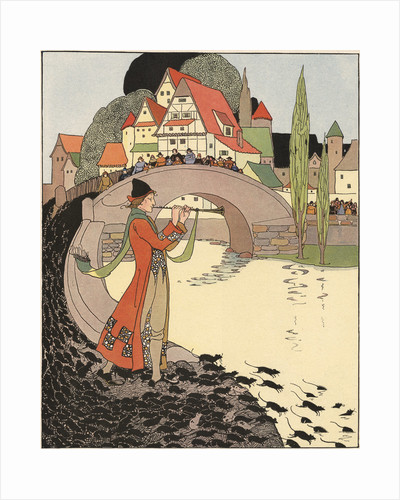
The Pied Piper of Hamelin is an example of just how brilliant the scribes were in preserving history. With Goethe and the Brothers Grimm involved, this myth holds some very astounding secrets. This myth is true, but it didn’t happen in the way that researchers think. It’s time to reveal the secrets of this myth that have been hiding for over 700 years.

The Pied Piper legends came out about the same time as the King Arthur legends. These legends came out  when the Crusaders brought back ancient texts from Syria and Jerusalem. The stories of these ancient texts spread through Gaul, Germany, Italy, Spain, Portugal, Greece, Scandinavia and Holland. Witty scribes got a hold of these ancient texts and preserved the history in stories of their local. The entire story of King Arthur is the story of the biblical Jesus, but they made him a King in Britain(See King Arthur). The story of the Pied Piper took place in Egypt, but the Germanic scribes placed it in Germany.

The first clue to this story is the Pied Piper shows up in a ‘coat of many colors’. This is the same thing Joseph, son of Jacob, wore in the Old Testament. In Patriarch Pharaohs, I showed that Jacob was the Lower Egyptian Pharaoh Yacobaam. He was kicked out of Egypt, but his son Joseph became a high priest to the Upper Egyptian Pharaoh. This ‘coat of many colors’ is what high priests wore in Egypt. This is telling the people ‘with eyes to see’ and ‘ears to hear’ that this is an Egyptian story. It was this Upper Egyptian bloodline of Joseph’s that was kicked out of Egypt twice. The first was his father Yacobaam(Jacob) and the second was a few generations later. We know this story as the story of Moses and the Israelites.

Using rats and cats is reinforcing that this was a dispute between Upper and Lower Egypt. The Rat Goddess was Tat-Taiut, she was always portrayed wearing a disk with horns and the Uraeus. The disk is the moon and the horns are for Taurus. These were symbols of Upper Egypt. The Uraeus is the cobra symbol of Lower Egypt. She was known as the “Goddess of the two lands”(Upper and Lower Egypt). The cats are symbolizing Bast or Bastet. She was the Cat Goddess of Lower Egypt. The Lower Egyptians were the ones forcing monotheism on everyone in Egypt. They wanted to get rid of all the gods except Aton, the sun. That is why all the cats are dead in this story.

The Piper tells the Mayor he will rid the town of rats for 1,000 florins. The mayor tells him if you get rid of the rats we will happily pay 50,000 florins. In just about every version of this story the Piper is playing a flute or some just say pipe. A piper is a person who plays the bagpipes. In Egypt they had the bagpipes, they just called it a skin bag. The Piper plays his pipes and all the rats follow him. He takes them to the river and the rats are all drowned or swept away by the current. This is confirming that this story is talking about the Moses story in the bible. In the bible the Pharaoh’s army is swept away or drowned. The Piper goes to get his payment and the mayor refuses to pay him the 50,000 florins. The Piper ask for at least the 1,000 florins he wanted. The mayor gives him 50 florins and says be happy you have that. The Piper tells the mayor “you will regret breaking your promise” and he vanishes. The people are not happy with the mayor for breaking his promise, but he exclaims “We saved 50,000 florins”!

The Piper returns that night and plays his pipes. This time only the children follow him out into the streets. The children followed him  through forest and to the foot of a mountain. When the Piper came to a dark rock he played his pipes louder and a great door creaked open. The children followed the Piper into the cave. When the last child had entered the cave, the door creaked shut. A great landslide came down the mountain blocking the entrance to the cave forever. Only a little lame boy escaped this fate and he is the one that told the citizens what happened. Remember that word ‘lame’, there is a reason the Brothers Grimm used it in their version of the story.

This is exactly what the ancient texts say happened in Egypt. This is the true story the patriarch religions have been hiding. Upper and Lower Egypt were fighting about religion. The Lower Egyptians wanted one god. The Upper Egyptians said “No, we like all our gods and goddesses thank you”. The Upper Egyptians paid the Lower Egyptians to leave. They agreed on a price, but when it was time for the Lower Egyptians to go, the Upper Egyptians didn’t give them all the money. So the Lower Egyptians went through out Egypt and killed all the Upper Egyptian children. They tore up the Great Pyramid. All the white limestone came down like a land slide. They took the white limestone and used it to build things where they settled. In Judea!!!!!!! This is the story of Moses in the bible!(see Patriarch Pharaohs) Even the Koran says that because they were not paid their full amount of the money, they caused all this death and destruction. This is what the base of religion is built on. If I don’t get my way I will just kill people and destroy things!!! And we wonder why this world is so screwed up!

The name of the Pied Piper is also giving away that it is an Egyptian story. Pied means having various colors, but the scribes like using words that have more than one meaning. If you take the word pied in the mathematical sense, it refers to Pi or 3.14. The Great Pyramid was built using Pi, so this is showing yet again it is a story about Egypt and the Great Pyramid. The word lame can mean ‘crippled or physically disabled’, but it also means ‘a person who is out of touch with modern fads or trends’. The Brothers Grimm used this word for the latter meaning. Modern fad and trends has always been religion. I am the lame boy who is telling you what really happened.

One last thing that was bugging me that I finally found. Why would the scribes put this story in Hamelin? I know it was named after a Royal Saxon family, but a lot of towns were named after royalty. In a book about ancient Egyptian magic, I found that Hame means ‘great carpenters’. Lin is just what it says ‘line of or descendant of’. So Hamelin would be ‘line of the great carpenters’. Carpenters being Masons. It is why they call Jesus a carpenter in the bible.(See His Royal Jesus) Modern Masonry is from Egypt, so this is pointing once again to Egypt.

Flowers That Heal – Good Witches Homestead

Source: Flowers That Heal – Good Witches Homestead

Garden flowers offer us more than their beautiful colors and smell; many contain healing properties that have been used for thousands of years. As we begin planning our gardens, we reflect on the relationship between the plants to which we tend and our own bodies.

— Tieraona Low Dog, M.D.

We often conceive of flowers as a dazzling aesthetic addition to our home or garden. We take the time to smell the roses, reveling in their centering scented offerings. Practiced gardeners and hobbyists alike can reap impressive health benefits by way of incorporating medicinal flowers into their gardens. In this way, your garden is both a wondrous green altar, as well as your own personal medicine cabinet.

Trembling with potential energy and encapsulated in a small seed are all the nutrients and structures necessary for the growth of the flower it contains. When provided with the right conditions, a seedling soon flourishes and attracts insects that are beneficial to other plants in a garden. This spring is the perfect time to create a healing ritual around the plants you tend. While you commit to caring for your bountiful blossoms, you can simultaneously tend to the soil that lies within you.


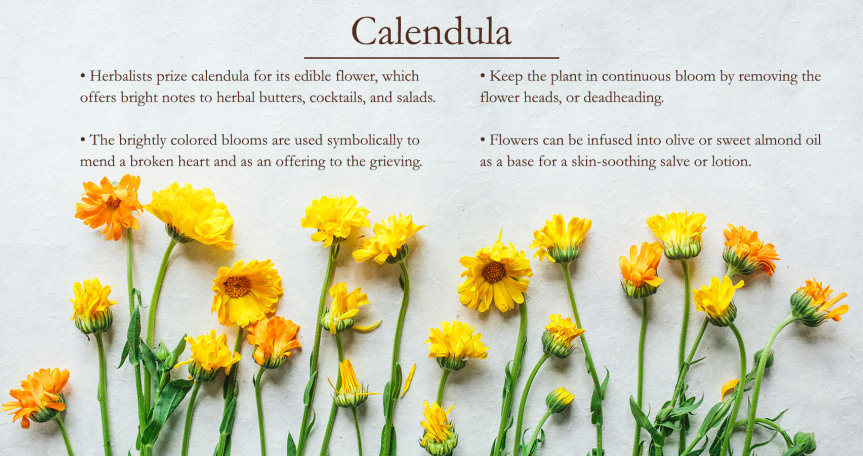
calendula TMCalendula (Calendula officinalis)

Growth and care: Start with real Calendula officinalis seeds (not one of the many hybrids) in flats or sow directly into the outdoor soil. Enjoying cool temperatures, calendula does well with a layer of mulch which traps moisture for use by this showy flowering annual. It is deer-resistant, non-invasive and the butterflies love it!  And by the way, the flowers are edible and will remind you of saffron in both taste and color. They can be used in salads or in cooked dishes.

Medicinal uses: Boasting lasting benefits for oral health, calendula is known to reduce gum inflammation and gingivitis. Teas are soothing to the stomach and can help soothe a sore throat. Calendula flowers are anti-inflammatory and antimicrobial, which is why they have been treasured for centuries for soothing rashes and helping mend wounds.  I keep small containers of calendula ointment around the house and up at the barn. It works as well for irritations and scrapes on the chickens and horses, as it does on us!

Harvesting: Harvest calendula as soon as flowers are fully blooming. Pick them in the morning hours on bright sunny day and harvest regularly to encourage flowering. You can use the flowers fresh, as mentioned above, or you can dry the flower heads in a warm, shaded place for use in salves, ointments or teas throughout the year.


California Poppy (Eschscholzia californica)

Growth and care: Native to California, the Golden or California Poppy can be sown directly into the rich soil. Golden poppies prefer full sun and sparse watering. They are annuals in some parts of the country, though our California poppies are perennial here at our ranch. These beautiful flowers are such a beautiful addition to the garden. The flowers are edible and look wonderful in salads.

Medicinal uses: California poppy is one of my favorite herbs for relaxation and relief of minor aches and pains. It is useful anti-inflammatory and antispasmodic, and is a life saver for those nights when I have overdone it in the garden. California poppy helps me fall asleep and stay asleep. It can be used to ease muscle cramps and spasms and soothe anxiety in someone who is feeling overwrought and irritable. It combines nicely with passionflower, valerian, and other relaxants.

Harvesting: The entire plant is used as a medicine, so it is best to harvest it when there are both flowers and the long seedpods present. Take a small spade or shovel and dig straight down in a circle about 8-10 inches from the plant and lift up the root and entire plant. Rinse off any dirt from the roots, chop the root, leaves, stem and flowers into small pieces, put in a mason jar and completely cover with vodka. Steep a few weeks covered, strain, and you have your tincture. I generally use 50-80 drops at night before bed or a few times per day for minor pain.


echinacea-finalEchinacea AKA Coneflower (Echinacea Angustifolia, E. purpurea)

Growth and care: Echinacea, also known as coneflower, appreciates well-drained soil in full sun or light shade. These perennials are plants of the open woodlands and prairie and send out deep tap roots that allow them to tolerate periods of low rainfall. They flower throughout the summer. You can scatter seed in the fall or propagate from root cuttings. Echinacea is fabulous in the garden; the butterflies and birds love them!

Medicinal uses: Echinacea is celebrated for its ability to ease colds, sore throats, and respiratory tract infections. I have used the tincture for both my family and patients for more than 35 years. As a matter of fact, many patients told me it was the first herbal medicine that they had ever used that made them really believe that “this stuff works.” Topically, Echinacea is used for cuts and minor abrasions.

Harvesting: You can prune the leaves and flower heads throughout the summer to enhance the health of your plant, as well as encourage blooming. Cut the flowering stem above the node or the place where the leaves/stem emerges from the stalk. The leaves and flower heads can be dried or made into a tincture. Wait for at least two years before harvesting the roots. Harvest in late summer. Sink your spade down about 24 inches from the stalk. Go deep and lean back on the spade to lift the root ball. Take the entire plant. You can dry or tincture the leaves and flowers. Trim some of the roots that you are going to use for medicine, leaving some roots with the crown, so that you can replant it in the garden. Washing the roots that you are going to dry with a good scrub brush. Use a sharp knife to cut the roots into small pieces. These can be set aside in a warm but shaded place for a week to dry and then stored, or you can make a tincture from the fresh roots. (Healthy at Home contains all the information you need for making fresh and dried herb tinctures).


Hyssop (Hyssopus officinalis)

Growth and care: Hyssop is a popular aromatic perennial member of the mint family that displays beautiful purplish blue flowers (or sometimes pink) and boasts a large root system beneath the earth. This is a great flower to plant in your garden to attract pollinators and prefers well-drained soil and partial or full sunlight.

Medicinal uses: Hyssop possesses antiviral properties and promotes the expulsion of mucus from the respiratory system. The use of hyssop flower tea has long been used to ease colds, coughs, and congestion. The tea is quite pleasant and I have found to be a very good expectorant when taken in small doses throughout the day.  When diffused, hyssop essential oil is often used to purify the air indoors. Hyssop leaves can be added to soups and salads.

Harvesting: Cut the flowering tops of hyssop. Harvest and dry the herb at the peak of maturity to assure the highest possible potency of active ingredients.


Lavender (Lavandula angustifolia)

Growth and care: Lavender enjoys full sun and well-drained, slightly alkaline soil. This gorgeous and fragrant perennial does not like to be overwatered and will not tolerate excessive moisture. While there are many different types of lavender, I admit that I am very partial to English lavender or L. Angustifolia. You can grow from seeds but cuttings are quicker. Lavender makes a beautiful border in the garden but also does great in pots.

Medicinal uses: Lavender flowers are often put in small cotton bags and put in linen and clothing drawers for their wondrous aroma. You can make an infusion and add it to a bath to soothe itchy skin or help relax before bed. Lavender essential oil touts many impressive benefits and can be used as aromatherapy to ease insomnia, headaches, and anxiety. Topically, diluted lavender essential oil can help ease sunburn, bug bites and mend wounds. I put ¼ cup of dried lavender flowers in 1 cup of honey and let it steep for 2-3 weeks. This lavender honey can be used on minor wounds to help them heal. And it serves double duty when drizzled over Manchego cheese and served with some grapes on a warm summer evening. Delicious!

Harvesting: To harvest, cut the stems just above the first set of leaves, as soon as some of the flowers just begin to open. Bundle your stems together (no thicker than the opening on a soda pop bottle), tie with a string and hang upside down in a cool, dry place for 3-4 weeks.

BLM’s Wild Horse & Burro Program in a Death Spiral | Straight from the Horse’s Heart

Open Letter by Author Terry Farley

“BLM’s wild horse and burro math is statistically bizarre…”

As a journalist, I first interviewed BLM Wild Horse and Burro Program staffers in 1976, shortly after I moved to Nevada. Since then, I’ve followed the program’s death spiral.

Those who say wild horses and burros ruin the range claim there are too many of them, and yet there’s little agreement about how many wild equines remain on America’s public lands.

BLM’s wild horse and burro math is statistically bizarre. Even the National Academy of Sciences, charged by BLM to analyze the program (2013) concluded: “The Wild Horse and Burro Program has not used scientifically rigorous methods to estimate the population sizes of horses and burros …”

NAS warned “continuation of business-as-usual practices will be expensive and unproductive for BLM and the public it serves.” Worse, NAS pointed out that BLM’s lack of science has actually backfired on its stated goal of protecting the range.

BLM’s reaction? Keep paying independent contractors to chase, trap and corral the West’s remaining wild horses and offer $10 million to anyone who found a new means of mustang birth control.

BLM asked for a new method because PZP “didn’t work,” ignoring recent science and BLM personnel who admitted that — counter to instructions – contraceptives are not always kept frozen or even cold in the field.

Band dynamics: During round-ups, family bands are shattered, routinely divided into stallions, mares and contractor-determined weanlings. Horses are prey animals. They know safety is with the band and the resulting cacophony and blood of these separations is haunting. Fewer than 2 percent are ever reunited.

Injury: Compare injection site abscess to BLM documentation of a single round-up in which 113 mustangs died. Death from shattered pelvises, broken necks, skulls and spine were sometime attributed to natural causes or pre-existing conditions. Those diagnoses would strain my credulity even if I hadn’t been there.

If you still oppose contraception, please consider this: Proponents of selling wild horses without limitation have made in-roads at BLM and those who’d destroy mustang captives as they stand in government pens have visited the White House.

The extermination of a Western icon is near, and your choice can hasten or slow its approach.

PZP is reversible. Death is final.

Source: BLM’s Wild Horse & Burro Program in a Death Spiral | Straight from the Horse’s Heart

Storytime with Rachel F Hundred

Creating stories for pleasure

Sibyl Moon

Shh I'm Writing

Sylum Clan

Nothing is True. Everything is Connected.

Laura Bruno's Blog

Medical Intuition, Astrology, Soul Readings, Intuitive Coaching, Tarot, Reiki: Inspiring and Empowering Visionaries, Artists and Healers

Fire Family Conflagration

Weekly Challenge from the 118, 126, & 113

Kiayea's Corner

all things fanfic...

Crystal Dawn Books & Gifts

Crystals, and all things Magical

Starkindler's Realm

welcome to the inner workings of my mind...

The Herb Society of America Blog

Learn • Explore • Grow

Dr. Gary Samuelson

A Journey of Discovery

Kylia's World

Where Canon has No Meaning and Universes Collide

originaltempus

Just another WordPress.com site

Profilers For Christmas

The Crime Drama Advent Calendar

Entangled Wood

Just another WordPress.com site

brokenamethystwrites

Here there be Dragons

Toasterpop's Fiction

Fanfiction and original stories from Toasterpop

Breakaway Consciousness

Seeking Ideas Beyond Conventional Thought

gypsysue

Writting, Drafts, Ideas

Ellywinkle

All Things Wicked and Wonderful

Natalie J. Case

Author, Editor, Photographer, Artist

Your Stories. Your Wall.

Honoring their service and building their legacy. The official blog of the Vietnam Veterans Memorial Fund.

00Q Reverse Big Bang!

Art and Stories for all things 00Q, since 2014

The Wild Hare Project

Where the Writer Comes First.

Anthea Davis

FanFiction Author

Every Fandom Bangs

The home of the Every Fandom Bang and Reverse Bang!

Penumbria

n. pl. pe·num·brae (-br) or pe·num·bras 1. A partial shadow, as in an eclipse, between regions of complete shadow and complete illumination.

This Crooked Crown

Witchcraft for the Everyday and the Extraordinary

This is who I am...

... and this is what I like

Fanfiction Recommendations by Isabelle Disraeli

Fanfiction Recommendations ~ Slash, Femslash, & Het Fanfic Recs

Ellywinkle

EVIL AUTHOR DAY

Convivial Supper

Recipes from the Past

Kaethe Vaako's Fiction

what my demented mind comes up with

Sylum Archive

Nothing is True. Everything is Connected

Quantum Bang

The Multi-Fandom Fix-it Big Bang

by Geep 10

a place for me to share what I've written

Good Witches Homestead

Enchanted World of Magical Gardening ~ Crystals & Gemstones ~ Locally Grown Organic Herbs

tkbenjamin

m/m original fiction and fanfic for adults only

Chestnut NOLA

It's All About The Romance

Loam Ananda

Spiritual Journeys in Druidry