~ Ostara ~ Spring Equinox ~ Ye Olde Dark Arts

By Dark Witch

Source: ~ Ostara – Spring Equinox ~ – Ye Olde Dark Arts

 ostara

Vernal or Spring Equinox, the Rites of Spring, Lady Day, Alban Eiber and Bacchanalia.The Spring Equinox occurs between March 19th and 22 in the Northern Hemisphere and between September 19 and the 22 in the Southern Hemisphere. Ostara marks the day when night and day are equal and balanced.

Altar decorations: Colored eggs, seeds, earth, flowers and herbs appropriate

Animal: Hares, Lambs, Rabbits, Snakes

Colors: All pastels, yellow, pink, green, blue

Drinks: wines, dandelion, lindon teas, hyssop

Flowers And Herbs: all spring flowers. Irish moss, crocus flowers, daffodils, Easter lilies, honeysuckle, iris, jasmine, roses, strawberry, tansy and violets. Acorn, Celandine, Cinquefoil, Dandelion, Dogwood, Honeysuckle, Iris, Jasmine, Rose, Tansy, Violet

Foods: Eggs, honey, bread, seeds, sprouts and green leafy vegetables

Incense: Jasmine, African violet, rose, sage, strawberry, violet flowers, orange peel, rose petals, lotus, magnolia, ginger

Oils: Magnolia, ginger, lotus

Spells: Healing, purification, psychic awareness, fertility and Air Magic

Stones: Amethyst,  aquamarine, jasper, moonstone and rose quartz.

Traditions:  Decorating Eggs,  getting rid of old and unwanted items that are no longer used, planning and preparing land for herbal, floral and vegetable gardens.

Copyright © 2002 – Present Ye Olde Dark Arts

Late Spring Flower ~ Wallflower – Good Witches Homestead

Source: Late Spring Flower ~ Wallflower – Good Witches Homestead

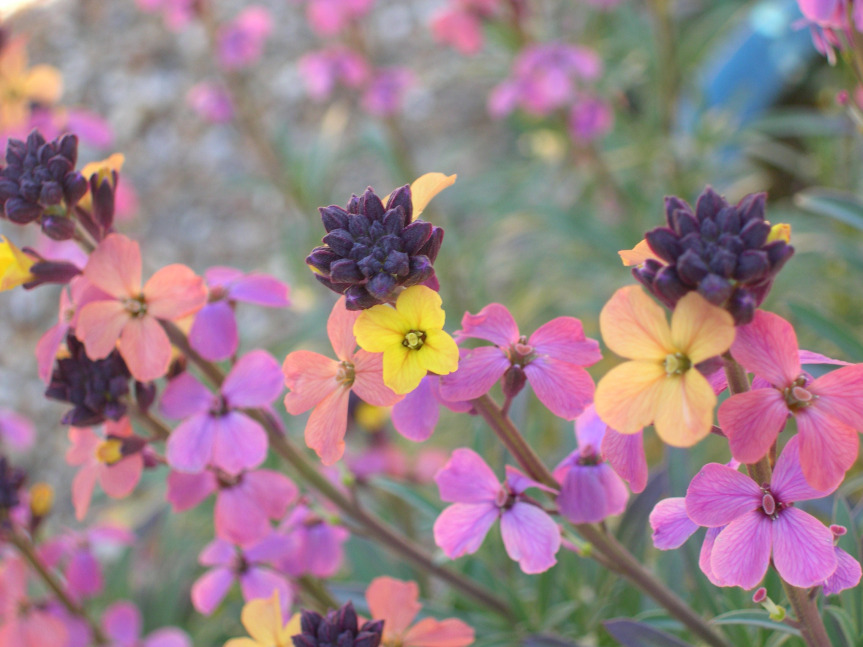
COMMON NAME:  wallflower
GENUS:  Cheiranthus
SPECIES:  C. allioni, C. cheiri
FAMILY:  Cruciferae
BLOOMS:  late spring-summer
TYPE:  perennial
DESCRIPTION:  Wallflowers come in lovely shades of orange, apricot, and yellow. Plants grow to a height of 14 to 18 inches. Numerous flowers occur at the ends of spikes. Leaves are long and narrow.
CULTIVATION:  Wallflower plants cannot tolerate extreme heat and humidity. Given a sunny, airy spot in a mild climate, though, wallflower produce bright blossoms over a long period, if it is watered regularly. The plants grow easily from seed, which should be sown directly in the flowering site in spring. Blossoms often come the first year from seed.

The following legend tells us of the origin of wallflower: The daughter of a Scottish lord fell in love with the son of an enemy border chieftain  The fathers, of course, took offense at the match, and the lord betrothed his daughter to a prince of his choosing and locked her up in a tower until the wedding was to take place. The chieftain’s son, posing as a minstrel, sang at the foot of the tower, suggesting that she throw down a rope ladder and run away with him. The girl threw him a blossom of a wallflower to indicate she understood and then began to climb down to her lover. Tragically, she slipped and fell to her death. The heartbroken young man adopted the wallflower as his emblem and wandered over the countryside singing of his beloved.
Because of this legend, the wallflower is a symbol of faithfulness in adversity, according to the Victorian language of flowers. During the Middle Ages, troubadours and minstrels wore bunches of wallflower blossoms as a sign of good luck.
The genus name is from two Greek words meaning “hand” and “flower” and refers to the custom of carrying these sweet-scented flowers as a bouquet to ward off the evil odors resulting from poor sanitation practices of the past. They were especially popular during spring festivals.
The French call it giroflee violier because it has the same sweet scent as does the carnation, often called gilloflower.
The common name comes from the growth habit of some species, which prefer to climb stone walls or fences.
Wallflower has also been called blood drops of Christ, for the deep red wallflower was supposed to have grown under the cross. Also known as the bloody warrior, wallflower was planted outside the cottage gate as protection against invaders.
Wallflower has always been valued as a medicine. The water of the distilled flowers, drunk twice a day for three to four weeks, was thought to make a woman fruitful. It has been used for uterine and liver disorders, to treat enlarged glands, and to purify the blood. Other remedies made from wallflowers have been used to ease pain during childbirth, treat palsy, and clear up cataracts. According to the doctrine of signatures, the yellow wallflower was used to treat jaundice. Scientists have discovered substances within the seeds, roots, and leaves that affect the heart, and for this reason, it is not recommended for a home remedy.

The plant was originally found growing in the Aegean Islands.

GRAPE HYACINTH – Good Witches Homestead

Source: GRAPE HYACINTH – Good Witches Homestead

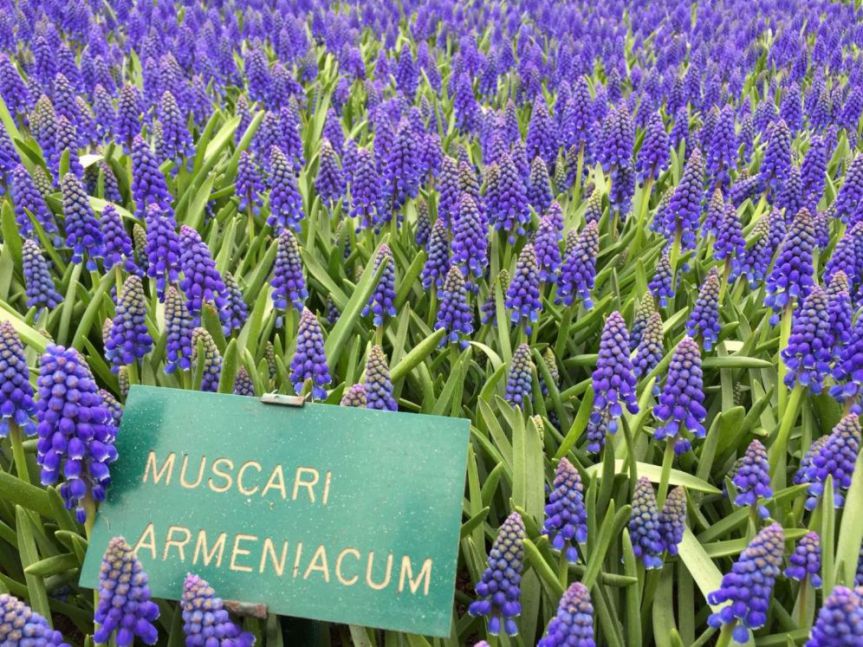
COMMON NAME:  grape hyacinth
GENUS:  Muscari
SPECIES, HYBRIDS, CULTIVARS,
M. armeniacum ‘Early Giant’-blue
M.a. ‘Blue Spike’-up to 12-inch blossoms.
M. a. ‘White Beauty’-white.
M. botryoides-pure white.
FAMILY:  Liliaceae
BLOOMS:  early spring
TYPE:  perennial
DESCRIPTION:  Most grape hyacinths grow 6 to 8 inches tall and produce spikes full of round, almost closed blossoms. They spread about 3 inches and have foliage that is long, narrow and grasslike.
CULTIVATION:  Grape hyacinths come from small bulbs, which should be planted 3 inches deep and 3 inches apart. For best effect, the bulbs should be planted in quantities. They are particularly effective under trees or shrubs. Grape hyacinth does equally well in full sun or partial shade. The leaves should be left to die back naturally after the flowers bloom.

Some species of the genus Muscari have a sweet, musky scent, and this is the reason for the name, for Muscari is from the Greek word moschos, or “musk.” Many gardeners originally grew the plant for its scent and not its beauty. The species name botryoides is also from Greek and means “a bunch of grapes.” This, along with the plant’s physical resemblance to the hyacinth, gives us the common name, grape hyacinth.
M. botryoides is also called the starch hyacinth, for it smells like starch.

Muscari_armeniacum2

Grape hyacinths are native to southern Europe, Northern Africa, and western Asia. The small bulbs have been used extensively in cooking. It has been suggested that boiled in vinegar {to reduce the bitterness}, the bulbs of M. comosa and M. atlanticum can be made into very tasty pickles. Other species are so bitter that they have earned the name Bulbus vomitorium. The first-century Greek physician Discorides wrote, “of this wort it is said that it was produced out of dragon’s blood, on top of mountains, in thick forests.”


HYACINTH – Good Witches Homestead

Source: HYACINTH – Good Witches Homestead

COMMON NAME:  hyacinth
GENUS:  Hyacinthus
SPECIES, HYBRIDS, CULTIVARS,
H. Orientalis ‘Amsterdam’-bright red to pink.
H. o. ‘Anne Marie’-light pink.
H. o. ‘Carnegie’-creamy white.
H. o. ‘Delft Blue’-blue
FAMILY:  Liliaceae
BLOOMS:  early spring
TYPE:  perennial
DESCRIPTION:  Hyacinths are widely used as a spring bulb. The top flower size is 7 to 7 1/2 inches in circumference. The flower spike is composed of neatly rounded mounds of small blossoms. Flowers are available in pink, white, cream, reddish pink, blue, yellow, and violet blue.
CULTIVATION:  Good drainage is a must for this plant because the bulbs rot easily if water stands on them. Bulbs should be planted in the fall, 6 inches deep, 6 to 8 inches apart. Mulch them in the fall to protect the tender spring growth from frost damage. Bulbs should be planted in an area that bets full sun or partial shade.

According to mythology, hyacinths originated because of the wrath of Zephyr, a god of the wind. Apollo, king of all the gods, fell in love with Hyacinthus, son of the king of Sparta. One day as Apollo and Hyacinthus were playing quoits {a game similar to today’s horseshoes}, Apollo threw the metal ring and Zephyr, jealous and enraged, caused the wind to make the metal ring hit Hyacinthus and kill him. Broken hearted, Apollo created the hyacinth flower out of the blood of his friend. Some even say that the petals look like the Greek syllables ai ai, meaning “woe.”
The Victorian language of flowers hyacinth means sport or play, and the blue hyacinth is a symbol of sincerity.
The Greeks dedicated this plant to Ceres, the goddess of agriculture. In ancient Sparta, annual Hyacinthian feasts were held. A Greek girl wore a crown made from hyacinth blossoms when she assisted at her brother’s wedding.
Greeks used concoctions made from the plants to treat dysentery and the bite of poisonous spiders. Such a concoction was also reputed to have the power to prevent a young boy’s voice from changing during puberty, making it very popular with singing masters of the time.
Hyacinths were first found growing in Asia Minor, as is suggested by the species name orientalis. Cultivated in Turkey and Persia, hyacinths were brought to England from Persia in 1561.

hycinths

The following story is told of how hyacinths got to Holland: Trading ships carrying crates of these exotic and expensive bulbs wrecked off the coast of Holland. The crates broke open, and the waves washed the bulbs ashore, where they rooted and produces beautiful flowers. However hyacinths got to them, the Dutch lent their magical hands to the plant, and by 1724 more than 2,000 varieties of hyacinth were found in Europe. Though interest in the bulbs never quite reached the level that tulips created, the price of hyacinth bulbs was quite high and competition for new varieties fierce.


Scilla – Good Witches Homestead

Source: Scilla – Good Witches Homestead

COMMON NAME:  scilla
GENUS:  Scilla
SPECIES:  S. sibirica
FAMILY:  Liliaceae
BLOOMS:  early spring
TYPE:  perennial
DESCRIPTION: Scilla has short {4 to 6 inches} spikes of bright blue or white flowers. The foliage is attractive and the growing habit neat, making it an excellent plant to use as a border or edging plant. It also lends itself well to an informal setting and looks very good naturalized under trees or shrubs.
CULTIVATION:  The small bulbs should be planted 4 inches deep in the early fall. Give them an open, sunny spot, and they will multiply rapidly.

Ten species of Scilla are native to Europe, and several of these have been cultivated for many centuries. Some records indicate that at least five species of Scilla were being cultivated as early as 1597.
The genus name means “I injure” and refers to the poisonous properties of the plant. Red scilla was even used as rat poison.
Scilla is often called squill. The bulbs of both the red and white squills were made into a concoction called a “syrup of squills.” This supposedly had medicinal properties, and a drug found in the bulbs was used as a component in heart tonics. The physiological effects of eating this bulb were thought to be similar to those of inhaling tobacco, for both acts on the nervous system. Roman statesmen suggested Scilla was a diuretic. It was also used to treat asthma and dropsy.
The Welsh name for this plant is cuckoo’s boot. S. bifolia was described by John Gerard, author of a sixteenth-century herbal, as “small blew flowers consisting of sixe little leaves spread abrode like a star. The seed is contained in small round bullets.”

During Elizabethian times, the starch used for stiffening collars was made from the bulbs of this plant.


Goddess Maat – secretsoftheserpent

By gserpent

Source: Goddess Maat – secretoftheserpent

c30c794c5961426e73f84e295903a5f4

Mainstream references will tell you that Maat was the ancient Egyptian concept of truth, balance, order, harmony, law, morality, and justice. Maat is a perfect example of how much knowledge we have lost about the ancients. Just like Osiris, Maat had nothing to do with death. She had to do with the underworld. Everything we know about Maat has come from the patriarch minds of Lower Egypt. Her true symbolism is way more interesting.

First off you need to know that all the Princesses and Queens in Egypt  held the title of Maakare. Even Hatshepsut held this title. When you break this down it becomes Maat, Ka, Ra. These women were very important priestess. The role of the priestess is said to be the Divine Adoratrice. Patriarchs will tell you that her role was to worship or adore the deity. They are simply being selective with the truth. The word they are using is ‘djuat’ and it can mean worship, adore or star. The truth is that she was the Star of the Gods. Out goes the image of a groveling woman on her knees and incomes the image of a woman who is so important to the gods that she is the star! Maakare literally means “Maat is the soul of Ra”. They try to cover this up by saying “Truth and Justice is the soul of Ra”. The truth and justice they are referring to are man-made laws. As you will see, they don’t know the true meaning of Maat.

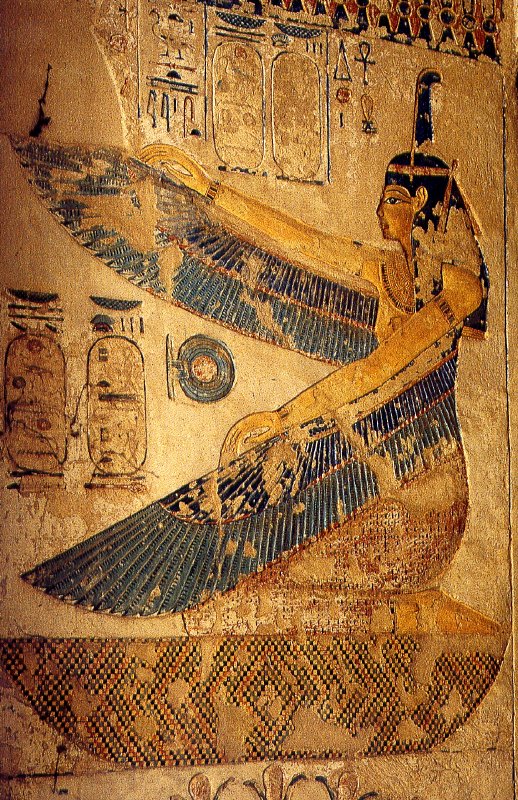
Maat is sometimes portrayed with wings. In Egypt winged gods and goddess always represent non physical, abstract dynamics – Intellect, spiritual, imagination, psychic. You can’t mention Maat without the feather. The feather was actually the symbol for Maat. She was supposed to measure the feather of knowledge against the heart. What is going on here? What is actually being weighed? Maat is the goddess of truth, justice, balance and harmony, but not in the way you think. Maat is a goddess and goddesses could care less about man-made laws and order. Maat is about nature or the Laws of Nature. So the feather represents the laws of nature. Imagination is the knowledge of the heart. Weighing the feather against the heart is measuring purity, innocents, and harmony of Universe. Thoth weighing the soul is the knowledge of nature. The scales are weighing mind, body and spirit, matter.

This weighing did not happen after someone died. It happens when you enter the underworld or subconscious. In other words, she is there during the wake up process. Most people, if not all, fear the sacred feminine. They don’t understand it. All humans are in the masculine, but females are closer to the sacred feminine. They are the sacred feminine expressed in physical form, so of course they are closer to the sacred feminine. Our minds are 10% conscious and 90% unconscious. We are in the conscious mind all the time. This is what is meant by we only use 10% of our brains.

The patriarch Hyksos hijacked Maat and either out of ignorance or greed they said she measured your soul to get into paradise. It is written in the Papyrus of Ani that when people died they had to recite 42 negative confessions. The Papyrus of Ani was written by the scribe Ani, a Hyksos sympathizer. He wrote these about the time they were kicked out of Egypt for the first time. They got the 10 commandments from these negative confessions, but instead of saying “I have not” they combined them and put “Thou shalt not”. In another text by Ani, called the Maxims of Ani, they got Jesus’ Sermon on the Mount and the Lord’s Prayer. To all you mainstream historians, theologians and researchers, your silence is deafening on this!

In truth Maat herself is the scales. She is bringing the ego to atonement. She is not crushing the ego. Once you find the goddess, the ego becomes an agent for her. Other cultures used the tip toeing goddess to symbolize walking the line of balance. This was not to make sure chaos never happened. The Upper Egyptians saw chaos as necessary because it started the wake up process. Chaos keeps you from becoming static. They did not see chaos as evil. Pain and struggle creates life. All you have to do is look at the birth of a child. Nature gives us the answers. The Lower Egyptians are the ones that made chaos evil. They are also the ones that created all the patriarch religions of today. Religions were created to keep you from meeting your higher self. Maat shows up at the beginning of the wake up process to see if a person is balanced enough to truly “wake up”. The goddess(sacred feminine) and self-love is the key to making it through the underworld. Maat is showing there is a need for order and balance, but everyone is different and needs to find their own individual balance. There is a need for moral law, but moral law should help people see the universal will and prevent people from dominating others. The moral laws we have today ensure that people are dominated and controlled.

602px-ammit_bd

I know there will be questions about Ammit. Ammit is supposed to be a female demon. She had a body that was part lion, hippopotamus and crocodile. Ammit lived near Maat’s scales. Supposedly if someone’s heart wasn’t pure, Ammit would devour it and the person could not go forward on their voyage. Once she swallowed the heart the person became restless forever. They were said to die a second death. I have shown before that the ancient Egyptians said the soul died when it entered a body or fleshy existence. Your soul died when you were born. This was considered the first death. When a person enters the wake up process, Maat weighs their heart with the feather of knowledge. If they have the sacred feminine or nature in their heart they could proceed. If the sacred feminine did not balance with the masculine, they don’t wake up and are restless. Because the person does not wake up they were considered to have died a second death. It is said that sometimes Ammit would stand by the lake of fire and she would cast the unworthy hearts in and destroy them. This has to be a later interpolation by christians because it is being compared to hell. In truth, fire is one of the four elements of consciousness. Fire is intellect. If Ammit is casting hearts in to the lake of fire, it is to get intellect or knowledge. The ancients thought ignorance was the greatest evil and there was nothing more precious than knowledge.

I’m not saying that people who don’t wake up are restless, but just look at the world. We live in a restless world by design. A racing mind is because our world is traumatic. If your mind is restless you can’t hear your higher self. I know my mind was pretty damn restless before I woke up. If you have truly ‘woken up’, for the most part your mind is at ease. It is what happens when you find your power. We all fall off the horse sometimes, but knowing your true power makes it easier to get back on. You have to conquer the masculine for the feminine to rise. Once you do, find your own balance. Get out in nature. She will help you find that balance. Nature is the living subconscious and nature is balanced. Maat is showing you to find the feminine principal in yourself. The sacred feminine is the forbidden fruit. Balance the scales by eating the forbidden fruit.  Balance is the key to everything.

The Victorian Language of Flowers – Good Witches Homestead

The language of flowers was quite suited to Victorian England, for it allowed for communication between lovers without the knowledge of ever-present chaperones and parents. Messages that would be a social impossibility if spoken could be conveyed by sending certain types of flowers. How these flowers were sent was of great importance as well, for this was also part of the message. If the blossom was presented upright, it carried a positive thought. If the flower came upside down, it might mean quite the opposite. If the giver intended the message to refer to himself, he would incline the flower to the left. If the message referred to the recipient, it would be inclined toward the right. If flowers were used to answer a question and were handed over with the right hand it meant “yes’;  with the left hand, the answer was “no.” Other conditions of the plant were important as well. For example, if a boy sent a girl a rosebud with the leaves and thorns still on it, it meant ” I fear, but I hope.” If the rosebud was returned upside down, it meant, “you must neither fear nor hope.” If the rosebud was returned with the thorns removed, the message was “you have everything to hope for.” If the thorns were left but the leaves removed, the message was “you have everything to fear.” If the young lady kept the rosebud and placed it in her hair, it meant “caution.” If she placed it over her heart, the message was clearly “love.” The Victorians took the language of flowers a bit further and actually began attributing personalities to various flowers, as Thomas Hood exemplified:
The cowslip is a country wench,
The violet is a nun;-
But I will woo the dainty rose
The queen of everyone.

During the last part of the nineteenth century, several floral dictionaries were published. Among these was The Poetical Language of Flowers {1847}, The Language and Sentiments of Flowers {1857}, The Floral Telegraph {1874}, and Kate Greenway’s The Language of Flowers, first published in 1884 and republished in 1978. Because more than one dictionary existed, the possibility of error was great. One of these floral misinterpretations was famous by Louisa Anne Twamley in her poem “Carnations and Cavaliers.” The poem describes how a knight gave his lady a pink rose, meaning our love is perfect happiness. His lady either did not know about the language of flowers or did not care, for she sent back to him a carnation, which means refusal. The result was the tragedy: the lovers died for each other’s love.

It was during the Victorian period that tussie-mussies became popular. A  tussie-mussie is a small bouquet of fresh or dried flowers, usually surrounded by lacy doilies and satin ribbons. Tussie-mussies were popular, in part, for the very practical purpose of warding off bad smells and disease. Some of the most useful flowers for this purpose included lavender, rosemary, and thyme. Tussie-mussies made marvelous gifts then, and they still do. They are easy to make, and, accompanied by a card explaining the meanings of the flowers used, make a uniquely personal present. Tussie-mussies can be made from either fresh or dried flower. Choose a relatively large, perfect blossom for the center flower. A perfectly formed rose blossom is wonderful for this. Surround this with smaller blossoms and ferns and put the stems through a doily or starched lace. If using fresh flowers, wrap the stems with damp paper towels and then cover them with plastic wrap or foil held in place with florist tape. If using dried flowers, simply wrap the stems with florist tape. Fresh flowers that are good to use in tussie-mussies include rose, baby’s breath, cornflower, phlox, aster, and carnation. Suitable dried flowers include strawflower, statice, honesty, ageratum, and sedum.

Flowers and Their Meaning … […]


Read the entire article at its Source: The Victorian Language of Flowers – Good Witches Homestead

What Was The Floral Calendar? – Good Witches Homestead

Calendars have existed for thousands of years in various forms. The Chinese, Japanese, Romans, Egyptians, and Hopi and Navajo Indians, among countless others, developed calendars.
Each of these calendars was different, but each was an accurate means of keeping track of the seasons and the passage of time. Because calendars were so closely tied with nature, it followed logically that different months should be associated with particular plants and flowers.
The Chinese, especially, used plants to keep track of time. According to Chinese folklore, two trees grew at the Court of Yao. One tree put forth one leaf every day for fifteen days as the moon waxed, and then it shed one leaf every day for fifteen days, as the moon waned. In this way, they measured the months. On the other side of the garden was a tree that put forth leaves every month for six months, then shed leaves every month for six months. In this way, they kept up with the passage of the years. A Chinese legend dating back to the seventh century A.D. says that Ho Hsien-Ku, daughter of a humble shopkeeper, ate the peach of immortality given to her by Canopus, god of longevity. She then became one of the eight Taoist immortals and decreed that honor should be paid to a particular flower each month of the year. This formed the basis of the Chinese floral calendar. Through the centuries, other civilizations adopted the custom of using a floral calendar.
floral clockPrimary among these were the Japanese and English. The English took the art of keeping time with plants to an extreme with their experiments with a floral clock. A pet project of Carl Linnaeus, the floral clock, or watch of Flora, never worked quite as well as he has wished. […]


Rest of the post at its Source: What Was The Floral Calendar? – Good Witches Homestead

Equine charities unite | The Donkey Sanctuary

Helping communities in EthiopiaA donkey working on a construction site
UK equine welfare charities Brooke, The Donkey Sanctuary, SPANA and
World Horse Welfare today announce their first formal coalition.

Formed specifically to put policy into practice, the coalition aims to advise, motivate and support the implementation of the first ever global welfare standards for working horses, donkeys and mules. These landmark standards were approved by the World Organisation for Animal Health (OIE) in May 2016 following advocacy and technical support from Brooke and World Horse Welfare.

This is the first time all four major charities have formally joined forces. Although not law, these landmark changes finally give legitimacy to calls for equine welfare to be improved around the world.

Petra Ingram, CEO at Brooke, who spearheaded the formation of the coalition and will be its Chair for the first year, believes that it’s the right vehicle to bring the standards to life: “A respected champion of change can be the difference between success and failure when it comes to implementation. Our message to countries is: let us help; equine welfare is an ally of humanitarian issues.”

With 180 OIE member states now acknowledging the importance of working horses, donkeys and mules, the time is right for coordinated action to implement the standards around the world.

Chief Executive of World Horse Welfare, Roly Owers, said “We know that horses, donkeys and mules are essential to hundreds of millions of human livelihoods, and it is heartening that the world is now recognising their versatility and importance.

“World Horse Welfare looks forward to working in partnership, bringing our influencing skills and 90 years of practical expertise gained helping equines around the world. The scale of the challenge to help 100 million working animals is so large that we must work together to get them the recognition and support they desperately need.”

As world-leading experts in equine welfare with a combined geographic reach covering the major populations of the world’s working equines, the four UK-based charities will provide a unique resource.

The coalition’s goal is to share a wealth of professional expertise and technical know-how by jointly developing training resources and working with governments, academics, communities and professionals to help put the standards into practice within the contexts of different countries, cultures and economies.

Geoffrey Dennis, Chief Executive of SPANA, said: “It is very encouraging that there is now international recognition for the working equines that play a fundamental role in supporting the livelihoods of millions of families worldwide.

“Through veterinary treatment, education and training for animal owners, SPANA works to improve the welfare of these vitally important horses, donkeys and mules across many countries. We are looking forward to working in partnership to ensure that the new standards are translated into practical support and action that makes a tangible difference to working animals and the communities that depend on them.”

The coalition’s work will use the skills the four organisations have in welfare assessment training; building capacity in equine owning communities; equipping service providers (including farriers, saddlers and vets) with the skills and tools required to provide affordable quality services. It supports universities in curriculum development, and postgraduate vets with continuing professional development; as well as raising awareness of the importance of working equids to human livelihoods with policy makers.

Mike Baker, CEO of The Donkey Sanctuary, said: “This is a fantastic milestone in global equine welfare standards. Our new coalition will really maximise welfare improvements as we share our skills, resources and experience. Millions of donkeys, horses and mules work extremely hard every day and it will be wonderful to highlight how vital they are for their human owners and communities.”

Source: Equine charities unite | The Donkey Sanctuary

Dana Perino: How I reset my heart (after a brutal election) — My visit to Mercy Ships | Fox News

Last October, after an intense, bizarre and exhausting day covering the election, I came home and told my husband Peter I needed to regroup.

I was suffocating from superficiality. I needed to reset my heart, reconnect with him, and do something together as a couple to the benefit of other people.

So we booked a five-day trip. Our destination: Cotonou, Benin in West Africa, to visit Mercy Ships.

Mercy Ships is a surgical hospital ship whose mission is to bring health and healing to the forgotten poor. We’ve been involved with the group for several years. For this visit, we brought along Erin Landers, the sole employee of Dana Perino and Company. She’d never been to Africa, and it was fun to watch it through her eyes. “Did you see that?!” She loved it. And then some.

I wrote this on the long flight home:

The trip to Benin was our second visit to Mercy Ships. The first was in August 2013 when the ship was in Pointe Noir, Congo. We were there for the screening day, before the surgeries even started, when 7,500 people lined up hoping to be a candidate to be cured of what ailed them.

Some problems are not fixed by surgery, like cerebral palsy. Watching the gentle way the nurses turned non-surgical cases away was heart wrenching. But they were also able to say yes to many, and we shared their relief and joy as they moved on to scheduling. (As an example of how much need there is in this part of the world, Mercy Ships filled up all nine months of goiter surgeries before noon on screening day.)

That day, a little boy, two-years-old, was in and out of consciousness and the people in line raised up their arms and passed him to the front. His name was Emanuel.

A doctor looked at him and couldn’t see anything wrong — until she asked him to open his mouth. There was a tumor growing on his palate that was obstructing his breathing. The doctors got him stable, and Emanuel was the first to be operated on during the ship’s stay in Congo.

The surgeon was a friend we made on the ship, Dr. Mark Shrime (Assistant Professor of Otolaryngology and of Global Health and Social Medicine at the Harvard Medical School). Dr. Shrime volunteers two months a year on the ship, which he has that written into his contract (note to self).

When I talked to him in the fall of 2016, he said he’d be back on the ship in March, so we booked our trip to overlap with his.

At dinner one night, I asked how Emanuel was. Unfortunately, no one knows. They haven’t heard anything since he was treated.

We know he was a healthy and happy boy when he left the ship, and that he was loved by his mom and dad who were there by his side. But it’s also Africa — follow up is difficult, though technology will help the ship try to stay in contact with patients in the future.

We agreed that we must find out how Emanuel is doing. Someone at the table had a friend who was still there, and they knew someone who worked at the port where Emanuel’s dad worked. Six degrees of separation applies in Africa, too. I bet Dr. Shrime that he and Emanuel would be reconnected by April.

There were several volunteers still on the ship that we’d met on our first trip. Some of them stay for many years. All of them raise money from their churches and communities, including online ones, and they pay a ship’s fee to cover their expenses.

Some people, like Keith Brinkman, have spent 28 years on the ship — what a career he’s had (and one of his financial supporters follows me on Twitter. How about that!).

Others, like Dr. Shrime, come when they can. Surgeons, dentists, anesthesiologists and ophthalmologists, for example, can come for as little as two weeks, while other jobs require a longer commitment due to training requirements or for teachers.

One of the full-timers that works in the operating room says he loves having visiting surgeons on the ship, but if they are there for two weeks they want to work 24/7 and get as much done as possible, which means the others don’t get a day or two to recharge. And one of the reasons they brought their families on the ship was to have more time with them. There’s a lot of what we used to call “forced family fun!”

In Benin there’s a cultural custom that family members wear the same pattern of traditional African clothing. The ship knows a few tailors who come on and make special outfits for everyone.

When we went out one night, several of the couples dressed in matching clothes. When in Benin! (Though Peter, Erin and I had a bit of a uniform, too – khakis and blue shirts. “YOBOS!”, we learned, is the nickname for white people — it wasn’t an insult; rather more playful and we laughed, too).

We made some new friends, too — including a young woman named Renee Joubarne from Canada who is relatively new to Mercy Ships and works in the communications office.

She patiently drove us everywhere and served as our interpreter. Her first service was in Madagascar. Next stop, Cameroon. We told her that back in the States, they’d call her a “Girl Boss.” She isn’t prideful, but I think she kind of loved that title.

We met nurses from Michigan. One of them is going back at the end of this field service to work as a travel nurse and pay down her student loans. Her girlfriend opted to stay on and will work in Cameroon as a ward nurse.

The head operating room nurse is from Holland and such a great leader — I’d follow her anywhere.

The galley staff is amazing — they make so much food, buying local when they can, cooking birthday cakes for celebrations, making sure anyone with a food allergy has some options, and being so cheerful about it all.

The captain is John Barrow from Australia. Quite a character.

When we were touring the ship’s bridge, I said “What’s it like to be captain of a ship that stays in port for nine months at a time?”

He was a good sport and laughed.

Captain Barrow and his wife are raising two boys on the ship.

“What’s the hardest part about that?” I asked.

“Boys want to run. But there’s no running on the ship. And as the rule enforcer for everyone on the ship, I’m always telling them to stop running!” he said.

Captain Barrow said that recruiting for non-medical staff was really important, because without the support staff (both on and off the ship), the medical team can’t do their work.

For example, he said that they really needed a car mechanic for their fleet of vehicles. I asked if they’d tried to tap into returning veterans who want to continue doing good work with organized, meaningful missions, and he thought that sounded like a good idea.

So that night during a live hit with “The Five,” I made an appeal for a car mechanic. Well, the next day there was an application in from a 25-year-old veteran with the required skills who said he was interested in the job.

The night we left, he caught me in the hall and said, “You’re a woman that’s good for your word.”

Well, it’s better than being good for nothing!” I said.

I hope I see him again one day.

There was also Timmy Baskerville, who started as a mechanic and ended up on the communications team as a photographer. Remember his name — his art is powerful. He started on the ship doing one job and ended up realizing he had a hidden talent and has a future as an artist.

I loved talking with the dentist from Peru, and the couple from Pennsylvania who sold everything and decided to give this a go because retirement felt like a death sentence.

I also enjoyed a couple from Oklahoma that is raising their three kids on Mercy Ships. The father is an anesthesiologist who could make a big salary in the States, but they wanted this experience for their family.

Their 11-year-old son agreed to do an interview for my package on Fox News, but he had a question for me, too. I said, go ahead ask me anything. But he got too shy and looked to his mom for help.

It turns out he wondered if I knew anyone in the States that might be willing to donate some AstroTurf that can be rolled or folded up and put away to be stored on the ship. The only place for them to play is on the dock and he wants to play “American football” (not just soccer and frisbee).

“Who’s your team?” I asked.

“The Seahawks,” he said.

“Is that allowed when you’re from Oklahoma?”

“Well, I don’t want to support the Cowboys!”

“How about the Broncos then? That’s my team.”

He scoffed.

“Ok, the Seahawks it is.”

I told him I didn’t know any company off the top of my head that made that kind of AstroTurf project but that I would ask. I posted it on Facebook with a photograph of the cement dock where the kids play. The first response came immediately from a man who works for Shaw and said, “I think we can do that.” Lesson: don’t be afraid to ask.

The kids living on board attend a school called The Mercy Ships Academy. There are thirty-five students, from nursery school to 11th grade. The classes are taught in English. On my tour, I met fifth graders learning synonyms and eighth graders building apps.

I talked with a social studies teacher that was creating lessons about different forms of government.

One of my favorite teachers is Miss Beth Kirchner, who used to work for Disney and can draw Mickey for her students to color in. Dave is their principal — he’s from Australia. Wonderful chap. He’s leaving in a couple of months and the school needs a new principal ASAP (hint hint) so that the kids can keep attending the school on the ship with their parents. Otherwise they’d have to go to boarding school. “Do not want” is an understatement.

I met a William Wolfenberger from Kansas in his early 20’s who works in the engine room on the ship – before this job he’d never been on a boat or seen the ocean. The second youngest on board, he’s grown a beard and seems to always be in a good mood, even when we were talking about the cabin he had where his towels never completely dried.

He is friends with Tyler Shroyer, a young man from Ft. Wayne, Indiana. Tyler spent his time on the ship studying business and will be going back this year, the oldest of seven boys, to help his father grow his concrete company. He also has a blog called “From the Barnyard to Benin.”

For Christmas this year, he sold his beard at an auction — they get creative with gifts. Whoever won got to dye the beard purple or pink (he has red hair). The cost of this item? $25.

“So, if I put up $26, I could get you out of it?” I asked.

“Yes, I suppose you could,” he said, a bit hopeful.

“Not that I’m going to,” I said. “I don’t want to spoil the fun.”

There was a girl named Anna Psiaki. Tall and willowy, long blond hair. She’s from upstate New York, one of nine children. She’s a writer on the ship — a poet, too.

Her team says she’s the first to get to know all the locals and has amazing stories of how people just invite her in for a meal, ask her to babysit their children and make her special gifts.

We saw her off the ship, too, at the French Institute where a jazz concert was playing. She was wearing a red sweater despite the heat. It was hideous and I said so.

“It’s meant to be!” she said.

It was an ugly Christmas sweater a friend had left behind on the ship. She wore it with no inhibitions. Anna is fully herself. I admire and envy that.

“What number were you out of the nine?” I asked her.

“I was the fifth,” she said.

“So no one paid attention to you?”

“I don’t think anyone even knows I’m in Africa.”

That was one of the funniest things I heard on the ship.

Then there was nine-year-old (almost 10!) Harry. His dad is the second engineer who served in the Navy for New Zealand. Harry, according to his dad, “loves the ladies.” He was not shy about saying hello and telling me all sorts of things.

“You are quite something!” I said. “You have a way with words.”

“Well, my mom says I can be about as diplomatic as a starving rhinoceros.”

“Can I use that line back home on ‘The Five’?”

Permission granted. I started wondering who’d that best describe back in the States.

We met a British couple that really should have their own reality show. Ally and Amy Jones. He’s the human resources director and she’s the Nurse and Medical Capacity Building Manager. Everyone loves these two and their great senses of humor.

Ally even took Peter surfing one morning. Well, Peter said it wasn’t really “surfing.” It was more like “fell off a short board over and over again.” The waves are rough in West Africa, but the temperature was perfect.

The night before, Amy was the designated driver to get me back to the ship in time to do my Fox News TV hit. We had to leave early, and our vehicle was blocked in. The parking attendants shrugged and looked around without meeting our eyes. But Amy was determined to get me back to the ship. The guys got one car moved. That left about 14 feet of space for a 15-foot long vehicle. She started maneuvering the vehicle. The men were all yelling instructions at her in different languages (she speaks English, French and some of the local language, Fon). The French military guard across the street came over to assist – these guys seemed bemused by this red headed woman driving a big SUV. She was confident. When she gunned it, the military guy jumped out of the way and the others all were shocked into laughter and a little bit of cheers. We made it with about a centimeter of space on each side. I kept saying, “Don’t worry, Amy. If I miss my hit, this will be the best reason EVER.” She was another Girl Boss. And one with a huge heart.

They’ll be leaving the ship soon for Amy to give birth to their first baby. Ally told me her condition upon agreeing to marry him was that he had to be comfortable living out of a suitcase. She loves to get off the ship and work in the village, while he likes being on board (with air conditioning and showers). A perfect match.

“Is the baby going to have to live out of one suitcase, too? I asked.

“Yes,” Ally said. “Well, ok, maybe two.”

They’ll be great parents.

Besides meeting new people, we got to see a lot more this time as the ship has been in port for about nine months and is preparing to leave this summer.

The hospital wards were full. Dr. Shrime performed four surgeries our first morning (Peter and Erin went in and filmed, while I shied away and dealt with motion sickness that morning — which is not the same as having morning sickness, so let’s not start any rumors).

We went to a celebration of sight where seventy patients that very week had gone from blind to seeing in just a couple of days. They danced and told their entire stories – no one summarized (we had to duck out or we’d have been there all day).

Then we visited patients in the outpatient tents who were having physical therapy to make sure everything was going well after their surgeries. It’s not of much use to have a skin graft to repair a burn if you don’t do the exercises to ensure range of motion. I was impressed by the care — from start to finish. No one is urged to go home before they’re ready.

The most powerful event was a New Dress ceremony held for three women who had their fistulas repaired on the ship. I am particularly interested in helping to heal women who have a fistula after their pregnancies.

I first became aware of it at the Aberdeen Clinic in Sierra Leone where women there stayed for three weeks and got to attend classes. The day I was there, they were learning to count to ten. Pause. Think of that. Learning to count to ten after you’ve already had at least one baby, probably more.

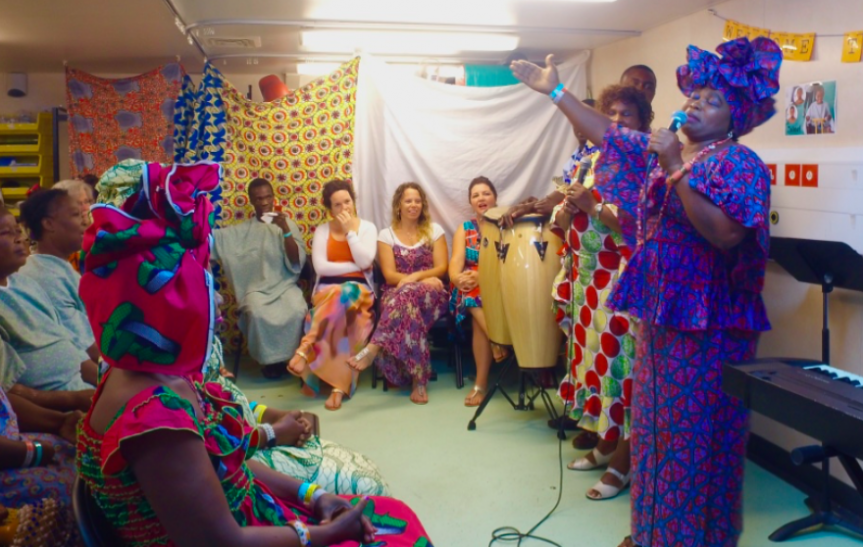
The patients get a new dress after their fistula surgery to celebrate the fact that they’re now healed. That morning on the ship, it was standing room only. The chaplain led the worship, the band played songs, and the patients and volunteers sang and danced. One of the songs lasted for twelve minutes — it had a good beat, and I was kind of bummed when it finished.

I was amazed that each of these women felt confident and strong enough to stand up in front of all of us, with no inhibitions, and give a speech — many fistula sufferers are ostracized for their condition and withdraw from society. Often they have their children taken away from them. They become broken, just shells of their former selves.

The first patient said she’d suffered from the condition for nineteen years — more than half of her life. She’d been shunned and no medical care was able to address her problem. Until the ship.

“Hallelujah!” she said. Indeed.

Then she led everyone in another song. I didn’t know the words, but I clapped and danced next to the patient who had beat me in Connect Four twice the day before.

“Rematch?” he said with his eyes.

“You bet,” I nodded. He was good though. A Connect Four ringer.

Despite those bits of humor, I cried for the entire ceremony — for their suffering, for the guilt of not being able to do more for them, and for the women who will not get this chance of a surgical remedy.

But mainly, mine were tears of joy. And maybe some tears of relief that my heart wasn’t as hard as it felt by the end of the election season. Then more guilt because with that thought I was making this about me. Is there no end to our self-absorption?

One of the African volunteers (a full-timer on the ship) who saw my tears stepped out to get me a tissue, a sweet gesture that, guess what? Made me cry even more.

As I tried to pull myself together, I was surprised to be called up to present one of the women with a gift. As self-conscious as I was since I really didn’t do anything to make her repair a reality, I wanted her to know how I felt.

I gave her an enthusiastic hug and she hugged me back as women who just understand each other.

“I’m so happy for you,” I said.

She didn’t speak English, but she knew what I meant.

She kissed my cheeks four times. Four is better than two in Benin.

At the end of the ceremony, the nurse in charge of the women’s clinic said to them. “All we ask is that when you leave here today, let God walk with you. You are not alone.” Yes, please do that. Don’t walk alone.

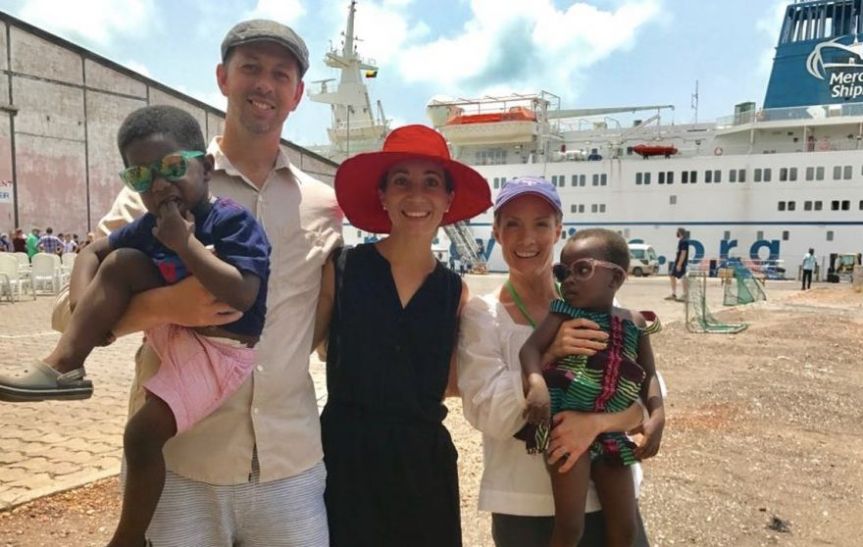
On Saturday, the ship held a party for kids from a local orphanage called Arbre de Vie, which means “tree of life”. The young couple that runs the orphanage is from Ohio. Ashley and John Reeves.

Ashley wore a black sleeveless dress, wedged sandals and a red straw hat. I liked her style. She held a toddler boy named Codjo. He called her mommy.

I wondered if they all did, but no, Ashley and John are adopting him.

He was brought to the orphanage when he was twenty days old. His mother had had a C-section and was sent home. But the placenta was still inside. Oh. Oh dear. What a tragic end to her young life. Story after story like this in Africa.

The orphanage has about thirty children under its care at any one time. They live way outside the city. I hear the place is joyous. They do all they can with what they have. They just got electricity last summer and a new kitchen, but their staff still prefers to cook outside over a fire. It probably does taste better anyway.

One of Ashley and John’s other kids is ready to go to university and wants to study medicine. They’ve done so many great things so far in their life, and being around people like that can make you really question your contribution to the world.

As we walked together after an interview, she thanked me for spreading the word.

“Well, none of us ever feels like we do enough,” I said.

She stopped walking, we shifted the babies we were holding from one hip to the other.

She said gently, “But you’re here. And not everyone can be here. You have unique talents that will help us be able to stay behind and do even more.”

I nodded, speechless, and was glad I was wearing sunglasses.

THE HOPE CENTER

Martha Rodriguez runs the Hope Center. She changed her name badge with a pen to go from public service to public servant. She grew up in Michigan and then worked for a chemical company in Houston.

She retired but wasn’t ready to settle. She was ready to do. And doing ended up being taking the lead at the Mercy Ships Hope Center. When she took us on a tour, she was full of joy and energy. “Can you believe I get to live here and do this?”

She loved every bit of it — the local day crew she hired all greeted her with big smiles. The children ran to her. The mamas met her gaze that to me said, “Thank you, thank you, thank you.”

The cooks make over 300 meals a day out of an outdoor kitchen, and they were washing beautiful lettuce leaves and had a huge bowl full of avocados (I kind of wanted one but I didn’t dare).

At one table, patients ready for surgery in the coming week were eating with their fingers, some with gigantic tumors on their faces that would be gone by Friday. In the heat, in their discomfort, they all stood to greet her, smiling. (Can you believe I got to come and see this?).

At the laundry area, several kids — some patients, others siblings or children of patients — played with whatever was handy — a stick, a broken race car.

I gave one little girl Felt Jasper to hold and she rubbed the soft material all over her face, put his pink Barbie stethoscope in his ears. Then the children saw Erin and the camera equipment and in unison they asked for what kids the world over want – a selfie! It turns out even little babies in Africa know how to swipe a phone.

Martha is an attractive woman. She has a long pony tail, letting her hair turn a lovely grey.

I thought I’d like to do that one day. Run a Hope Center and have pretty hair I don’t have to worry about coloring. And to have a heart that big.

As we were leaving to go back to the ship, an older couple came to the door. The husband was blind, walking with a cane and being led by his wife. They’d traveled from up country and said they were there to be pre-screened for his surgery. The problem was they were a day early and the center was full. It was only 2 p.m., and Martha said she’d figure it out, not to turn them away yet.

In the car, she called someone and explained that they’d come a long distance and needed a bed. But she was told there wasn’t a room that night and that they believed couple had a place to stay, perhaps with family.

Martha said good-bye and then, to no one in particular, said, “But they’ve traveled so far. There has to be a way. How could we turn them away?”

“I could never. Ever,” I said from the back seat, admiring and wanting to be more like her.

She was here and she was doing.

What was I doing?

A word about Benin. I’ve traveled to many countries in Africa, and to me Benin felt the most hopeful. It has a new president with a business background who is focused on the economy and expects results.

“But I am wearing the helmet, officer!”

I kind of appreciate the mix of compliance and defiance. But I do hope they start to wear their helmets.

With a stable government and a young population (65 percent of the country is under 35), and decent infrastructure in the main cities (that’s all relative in Africa), the city feels alive. And fairly safe.

Cotonou is the economic capital, and we ate at an Indian restaurant, Shamiana, whose pappadam were better than any I’ve had in the States.

Ouidah is the cultural city where millions of slaves died or passed through the Gate of No Return before the terrifying trip over the Atlantic.

When we were there, busloads of schoolchildren were there on field trips. They were colorful, loud, and funny.

Looked to me just like kids look anywhere. I got a photograph from behind as they all gathered at the sea, many of them seeing the ocean for the first time. And I wished them well — that they’d have peace and opportunity and that they’d keep giggling like that.

Finally, we met the U.S. Ambassador, Lucy Tamlyn and her husband Jorge Serpa, wonderful representatives of the USA in a country that aligns with America’s interest for freedom and opportunity. They are wonderful people who have both dedicated their lives to foreign service.

Peter and I feel lucky to know them – they have the best stories! (Like when Jorge was evacuated in Chad…TWICE). I finished my trip feeling like Benin had a hopeful future.

And not to be left behind on the ship, I took Caleb Biney with me. Caleb is fourteen and lives on the ship with his family. He’s a part of Scholastic’s young journalism program, and was able to interview Amb. Tamlyn for an article for Scholastic’s News Kids magazine. He was also taller than both of us.

As we left the ship, I told Peter I want my obituary to say, “Loved hellos. Hated goodbyes.”

Humans can make friends easily, if they are open to it and are interested in other people. There’s so much cultural and language diversity on the ship, but we all bonded over something that means a lot more than anything else I do every day — to serve others who need our help, and to do it selflessly and joyously.

It’s actually rather simple. It just took traveling halfway around the world for me to be reminded of it.

We accomplished what we set out to do — reset our priorities and reconnected with each other.

And now…back to our previously scheduled program, but with lighter hearts and renewed enthusiasm for the things that really matter.

Dana Perino currently serves as co-host of FOX News Channel’s “The Five” (weekdays 5-6PM/ET). She previously served as Press Secretary for President George W. Bush. She is the author of the new book “Let Me Tell You about Jasper : How My Best Friend Became America’s Dog” (October 25, 2016). Ms. Perino joined the network in 2009 as a contributor. Click here for more information on Dana Perino. Follow her on Twitter@DanaPerino.

Source: Dana Perino: How I reset my heart (after a brutal election) — My visit to Mercy Ships | Fox News


Storytime with Rachel F Hundred

Creating stories for pleasure

Sibyl Moon

Shh I'm Writing

Sylum Clan

Nothing is True. Everything is Connected.

Laura Bruno's Blog

Medical Intuition, Astrology, Soul Readings, Intuitive Coaching, Tarot, Reiki: Inspiring and Empowering Visionaries, Artists and Healers

Fire Family Conflagration

Weekly Challenge from the 118, 126, & 113

Kiayea's Corner

all things fanfic...

Crystal Dawn Books & Gifts

Crystals, and all things Magical

Starkindler's Realm

welcome to the inner workings of my mind...

The Herb Society of America Blog

Learn • Explore • Grow

Dr. Gary Samuelson

A Journey of Discovery

Kylia's World

Where Canon has No Meaning and Universes Collide

originaltempus

Just another WordPress.com site

Profilers For Christmas

The Crime Drama Advent Calendar

Entangled Wood

Just another WordPress.com site

brokenamethystwrites

Here there be Dragons

Toasterpop's Fiction

Fanfiction and original stories from Toasterpop

Breakaway Consciousness

Seeking Ideas Beyond Conventional Thought

gypsysue

Writting, Drafts, Ideas

Ellywinkle

All Things Wicked and Wonderful

Natalie J. Case

Author, Editor, Photographer, Artist

Your Stories. Your Wall.

Honoring their service and building their legacy. The official blog of the Vietnam Veterans Memorial Fund.

00Q Reverse Big Bang!

Art and Stories for all things 00Q, since 2014

The Wild Hare Project

Where the Writer Comes First.

Anthea Davis

FanFiction Author

Every Fandom Bangs

The home of the Every Fandom Bang and Reverse Bang!

Penumbria

n. pl. pe·num·brae (-br) or pe·num·bras 1. A partial shadow, as in an eclipse, between regions of complete shadow and complete illumination.

This Crooked Crown

Witchcraft for the Everyday and the Extraordinary

This is who I am...

... and this is what I like

Fanfiction Recommendations by Isabelle Disraeli

Fanfiction Recommendations ~ Slash, Femslash, & Het Fanfic Recs

Ellywinkle

EVIL AUTHOR DAY

Convivial Supper

Recipes from the Past

Kaethe Vaako's Fiction

what my demented mind comes up with

Sylum Archive

Nothing is True. Everything is Connected

Quantum Bang

The Multi-Fandom Fix-it Big Bang

by Geep 10

a place for me to share what I've written

Good Witches Homestead

Enchanted World of Magical Gardening ~ Crystals & Gemstones ~ Locally Grown Organic Herbs

tkbenjamin

m/m original fiction and fanfic for adults only

Chestnut NOLA

It's All About The Romance

Loam Ananda

Spiritual Journeys in Druidry