Aromatic Culinary Herb Called the Dill

By Crooked Bear Creek Organics

Crooked Bear Creek Organic Herbs's avatarCrooked Bear Creek Organic Herbs

Dill

Anethum graveolens syn. Peucedanum graveolens

Also, Known As:

  • American Dill
  • Common Dill
  • Danish Dill
  • Dill
  • Dillseed
  • Dilly
  • Dillweed
  • European Dill
  • Garden Dill

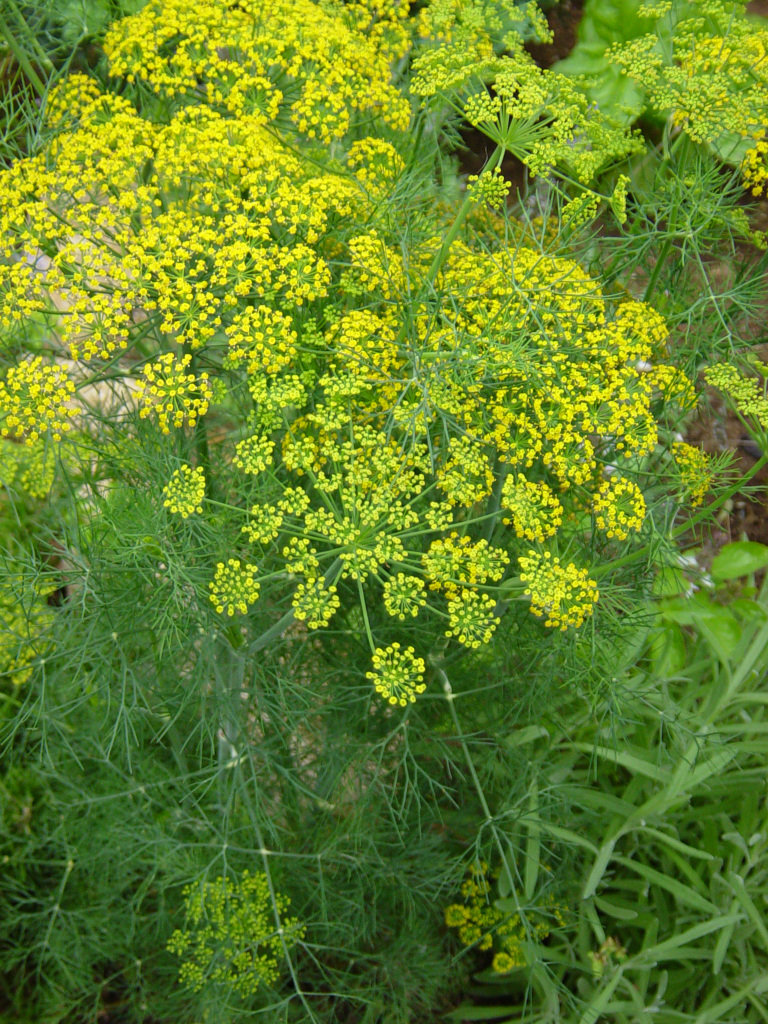
The familiar culinary plant known as the dill is an annual aromatic herb, which is about thirty inches tall – seventy-five centimeters in height. The herb bears feathery leaves on an erect stem that is hollow inside. When in bloom, the herb bears a large number of yellow colored flowers in umbels on the stem.

The dill has been traditionally associated with superstitious beliefs in Europe, and hanging a bunch of dill herbs over the door was supposed to protect one against witches and sorcery in the olden days. While the herb is no longer associated with such superstitious beliefs these days, it is still used to a great degree in the manufacture of herbal medications and in culinary dishes in many cuisines around the world.

The…

View original post 2,611 more words
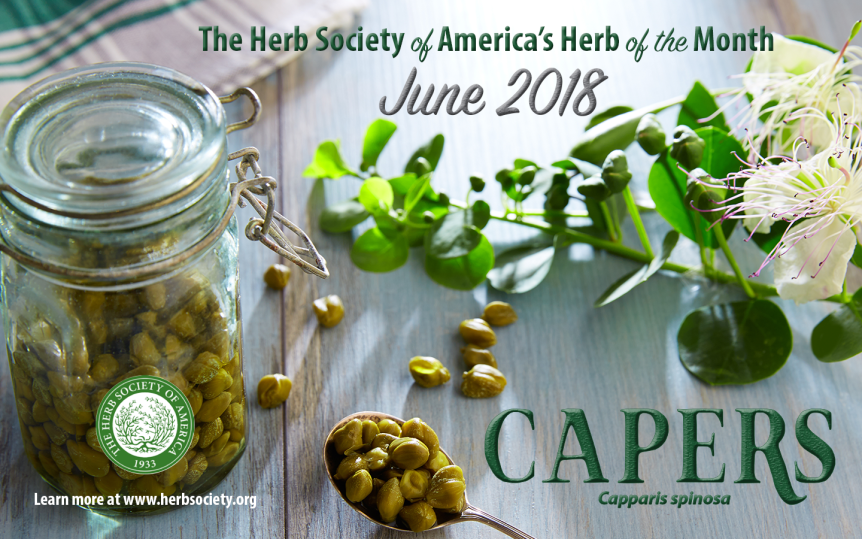
June Herb of the Month: Capers

By Crooked Bear Creek Organics

Crooked Bear Creek Organic Herbs's avatarCrooked Bear Creek Organic Herbs

Did you know:

Capers – Capparis spinosa
• Capers are the flower buds of the Flinders rose (or caper bush) Capparis spinosa
• This thorny shrub is native to the Mediterranean and hardy to USDA zone 9
• Capers thrive in hot dry climates
• Grows as a mounding shrub with a sprawling habit
• The flower buds are hand-picked then either pickled, brined or packed in salt to preserve
• The bitter flavor is mellowed by pickling, resulting in a salty, slightly sweet taste
• Buds that bloom produce a white flower with purple stamens which then will form a small fruit
called a caperberry.
• Caperberries are also pickled and are often served on antipasto platters or used as a garnish for
martinis
• The smaller the caper, the better the quality, flavor and commercial value, and are also called
nonpareilles or surfines; larger ones are known as…

View original post 347 more words

One Of My Favorite Places To Find Incredible Wild Plants & Mushrooms

Greetings!

First, I want to say “Thank you!” to everyone who pre-registered for the upcoming Summer Flora & Fungi Hike on July 7th.  Registration is now closed, as both walks have filled to max capacity.  Stay tuned for another Learn Your Land outdoor event to be held in August!

Second, let’s talk about ideal locations to find incredible wild plants and mushrooms.

Bogs are magical.  Floodplains are great.  Deciduous woods are wonderful, and forest edges are fantastic.

I love walking through all these unique ecosystems during all seasons of the year, though I’d be remiss if I didn’t mention an additional habitat that I absolutely love exploring…

A hemlock forest.

There’s something special about it.  Dark, moist, green, and aromatic… this is how I typically think of a hemlock forest.  Deep in these woods, incredible wild plants and mushrooms can often be found if the conditions are right.

I recently explored a hemlock forest in search of summer’s flora and fungi.  Needless to say, I brought my camera along and documented the experience.  If you’re interested in learning a few new incredible plants and mushrooms (some of which are edible and medicinal!), check out the brand new video!

Speaking of incredible wild fungi, Black Trumpet mushrooms are appearing right now.  These fungi are some of the tastiest wild mushrooms on the planet, though they’re not always so easy to find.  Check out this recent Instagram post to learn a few foraging tips!

Thanks for reading and watching, and as always, thank you for your support!

-Adam Haritan

Fragrant Linden Blossom Sun Cake: A Magical Midsummer Treat ~ Gather Victoria

Delicately perfumed with the GORGEOUS scent of linden blossoms, this moist, crumbly cake truly is delicious. I couldn’t stop eating it – so now I have to bake a whole new one for solstice! But that’s okay, it takes no time to whip up and I’ll get to enjoy even more of it! In Latvia,…

via Fragrant Linden Blossom Sun Cake: A Magical Midsummer Treat — Gather Victoria

Sacred Tree of India: Amla {Phyllanthus emblica}

By Crooked Bear Creek Organics

Crooked Bear Creek Organic Herbs's avatarCrooked Bear Creek Organic Herbs

Also, Known As:

  • Amla
  • Indian Gooseberry

Amla (botanical name Phyllanthus Emblica) is an elegant ornamental tree, which usually grows up to a height of 60 feet (18 meters). In some rare cases, the tree may even be 100 feet (30 meters) tall. The bark of amla tree is somewhat smooth and has a light greyish-brown hue. Similar to the bark of guava, amla also peels off its bark in thin flakes. Although amla is a deciduous tree, which sheds its leaves and branches from time to time, the tree is rarely found completely bare. Hence, this tree is often described as an evergreen species. Amla trees bear tiny, oblong-shaped leaves that grow up to a length of anything between 1/2 inch and 3/4 inch (1.25 cm and 2.0 cm) in length and they are just 1/8 inch (3 mm) broad. These miniature leaves are disposed of distichously (arranged alternately in…

View original post 3,113 more words

Herb Guide: Bay Laurel

By Crooked Bear Creek Organics

Crooked Bear Creek Organic Herbs's avatarCrooked Bear Creek Organic Herbs

Laurus nobilis

Also, Known As:

  • Bay Laurel
  • Sweet Bay

The herb known as the bay laurel or the sweet bay is native to Asia Minor and the Mediterranean region in general – it is a small evergreen shrub or tree. The early Greeks and Romans admired the bay laurel for its beauty and used the aromatic leaves in many different ways. Bay laurel possesses leathery leaves that are lanceolate and pointed in shape. The leaves also have the maximum oil content during early and mid-summer and this oil content tends to decrease in other seasons. The name “bay” is used to refer to several botanicals – for example, the West Indian bay – botanical name Pimenta racemosa, and the California bay – botanical name Umbellularia californica. Therefore, any of these plants can be called by the name “bay” in the existing herb literature; what is more, some other plants are…

View original post 2,420 more words

Herb Guide: Lemon Balm

By Crooked Bear Creek Organics

Crooked Bear Creek Organic Herbs's avatarCrooked Bear Creek Organic Herbs

Learn the medicinal and culinary uses of lemon balm, how to grow it, and how to make your own traditional Carmelite water.

To get the best flavor out of lemon balm, shear it with scissors, cutting it down by half or more, at least once a month. You can safely harvest three-quarters of the plant every three to four weeks and not harm it.

Often when someone asks me what my most favorite herb would be, I enjoy the surprise on their face when they hear my answer: Lemon balm, I say, without any hesitation.

Lemon balm (Melissa officinalis) isn’t at the top of most people’s favorites list. Basil, parsley, and lavender are the most popular herbs in America, but lemon balm isn’t even on the top 10 list. But it is deserving of considerably more recognition.

Lemon balm is a perennial herb from the mint family (

View original post 1,136 more words

Herb Guide: Wild Thyme {Thymus serpyllum}

By Crooked Bear Creek Organics

Crooked Bear Creek Organic Herbs's avatarCrooked Bear Creek Organic Herbs

Also, Known As:

  • Creeping Thyme
  • Mother-of-thyme
  • Wild Thyme

The wild thyme is native to the larger parts of Europe where the land is dry. The wild thyme is rare compared to the common thyme’s and is farmed extensively. Normally, wild thyme is found growing up to a certain altitude on the Alps, on high plateaus, in valleys, alongside trenches, roads, on rocks and also in infertile and dry soil. Wild thyme may also be found growing in moisture-laden clay soil that is improvised of chalk. Wild thyme’s can also be found in old rocky, deserted grounds, dried-up grass turfs and also on open lands. Particularly in England, wild thyme’s grow normally on moorlands and rocky terrains. Wild thyme is frequently cultivated as garden borders, in rock gardens or on the sunlit banks of rivulets and streams.

Wild thyme is a perennial herb. The herb’s sulky wooded stems grow up to a…

View original post 1,531 more words

Herb Guide: Oregano

By Crooked Bear Creek Organics

Crooked Bear Creek Organic Herbs's avatarCrooked Bear Creek Organic Herbs

Origanum vulgare

Also, Known As:

  • Common Marjoram
  • Oregano
  • True Oregano
  • Turkish Oregano
  • Wild Marjoram
  • Winter Marjoram

The famous European herb called the oregano or the pot marjoram is a very familiar spice, botanical name Origanum vulgare. It is a common herb, and the European oregano is known to be a very hardy and perennial herb characterized by the presence of an erect, and somewhat hairy and well-branched stem, the leaves of the herb are also hairy. When fully grown, the plant can cross two feet in height, and is characterized by a very acrid and pungent odor, the fragrance of the plant is very strong, and has a sage-like an aroma, it also smells somewhat like another spice, the thyme – also used in a lot of European cuisines.

The oregano also refers to the pleasant and mint smelling European herb, the marjoram, or the wild marjoram as it is…

View original post 2,012 more words

Herb Guide: It’s About Thyme

By Crooked Bear Creek Organics

Crooked Bear Creek Organic Herbs's avatarCrooked Bear Creek Organic Herbs

Thymus vulgaris

Also, Known As:

  • Black Thyme
  • Common Thyme
  • English Thyme
  • French Thyme
  • Garden Thyme
  • German Thyme
  • Serpyllum
  • Thyme
  • Tomillo
  • Winter Thyme

Thyme is a common name given to all the herbs belonging to the plant species called Thymus. The Thymus is indigenous to Europe and Asia and all plants belong to this species are usually low-growing and perennial. Among the different plants of this species, the common or garden thyme is regarded as the main variety and is used commercially for flowering as well as decorative purposes. The garden thyme is a small shrub bearing greyish-green leaves and flowers whose hues vary from white to pink or purple. Several countries in Europe, including Spain, Portugal, France, and Greece, as well as the United States, cultivate and harvest the thyme. Basically, there are three major types of thyme – French, English, and German, and each of them bears leaves of…

View original post 3,610 more words