Public Lands Issues effect on wildlife and wild horses and burros | Straight from the Horse’s Heart

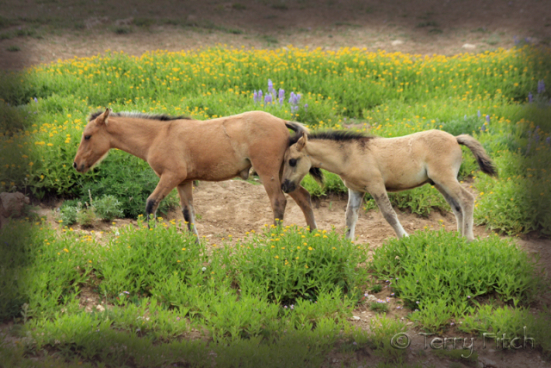
photo by Terry Fitch of Wild Horse Freedom Federation

by Bonnie Kohleriter

Our public lands are now under attack which has enormous consequences for our wild horses and burros and for our wildlife.  The attacks are coming from Trump’s cabinet members, particularly the Dept. of Agriculture and the Dept. of the Interior, and from Congressional Republicans.

First, Rep. Jason Chaffetz R UT, introduced a bill early in January, 2017, to sell off 3.3 M acres of Federal land to states.  With an outcry from conservatives and sports groups, he withdrew that bill.

Then Rep. Jason Chaffetz R UT, introduced a bill later in January, 2017, called the Local Lands Act, wherein Federal law enforcement on our Federal Forest Service (FS) and Bureau of Land Management (BLM) land, will be supplanted with State law enforcement with the States being given block grants.  The bill is currently in the Natural Resources Committee: Subcommittee on Conservation and Forestry.

Then Rep. Don Young (R) AK, moved a bill, House Joint Resolution 69, through the Congress in February, 2017, wherein the Federal Fish and Wildlife Service (FWS) on Federal Alaskan lands will no longer manage its Federal wildlife, and its Federal wildlife will be managed by the State of Alaska.  Resolution 69 went to the Senate, where Sen. Lisa Murkowski (R) AK and Sen. Dan Sullivan (R) AK, moved the resolution through the Senate in March, 2017.

It is concerning as attempts are in process to take away Federal land and give it to the States, to take away Federal law enforcement on Federal lands and give it to the States, and to take away Federal management of Federal wildlife on Federal land and give the management to the States.  What’s next?  In addition to give aways, the Senate voted 51-48 to kill the 2.0 plan which was developed by the Dept. of the Interior.  That plan authorized public lands stakeholders to give input into the use of the land.  The killing of the 2.0 plan is designed to give the local and state governments more control over the Federal public lands for development such as use for businesses.

Now Ken Ivory, a Rep. in the Utah State Legislature, under House Concurrent Resolution 22, is asking the President and Congress to repeal the Wild Free-Roaming Horses and Burros Act of 1971 and grant authority and resources to the States to manage feral horse and burro populations within their jurisdictions.  The Legislature and Governor maintain the horses and burros are damaging the rangelands for wildlife and livestock that share the same areas.  This bill would authorize the States to geld the stallions.  Some outspoken ranchers and hunters want our public land for their gains.  The ranchers in Utah have expressed they want to “harvest” (slaughter) the horses and burros like they harvest cattle.

What else is coming?  Environmental groups have identified “Public Lands Enemies.  Interestingly they are all Republicans. They are:

Sen. Mike Lee           Utah    Sen. Lisa Murkowski Al    Rep Mark Amodei        NV

Sen. Orin Hatch        Utah    Sen. Dan Sullivan      AL    Rep Dean Heller           NV

Rep. Rob Bishop       Utah    Rep. Don Young        AL    Rep Tom McClintock   CA

Rep. Jason Chaffetz Utah    Sen. Jeff Flake           AZ     Rep Doug La Malfa      CA

Rep. Chris Stewart    Utah   Rep. Paul Gosar        AZ     Rep Steve Pearce        NM

Rep. Mia Love            Utah   Sen. Barrasso            WY   Rep Raul Labrador       ID

In California, McClintock is from the Central Valley and La Malfa is from NE California.  La Malfa is a 4th generation rice farmer and has received $ 5M in federal commodity subsidies starting in 1995, or on average a quarter of a million dollars every year from the federal government.  Now that’s the real “welfare” food stamps subsidy.

While Republican Congressional Representatives primarily supported by ranchers and hunters in their respective states, wrangle in Congress to take from the Federal government and give to the States, the Wildlife Services within the U.S. Department of Agriculture yearly brutally kills millions of carnivores and omnivores on our public lands to appease the hunters and ranchers.  The hunters claim the carnivores and omnivores kill the herbivores they want to hunt and the ranchers on our public lands claim the carnivores and omnivores kill their livestock.  The killings are brutal: aerial gunning, cyanide poisoning, steel jaw and leg trapping… In 2016 the Ag Dept. Wildlife Services killed 2.7 M animals on our public lands.  415 gray wolves, 77,000 coyotes, 407 black bears, 334 mountain lions, 997 bobcats, 21,000 beavers, 4000 foxes, …

Our public lands are to have a multiple use mandate, but it seems the powerful, monied hunting and ranching lobbies, as well as now, the gas, oil and mining lobbies in Washington are dictating what will go on with our public lands through their elected congressional representatives.  Get involved.  Contact your elected congressional representatives, especially those on the natural resources, agricultural, and appropriations committees in the House and the agricultural, nutrition, forestry, and environmental and public works and appropriations committees in the Senate.  Tell your representatives what it is you want on our public lands.

Source: Public Lands Issues effect on wildlife and wild horses and burros | Straight from the Horse’s Heart

Yellowstone and Montana are Killing the Last Wild Buffalo

2017 03 16 01 003 YoungBull BFCseay2017

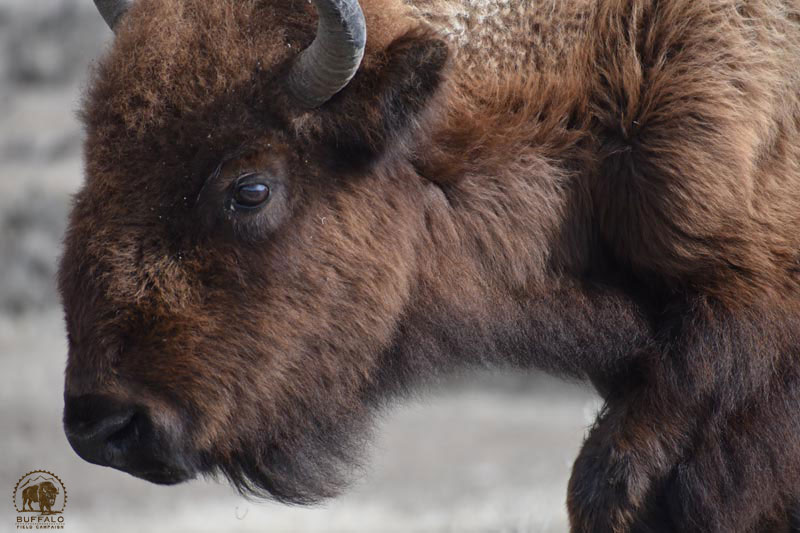
More than 1,200 of America’s last wild buffalo have been killed this winter, and it isn’t over yet. Hunting along Yellowstone’s boundaries has taken the lives of more than 400 buffalo. Hunters are still in the field making kills. It’s a terrible time of year to hunt. The buffalo — like other wild grazers — have used up all of their fat stores, and are showing ribs and bony hips, waiting for the re-greening of the Earth so they can again replenish their huge bodies. This is also the time of year when the long, harsh winter takes her toll, too. There will be many buffalo who will not survive into spring, but the government is not accounting for these deaths in their mad rush to reduce this most significant and vulnerable population. Further, hunters are still killing adult female buffalo who will begin having their calves in about six weeks. All too often, BFC patrols make heartbreaking discoveries of finding fully-formed baby buffalo in their mother’s gut piles.

2017 03 16 01 002 YNPtrapBFCseay2017

Additionally, Yellowstone National Park — shamefully complicit in Montana’s livestock industry’s war against wild buffalo — has captured close to 800 buffalo, all of whom have been or will be sent to slaughter. The trap is emptying quickly, though Yellowstone continues to attempt to capture. Recently, some buffalo have resisted these attempts, while others have not been so lucky. On Monday in Gardiner, BFC patrols documented as five Yellowstone wranglers on horseback tried to trap fifty-five buffalo; all but one got away, running to the hills for their lives. The unfortunate mama buffalo who was trapped caught the attention of another family group of twenty-two. Coming dangerously close to the trap, they sealed their own fate as the wranglers, hungry to capture, took advantage of the situation. Hundreds of wild buffalo are gone forever. BFC’s Mike Mease and Stephany Seay attended the second media tour of Yellowstone’s trap last Thursday, where we again witnessed Yellowstone park rangers, wranglers, and biologists doing the service of the Montana Department of Livestock as they loaded wild buffalo onto stock trailers headed for the slaughterhouse, then proceeded to move more through the trap. It has become business as usual for these buffalo abusers, just another day in the park. They tell us that they don’t like doing this, that they want slaughter to end, but their actions say something else. Yellowstone National Park is not without significant power, but they have shown they are without courage. They can stand up to Montana and refuse to participate. But they don’t. Their cold routine of capturing, testing, sorting, and shipping the country’s national mammal to a horrific death — as they don the image of this sacred being on their uniforms and rake in millions from the people who come to adore them — has become just another day at work. They attempt to put the task of change on the public, shirking responsibility for their part in these crimes. While it is true that a current Montana law – MCA 81-2-120 — is the driver behind the cumulative mismanagement plans and practices, Yellowstone should not have the luxury of of passing the buck. The world’s most well-known national park has astounding influence that they choose not to use. Instead, they kill America’s last wild buffalo. By the end of March, this should all be over.

Please continue to keep pressure on Montana and Yellowstone. Do not ease up. Be relentless and don’t accept their excuses. Laws, decisions, and management plans can be changed.
* Yellowstone National Park Superintendent Dan Wenk 307-344-2002
* Montana Governor Steve Bullock 406-444-3111

And contact your members of Congress to tell them that this must end once and for all. Congress holds the purse strings and can end the funding.

2017 03 16 01 001 RedHead BFCseay2017

The coming of spring is beginning to benefit the buffalo, and we are thankful. The Gardiner Basin is swiftly losing all of its snow and the earth is beginning to turn green again. This is encouraging buffalo to migrate away from the vicinity of the trap and away from the boundary where hunters still wait. In the Hebgen Basin, west of the park, however, there is still a significant amount of snow covering the ground. It’s beginning to melt, and south-facing slopes are opening up, but with so much snow there’s still a long way to go. Buffalo here are making their living along creeks and rivers, eating the sedges that are exposed. Soon spring migration will begin in earnest, as family groups — hopefully by the hundreds — will make their way to their calving grounds around Horse Butte. BFC patrols will soon shift our focus to the highway, helping to warn motorists as the buffalo move through this important corridor to their birthing grounds. The Montana Department of Transportation has recently installed new 55mph signs for night time drivers, but without enforcement this change will not benefit buffalo very much. A few other mitigation measures have been or will soon be put into place as well, including new wording on three marquee signs that alert drivers to “BISON” on the road, as well as an incident alert for a mobile app to alert truckers and other travelers that they should expect buffalo on the road along this section of highway. These things will help, but safe passage infrastructure is the only thing that will make a real and lasting difference. Until then, and as we always are, BFC will be out day and night helping to warn traffic, trying to keep the buffalo safe.

BLM Seeks Public Comment on Plan to Rip More than 1,000 Wild Horses Out Of Wyoming | Straight from the Horse’s Heart

“This is Your Chance to be a Voice for the Horses…”

Destruction of Wyoming’s Adobe Town herd by the BLM ~ photo by Carol Walker of Wild Horse Freedom Federation

The Bureau of Land Management offices in Rock Springs and Rawlins are launching a 30-day public scoping period prior to preparing an environmental assessment on proposed deadly wild horse stampedes in the Salt Wells Creek, Adobe Town, and Great Divide Basin Herd Management Areas.

The war on Wyoming’s last remaining wild horses is allegedly scheduled to begin in the fall of 2017.

Written comments should be received by April 4, and should be e-mailed to blm_wy_adobetown_saltwells_hma@blm.gov. (Please include “2017 AML Gather” in the subject line).

Mailed or hand-delivered comments can be made during regular business hours (7:45 a.m. to 4:30 p.m. local time) at: BLM Rock Springs Field Office, 2017 AML Gather, 280 Highway 191 North, Rock Springs, WY 82901.

To verbally express your disdain, please contact the BLM at 307-352-0256.

For more details on how the BLM plans to destroy wild horse families and strip them of their freedom visit (HERE)

Source: BLM Seeks Public Comment on Plan to Rip More than 1,000 Wild Horses Out Of Wyoming | Straight from the Horse’s Heart

Glimpse into Horse Slaughter – Eagle Pass, Texas (raw video)


“Quietly and behind the scenes the Equine Welfare Alliance and Wild Horse Freedom Federation have been watching, taking note and documenting more than just the unnecessary roundups of wild horses and burros by the BLM; but also paying attention to where tens of thousands of American horses and donkeys (domestic and wild) disappear to without even so much as a final wave goodbye. Horse Slaughter has not been banned in the USA instead it has only moved across our borders and both our beloved domestic equines and our protected wild horses and burros continue to end up on the dinner plates of foreigners across the globe. Below is simply raw video of what the horses go through as they cross the border from Texas to Mexico in the final hours of their precious lives. No commentary, no music, no opinions as the footage speaks for itself. We have simply released it to emphasis the need to act, of things to come and to remind those who participate in this predatory blood business that we are watching and taking names. Yes, we are paying attention as the victims cannot speak for themselves but we can. Let the kill buyer beware. Keep the faith, my friends. We are paying attention.” ~ R.T.

via Glimpse into Horse Slaughter – Eagle Pass, Texas (raw video) — Straight from the Horse’s Heart

Video supplied by investigators from EWA and WHFF

BLM Set to Wage War on Wyoming’s Wild Horses, AGAIN! | Straight from the Horse’s Heart

Sources: Multiple

“Using poor science and bad numbers the BLM continues to ensure that the wild horses of Wyoming will have no families, freedom or future.  Unedited, propaganda article posted below. (Herds do not double in size every four years – Fake News)” ~ R.T.

Adobe Town ~ photo by Carol Walker

ROCK SPRINGS, Wyo.  — The Bureau of Land Management is proposing to remove about 1,000 wild horses from three herd management areas, including Adobe Town, in southwest Wyoming in order to meet population level objectives.

Kimberlee Foster, field manager for the Rock Springs BLM field office, said there are too many horses on the land, and rules require them to remove horses when they are above management levels.

Foster said the gathered horses will go to the Rock Springs Holding Facility where they will be put up for adoption.

The BLM plans to remove 210 horses from Adobe Town, 584 from Salt Wells Creek and 235 from Great Divide Basin.

There are many reasons the BLM must carefully maintain certain population ranges for wild horses in Wyoming. For one, there are no natural predators for horses in the state and equines can be prodigious breeders.

“Typically a herd management area can double in size every four or five years,” Foster told the Rawlins Daily Times (http://bit.ly/2mayVKA ).

If wild horse populations become too large, the natural forage on the land won’t be able to support them.

Herd management is based around the usage of the land, Foster said, as well as the amount of available forage for the animals. Additionally, the BLM has agreed to act to reduce herd sizes should population levels reach a certain point.

The BLM is accepting public comment until April 4 on its horse roundup plan.

Source: BLM Set to Wage War on Wyoming’s Wild Horses, AGAIN! | Straight from the Horse’s Heart

House Leadership Renews Push to Reinstate Horse Slaughter in US | Straight from the Horse’s Heart

Source: Equine Welfare Alliance PR

Chicago (EWA)– EWA has learned that Mr. Douglas A. Glenn, Director, Office of Financial Management, Department of the Interior, has notified his department in a letter dated 22 February, that the GAO (Government Accountability Office) has been tasked to study any changes in the state of equine welfare in the US from 2010 to the present.

The request to the GAO was made by the Chair of the House Agriculture Committee and the Chair of House Appropriations Committee, Subcommittee on Agriculture, Rural Development, Food and Drug Administration.

Attached to the letter was a statement of the scope of the work to be performed, including addressing four questions:

  1. What is known about changes and trends in the U.S. horse market since 2010?
  2. What impact, if any, has the prohibition on USDA funding for horse slaughter inspection had on horse welfare and on states, local governments and Indian tribes?
  3. What is known about the number of abandoned and unwanted horses in the U.S. and associated environmental impacts?
  4. What is the current capacity of animal welfare organizations and shelters to accept and care for unwanted and abandoned horses?

Source: House Leadership Renews Push to Reinstate Horse Slaughter in US | Straight from the Horse’s Heart

BLM Violates Own Wild Horse Welfare Standards | Straight from the Horse’s Heart

Source: The Cloud Foundation

Roundup Incident Sparks Outcry

photo by Terry Fitch of Wild Horse Freedom Federation

photo by Terry Fitch of Wild Horse Freedom Federation

COLORADO SPRINGS, CO – On February 12, the Bureau of Land Management (BLM) conducted a helicopter roundup of wild horses at Cedar Mountain Herd Management Area (HMA) in Utah.  The Cloud Foundation (TCF) and advocates across the country contend that BLM’s actions at the roundup violate standards in their own Comprehensive Animal Welfare Program (CAWP).

Eyewitness, Mosie Trewhitt, a professional horse trainer, photographed the incident of a lone pinto mare being driven by a helicopter. The mare could not keep up with her band but the helicopter kept pushing her. Then a wrangler joined the pursuit and both helicopter and wrangler chased the mare on a dead run along a barbed wire fence line. The wrangler tried to rope her numerous times and was finally successful. The mare lurched and flipped over or tried to jump the fence. She became entangled in the barbed wire, and ended up on the other side of the fence.

The mare escaped, dragging the rope behind her and has not been seen since the incident according to BLM who also contend she was uninjured. Trewhitt’s blog, Voices of the Herd, documents the incident with vivid photographs. Fears persist that this mare who appears to be pregnant may be strangled by the rope or suffer from infection due to an obvious gash on her right rear leg.

Read the entire article at the Source: BLM Violates Own Wild Horse Welfare Standards | Straight from the Horse’s Heart
Bureau of Land Management glosses over coverup of 213 wild horse deaths on the Scott City, Kansas, feedlot

12lth1_26_of_161_-300x102

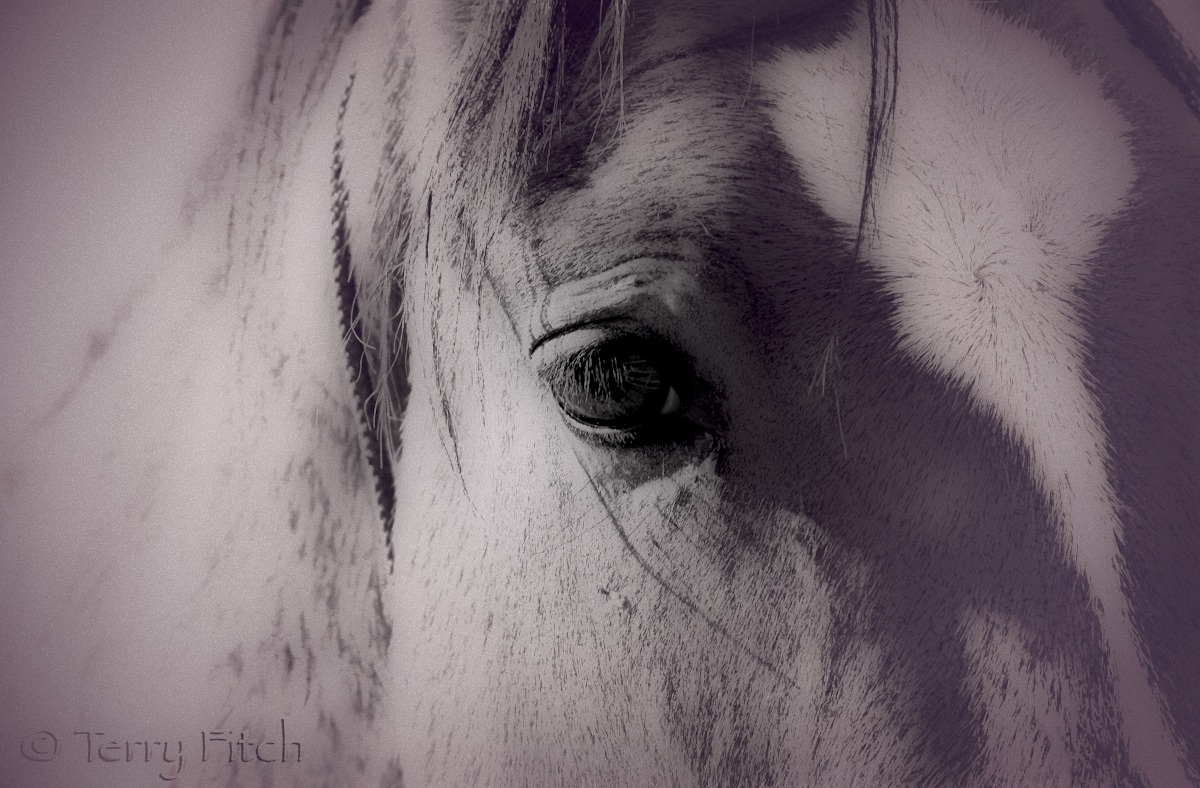
Photos of wild mares at Teterville (photo: Carol Walker)

By Debbie Coffey, V.P. and Dir. of Wild Horse Affairs, Wild Horse Freedom Federation

Copyright 2017   All Rights Reserved.

After no news for 2 years by BLM on their promised investigation and report to the public on the deaths of wild horses at Scott City, KS, after our 2/2/17 report titled “196 wild horses died at BLM’s Scott City feedlot (a BLM Auschwitz for wild horses),” the BLM was suddenly able to muster up a little something for the public on the Wild Horse & Burro Program website in only about a week.

It popped up under “news” and it seems the BLM was careful to not mention deaths or draw too much attention to the issue at hand in the headline, by titling their “news” “Status of Off Range Corral in Scott City, KS.”

In fact, buried at the end of the 3rd paragraph, the BLM (with more current information) finally stated that 213 mares died (out of the 1,493 wild mares) between June 2014 and October, 2016.

So, about 14% of the wild horses that the BLM shipped to that feedlot, died on that feedlot.

It seems that in the very little offered as a “news” report to the public, the BLM tried to cover up their actions (and more importantly, their lack of action), resulting in the deaths of so many wild horses.

In BLM’s “news” version (HERE) of what happened to wild horses on the Scott City feedlot, they cited “crowding at the feed bunks most likely resulting in some horses not receiving the protein and energy required to support their needs. The BLM made adjustments and the animals began to acclimate and show improvements in their overall health, which resulted in a dramatic decrease in the monthly mortality rate. “

SO WHY DID SO MANY WILD HORSES DIE BEFORE THE “ADJUSTMENTS” WERE MADE?  In an August 2014 article on EquiMed, USDA veterinarian Dr. Al Kane stated “in addition to increasing the amount of feed being offered during feedings, we’ve worked with the onsite veterinarian and the operator to increase the energy density of the horses’ feed by increasing the ratio of alfalfa to grass in the hay mix.  This helps support the horses’ nutritional needs during the transition from open-pasture to the corral environment”..

WHY WASN’T THE CORRECT FEED PLANNED BEFORE THE WILD HORSES ARRIVED AT THIS FEEDLOT?  The BLM has been “managing” wild horses for about 45 years and still can’t get it right.

The BLM still didn’t inform the public that 87 of the 196 wild horses were euthanized, or that 41 wild horses died of colic or that 14 wild horses died of fractures of the spinal cord (neck and back) and 6 horses died of leg or pelvis fractures.  The BLM’s version of the “news” didn’t mention the wind storms that were noted by the local veterinarian in his reports to them, or the many cases of sand colic suffered by the wild horses, or the fact that a squeeze chute wasn’t brought to the feedlot until almost 2 months after the horses arrived. 

Note that the BLM’s “news” did not provide you with the name of the contractor for the Teterville Off Range Pasture (ORP) in Kansas.  (And, also note that the BLM doesn’t disclose the names of ALL of the ORP contractors for the public anywhere on the Wild Horse & Burro Program website.)

While omitting so many important facts for the public in their “news,” the BLM managed to hone in on a couple of mistakes in our article.  We corrected these immediately.  However, we didn’t kill 213 wild horses and the BLM can’t “undo” what they did.

The real issue is that 213 wild horses (that we know of), died on this feedlot, no matter what the time frame, and the BLM didn’t issue a promised report to the public until now.

If the BLM would give more information to the public, there would be no mistakes.  We request that the BLM, in the spirit of transparency, post the spreadsheet containing the freezemark numbers of the horses that died, the dates of deaths and causes of death, and all of the veterinary, necropsy and blood pathology reports of the Scott City wild mares on the Wild Horse & Burro Program website.

We can only hope the BLM will apply some focus to noticing and correcting their mistakes in their own statistics and data, and in their management of the Wild Horse & Burro Program.

Source: BLM glosses over coverup of 213 wild horse deaths on the Scott City, KS, feedlot | Straight from the Horse’s Heart
Scientists Agree: It’s Time To End The War On Wildlife | Straight from the Horse’s Heart

By Collette Adkins, Contributor as published on The Huffington Post

“Wild horses and burros survived centuries in perfect balance and harmony without the intervention of humans.  The removal of natural predators upsets the natural balance and the crisis rolls downhill initiating even more violent intervention by humans.  If we, as humans, would step back and cease attempting to manage something that does not require to be controlled the world would be a much better place to live for humans and animals alike.  Keep the faith.” ~ R.T.


“Today’s predator control is widespread in the American West…”

coyote-crueltyKilling large predators to reduce livestock conflicts or benefit game populations has long been thought to be ineffective — and devastating for ecosystems — and a growing body of scientific literature criticizing the widespread practice is confirming those fears.

Most recently, this month, the Journal of Mammalogy — a highly respected international scientific journal and flagship publication for the American Society of Mammalogists — published a special collection of articles criticizing lethal control of predators such as wolves and grizzlies.

Today’s predator control is widespread in the American West and has its origins in barbaric 20th century, government-sponsored predator eradication programs. Those utilized poisons and bounties to drive grizzly bears and wolves to the brink of extinction.

Thanks to the protection of the Endangered Species Act — which has saved more than 99 percent of the plants and animals under its protection and put hundreds on the road to recovery — the grizzly bear and wolf have begun to recover. But as these large carnivores expand their population size and range, people have once again called for lethal control to address livestock depredations and inflate game populations.

In states where gray wolves have lost their federal protections, such as Idaho, state managers dead set on killing the predators established aggressive hunting seasons and lethal depredation controls. After the U.S. Fish and Wildlife Service proposed removing Yellowstone grizzly bears from the list of federally protected species, states like Montana moved quickly to establish hunting seasons.

Then there’s the coyote, a predator lacking protection at state or federal levels and a primary target of predator control programs across the U.S. Tens of thousands of these resilient predators are killed each year by a highly secretive arm of the U.S. Department of Agriculture known as Wildlife Services.

The numbers of predators killed by Wildlife Services is staggering. The latest kill report shows Wildlife Services in fiscal year 2015 killed more than 3.2 million animals, including 68,905 coyotes (plus an unknown number of pups in 492 destroyed dens), 385 gray wolves, 284 mountain lions, 731 bobcats and 3,437 foxes.

This level of human-caused mammalian predator mortality is damaging native ecosystems and biodiversity. The lead article in the Journal of Mammalogy’s special feature on lethal control — “Carnivore conservation: shifting the paradigm from control to coexistence” — summarizes studies on the essential role of apex predators like wolves and grizzlies and mesopredators like coyotes and foxes in maintaining ecosystem function. A well-known example is how wolf reintroduction to Yellowstone created a trophic cascade that enriched riparian songbird communities.

Given the ecological importance of wolves and other predators, scientists are calling for implementation of nonlethal methods to prevent livestock depredations.

The authors of “Adaptive use of nonlethal strategies for minimizing wolf-sheep conflict in Idaho” in the special feature document a seven-year pilot project in prime Idaho wolf habitat, highlighting the adaptive use of a suite of nonlethal deterrents to protect sheep. Those nonlethal methods reduced sheep depredation by more than three times the reductions seen on sheep allotments in Idaho that used lethal control.

Another study featured, “Cattle mortality on a predator friendly station in central Australia,” found that ending lethal control may in itself — even without implementing nonlethal methods — reduce livestock losses by simply enabling the predator’s social structure to stabilize.

Not only are aggressive lethal controls ineffective, they have actually been found to increase livestock losses, as was found among gray wolves in the northern Rocky Mountains. Scientists demonstrated similar results from aggressive lethal control of cougars, which replaces adult males with immigrating adolescent males that are more likely to depredate. Other studies show that lethal control of wolves may be merely shifting depredation from cattle to sheep because coyotes replace the wolves and target smaller livestock.

As for predator control to benefit game populations, a meta-analysis of 113 predator removal experiments found that the intended beneficiary prey population actually declined in 54 of them.

In addition to the ecological and wildlife policy concerns with lethal control of predators, public acceptance of lethal predator control methods appears to be declining. While the public supports the need for livestock producers to protect their animals, foot or leghold traps, snares and poisons are viewed by the majority of the public to be so inhumane their use should not be allowed.

With all the issues surrounding lethal predator control, one would hope livestock producers would have help in implementing nonlethal alternatives. Yet very few states have any permanent programs to protect livestock from depredations using nonlethal methods comparable to the federal Wildlife Services lethal control program.

With scientific evidence against carnivore controls mounting, it is time to finally stop the cruel, senseless killing and start utilizing smart, nonlethal methods that actually work, benefiting both livestock and these majestic wild animals.

http://www.huffingtonpost.com/entry/scientists-agree-its-time-to-end-the-war-on-wildlife_us_58a77e73e4b026a89a7a2b08

Source: Scientists Agree: It’s Time To End The War On Wildlife | Straight from the Horse’s Heart

Don’t Slaughter Montana’s Bison

“As most of our seasoned readers are aware, the main thrust of SFTHH is to bring to the forefront the plight of our American equines be they domestic or wild. But while being tuned into the …

Source: Don’t Slaughter Montana’s Bison